
Last Updated on August 29, 2026
Wondering how daddy issues in relationships affect you and your love life? You may notice that you keep getting attached to unavailable people, overthink small changes in your partner, or stay in relationships even when they no longer feel good.
If your father was absent, emotionally distant, highly critical, controlling, or difficult to please, you may start asking whether those early experiences are still shaping how you handle love, trust, rejection, and closeness today.
Sometimes they are. But not every relationship problem comes from “daddy issues.” What matters is whether the same reactions keep appearing in your dating life, marriage, or long-term relationships.
How Your Relationship With Your Father Can Shape Your Love Life
Clinically, “daddy issues” is not a diagnosis. The term is generally used to describe emotional and relationship difficulties that can be connected to an absent, inconsistent, highly critical, controlling, or emotionally unavailable father or father figure.
That early relationship can affect how you later handle:
- approval and rejection
- emotional closeness
- criticism
- trust and reassurance
- dependence on a partner
- conflict and emotional withdrawal
For some people, closeness itself becomes uncomfortable, which can overlap with a fear of intimacy in relationships.
The connection is not as simple as having a difficult father and then having difficult relationships. A 2026 study published in Scientific Reports found an indirect association between father attachment and romantic social interest through difficulty identifying and describing emotions.
What can carry into adult relationships is not only what happened with your father, but what you learned about expressing emotions, asking for closeness, handling rejection, and depending on another person.
7 Relationship Patterns That May Be Connected to Daddy Issues
1. You Keep Choosing People Who Make You Chase Them
You feel drawn to people who gave you intense attention or warmth at first but later became distant or inconsistent.
Instead of asking whether they genuinely love you, value you, or invest in the relationship, your attention shifts to getting the earlier intensity back.
You start analysing messages, waiting for replies, changing how you behave, or trying harder to become the person they seemed to want at the beginning.
This can turn into self-sabotaging relationship patterns where the chase becomes more important than asking whether the relationship is actually giving you consistency, care, and emotional security.
2. You Try Hard to Earn Love
You put extra effort into being helpful, understanding, attractive, available, or easy to be with because being chosen starts to feel like something you have to earn.
This can mean:
- hiding your needs
- avoiding saying no
- over-giving
- staying constantly available
- accepting behaviour that bothers you
You worry that asking for more, setting a boundary, or disagreeing could make your partner lose interest.
Love then starts feeling less like something shared between two people and more like something you have to keep proving you deserve.
3. You Stay in Toxic or Unhealthy Relationships
You already know they lie, make little effort, behave inconsistently, neglect you emotionally, disrespect you, or keep breaking promises.
But instead of walking away, you keep trying to understand them, forgive them, or find reasons for why they behave this way.
You tell yourself they are stressed, confused, scared of commitment, dealing with their own problems, or that things will improve once life settles down.
Even when the relationship keeps hurting you, you continue replying, checking on them, meeting them, or staying emotionally connected because cutting contact feels harder than holding on to hope.
If you are unsure whether you are giving the relationship another chance or simply delaying a decision you already know you need to make, look at the signs a relationship may not be fixable.
4. Small Changes in Your Partner Start Feeling Threatening
You notice your partner replying more slowly, showing less affection, asking for more space, or spending more time with friends or new people.
Instead of seeing those changes as part of them living their own life, you start wondering whether they are losing interest, upset with you, or slowly pulling away.
This can feel even stronger in dating or long-distance relationships where calls, messages, and availability carry more weight.
Even when your partner communicates openly, tells you about their plans, follows through on what they said, and makes an effort to reassure you, the anxiety does not fully settle.
Your trust starts depending on every small change in their behaviour.
People do sometimes cheat, lose interest, or leave relationships unexpectedly. Concern is not automatically irrational. But if your partner is still making a consistent effort and your attention stays fixed mainly on what has changed, fear itself can start affecting the relationship.
5. Conflict Makes You Chase or Completely Withdraw
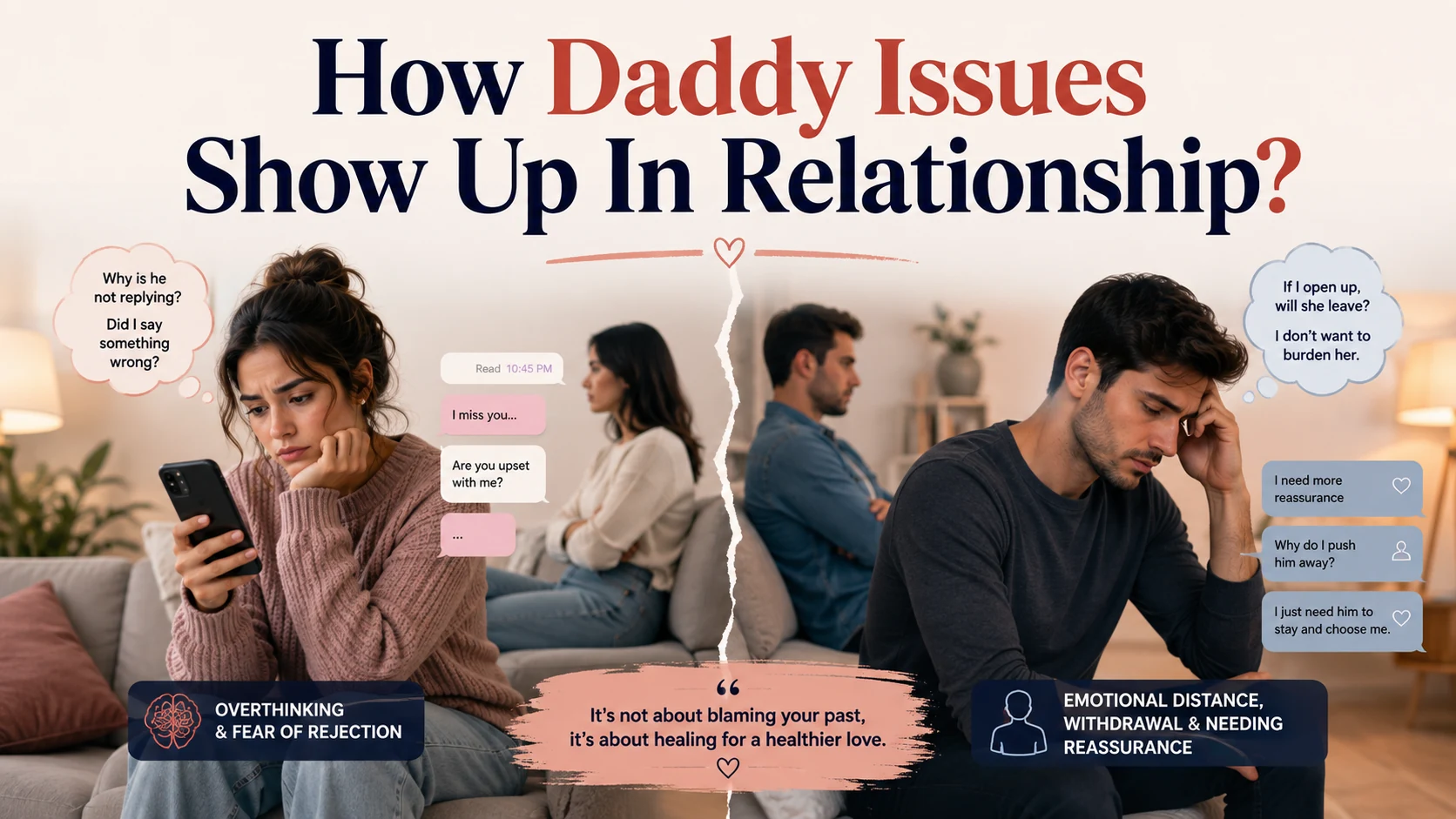
When conflict starts, you struggle to stay in the middle.
An anxious reaction can look like:
- repeated calls
- pushing for an immediate answer
- continuing the argument
- breakup threats
- demanding reassurance
An avoidant reaction can look like:
- shutting down
- refusing to talk
- leaving
- burying yourself in work
- acting as if you no longer care
Both make it harder to stay in the conversation long enough to understand what actually happened.
Chasing can make your partner feel pressured. Withdrawing can make them feel abandoned.
If this becomes your usual conflict pattern, learning how to stop arguing with your partner can help you interrupt it before the argument gets worse.
6. Criticism Feels Like a Judgment of Your Worth
Your partner points out one mistake or says they wish you had handled something differently.
But instead of hearing:
“I didn’t like what happened.”
you hear:
“I disappointed them.”
“I am not good enough.”
“They will think less of me now.”
You may become defensive, explain yourself repeatedly, get angry, or go quiet.
If approval from your father was difficult to earn, harsh, or strongly tied to performance, normal feedback in dating or marriage can feel much bigger than the issue being discussed.
7. Your Partner Starts Becoming Responsible for Your Emotional Stability
Supporting each other is normal in a relationship. The problem starts when your emotional security begins depending heavily on what your partner says, does, or avoids doing.
You expect them to:
- reassure you
- make decisions for you
- calm your insecurity
- prove their loyalty
- prevent your triggers
- explain their actions
- tell you whether your reactions are reasonable
The relationship can slowly shift from two adults supporting each other to one person carrying most of the emotional responsibility.
Your partner can reassure you or help clear up a misunderstanding. They cannot be responsible for settling every fear about rejection, cheating, or abandonment.
Daddy Issues Do Not Look the Same in Everyone
The same father-related experience can look very different from one person to another. Some people seek more reassurance and closeness, while others become emotionally guarded, highly independent, or focused on proving their worth.
Daddy Issues in Men
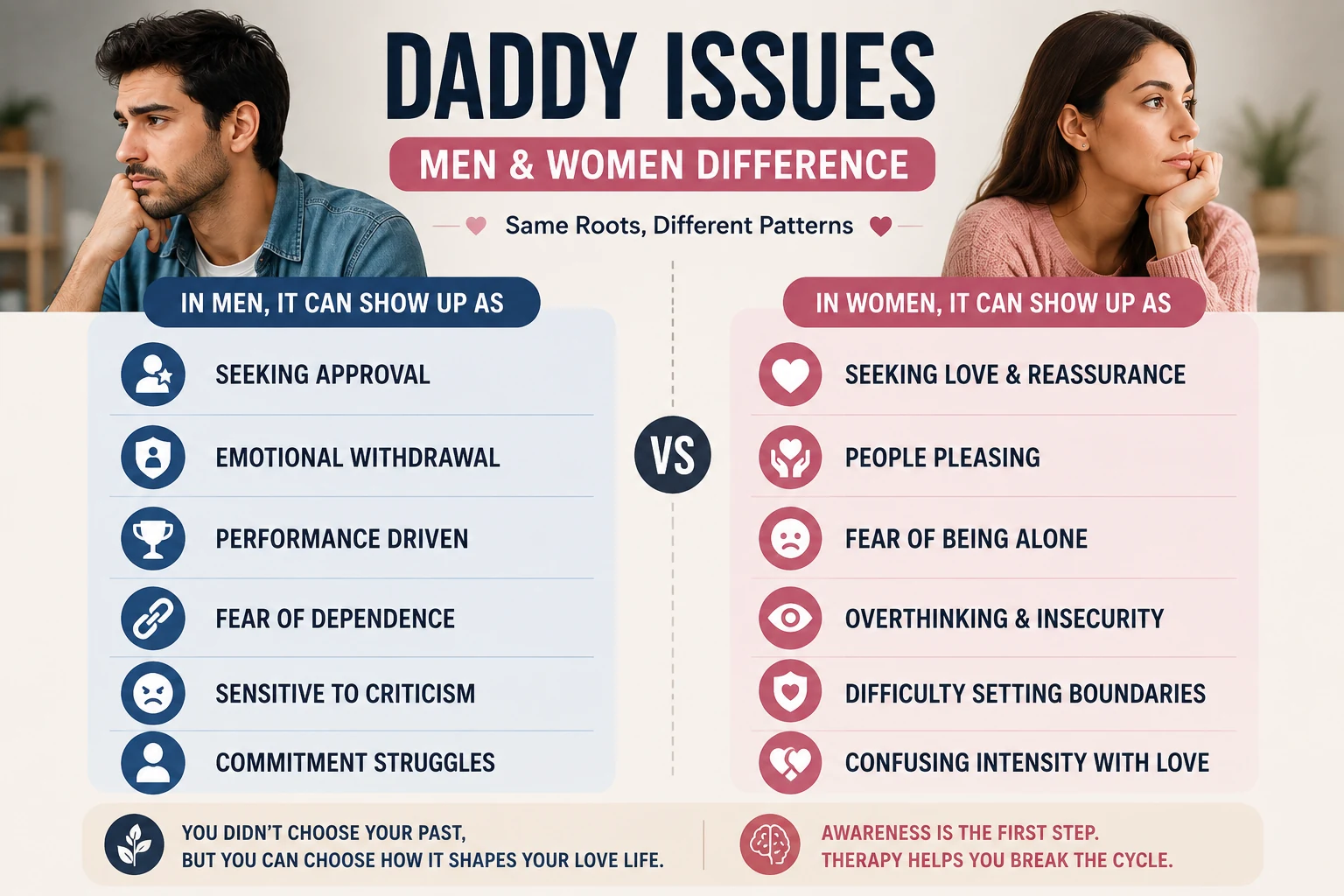
Daddy issues in men can show up as:
- seeking approval from bosses, mentors, older men, or authority figures
- using career, money, status, or achievement as proof of worth
- struggling to ask for help
- shutting down during emotional conversations
- reacting strongly to criticism
- becoming extremely independent
Men with daddy issues do not always look insecure. Someone can appear highly capable and independent while still being strongly affected by approval, failure, criticism, or emotional dependence.
Daddy Issues in Women
Daddy issues in women in relationships can show up as:
- over-giving to keep a partner interested
- tolerating inconsistency for too long
- needing repeated reassurance
- struggling to trust
- fearing rejection or abandonment
- measuring self-worth through attention, affection, or approval
These are patterns, not fixed male and female profiles. The same reactions can appear in any gender.
What Does Not Automatically Mean You Have Daddy Issues
These things alone do not prove anything:
- dating someone older
- having certain sexual preferences
- growing up with a single mother
- having a difficult relationship with your father
What matters is whether repeated problems with approval, trust, rejection, closeness, or self-worth are affecting your relationships now.
How to Stop Daddy Issues From Affecting Your Relationship
Learning how to deal with daddy issues starts with noticing what you actually do when an old fear gets triggered.
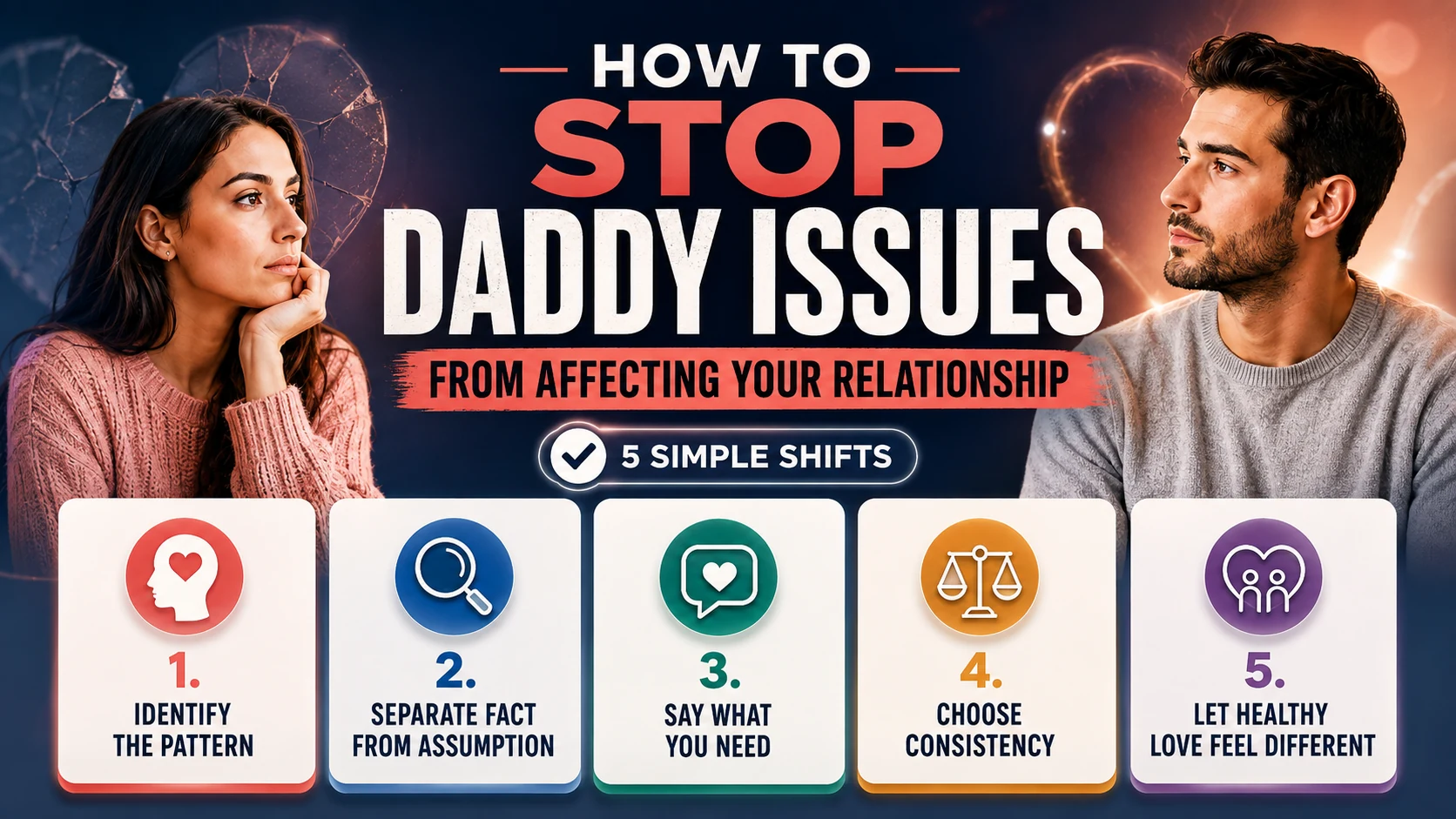
1. Identify the Pattern You Keep Repeating
Instead of saying:
“I have daddy issues.”
name the behaviour.
For example:
“When someone becomes distant, I chase them.”
“When I feel criticised, I shut down.”
“I stay even after trust is broken.”
A clear behaviour gives you something specific to work on.
2. Separate What Happened From What You Assumed
Notice the difference between the event and the meaning you immediately gave it.
What happened: They replied late.
What you assumed: They are losing interest.
That pause can stop one late reply from turning into an accusation, argument, or another reassurance cycle.
3. Say What You Need Directly
Do not test whether your partner cares by going silent, creating jealousy, threatening to leave, or waiting for them to chase you.
Say what is actually happening:
“I’ve felt disconnected this week. Can we spend some proper time together?”
Direct communication gives your partner something real to respond to.
4. Judge Partners by Consistency, Not Intensity
Strong chemistry does not tell you whether someone will be a good partner.
Look at:
- honesty
- reliability
- emotional availability
- respect for boundaries
- effort over time
- behaviour during conflict
If you keep confusing intensity with compatibility, look more closely at how to choose the right life partner.
5. Let Healthy Relationships Feel Different
Someone who replies consistently, keeps plans, communicates clearly, and does not make you chase them can actually feel less exciting at first if uncertainty is what you are used to.
A reliable relationship can show you that:
- disagreement does not mean abandonment
- needing help does not make you weak
- saying no does not end love
- spending time apart does not mean losing interest
You may still feel insecure sometimes. The difference is that a late reply, disagreement, or request for space no longer automatically decides what you do next.
Do You Need to Fix Your Relationship With Your Father?
No. Changing your adult relationship patterns does not require confronting your father, getting an apology, forgiving him, rebuilding contact, or repairing the relationship.
For some people, reconnecting helps. For others, distance or stronger boundaries are healthier.
You cannot change what happened with your father. You can change what you expect, tolerate, and do in relationships now.
When Therapy Can Help
Therapy is worth considering when you can already explain the pattern clearly but still keep choosing the same unavailable partners, chasing when someone pulls away, shutting down during conflict, becoming highly jealous, reacting strongly to criticism, or distrusting someone who has consistently treated you well.
Relationship counselling can help you work on what happens between you and your partner, while relationship anxiety and attachment therapy can help when reassurance-seeking, anxious reactions, avoidant behaviour, or difficulty with closeness keeps returning.
Therapy does not need to revolve around repeatedly analysing your father. The work can focus on what keeps happening in your relationships now and what you do differently when the same trigger appears again.
Final Thoughts
A difficult relationship with your father does not explain every problem in your dating life, marriage, or relationships.
But if you repeatedly chase unavailable partners, tolerate inconsistency, panic over normal distance, depend heavily on reassurance, or shut down when you feel criticised, your past may still be influencing how you respond to love now.
Understanding that connection is useful when it helps you change what you do next.
FAQs
Can Daddy Issues Affect a Healthy Relationship?
Daddy issues can affect a healthy relationship when old fears around rejection, criticism, closeness, or reassurance remain active even with a reliable partner. A stable relationship can still feel threatening when normal distance or disagreement is repeatedly interpreted as rejection.
Can You Have Daddy Issues If Your Father Was Present?
You can have daddy issues even if your father was physically present. Emotional distance, harsh criticism, control, unpredictability, or difficulty approaching him for comfort can affect a child even when the father lives in the same home.
Can Men Have Daddy Issues?
Men can have daddy issues. They can appear through extreme independence, emotional shutdown, sensitivity to criticism, difficulty asking for help, or a strong need to prove worth through achievement or approval from bosses, mentors, and older men.
Do Daddy Issues Make You Choose Emotionally Unavailable Partners?
Daddy issues can make emotionally unavailable partners feel familiar when attention or approval was inconsistent earlier in life. That does not mean every attraction to an avoidant or distant partner comes from your father relationship.
How Do You Heal Daddy Issues Without Talking to Your Father?
You can heal daddy issues without talking to your father by changing the relationship patterns affecting you now. Work on how you respond to rejection, criticism, reassurance, closeness, partner choice, and conflict rather than waiting for your father or the past to change.