
Last Updated on September 1, 2026
Clinically reviewed by Aradhana Gambhir, Senior Psychologist and Marriage Counsellor with 25+ years of experience.
Are you dating, married, or simply trying to understand the common green flags in a relationship? Expensive gifts, date nights, flowers and outings may feel special, but they do not prove that a relationship is healthy.
What matters more is how your partner treats you, cares for you and responds during disagreements, anger, stress or difficult situations. Do they listen and remain respectful, or use blame, pressure, insults or silence?
Below are 17 green flags in a healthy relationship, with real-life examples to help you understand the difference between genuine emotional maturity and behaviour that only looks good at first.
What Is a Green Flag in a Relationship?
In relationship counselling, a green flag is a repeated behaviour that shows your partner is respectful, honest, emotionally safe and willing to share the effort. It becomes clearer over time, especially in how they respond to boundaries, disagreements, mistakes and stressful situations.
The National Domestic Violence Hotline’s guide to relationship green flags also highlights communication, respect, trust, equality and consent.
17 Green Flags in a Healthy Relationship
Look for patterns that continue during daily life, disagreements and stress, not perfect behaviour. These examples of green flags in a relationship show everyday signs of a healthy relationship, whether you are in early dating or married.
1. Their Actions Match Their Words
You can generally rely on your partner without repeatedly reminding or chasing them.
- They call when promised or let you know they cannot
- They message before you leave home if they need to cancel
- They pay the bill or complete the household task they agreed to handle
- Their effort continues after the excitement of early dating
Occasional mistakes happen. Broken promises do not become the normal pattern.
2. You Can Disagree Without Being Insulted or Threatened
You can disagree about money, plans or responsibilities without the conversation becoming a personal attack.
Green flag examples include:
- If they interrupt, they notice and say, “Sorry, finish what you were saying”
- They do not use insults or breakup threats to win
- They discuss the current problem without bringing up past mistakes to win
Both partners can speak, even when neither agrees.
3. They Respect “No” Without Punishing You
Your partner accepts a refusal without repeatedly asking, pressuring you or making you feel guilty.
- They stop when you do not want to kiss or have sex
- You decline a family dinner, and they discuss going alone without guilt-tripping you
- They do not say, “If you loved me, you would do it”
Disappointment does not become pressure to change your answer.
4. They Take Responsibility Without Shifting Blame
Your partner can admit what they did wrong without making you responsible for their actions.
- They say, “I shouted at you,” rather than, “You made me shout”
- They listen to what hurt you without immediately listing your faults
- They do not use stress, alcohol or anger as an excuse
5. They Return to Difficult Conversations
Taking a break does not mean abandoning the issue.
- They say, “I need some time. Can we talk after dinner?”
- They return to the conversation rather than waiting for you to chase them
- They discuss what needs to happen next instead of pretending nothing happened
6. You Do Not Have to Constantly Prove Your Loyalty
A late reply or conversation with a colleague does not automatically lead to accusations.
- They do not demand screenshots or your phone password
- They do not require live location sharing whenever you go out
- They ask about a genuine concern without interrogating you
Reassurance can be discussed, but constant monitoring is not expected.
7. Online Boundaries Can Be Discussed Clearly
You can discuss messages, former partners and social media without assuming you both have the same expectations.
- You discuss what counts as flirting online or micro-cheating
- Contact with an ex can be discussed honestly
- Neither partner hides conversations that break an agreement
- Either person can raise a concern without being mocked
Privacy is respected; it is not treated as automatic proof of cheating.
8. Your Life Outside the Relationship Is Respected
Being together does not mean spending every free hour together.
- You can meet friends without an argument afterwards
- A busy workday is not treated as rejection
- You can attend a class, exercise or spend time alone without repeated calls
9. They Are Genuinely Happy When You Succeed
Your partner does not belittle your achievement because their own life is difficult.
Green flag examples include:
- They ask how your exam went and celebrate your result without comparing scores
- They do not make insulting comments because you earn more
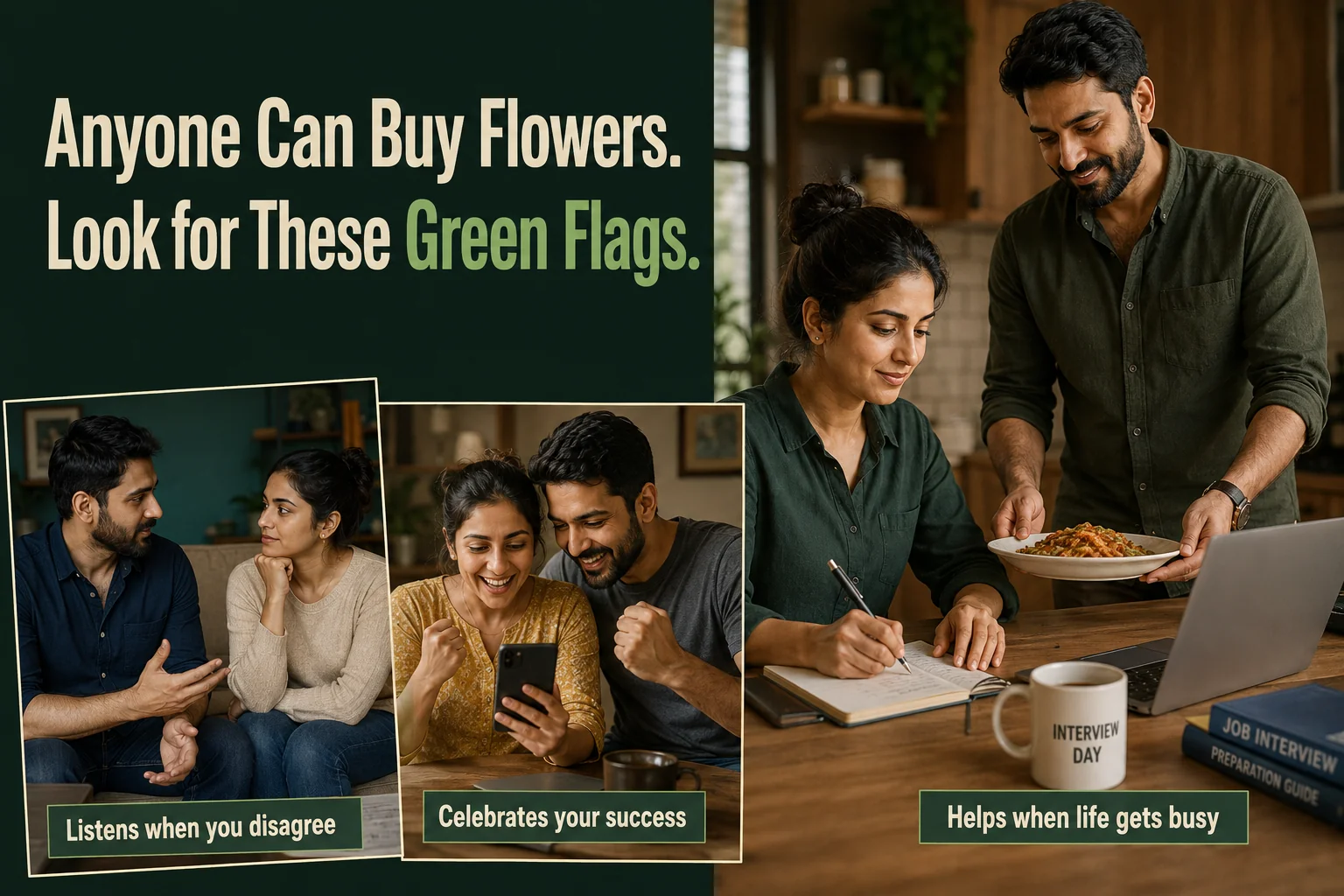
- They help with dinner or childcare when you need to prepare for an interview
They can discuss their own worries without making you feel guilty for succeeding.
10. They Speak Respectfully About You Around Others
You are not the target of jokes meant to impress friends or entertain family.
- They stop a joke when you say it hurts
- They do not mock your appearance, income or mistakes
- When family praises the meal, they mention that you both cooked
- They speak up when someone humiliates you
11. Family and Friends Do Not Control the Relationship
Advice can be considered, but decisions affecting both partners are discussed together.
- Your partner does not agree to move homes or lend shared savings without asking you
- A parent’s demand does not automatically override your agreement
- They can tell relatives, “We need to decide this together”
12. Money Can Be Discussed Without Secrecy or Control
You can discuss bills, spending and savings without intimidation.
- Debts affecting shared finances are not hidden
- You agree on how to divide expenses
- Neither partner takes the other’s salary or restricts access to money
- Earning more does not mean having the final say
Openness about shared money helps prevent the secrecy involved in financial infidelity.
13. They Ask What Support You Need
Your partner checks what would help instead of assuming they should fix everything.
- They ask, “Do you want advice or just someone to listen?”
- When you are overwhelmed, they ask, “Would it help if I collected the children?”
- They ask before calling your family, friend or colleague about the problem
14. Affection Is Not Used as a Reward
Your partner does not make warmth or attention conditional on getting their way.
- They do not say, “I’ll talk to you when you agree”
- They remain considerate after you decline a request
- If they need space, they explain rather than keeping you guessing
Nobody owes physical affection. What matters is that it is not used to bargain, pressure or punish.
15. Private Information Is Never Used as a Weapon
Something you shared in confidence does not become ammunition during an argument.
- Your insecurities or past trauma are not used to insult you
- They do not threaten to expose private messages or photos
- Personal confessions are not shared to embarrass you
Seeking trusted support is different from gossiping or threatening exposure.
16. Apologies Lead to Behavioural Change
You notice a difference after explaining what hurt you.
- The personal joke stops after you ask
- They stop repeating your private arguments in a group chat
- They notice when they repeat a mistake and correct it
- Gifts do not replace addressing the problem
Change may take practice, but another apology is not the only thing that happens.
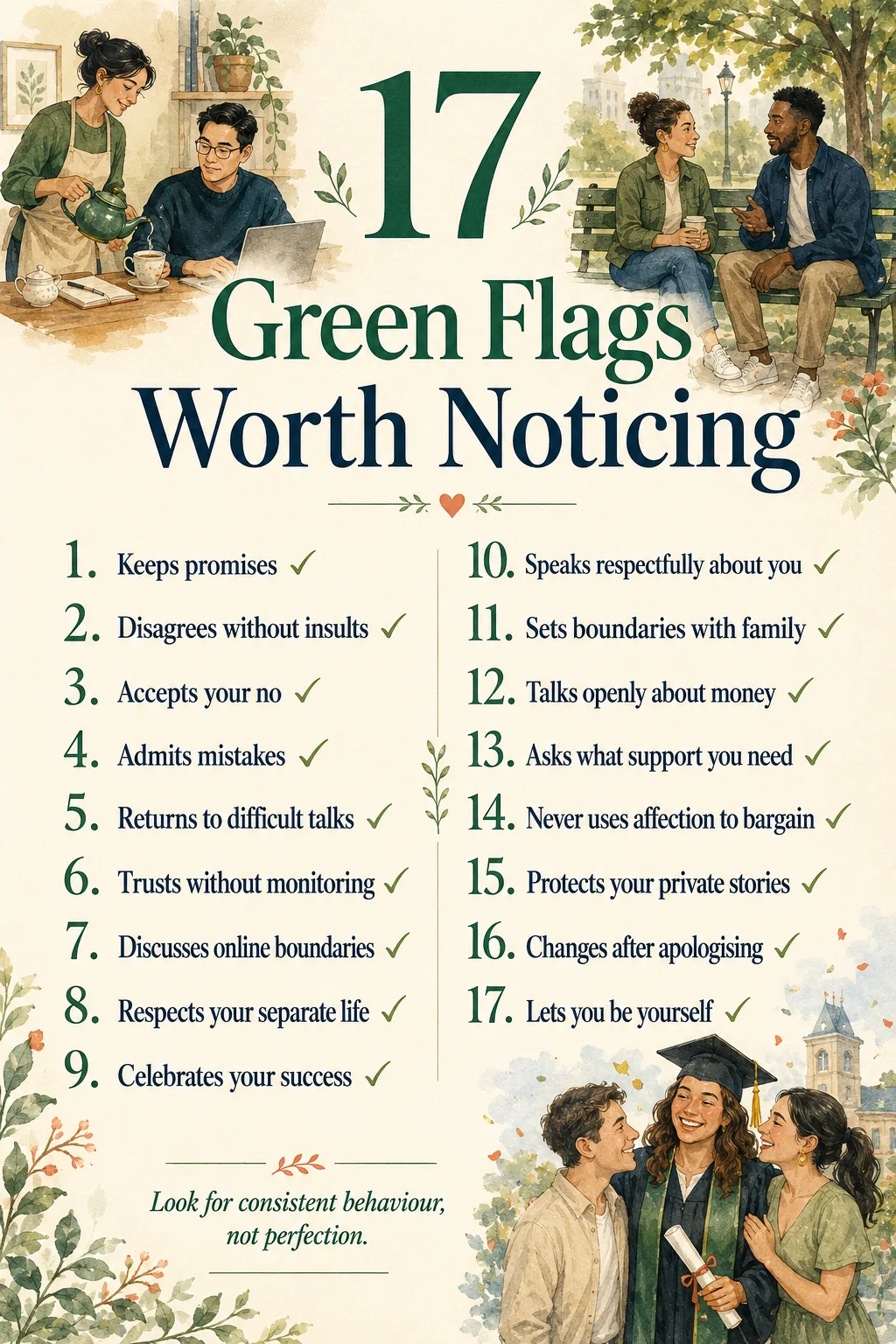
17. You Feel More Like Yourself, Not Smaller
You do not constantly edit your personality to avoid your partner’s reaction.
- You can express an opinion they disagree with
- You choose your clothes without fearing insults
- You can admit you are unsure or need help
- You can be quiet, excited or upset without being mocked
You make room for each other without giving up your voice.
Note: Do not expect perfection from your boyfriend, girlfriend, husband or wife or yourself. Notice which green flags appear consistently, and ask what you bring to the relationship too. More of these behaviours can support healthier dating and married life, but this is not a pass-or-fail test. Good qualities do not cancel out threats, control or abuse.
Can Someone Fake Green Flags?
Yes. Some people show their best behaviour while pursuing you, during early dating or at the start of marriage. Over time, notice whether that care continues. Calls may become an annoyance, dates may repeatedly get cancelled, or friendships they once accepted may suddenly cause arguments.
Changes alone do not prove someone was pretending. Look at whether they discuss what has changed and still treat you with respect.
Final Thoughts
Relationship green flags show up in everyday behaviour, not just gifts, dates or promises.
If your relationship has changed or you feel unsure during early dating, a couples therapist can help you understand your concerns.
LeapHope offers online support through qualified, experienced couples therapists for individuals and couples worldwide, using structured, clinician-led and culturally aware approaches.
FAQs
What is the biggest green flag in a relationship?
One of the biggest green flags in a relationship is emotional safety: you can say no, admit a mistake or raise a concern without fearing threats, humiliation or retaliation. There is no single clinically ranked “biggest” green flag. Look for respect, accountability and consistent behaviour together.
What are green flags in a new relationship?
Green flags in a new relationship include following through on plans, being clear about intentions and respecting your pace. Notice their response when you cannot meet, disagree or decline physical closeness. Accepting your answer without repeated pressure tells you more than frequent messages or expensive dates.
What are green flags in a man or boyfriend?
Green flags in a man or boyfriend include respecting your decisions, discussing feelings without ridicule and taking responsibility for his behaviour. He does not treat earning more, paying for dates or being jealous as a right to control you. His care continues when you disagree or need something different from him.
What are green flags in a woman or girlfriend?
Green flags in a woman or girlfriend include expressing her needs directly, sharing responsibility and respecting your limits. She can discuss disappointment without expecting you to guess what is wrong or prove your love through money, constant availability or giving up friendships. These standards apply equally to every gender.
Can a healthy relationship still have arguments?
A healthy relationship can still have arguments about money, family, parenting or time together. The important distinction is how disagreements are handled: both partners can speak, take a break without punishment and return to discuss a solution. Repeated threats, intimidation or humiliation are not simply normal arguments.
How do you know if someone is faking green flags?
You cannot know for certain whether someone is faking green flags from a few dates or one change in behaviour. Look for repeated differences between promises and actions, especially after you set a boundary. When you raise the concern, do they acknowledge it and change, or briefly become attentive before repeating the same behaviour?