
Online anxiety counselling and therapy

Online Anxiety Counselling and Therapy for Adults

You do not have to keep arranging your life around anxiety.

Work online with psychologists and therapists who understand the thoughts, body alarms, avoidance, attachment fears and behavioural patterns that can keep anxiety going. Sessions provide structured, practical support based on how anxiety affects your everyday life.

Qualified professionals 50-minute online sessions Sessions from ₹1,799

Specialist online anxiety therapy for adults in India and NRIs worldwide.

Woman speaking with a psychologist during an online anxiety counselling session
LIVE HUMAN SUPPORT A session shaped around your anxiety pattern
Persistent worry Overthinking Panic patterns Social and performance anxiety Health anxiety Relationship anxiety

Why anxiety keeps returning

How an Anxiety Cycle Can Keep Repeating

Anxiety is not always caused by one thought or situation. A trigger activates the mind and body, a protective response brings temporary relief, and that relief can make the same anxiety pattern easier to repeat. Online anxiety counselling helps identify where this cycle can begin to change.

01

Trigger

A meeting, physical sensation, uncertain situation, memory, relationship change or difficult thought activates concern.

02

Anxious Prediction

The mind anticipates danger, rejection, failure, illness, loss of control or another unwanted outcome.

03

Mind and Body Alarm

Tension, urgency, racing thoughts, a fast heartbeat, breathlessness or mental noise make the prediction feel more convincing.

04

Protective Response

Avoiding, checking, controlling, escaping or seeking reassurance provides short-term relief but may keep the anxiety cycle active.

Therapy enters here

Sessions help you recognise the cycle, understand what maintains it and practise responses that support new learning instead of another round of temporary relief.

Understand what maintains anxiety

Specialist Therapy for Different Anxiety Patterns

Two people may both say “I feel anxious” while experiencing very different cycles. Specialist anxiety counselling looks beyond the visible symptoms to understand how thoughts, behaviours, relationships and body responses may be maintaining the difficulty.

01

The Psychological Pattern

Catastrophic predictions, perfectionistic rules, self-doubt and the need to feel completely certain can keep the mind scanning for what might go wrong. Therapy helps examine these interpretations without simply replacing them with forced positive thoughts.

Worst-case thinking Overthinking Rumination Fear of uncertainty
02

The Behavioural Pattern

Avoiding, repeatedly checking, overpreparing, escaping or seeking reassurance may bring quick relief. That relief can unintentionally teach the brain that the situation really was dangerous and that the same protective response is needed again.

Avoidance Checking Reassurance seeking Safety behaviours
03

The Attachment Pattern

Fear of rejection, abandonment, conflict or disappointing someone can turn closeness into constant monitoring. Attachment-informed therapy explores how earlier relational experiences and current emotional needs influence anxiety in relationships.

Fear of rejection Relationship anxiety Hypervigilance Need for reassurance
04

The Body-Alarm Pattern

A racing heart, tight chest, dizziness, sweating or breathlessness can become frightening in themselves. Fear of another sensation or panic-like episode can then increase body monitoring and create another layer of anxiety.

Panic sensations Body scanning Fear of fear Nervous-system activation

Anxiety patterns often overlap. Your therapist develops a working understanding of how these elements interact in your life and chooses practical methods around that individual pattern.

Choose with clarity

Choose an Online Psychologist or Therapist for Anxiety

Work with a qualified professional who understands how anxiety can influence thoughts, physical sensations, behaviour, relationships, work and everyday decisions. Online anxiety counselling is available for adults living in India and Indians living abroad.
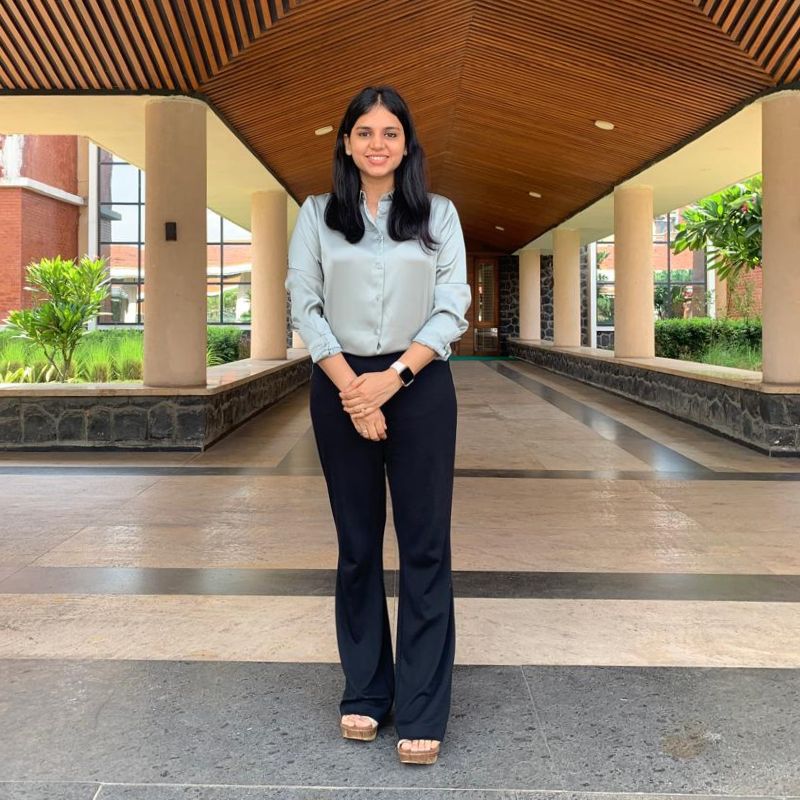
AvailableMansi More Nopany, RCI-licensed clinical psychologist for adult anxiety counselling

Clinical anxiety formulation

Mrs. Mansi More Nopany

RCI-Licensed Clinical Psychologist

Licensed and verified · RCI CRR No. A66434

Mansi works with adults experiencing persistent anxiety, panic-like episodes, emotional distress and psychological patterns that continue despite repeated attempts to manage them. She examines how anxious thoughts, body sensations, avoidance, relationships and earlier experiences interact. This clinical understanding is then used to develop structured therapy goals and practical ways of responding differently.
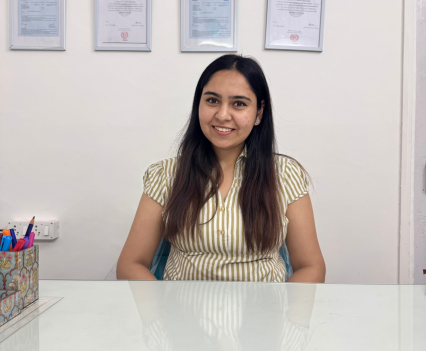
Professional focus Clinical anxiety therapy
View availability
AvailableBipasha Sharma, RCI-licensed psychologist for adult anxiety and overthinking

Insight and behavioural change

Bipasha Sharma

Counselling and Developmental Psychologist

Licensed and verified · RCI CRR No. A100506

Bipasha supports adults dealing with overthinking, emotional overwhelm, self-doubt and anxiety within relationships. Her work helps clients recognise the beliefs and protective behaviours behind recurring distress. She draws from CBT, mindfulness and integrative therapy to build insight while introducing realistic changes that can be practised in relationships, work and everyday decision-making.
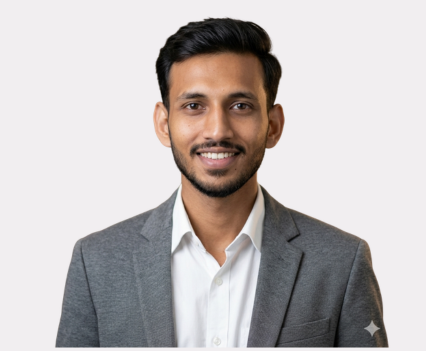
Professional focus Overthinking and relationships
View availability
AvailableMohit Yadav, RCI-licensed clinical psychologist for adult anxiety therapy

Structured psychological therapy

Mohit Yadav

RCI-Licensed Clinical Psychologist

Licensed and verified · RCI CRR No. A100623

Mohit works with adults whose anxiety may occur alongside low mood, attention difficulties, relationship strain or disruption in everyday functioning. He uses structured psychological methods to understand how symptoms affect routines, motivation, work and personal relationships. Sessions focus on clear goals, evidence-based techniques and reviewing what is changing outside therapy.

Professional focus Structured anxiety therapy
View availability
AvailableK S Veena, RCI-registered mental health counsellor for adult anxiety

CBT-informed anxiety support

K. S. Veena

RCI-Registered Mental Health Counsellor

Licensed and verified · RCI CRR No. A63961

Veena helps adults understand the connection between anxious thoughts, emotional reactions and the behaviours used to obtain immediate relief. Her CBT-informed counselling combines supportive conversation with practical work on emotional regulation, avoidance and unhelpful coping patterns. The aim is to develop responses that can be applied between sessions and in real-life situations.

Professional focus CBT-informed counselling
View availability
AvailableAmritha, counselling psychologist and CBT practitioner for adult anxiety

CBT and mindfulness

Ms. Amritha

Counselling Psychologist and Certified CBT Practitioner

Qualification and CBT training verified

Amritha supports adults experiencing anxious thoughts, stress, emotional overwhelm and difficulty switching off mentally. She uses CBT, mindfulness and neurodivergent-affirming approaches to help clients organise difficult thoughts and understand emotional triggers. Techniques can be adapted around individual communication, learning and sensory preferences.
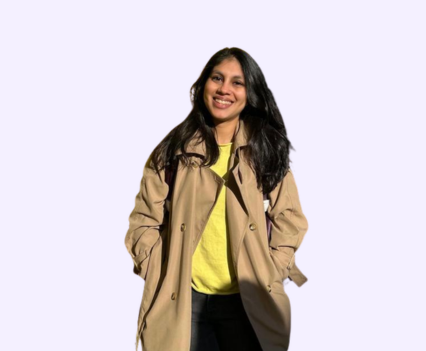
Professional focus CBT and mindfulness
View availability
AvailableTaarini Murthy, expressive arts therapist for adult anxiety and emotional overwhelm

Expression beyond words

Taarini Murthy

Expressive Arts Therapist — Art and Movement

Qualification and professional profile verified

Taarini supports adults who experience anxiety through emotional overwhelm, physical tension or difficulty explaining what they feel through conversation alone. She integrates art, movement and reflective therapeutic work to explore emotional experiences, increase body awareness and develop ways of regulating distress without requiring every experience to be expressed verbally.

Professional focus Art and movement therapy
View availability

Professional titles and registrations are displayed according to the information held by each therapist. Training, scope and suitability may differ between professionals.

Client experiences

Professional Support That Feels Human

100+ client reviews
across LeapHope services

Clients often value counselling that balances careful listening with practical guidance. Here are experiences shared by people who have used LeapHope’s adult counselling and psychology services.

There is a good balance between being understood and being guided. I never felt judged, but I was also gently encouraged to reflect.
Adult counselling client Shared directly · Identity withheld
Sessions felt structured without being rigid. I was able to understand my thoughts more clearly and handle difficult situations more calmly.
Adult counselling client Shared directly · Identity withheld
I was never rushed during sessions. There was space to think and talk, and the insights I received felt thoughtful and practical.
Clinical psychology client Shared directly · Identity withheld
Sessions at LeapHope felt calm and comfortable. I have noticed that I now handle difficult thoughts and situations much better.
Public reviewer Review published on Google

Reviews describe individual experiences with LeapHope’s adult counselling and clinical psychology services. Personal experiences vary and no specific therapeutic outcome is guaranteed.

A structured working process

How Online Anxiety Counselling Sessions Work

Anxiety counselling is more than discussing what happened during the week. Your therapist helps identify the thoughts, physical reactions, behaviours and relationship experiences that form your anxiety pattern. This approach reflects LeapHope’s wider commitment to professional online counselling and psychological support .
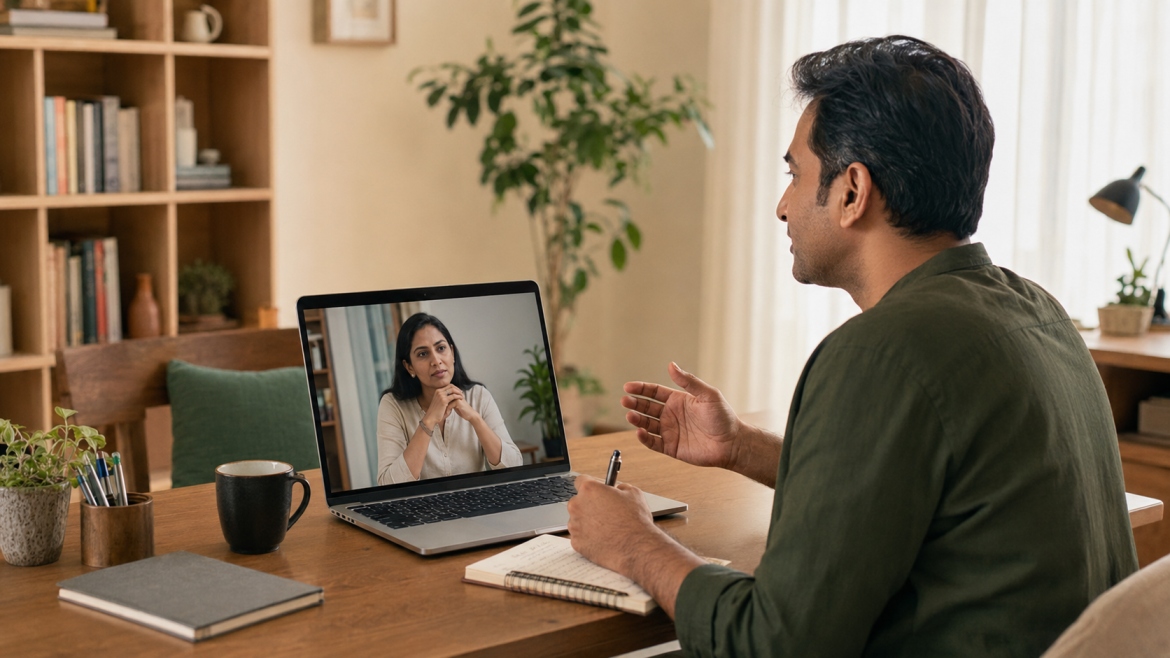
Adult attending an online anxiety counselling session with a psychologist
Online anxiety session Talk · Understand · Practise · Review
“The aim is not to argue with every anxious thought. It is to understand the pattern well enough to respond differently.”
Your session map Shaped around your anxiety pattern
01

Notice what activates anxiety

Explore what was happening before the worry, body alarm, overthinking or urge to avoid became stronger.

02

Map the complete pattern

Connect thoughts, physical sensations, emotions, memories, relationship cues and the current situation.

03

Understand the protective response

Identify avoidance, checking, reassurance, control or other actions used to obtain immediate relief.

04

Practise a suitable technique

Use a psychological method or behavioural experiment selected for the pattern being addressed.

05

Review what changed

Discuss what helped, what remained difficult and how the next step should be adjusted.

Choose before you book. Compare qualifications, professional backgrounds and approaches on our therapist page.

Explore psychologists

Methods used with a clear purpose

Evidence-Based Anxiety Therapy Methods and Techniques

Anxiety therapy should not rely on one standard technique for every person. Your therapist considers the anxiety pattern, current difficulties, personal preferences and agreed goals before choosing suitable psychological and behavioural methods.

01

Cognitive Behavioural Therapy

Work with anxious predictions, interpretations and behaviour cycles.

CBT can help you recognise habitual interpretations, examine anxious predictions and reduce behaviours that keep fear active. Sessions may include thought monitoring, behavioural experiments, gradual practice and reviewing what happened rather than relying only on what anxiety predicted.

02

Acceptance and Commitment Therapy

Respond differently to difficult thoughts and internal experiences.

ACT-informed work can help reduce the constant struggle to remove every anxious thought or uncomfortable feeling. It focuses on psychological flexibility, observing thoughts with greater distance and making choices guided by meaningful values rather than immediate anxiety relief.

03

Exposure and Behavioural Experiments

Build new learning by approaching avoided experiences gradually.

When appropriate, gradual exposure can help reduce avoidance and test what happens when familiar safety behaviours are changed. Practice is planned collaboratively and progresses at a purposeful pace. It is not about forcing someone into a feared situation without preparation.

04

Attachment-Informed Therapy

Understand anxiety connected with closeness, rejection and safety.

Attachment-informed therapy explores how earlier and current relationships influence emotional security. It may be useful when anxiety appears through fear of rejection, sensitivity to distance, conflict avoidance, repeated reassurance seeking or difficulty trusting that relationships are secure.

05

Grounding and Regulation Skills

Develop practical responses for intense activation and body alarms.

Grounding, breathing, relaxation and attention-based techniques may support adults during periods of high activation. These skills are used thoughtfully rather than presented as a complete cure or another way to immediately escape every uncomfortable physical sensation.

06

Mindfulness and Attention Training

Notice mental activity without becoming absorbed by every thought.

Mindfulness-based techniques can help you notice worry, mental checking and body scanning earlier. The purpose is not to empty the mind but to strengthen the ability to redirect attention and allow thoughts to pass without automatically treating them as urgent instructions.

Progress that matters

What Progress in Anxiety Therapy Can Look Like

Progress does not mean never feeling anxious. It may mean anxiety becomes less controlling, recovery becomes quicker and important choices are no longer made only to obtain immediate relief.

Woman returning to everyday life with greater confidence following anxiety counselling
More room for life Not a promise of never feeling anxious
01

More Choice

Pausing before automatically avoiding, checking or seeking reassurance when anxiety rises.

02

Better Recovery

Returning to balance more effectively after difficult thoughts, emotions or physical sensations.

03

Wider Living

Re-entering conversations, responsibilities and experiences that anxiety had gradually narrowed.

04

Clearer Self-Trust

Making decisions without waiting for impossible certainty or constant approval from others.

No responsible therapist can promise a fixed outcome or timeline. Progress is reviewed collaboratively and the counselling plan is adjusted where needed.

Start with the right professional

Book an Online Anxiety Consultation

Review therapist qualifications, professional experience, availability and session fees before deciding. Online anxiety counselling is available for adults living in India and Indians living abroad.

Online counselling session ₹1,799 50-minute private session
Clinical psychologist ₹2,799 50-minute private session
Compare anxiety specialists

Private online appointment · Booking times are displayed in your selected time zone

Questions before beginning

Online Anxiety Counselling for Indians and NRIs

Clear answers about cultural understanding, privacy, video sessions, time zones and choosing the right anxiety therapist.

01

Can online counselling genuinely help with anxiety?

Online counselling can provide structured psychological support for anxious thoughts, avoidance, panic patterns, reassurance seeking and emotional overwhelm. The therapist can explore your pattern, teach suitable techniques and review how these changes work in everyday situations.

02

What if I feel awkward talking to a therapist on video?

Feeling hesitant in the first session is common. You do not need to explain everything perfectly or disclose your complete history at once. The therapist can begin with what is affecting you now and help the conversation develop at a manageable pace.

03

Will the therapist understand Indian family and social expectations?

LeapHope’s Indian psychologists understand how anxiety may interact with family involvement, marriage expectations, career pressure, caregiving roles, social comparison and difficulty establishing personal boundaries. These circumstances can be discussed without assuming that every Indian family experience is identical.

04

Can NRIs discuss anxiety connected with living away from India?

Yes. Sessions can explore loneliness, migration stress, cultural adjustment, demanding work environments, relationship changes, ageing parents in India and the pressure of managing responsibilities across countries. Therapy remains focused on your individual circumstances rather than applying a general NRI label.

05

How can I attend privately if I live with family or shared accommodation?

You can attend from a private room, parked car or another quiet place with a stable internet connection. Headphones can provide additional privacy. Choose a setting where you can speak comfortably without driving or managing another task during the appointment.

06

My family does not believe in therapy. Can I still begin counselling?

Adults can seek counselling for their own emotional wellbeing without first persuading every family member that therapy is necessary. Your therapist can also help you think through privacy, boundaries and how much you want to share with people close to you.

07

Can I attend sessions from outside India or across different time zones?

LeapHope provides online appointments for Indians living in India and abroad. Available times are displayed in your selected time zone, helping NRIs compare appointments without manually converting every session from Indian Standard Time.

08

Do I need to know exactly what is causing my anxiety?

No. Many people begin counselling knowing only that they feel tense, mentally exhausted, fearful or unable to stop overthinking. Your therapist can help organise these experiences and identify possible triggers, maintaining patterns and practical therapy goals.

09

How do I choose between a clinical psychologist and a counsellor?

Consider the professional’s qualifications, registration, experience and anxiety focus. A clinical psychologist may be preferred for more complex or persistent psychological concerns, while a suitably trained counsellor may support anxiety, stress and emotional difficulties. You can compare the therapist profiles before booking.

10

What if I do not connect with the first therapist I choose?

A useful therapeutic relationship should allow you to feel heard, respected and able to discuss the direction of sessions. If the fit does not feel right, you can review what is missing and consider another qualified professional whose style better suits your needs.

11

Can I continue online anxiety counselling when I travel or move countries?

Online sessions can make continuity easier when work, travel or relocation changes your routine. Tell your therapist where you will be attending from and confirm availability for the new time zone before scheduling the next appointment.

12

How many anxiety counselling sessions should I book initially?

You can begin with one consultation rather than committing to a fixed package. The therapist can understand your current concerns, discuss suitable goals and explain how further sessions may be structured. The total duration depends on your pattern and progress.

Still unsure who to choose?

Compare professional qualifications, anxiety focus and therapeutic approaches before scheduling a session.

Compare anxiety therapists
Scroll to Top