Relationship anxiety · attachment patterns · emotional security

Online Therapy for Relationship Anxiety & Attachment Issues

Relationships can feel confusing when you keep fearing they will leave, need repeated reassurance, overanalyse small changes, or do the opposite and pull away when someone gets too close. LeapHope psychologists help you understand the relationship and attachment patterns behind these reactions and work on healthier ways of handling closeness, distance, trust and uncertainty.

Qualified psychologists with relationship & attachment experience
Anxious · Avoidant · Fearful-avoidant patterns
India · NRIs · International clients
Sessions starting from ₹1,799
CBT · Attachment-informed · Relationship-focused approaches
Private 50-minute online sessions
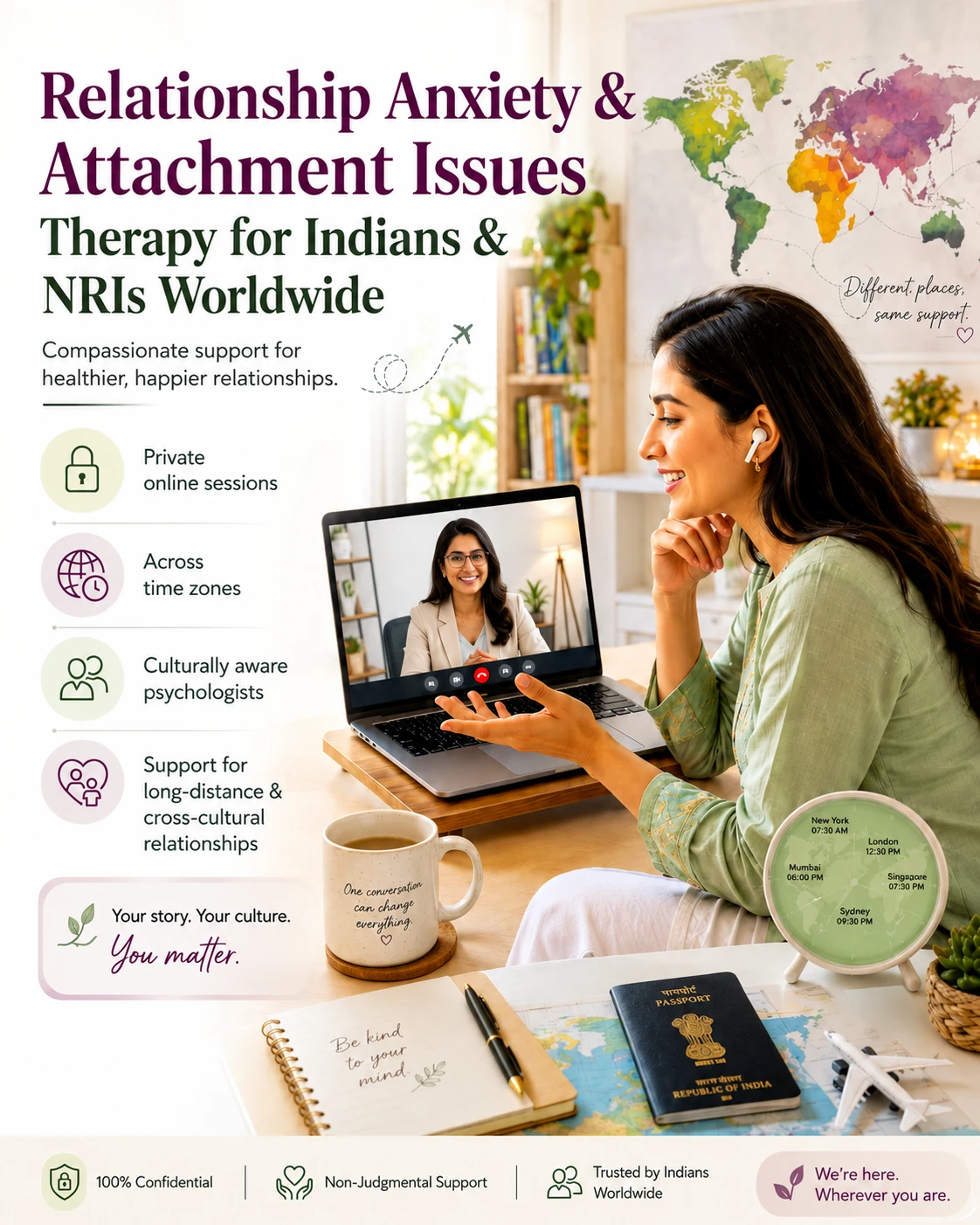
Adult discussing relationship anxiety and attachment issues with a psychologist online
Understand your relationship & attachment pattern Closeness · distance · reassurance · withdrawal
India · NRIs · Worldwide

Assessment · formulation · evidence-informed psychological care

Psychologists for Relationship Anxiety & Attachment Therapy

Therapy at LeapHope is not based on assigning you a quick attachment label. Our psychologists look at the wider clinical and relationship picture, build an individual formulation, and choose therapeutic methods according to what is relevant for you.

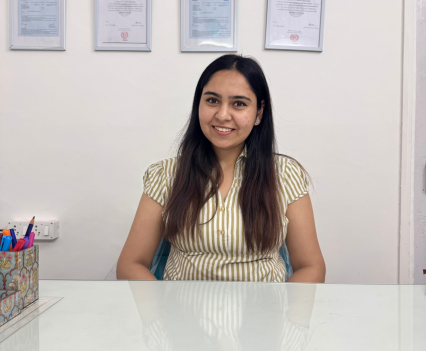
Mansi More Nopany, RCI registered clinical psychologist at LeapHope Available online

Clinical Psychologist

Mrs. Mansi More Nopany

RCI-Registered · 9+ years of clinical experience

Clinical Assessment & Formulation

PhD Scholar · M.Phil. Clinical Psychology · Couple & Family Therapy · Gottman Method · CBT · DBT · MBCT

Languages: Hindi, English

Mansi works from a clinical formulation-based approach. Assessment considers the person's current relationship context, recurring interpersonal patterns, responses to closeness and distance, emotional regulation, beliefs, coping responses, relevant history and other psychological factors before deciding the direction of therapy.

Her therapeutic work can integrate attachment-informed formulation with CBT, DBT, MBCT, Couple and Family Therapy and Gottman-informed relationship work. The approach is selected from the clinical formulation rather than applying one model to every client.

  • Clinical assessment
  • Case formulation
  • Attachment-informed work
  • Gottman · CBT · DBT · MBCT
50-minute private session ₹2,799 International appointments available
Clinical approach Assessment-led, integrative and relationship-informed psychological care.
Book With Mansi
Mohit Yadav, RCI registered clinical psychologist at LeapHope Available online

Clinical Psychologist

Mohit Yadav

RCI-Registered · Clinical Psychology

Structured Psychological Interventions

CBT · Behaviour Therapy · Emotional Regulation · Relaxation Training · Structured Psychological Interventions

Languages: Hindi, English

Mohit uses a structured clinical approach that examines the relationship between thoughts, emotional responses, behavioural patterns and situational triggers. The initial formulation helps identify which processes are maintaining distress and which therapeutic strategies are most relevant.

His work can draw from CBT, behaviour therapy, emotional-regulation strategies, relaxation training and structured psychological interventions. Sessions are organised around observable patterns, therapeutic goals and practical changes that can be reviewed over time.

  • Clinical formulation
  • CBT-based work
  • Behaviour therapy
  • Structured interventions
50-minute private session ₹1,799 International appointments available
Clinical approach Structured, CBT-informed and behaviour-focused psychological work.
Book With Mohit
Swati Sharma, relationship therapist at LeapHope Available online

Mental Health & Relationship Therapist

Ms. Swati Sharma

PhD Scholar · 5+ years of experience

Couple & Relationship Formulation

PG in Counselling Psychology · Couple Therapy · Family Therapy · CBT · Behavioural Interventions

Languages: English, Hindi, Assamese

Swati uses a relationship-focused formulation that considers the individual as well as the interaction between partners. Therapy can examine communication patterns, emotional responses, expectations, boundaries, relational roles and the way each person's responses influence the wider relationship system.

Her work draws from counselling psychology, Couple Therapy, Family Therapy, CBT and behavioural interventions. This allows individual psychological processes and couple-level interaction patterns to be considered together when clinically appropriate.

  • Relationship formulation
  • Couple therapy
  • Family therapy
  • CBT & behavioural work
50-minute private session ₹2,799 International appointments available
Therapeutic approach Relationship-focused, systemic and integrative psychological work.
Book With Swati
Bipasha Sharma, psychologist at LeapHope Available online

Counselling & Developmental Psychologist

Bipasha Sharma

RCI-Registered · 8+ years of experience

Cognitive & Behavioural Formulation

PhD Scholar · CBT · Behaviour Therapy · Mindfulness · Psychological First Aid

Languages: Hindi, English

Bipasha takes a counselling and developmental perspective while using structured cognitive and behavioural methods. Formulation can examine how interpretations, beliefs, learned responses, emotional processes and interpersonal experiences interact within the person's present relationship context.

Her therapeutic work can combine CBT, behaviour therapy and mindfulness-based strategies, with interventions selected according to the person's formulation and therapeutic goals rather than a fixed attachment-style programme.

  • Cognitive formulation
  • CBT
  • Behaviour therapy
  • Mindfulness-based work
50-minute private session ₹1,799 International appointments available
Therapeutic approach CBT-informed, behavioural and mindfulness-based psychological work.
Book With Bipasha

Compare LeapHope psychologists by qualifications, clinical background, therapeutic approaches, languages, fees and appointment availability.

View All LeapHope Psychologists

Relationship anxiety & attachment therapy experiences

When Relationship Patterns Start Affecting How You Think, Trust & Respond

Afraid to lose the relationship
I knew some of the things happening in my relationship were disrespectful, but the thought of losing him felt even worse. I kept adjusting, apologising and accepting things I would normally tell someone else not to accept. Therapy helped me understand why being left felt so threatening and why I was giving up so much of myself just to keep the relationship.
Individual therapy client India · Anonymised feedback
Distance turns into overthinking
If my partner became quiet or less affectionate for even a day, I could not concentrate on anything else. I would replay our conversations, check when they were online and keep thinking about what I had done wrong. Reassurance helped for a while, but the fear always returned. Therapy helped me recognise the cycle instead of treating every change as proof I was being left.
NRI therapy client United Kingdom · Anonymised feedback
Friends, colleagues & fear of cheating
Whenever my partner went out with friends or spent more time with a colleague, my mind would immediately go to cheating. I would imagine them getting closer to someone else, compare myself and ask too many questions when they came home. Even when there was no clear evidence, the fear felt completely real in that moment. Therapy helped me understand why ordinary independence felt so threatening to me.
NRI therapy client United Arab Emirates · Anonymised feedback
Long-distance relationship anxiety
Being in different countries made every small gap feel much bigger. A missed call, a late reply or a night out could turn into hours of overthinking. I started organising my day around when my partner would be available. My psychologist helped me separate what genuinely needed a conversation from what my anxiety was adding to the situation.
NRI therapy client Canada · Anonymised feedback
Too attached, then more distance
My mood started depending completely on the relationship. I wanted constant contact, reassurance and time together, and when my partner wanted space I felt rejected. Eventually my need to feel closer was actually creating more distance between us. Therapy helped me understand that caring about someone and needing constant proof of the relationship were not the same thing.
International therapy client Australia · Anonymised feedback
Caring but feeling emotionally distant
I cared about my partner and did not want to hurt them, but I often felt detached when they wanted more emotional closeness. The more they asked me to open up, the more I wanted to withdraw. I used to assume that meant I did not love them enough. Therapy helped me look more carefully at what happened inside me when intimacy increased.
International therapy client United States · Anonymised feedback
Hard to trust again
My current partner had not betrayed me, but I kept expecting it. I questioned small things, noticed every inconsistency and found it very difficult to relax in the relationship. I knew some of the fear came from what had happened before, but knowing that logically did not stop the reaction. Therapy helped me separate the current relationship from what I was carrying into it.
International therapy client Singapore · Anonymised feedback
Wanting closeness, then pushing away
When my partner became distant I desperately wanted to reconnect. But once things felt close again, I sometimes became cold, irritated or wanted space. I could not understand how I was both afraid of losing the relationship and also the person creating distance. Therapy helped me see that both reactions were part of the same pattern I needed to understand.
International therapy client New Zealand · Anonymised feedback
1 / 3

Swipe to view more client experiences

Client experiences are anonymised and may be lightly edited for privacy and readability. Relationship circumstances, therapy needs, progress and outcomes differ between individuals. Therapy does not assume every concern is caused by attachment or anxiety.

Relationship insecurity · attachment · closeness & distance

How Relationship Anxiety & Attachment Issues Can Show Up

You may recognise yourself in several of these, not just one attachment style.

Real thoughts and situations people bring to therapy

Even when everything is going well, I keep thinking they might leave me
If my partner feels slightly distant, I immediately think something has changed between us
? I keep wondering whether they still love me as much as they did before
I am always scared they will eventually find someone better than me
! After an argument, I cannot relax until I know for certain that we are okay
I know I am being treated badly sometimes, but losing the relationship feels even harder
I keep compromising on things that hurt me because I am scared that saying no will push them away
I tolerate disrespect that I would never tell a friend to tolerate
They already told me everything is fine, but I still need to ask again
Reassurance makes me feel better for a while, but the doubt always comes back
I want to talk throughout the day and feel rejected when my partner wants time alone
I keep checking whether they are online when they have not replied to me
My whole mood changes depending on how affectionate or responsive my partner is that day
The more I try to feel close to my partner, the more I seem to push them away
I replay conversations for hours trying to work out whether their feelings have changed
I analyse the exact words they used, their tone and how long they took to reply
? One different message can make me question the entire relationship
At night I imagine everything that could be going wrong in the relationship
I keep searching online to work out whether my relationship is healthy or whether my partner has lost interest
I overthink so much that I eventually cannot tell what I genuinely feel anymore
If my partner spends a lot of time with a colleague, my mind immediately goes to cheating
When they go out with friends without me, I start imagining what might be happening
I compare myself with the people my partner works with or spends time around
? If they mention someone often, I start wondering whether there is something between them
I check social media or online activity looking for clues that they might be hiding something
! Even when I have no clear evidence of cheating, the fear feels completely real in that moment
I ask questions that sound like an interrogation because I am trying to feel safe
I want to trust my partner, but part of me is always waiting to discover something
Long distance makes every missed call or late reply feel much bigger than it probably is
I cannot sleep properly when my partner is out at night in another country and I do not know what they are doing
I keep watching their online status because messaging is the only way I know we are still connected
I organise my day around when my partner will be available to call
? I cannot tell whether distance is making me anxious or whether the relationship really is changing
When my partner builds a social life abroad without me, I feel like I am slowly being replaced
I care about my partner, but when they want more emotional closeness I automatically pull away
I can love someone and still feel strangely detached from them
When conversations become emotional, I shut down and just want them to stop
The closer someone gets to me, the more I start noticing reasons why the relationship may not work
People tell me I am emotionally unavailable, but I do not know why opening up feels so uncomfortable
I feel safer relying on myself than needing another person emotionally
× When my partner asks me what I need emotionally, I genuinely do not know what to say
After conflict I want distance, while my partner wants to talk immediately
I want a deep relationship, but being truly vulnerable with someone scares me
I want commitment until the relationship actually starts becoming serious
? When my partner talks about marriage or the future, I suddenly start questioning my feelings
I worry that being in a serious relationship means losing my independence
I find physical closeness easier than talking honestly about what I feel
I keep choosing people who are unavailable and then feel uncomfortable when someone is actually available
When they pull away I desperately want closeness, but when they get close I suddenly need space
I am terrified of losing the relationship, but I am also often the one creating distance
One day I want reassurance and the next day I do not want my partner near me
? I cannot tell whether I want to leave or whether closeness itself is making me uncomfortable
I crave emotional connection but start distrusting it once I actually have it
My relationships keep repeating the same cycle of closeness, conflict, distance and reconnecting
My current partner has not betrayed me, but I keep expecting what happened in my last relationship to happen again
! I notice every small inconsistency because I am scared I will miss the signs again
I know logically that this is a different person, but emotionally I still struggle to trust them
I sometimes test my partner because I need proof that they will not leave when things become difficult
? What if this is not anxiety and my gut is actually telling me something is wrong?
I cannot tell whether I have commitment issues or whether this is simply the wrong relationship
I keep asking myself whether I really love my partner or whether I am forcing something
I do not want therapy to tell me that every relationship problem is just my insecurity
I want to understand which concerns come from me and which ones genuinely need to change in the relationship
I keep ending up in relationships where I feel like I have to earn someone's love
I keep becoming attached to people who cannot give me the consistency I want
My relationships seem different at first but eventually I react in the same ways again
? I want to understand why I feel safest with people who are difficult to get close to
I want to understand my attachment and relationship patterns before they damage another relationship


These experiences do not automatically mean you have a particular attachment style. A LeapHope psychologist can look at the wider relationship and psychological picture, including what is happening in the relationship now, rather than assuming every concern comes from anxiety or attachment.

Psychologist-led clinical assessment

Book Attachment Style Clinical Assessment

Already think you are anxious, avoidant or fearful-avoidant after reading about attachment styles online? A psychologist can assess the pattern clinically instead of relying only on self-diagnosis.

Attachment Pattern Assessment
Anxious, avoidant, fearful-avoidant, secure or mixed patterns.

Clinical Interview
Psychologist-led review of your relationship and psychological history.

Relationship Pattern Assessment
Repeated interpersonal and attachment patterns across relationships.

Clinical Formulation
Understanding what is contributing to the pattern and what therapy should focus on.

The assessment helps your psychologist understand whether the attachment label you identify with fits the wider clinical picture, overlaps with another pattern, or needs to be understood differently.

Coming with an online self-diagnosis is completely fine. You can bring what you have already noticed or learned, and the psychologist will assess it within the wider relationship context.

Book Attachment Style Assessment
Attachment style clinical assessment with a psychologist at LeapHope
Anxious · Avoidant · Fearful-Avoidant · Secure Assessed within your wider clinical and relationship picture

Therapy based on your assessment and attachment pattern

Therapy Approaches for Relationship Anxiety & Attachment Issues

There is no single therapy for every attachment style. Your psychologist selects the approach according to your relationship anxiety, attachment pattern and clinical formulation.

Online therapy for relationship anxiety and attachment issues with a psychologist

Attachment-Informed Therapy

Attachment-focused work helps your psychologist understand emotional security, closeness, distance, abandonment, dependence and intimacy without treating your attachment style as a fixed label.

CBT for Relationship Anxiety

Cognitive Behavioural Therapy can work with relationship overthinking, catastrophic interpretations, reassurance cycles and beliefs that keep relationship anxiety active.

Emotionally Focused Therapy (EFT)

Emotion-focused and attachment-based work can identify deeper emotional needs and change cycles of pursuing, withdrawing, insecurity and disconnection.

Gottman Method & Couple Therapy

When anxious-avoidant dynamics involve both partners, Gottman-informed couple work can address communication, conflict, trust and recurring relationship patterns.

Individual therapy is often used for relationship anxiety and attachment concerns. Couple therapy may be considered when both partners are part of the recurring pattern. The approach depends on clinical assessment and your psychologist's professional training.

India · NRIs · international clients

Relationship Anxiety & Attachment Therapy Across Countries and Cultures

Attachment patterns do not disappear when relationships cross cities, cultures or countries. Your psychologist considers the relationship context around the anxiety, not only the attachment label.

01

Clients in India

Online relationship anxiety therapy for dating, committed and married adults, including concerns shaped by family expectations, privacy, commitment and changing relationship roles.

02

NRIs & Indians Living Abroad

Therapy can consider long-distance relationships, relocation, time-zone differences, reduced support systems and the pressure of managing a relationship while living away from home.

03

Long-Distance & Cross-Border Relationships

Distance can make reassurance, trust, communication gaps and relationship uncertainty feel stronger. Therapy helps assess what belongs to the attachment pattern and what needs attention in the relationship itself.

04

Cross-Cultural & Interfaith Relationships

Different expectations around closeness, independence, family, communication, religion or commitment can affect how security and distance are experienced by each partner.

You can attend individually even if your partner lives elsewhere or does not join therapy. Sessions are available online for clients in India, NRIs and international clients across different time zones.

Online relationship anxiety and attachment therapy for Indians NRIs and international clients
Private online sessions across countries and time zones

Clinical leadership · structured care · measurable progress

Why Choose LeapHope for Relationship Anxiety & Attachment Therapy?

LeapHope is built around qualified psychological care rather than generic relationship advice. Our team includes RCI-registered professionals and psychologists with M.Phil, PhD and advanced counselling and clinical psychology training.

01

Qualified Clinical Team

LeapHope works with experienced psychologists, including RCI-registered professionals and clinicians with M.Phil, PhD and advanced psychology qualifications across the team.

02

Structured Psychological Care

Sessions are guided by assessment, formulation, defined therapy goals and appropriate psychological approaches instead of unstructured conversations or one-size-fits-all advice.

03

Culture-Aware Relationship Work

Indian family systems, NRI life, long-distance relationships, interfaith partnerships, cross-cultural expectations and international relationship dynamics can be considered when relevant.

04

Progress Reviewed, Not Assumed

Therapy progress can be reviewed through changes in recurring relationship patterns, emotional responses, behaviour, decision-making and everyday functioning rather than relying only on how a session felt.

Progress can be reviewed through
Reassurance frequencyChecking behavioursResponse to distanceEmotional withdrawalRelationship clarityCommunicationBoundary consistencyDaily functioning

Clinical structure does not mean rigid therapy. Your psychologist can adapt the work as new information appears, your relationship changes or progress shows that a different therapeutic focus would be more useful.

Choose a LeapHope Psychologist

Questions people ask about relationship anxiety & attachment

FAQs About Relationship Anxiety & Attachment Therapy

Clear answers about attachment styles, relationship doubts, emotional unavailability, intimacy, commitment and relationship OCD.

What is the difference between relationship anxiety and anxious attachment?

Relationship anxiety describes worry, insecurity or doubt connected with a romantic relationship. Anxious attachment is a broader attachment pattern involving greater sensitivity to rejection, separation or uncertainty in close relationships. Someone may feel anxious in one difficult relationship without having a strong anxious attachment pattern across relationships. If anxiety is affecting several areas of your life rather than mainly your relationship, you can also explore online anxiety counselling .

Is it relationship anxiety or a gut feeling that something is wrong?

There is no reliable rule that anxiety is always irrational while a gut feeling is always correct. A psychologist can look at both: the pattern of your fears and the actual relationship. This may include your partner's behaviour, consistency, trust, boundaries, previous experiences and whether the same fear continues even when there is little evidence of a current problem. Therapy should not automatically explain a genuine relationship concern as anxiety.

Is it relationship anxiety or am I not in love anymore?

Repeatedly questioning your feelings does not by itself prove that you have fallen out of love, but anxiety should not be used to dismiss every relationship doubt either. Therapy can help you look at the pattern of the doubts, what happens when anxiety rises or falls, your emotional connection, attraction, compatibility, relationship experience and what you genuinely want before drawing a conclusion.

How do I know if I have a fear of commitment or I am with the wrong person?

A single checklist cannot reliably answer this. A psychologist may look at whether uncertainty appears whenever relationships become serious, whether similar commitment concerns have repeated with different partners, and whether there are specific problems in the current relationship that reasonably make you hesitate. If the main difficulty needs work from both partners, LeapHope also provides relationship counselling .

Is emotional unavailability the same as avoidant attachment?

No. Emotional unavailability is a broad description people use when someone has difficulty engaging emotionally or being available for closeness. Avoidant attachment refers to an attachment pattern involving greater discomfort with dependence, vulnerability or closeness. A person may appear emotionally unavailable for many other reasons, so the terms should not automatically be treated as the same thing.

Is fear of intimacy related to avoidant attachment?

It can be, but not always. Attachment avoidance can involve discomfort with emotional closeness, dependence or vulnerability, which may look like fear of intimacy. Difficulty getting close to someone can also be influenced by previous relationship experiences, broken trust, shame, anxiety, trauma or the current relationship itself. Assessment helps clarify what is relevant for you.

Is relationship anxiety the same as relationship OCD (ROCD)?

No. Relationship anxiety is a broad description of anxiety, insecurity or doubt within a relationship. Relationship OCD, often called ROCD, involves an obsessive-compulsive pattern focused on the relationship or partner. It can include intrusive doubts together with compulsive checking, comparing, monitoring feelings or repeatedly seeking reassurance. Having relationship doubts, overthinking or needing reassurance does not automatically mean you have ROCD. Proper assessment is important when OCD is suspected.

Can someone with avoidant attachment still love their partner?

Yes. Avoidant attachment does not mean a person is incapable of love or does not care about their partner. Attachment avoidance is more about how someone may manage closeness, vulnerability, dependence and emotional stress. A person can care deeply about a relationship while still withdrawing, becoming emotionally distant or relying heavily on independence when closeness feels difficult.

Can attachment styles change over time?

Attachment patterns can show both stability and change. Research suggests that adult attachment is not completely fixed, and some people show changes in attachment anxiety or avoidance across life experiences and relationships. Therapy therefore focuses less on permanently defining you as one attachment type and more on the patterns that are active now and whether those patterns can change.

Can my attachment pattern be different with different partners?

Yes. People may have broader attachment tendencies while also responding differently within particular relationships. Trust, consistency, closeness, conflict, previous experiences and the behaviour of each partner can affect how secure or insecure a relationship feels. This is one reason a psychologist looks at your current relationship as well as repeated patterns across previous relationships.

Can someone with secure attachment still experience relationship anxiety?

Yes. Secure attachment does not mean never feeling jealous, uncertain, rejected or worried about a relationship. Relationship anxiety can also arise because of current relationship stress, inconsistent behaviour, broken trust, major changes or anxiety that is not primarily attachment-related. Attachment style is only one part of the clinical picture.

Is being clingy or needy always a sign of anxious attachment?

No. “Clingy” and “needy” are everyday labels, not clinical diagnoses. Frequent contact, reassurance seeking or difficulty tolerating distance can occur with anxious attachment, but they can also appear during relationship uncertainty, after broken trust, during long-distance relationships or in response to a partner who is inconsistent. The behaviour needs context before an attachment label is applied.

LeapHope provides psychological therapy and counselling and is not an emergency or crisis service. Immediate danger or an inability to remain safe requires urgent local emergency, crisis or medical support.

Scroll to Top