
Last Updated on October 23, 2026
Clinically Reviewed by Mohit Yadav, RCI-Registered Clinical Psychologist (CRR A100623)
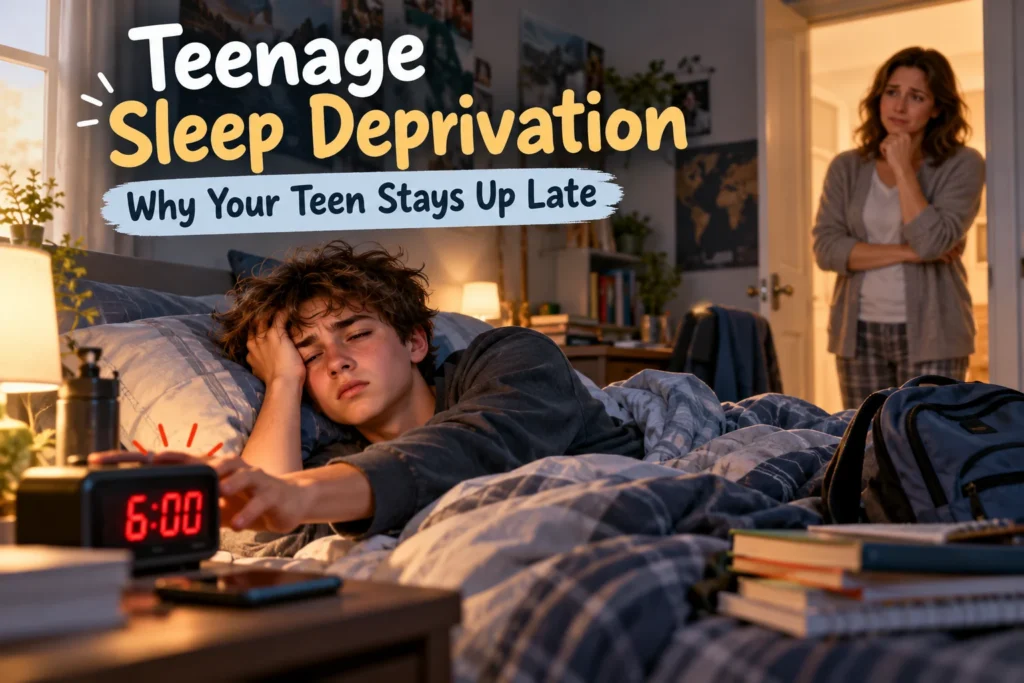
Your teenager struggles to get out of bed for school. You call them several times, they silence their alarm and somehow fall asleep again. By afternoon, they complain about being exhausted. Yet at 11 PM, when you remind them to sleep, they insist they aren’t tired.
You may wonder whether they’re spending too much time on their phone, avoiding responsibility or simply refusing to follow a routine.
But teenage sleep deprivation isn’t always that straightforward. Some teenagers genuinely struggle to fall asleep earlier, while others lose sleeping hours to schoolwork, entertainment or personal concerns they rarely discuss at home.
Before deciding what needs to change, it helps to understand why your teenager may not be getting enough sleep.
How Much Sleep Do Teenagers Need?
Teenagers aged 13–18 generally need 8–10 hours of sleep per 24 hours, according to the American Academy of Sleep Medicine.
If your teenager falls asleep at midnight and wakes at 6 AM, they’re getting only six hours—at least two hours below the recommended range.
Count actual sleep, not simply time spent in bed. Individual needs vary, but regularly sleeping less than eight hours deserves attention.
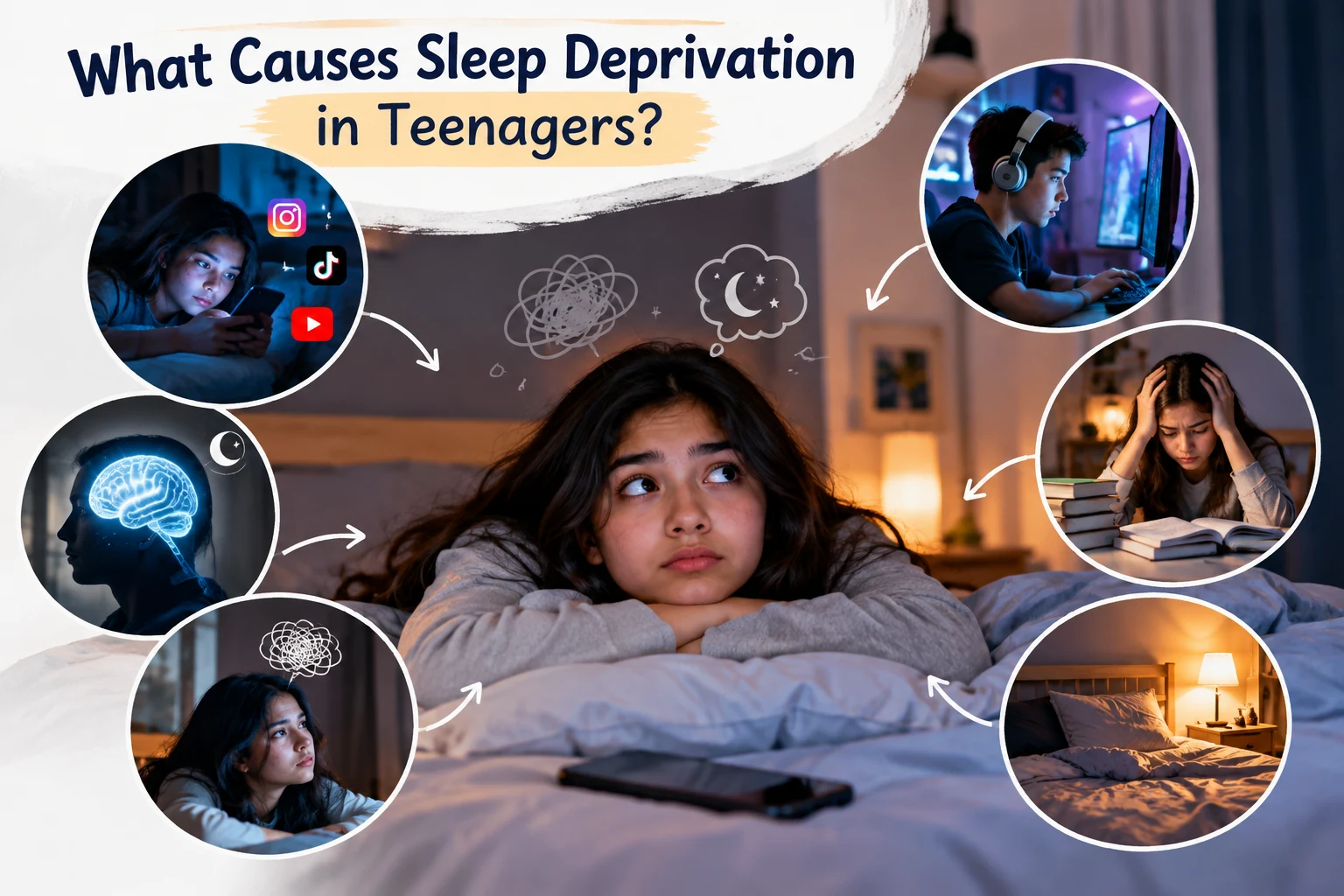
What Causes Sleep Deprivation in Teenagers?
There isn’t one explanation that applies to every teenager. Two teenagers may stay awake until the same hour for entirely different reasons.
The following are some of the factors worth considering when trying to understand a teenager’s sleeping habits.
Changes in Sleep Patterns During Puberty
You may remember your child becoming sleepy around 9 PM when they were younger. Now, they seem wide awake at the same hour.
During adolescence, the body’s internal sleep schedule often shifts later. Many teenagers naturally begin feeling sleepy later in the evening and prefer waking later in the morning.
This is a recognised developmental change, not simply a lack of discipline.
The difficulty arises when a teenager who doesn’t feel sleepy until late at night still needs to wake early for school. Asking them to get into bed at 9 PM may not immediately make them capable of falling asleep at that hour.
Schoolwork, Exams and Academic Competition
Think about how your teenager spends a typical weekday.
They may return from school, attend tuition or coaching, complete assignments, prepare for examinations and still have unfinished work late in the evening.
Some teenagers also feel considerable pressure to achieve high marks, perform well in competitive examinations or meet expectations they have set for themselves.
Even when homework is finished, a student may continue thinking about an upcoming result or something they haven’t prepared adequately for.
When academic pressure begins affecting your teenager’s emotional wellbeing, school stress counselling may be relevant alongside practical changes to their workload.
Social Media, Gaming and Late-Night Screen Use
Your teenager opens Instagram to check a message. Half an hour later, they’re watching videos. A friend replies, another conversation starts, and suddenly it’s past midnight.
Online games, streaming and social media can easily take up time that was originally meant for sleep.
There may also be pressure to remain available. Some teenagers worry about missing group conversations or being left out when friends are active online.
Research has found associations between social media use and later sleep timing, although this doesn’t establish that social media causes every teenager’s sleeping difficulties.
It’s also worth noticing whether your teenager stays awake even when their phone is put away. If so, restricting screen use alone may not explain the problem.
Friendships, Dating and Relationship Stress
Teenage relationships can feel intensely important.
Your teenager might be waiting for a message from someone they like, replaying an argument with a friend or worrying about a breakup.
They may also be navigating rejection, jealousy, changing friendships or uncertainty about where they stand in a relationship.
These experiences don’t automatically cause sleep deprivation. However, emotionally significant events can occupy a teenager’s thoughts long after they have gone to bed.
A parent may notice the late-night messaging without knowing what is happening emotionally.
Social Comparison, Competition and Overthinking
Teenagers can see what classmates, influencers and people around the world are doing almost constantly.
Someone is achieving better marks, looking more attractive, travelling somewhere exciting or appearing to have a perfect relationship.
For some teenagers, repeatedly comparing themselves with others can contribute to insecurity or worries about their own lives.
They may also encounter an enormous amount of advice, news, opinions and expectations about their future.
This doesn’t mean information itself is harmful. However, if your teenager has become unusually self-critical or worried about keeping up with others, our article on how comparison with classmates affects children’s confidence explores that pattern in more detail.
Sexual Curiosity and Private Online Activity
Adolescence also brings sexual curiosity, changing feelings and an increasing interest in romantic or intimate experiences.
Some teenagers may spend time late at night exploring online sexual content or having private conversations. If these activities regularly extend into sleeping hours, they can reduce the opportunity for sleep.
Masturbation itself is a normal part of adolescent development. It is not an established cause of sleep deprivation, and frequency alone does not indicate addiction.
When a teenager feels unable to control an activity that interferes with sleep or everyday functioning, the overall pattern may deserve sensitive, non-judgemental assessment.
If you’ve discovered that your teenager is accessing sexual content and aren’t sure how to respond, read our guide on what parents can do when a teenager watches inappropriate content online.
Anxiety, Low Mood and Other Health Concerns
Sometimes the problem has little to do with how a teenager chooses to spend the evening.
A teenager experiencing anxiety may lie awake worrying about school, family or the future. Depression can also be associated with changes in sleeping patterns, including sleeping too little or too much.
Other possibilities include caffeine use, medication effects, physical discomfort or conditions affecting sleep quality.
A clinician would consider these alongside the teenager’s routine rather than assuming that being awake late indicates a particular mental-health condition.
Signs Your Teenager Isn’t Getting Enough Sleep
You might notice that your teenager:
- Needs several alarms or repeated reminders to wake up.
- Regularly feels exhausted before school.
- Falls asleep while travelling, reading or attending lessons.
- Struggles to concentrate on homework or conversations.
- Becomes more irritable or impatient than usual.
- Sleeps much longer when school isn’t scheduled.
- Relies on coffee or energy drinks to remain alert.
These signs can suggest insufficient sleep, but they don’t establish why it is happening.
For example, irritability may be related to tiredness, emotional distress or another concern. Our guide to teenage mood swings versus emotional distress explains when changes in mood may need closer attention.
Why Does My Teenager Sleep So Much on Weekends?
Your teenager may be catching up on sleep lost during the school week. If they regularly sleep six hours on school nights but need eight or nine, that shortfall can build up.
Sleeping longer on weekends can reduce sleepiness, but it may not fully reverse the effects of repeated insufficient sleep. Large shifts in weekend sleep timing can also make early school mornings more difficult.
If your teenager sleeps until noon after going to bed at 2 AM, that’s ten hours—not necessarily excessive sleep. Look at when they fell asleep, not just when they woke up.
However, staying unusually sleepy despite adequate sleep, or regularly needing very long sleep periods, warrants medical evaluation.
How Can Parents Help a Sleep-Deprived Teenager?
If you’ve spent months arguing about bedtime, another lecture about putting the phone away probably won’t improve the situation.
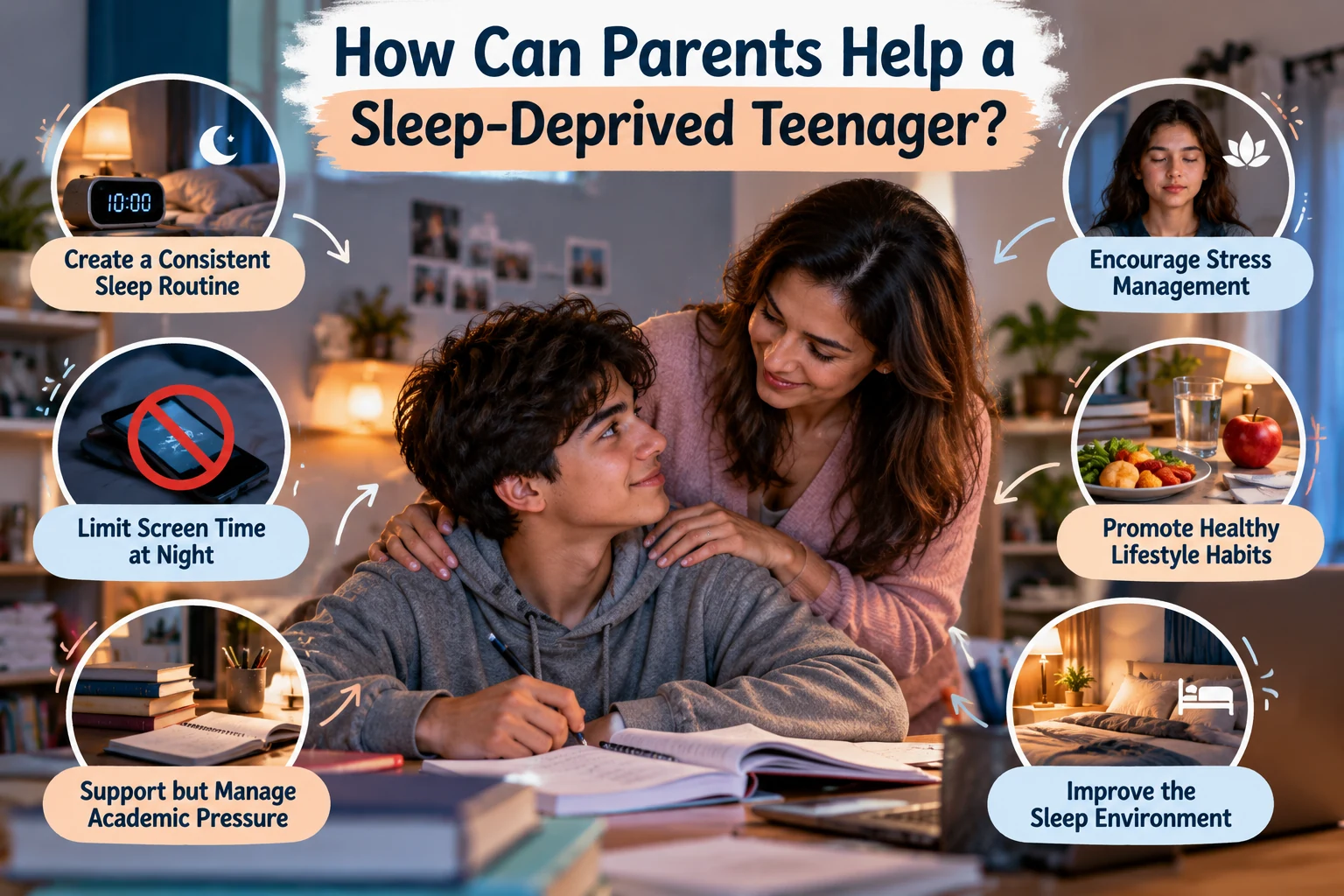
What helps depends on whether your teenager is losing sleep because they are staying awake, struggling to fall asleep or following a schedule that leaves too little time for rest.
1. Work Out Whether They Can’t Sleep or Are Delaying Sleep
These two situations need different responses.
If your teenager feels sleepy at 10 PM but continues gaming until midnight, the immediate problem is time being taken away from sleep.
If they put their phone aside, switch off the lights and remain awake for hours, forcing an earlier bedtime may not solve anything.
Ask what actually happens after they get into bed. This distinction can help you avoid spending weeks arguing about the wrong issue.
2. Use a Sleep Record to Identify the Pattern
For one or two weeks, ask your teenager to note approximately when they fall asleep, when they wake, any daytime naps and whether they feel sleepy during the day.
Compare school nights with weekends.
A record may show that they don’t have enough time available for sleep, that their schedule shifts considerably or that they struggle to fall asleep despite allowing sufficient time.
If assessment becomes necessary, this information can also help a healthcare professional understand the difficulty.
3. Fix the Part of Their Schedule That’s Actually Reducing Sleep
If late-night homework is the problem, taking away the phone won’t create extra hours.
Look at schoolwork, coaching, travel time and other commitments. Could an activity finish earlier? Is the workload realistic? Does your teenager need support discussing academic demands with their school?
If online entertainment is taking up the time, agree on a specific stopping point before the night begins. Keeping the phone outside the bedroom overnight can help when notifications and repeated checking are part of the problem.
Choose changes based on the pattern you’ve identified rather than imposing several new rules at once.
4. Make Their Sleep Schedule More Consistent
A teenager who wakes at 6 AM for school but sleeps until 1 PM every Sunday may find Monday morning especially difficult.
Aim for more consistent sleeping and waking times across the week. Morning daylight exposure can also help support the body’s sleep-wake timing.
If their schedule has shifted very late, gradual adjustments may be easier than suddenly demanding a bedtime several hours earlier.
Persistent difficulty falling asleep at conventional times may need professional assessment, particularly when it interferes with school attendance.
5. Address Problems That Bedtime Rules Cannot Solve
Suppose your teenager follows a reasonable routine but continues lying awake worrying about examinations or a difficult relationship.
Another sleep rule may not address what is bothering them.
Ask whether there is something they would like help managing. You don’t need to demand details about private conversations or relationships.
If emotional distress is interfering with sleep, appropriate psychological support may help. If they are excessively sleepy despite sufficient sleep, arrange medical assessment.
The useful change is the one that addresses the actual difficulty—not simply the strictest bedtime rule.
When Should Parents Worry About Their Teenager’s Sleep?
Occasional late nights are common. More persistent difficulties deserve attention, particularly when they affect your teenager’s health, safety or daily functioning.
Consider speaking with a paediatrician or qualified healthcare professional if your teenager:
- Remains excessively sleepy despite having sufficient opportunity to sleep.
- Frequently falls asleep unexpectedly during the day.
- Has ongoing difficulty falling asleep or staying asleep.
- Snores loudly, gasps or appears to stop breathing during sleep.
- Shows a significant decline in school attendance or everyday functioning.
- Develops noticeable changes in mood, interest, behaviour or social engagement.
A teenager who consistently cannot fall asleep until very late, even when trying to follow an earlier schedule, may also need assessment for a circadian rhythm sleep disorder.
For a broader explanation of medical and behavioural sleep concerns, see our guide to sleep problems in children.
If your teenager expresses suicidal thoughts, appears at immediate risk of self-harm or is in danger, seek urgent local mental-health or emergency assistance.
Can Counselling Help Teenagers With Sleep Difficulties?
Counselling may be useful when sleep difficulties occur alongside anxiety, emotional distress, academic pressure, relationship concerns or repeated family conflict.
A qualified mental-health professional can explore the teenager’s experiences, sleeping habits and emotional wellbeing without deciding in advance what is responsible.
Teenagers may also need space to discuss sensitive concerns privately, within appropriate confidentiality and safeguarding limits.
Psychological support can help with relevant coping patterns and behaviours. However, counselling does not replace assessment or treatment for medical sleep conditions.
For families seeking help with emotional concerns, LeapHope offers online child and teen counselling, with dedicated information for parents in India, the USA, UK, Canada and Australia. Availability and suitability should be confirmed for the teenager’s location and needs.
Final Thoughts
A teenager who struggles to wake for school may need more than another alarm or an earlier bedtime.
The important question is whether they have enough opportunity to sleep, whether they can fall asleep when they try, and what may be interfering.
Once you understand the pattern, you can make changes that address the difficulty rather than repeatedly arguing about bedtime.
Clinical References
- Paruthi S, et al. Recommended Amount of Sleep for Pediatric Populations: A Consensus Statement of the American Academy of Sleep Medicine. Journal of Clinical Sleep Medicine. 2016.
- American Academy of Pediatrics. Insufficient Sleep in Adolescents and Young Adults: An Update on Causes and Consequences. Pediatrics. 2014.
- Bhalla L, et al. Prevalence of Sleep Deprivation and its Associations with Depressive Symptoms, Academic Performance, and Sleep Hygiene among School-going Adolescents (12–18 Years) in Urban Delhi. Indian Journal of Community Medicine. 2026.
- Ramar S, Lloyd RM. Perspective: Teenagers and the Sleep Paradox. Journal of Clinical Sleep Medicine. 2023.
- Scott H, Biello SM, Woods HC. Social Media Use and Adolescent Sleep Patterns: Cross-Sectional Findings From the UK Millennium Cohort Study. BMJ Open. 2019.
This article is intended for general educational purposes and does not replace individual medical or psychological assessment.