
Last Updated on September 9, 2026
A marriage can look normal from outside while very little is being shared inside it.
Bills are paid. Children are taken to school. One partner asks for money and the other sends it. Someone falls ill, so their spouse brings medicine and reminds them to take it.
The practical work continues, but nobody asks what happened, how the other person feels or whether they need anything more.
Some couples talk throughout the day but only about food, work, children and household tasks. Money, intimacy, family interference, disappointment and the future remain untouched. When either partner raises these subjects, the conversation turns into an argument or another period of silence.
What Does No Communication in Marriage Mean?
No communication in marriage usually means there is little meaningful conversation between spouses.
They may still discuss:
- Bills and payments
- Children’s needs
- Meals and groceries
- Work schedules
- Medicines and appointments
- Household responsibilities
- Family visits
These conversations keep the household running. They do not help partners understand each other.
In some marriages, one person has stopped sharing altogether. In others, both partners try to talk but misunderstand each other. One explains everything in detail while the other gives short answers. One wants an immediate discussion while the other needs time.
Soon, the words carry the weight of previous arguments. A reminder sounds like criticism. A question feels like suspicion. A tired voice is taken as disrespect. Both partners react to what they expect to hear.
Signs of Lack of Communication in Marriage
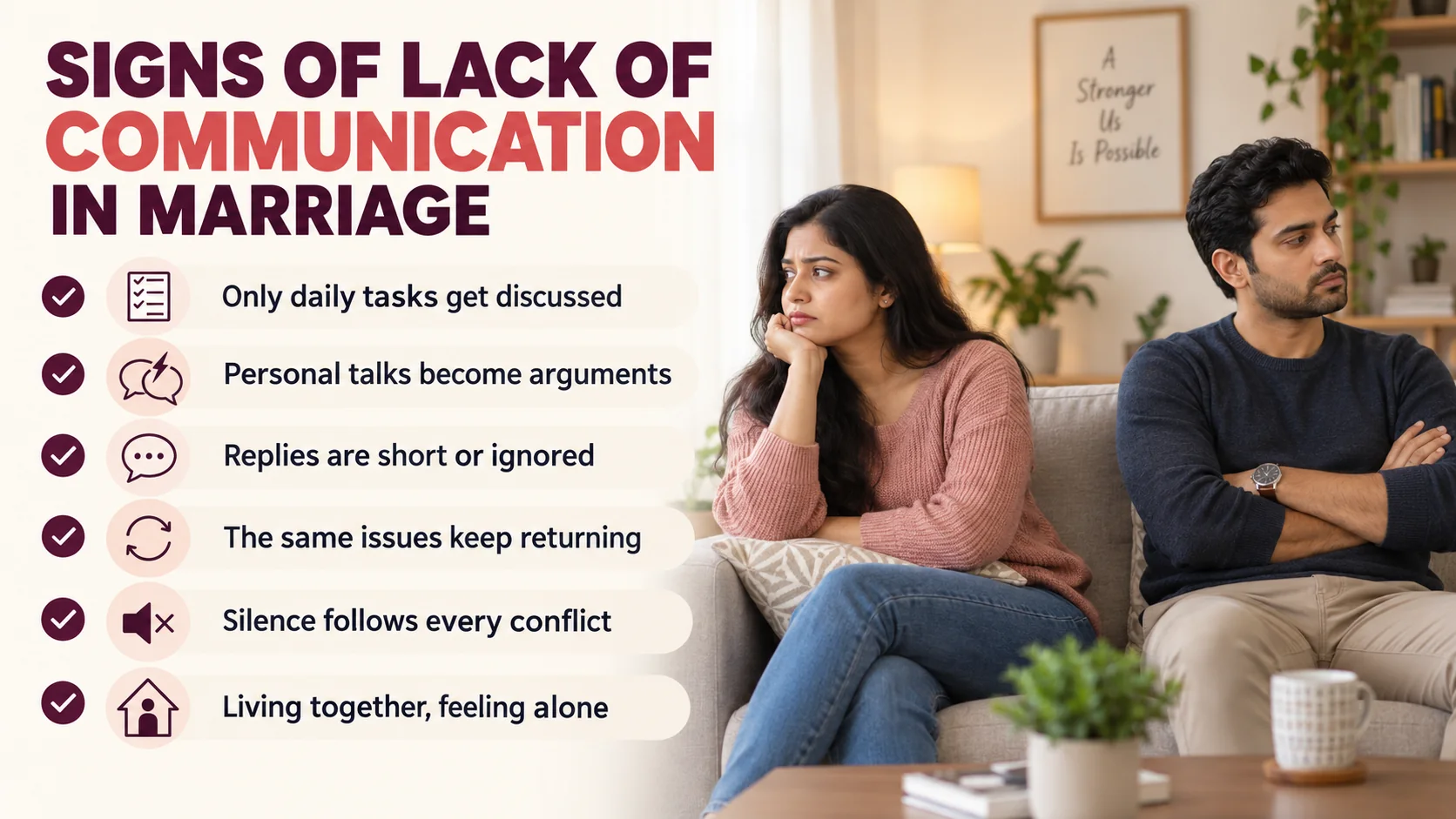
- Conversations remain limited to daily responsibilities.
- You know your partner’s routine but not how they feel.
- Personal topics quickly become arguments.
- One partner regularly answers with yes, no or fine.
- Important issues are postponed and never discussed again.
- One person keeps explaining while the other shuts down.
- Normal wording is frequently understood as a taunt.
- You communicate through messages but avoid talking face to face.
- Messages about serious matters are read and ignored.
- Past incidents enter every new disagreement.
- Both partners feel misunderstood and unheard.
- Silence lasts until normal conversation slowly returns.
- A small new incident sends the couple back into silent mode.
- Parents or relatives know more about the conflict than the spouse.
- Practical help continues, but emotional interest has disappeared.
- Silence is used to punish, worry or control the other person.
- You share personal matters with others but not with your spouse.
- You live together but feel increasingly alone.
The repeating pattern matters most. The couple speaks normally, something happens, communication drops and the issue remains unresolved. With every cycle, returning to each other becomes harder.
Why Do Married Couples Stop Communicating?
The Same Conversation Keeps Returning
One spouse raises a concern. The other defends, denies, apologises or promises to change. Things improve briefly, but the same behaviour returns.
After repeating this for years, neither partner expects the conversation to help. One enters ready to prove the point. The other prepares to escape or defend themselves.
The original issue gets buried under older complaints.
Different Talking Styles Create More Conflict
One partner talks to understand what they feel. The other wants them to make the point quickly. One needs reassurance. The other immediately offers a solution. One wants to settle the matter now. The other needs space.
This often creates a loop:
- One person talks more because they feel unheard.
- The other feels pressured and withdraws.
- The withdrawal feels like indifference.
- The first partner pushes harder.
- Both leave feeling misunderstood.
Talking Face to Face Feels Tense
Technology does not create most communication problems, but it can add pressure.
A delayed reply feels deliberate. An important message receives an emoji. One person reads a message at work and forgets to answer. The other spends hours feeling ignored.
Some couples talk comfortably on WhatsApp but become tense in the same room. After months of complaints and arguments, one spouse starts expecting every face-to-face conversation to bring another problem. Staying busy, using the phone or sleeping early feels easier.
Silence Has Become the Usual Response
A spouse may become silent because they feel overwhelmed and cannot think clearly. Another may avoid responsibility. Some use silence to punish or gain control.
Someone who needs a pause can explain that and return to the conversation later. Punishing silence leaves the spouse guessing how long it will last and what they must do to end it.
When silence creates fear or forces compliance, emotional abuse counselling or individual support may be safer than beginning with couples sessions.
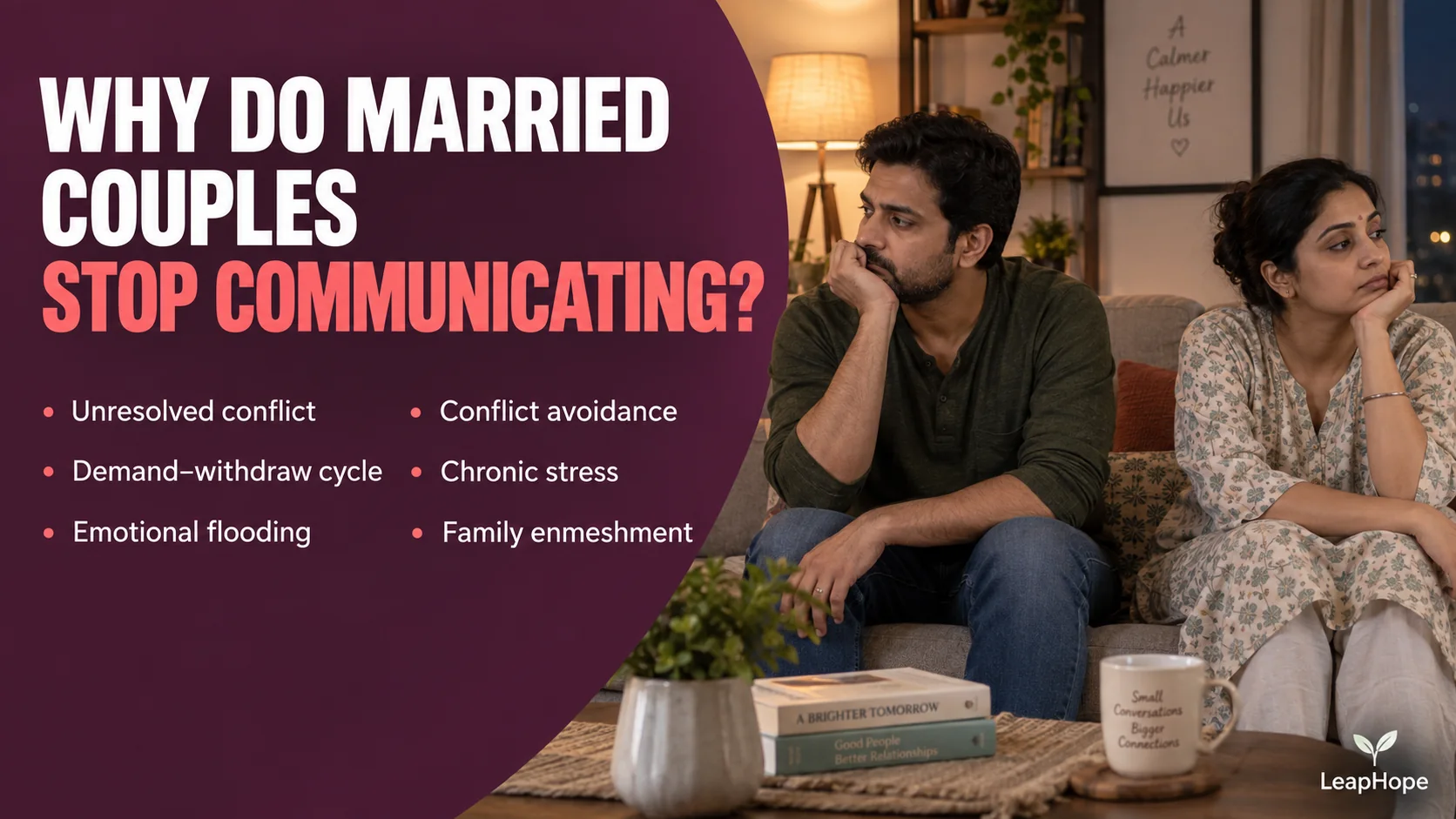
Work and Responsibilities Take the Remaining Energy
Work, children, household tasks and family duties leave many couples with very little uninterrupted time.
By night, both are tired. Scrolling, television, gaming or sleep takes less effort than discussing something difficult. The couple gradually stops sharing small experiences and new thoughts. Eventually, they have less to discuss because they are no longer part of each other’s inner life.
Parents and In-Laws Increase the Distance
Family involvement strongly affects many Indian, Asian and NRI marriages.
Parents often hear only their own child’s version. They may minimise what their child did, focus on the spouse’s behaviour or use guilt and family pressure to influence decisions.
The couple then stops working on the problem together. Each person defends their family, and private disagreements become wider family conflicts.
Family counselling may help when relatives are actively affecting the marriage. The couple also needs space to discuss problems without reporting every detail to their families.
How Does Lack of Communication Damage a Marriage?
Practical Support No Longer Feels Like Care
Sending money, buying medicine and completing household tasks matter. But practical help can feel cold when there is no emotional interest behind it.
A spouse may receive what they asked for and still feel uncared for because nobody asked why they needed help or how they were feeling.
Assumptions Take Over
When spouses stop asking, they begin interpreting.
A late reply becomes rejection. Tiredness becomes a lack of interest. A forgotten task becomes proof that the partner never cares. These assumptions change how both people behave, even when they are wrong.
Honesty Starts to Feel Risky
People share less when openness repeatedly leads to criticism, mockery or punishment.
They begin hiding purchases, family conversations, work problems and personal decisions. Important details come out late, often during an argument. Trust weakens with every new discovery.
Old Problems Enter Every New Argument
An unresolved issue does not disappear. It returns during another disagreement.
A conversation about visiting family brings back an insult from years ago. A spending disagreement brings up an old hidden payment. One careless sentence opens several earlier wounds.
Repeatedly using the past against a spouse teaches them that nothing is ever settled. It also makes honest communication feel unsafe. This pattern often appears among couples who cannot stop fighting about the same problems.
Emotional and Physical Intimacy Reduce
Affection becomes difficult when a partner feels ignored, criticised or emotionally unsafe.
The couple may share a bedroom but stop reaching for each other. Sex becomes less frequent or mechanical. Neither person discusses it because intimacy has become another sensitive subject.
The Couple Stops Acting Like a Team
Money, parenting, health, careers and family boundaries require real conversation. When these subjects remain unresolved, each partner starts making decisions alone.
The marriage may continue as a household arrangement while the emotional separation quietly grows.
Research on distressed relationships often discusses criticism, contempt, defensiveness and withdrawal. The Gottman Institute explains how these patterns damage relationships and what couples can practise instead.
How to Fix Lack of Communication in Marriage
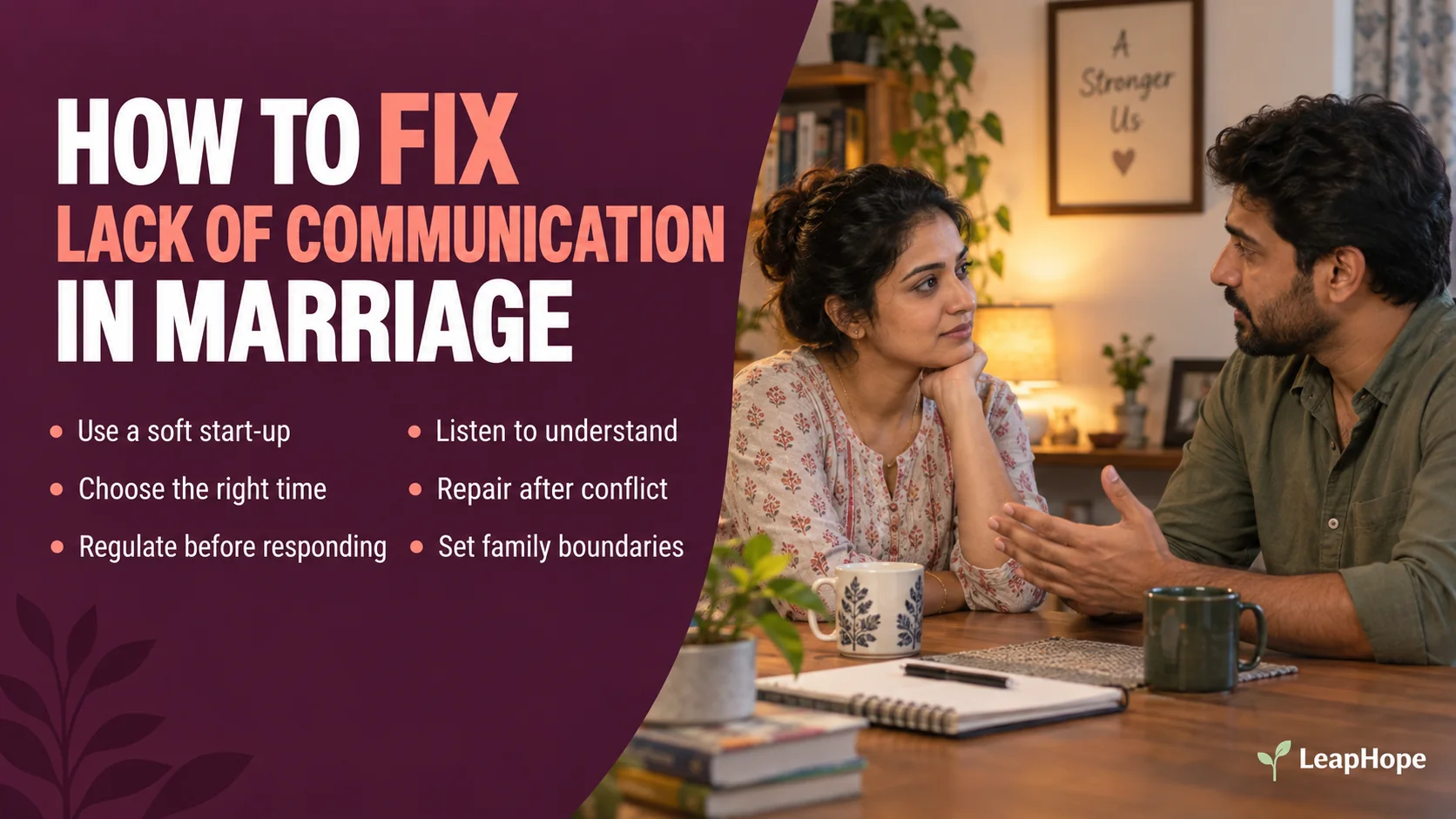
Give Notice Before Raising a Serious Subject
Do not begin a major conversation while your partner is entering the house, answering work messages or trying to sleep.
Tell them what you want to discuss and ask whether now is a good time. If not, agree on a specific time rather than leaving it for later without a plan.
Keep One Problem in the Conversation
Do not try to solve money, intimacy, children and in-laws in one sitting.
Choose the issue affecting the marriage now. Mention an older incident only when it directly explains the current concern. Bringing the whole history into every discussion makes resolution almost impossible.
Notice the Pattern While It Is Happening
Pay attention when:
- Listening turns into preparing a defence.
- Explaining turns into proving.
- A request starts sounding like an order.
- One person begins feeling overwhelmed.
- The subject changes to an older argument.
- Either partner starts using insulting language.
Stopping the pattern at that point is more useful than continuing until both people say something damaging.
Pause Without Disappearing
A short break can prevent a heated conversation from becoming cruel. Explain that you need time and agree when you will return.
Do not turn a pause into several days of silence. Returning when promised helps restore trust.
Move Serious Arguments Away From Messages
Messages are useful for introducing a subject or choosing a time to talk. Long WhatsApp arguments usually create more confusion.
Tone is guessed, replies cross each other and one badly worded sentence becomes the focus. Use the message to open the conversation, then continue it on a call or face to face.
Clear Major Issues Properly
Ignoring a minor irritation can be sensible. Avoiding betrayal, hidden money, serious disrespect or family interference allows the issue to return later.
Clearing it may require:
- Admitting what happened
- Listening to how it affected the spouse
- Correcting hidden or false information
- Setting boundaries with relatives
- Agreeing on a specific change
- Checking whether that change continues
Handle Your Share of Life
A spouse can support you without managing every part of your life.
Do what you can to manage your emotions, relatives, responsibilities and decisions. Bring a clear request to your partner instead of expecting them to solve the whole problem.
After the conversation, look for consistency. A useful apology should be followed by fewer repeated incidents, better honesty and visible effort from both partners.
When Can Marriage Counselling Help?

Consider relationship counselling when you no longer know how to begin talking without returning to the same argument.
Support may help when:
- Silence returns after every disagreement.
- One spouse pursues while the other withdraws.
- An important issue has never been resolved.
- Past incidents control present conversations.
- In-laws are affecting decisions inside the marriage.
- Trust has weakened after secrecy or broken promises.
- The marriage works practically but feels emotionally empty.
- Both partners disagree about what the problem is.
A counsellor can slow down the conversation and help the couple recognise the pattern beneath their arguments.
Both partners do not have to begin together. One spouse can start online marriage counselling individually when the other refuses to attend.
If communication includes fear, threats, monitoring, financial control or violence, individual safety needs attention before asking both partners to speak openly together.
Final Thoughts
A marriage can move through quiet periods. The concern begins when silence becomes the main response to hurt.
Many couples move between normal conversation and silent mode for years. A new event activates an old wound, communication drops and neither person repairs what happened.
Start with one issue. Give notice before raising it. Choose a workable time and pay attention to how both of you listen. Then look at what changes after the conversation.
Trust starts returning when both partners see that a difficult discussion can end without humiliation, punishment or another long period of silence.
FAQs
Is no communication in marriage normal?
Short quiet periods can happen during stress or demanding work. No communication in marriage becomes concerning when personal subjects are repeatedly avoided and spouses only discuss basic daily needs.
Can a marriage survive without communication?
A marriage may continue practically without meaningful communication, but trust and emotional closeness usually weaken. Its future depends on whether both partners can begin addressing important issues.
Why is my husband not communicating with me?
A husband may stop communicating after feeling criticised, overwhelmed or certain that talking will cause another argument. Stress, resentment, avoidance and a need for control can also affect communication.
Why is my wife not communicating with me?
A wife may stop communicating after feeling unheard or becoming tired of repeating the same concern. She may be waiting for consistent change rather than another temporary apology.
What should I do when my spouse refuses to communicate?
Choose a calm time, name one issue and ask when your spouse can discuss it. If every attempt is refused, individual counselling can help you understand the pattern and set boundaries.
Is silent treatment emotional abuse?
Silent treatment can become emotionally abusive when it is used to punish, frighten or control a spouse. A healthy pause includes an explanation and a time for returning to the discussion.
How does lack of communication affect intimacy?
Lack of communication leaves hurt and resentment unresolved. A spouse may stop feeling emotionally safe, appreciated or desired, making affection and sexual closeness harder to maintain.
Can marriage counselling improve communication?
Marriage counselling can help couples recognise repeated patterns, discuss one issue at a time and rebuild enough safety to speak honestly. One partner can also begin counselling alone.