Private online counselling · India · NRIs · Worldwide

Online Emotional Abuse Counselling & Recovery

If a relationship has left you doubting yourself, losing confidence, questioning your decisions, or feeling emotionally exhausted, you do not need to have everything figured out before starting therapy. LeapHope psychologists work with emotional abuse, gaslighting, controlling relationship patterns, self-blame, boundaries and the difficult process of trusting yourself again.

RCI-Licensed Clinical Psychologists · M.Phil & PhD Professionalss
Trauma-informed · CBT · attachment-informed support
Support for current or past emotionally abusive relationships
Private 50-minute online sessions
India · NRIs · International clients
Sessions starting from ₹1,799
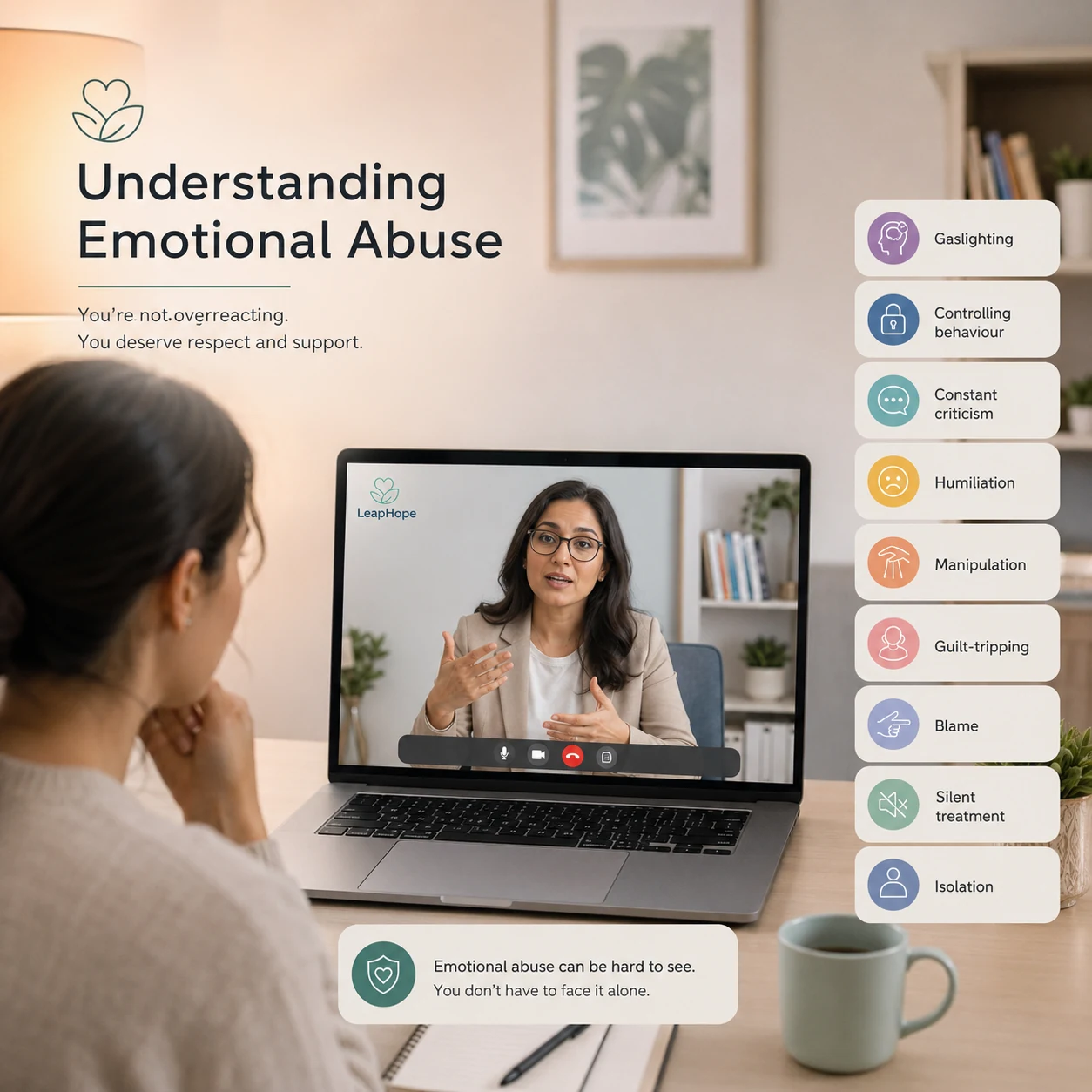
Woman speaking privately with a psychologist during online emotional abuse counselling
Recovery can begin with understanding what happened to you Self-trust · boundaries · confidence · emotional safety
Private online sessions

Compare qualifications, languages and therapeutic approach

Emotional Abuse Counselling Therapists at LeapHope

Emotional abuse can affect self-trust, confidence, boundaries, emotional regulation and the way you respond in relationships. Compare each therapist’s qualifications, therapeutic approach, languages and session fee before booking.

Mansi More Nopany, RCI-licensed clinical psychologist providing emotional abuse counselling Available online

Mansi More Nopany

RCI-Licensed Clinical Psychologist · M.Phil. Clinical Psychology · PhD Scholar · 10+ Years

Languages: English & Hindi

Mansi uses trauma-informed clinical formulation alongside CBT, DBT and MBCT. Therapy can examine self-blame, loss of self-trust, emotional dysregulation, fear responses and relationship patterns while using cognitive, emotional and behavioural interventions according to the person’s history and current psychological needs.

50-minute online session ₹3,700 / $39
Book Appointment
Swati Sharma, relationship and couples therapist providing emotional abuse counselling Available online

Swati Sharma

Relationship & Couples Therapist · 5+ Years

Languages: English, Hindi & Assamese

Swati uses evidence-based, relationship-focused therapy with a culturally aware approach when relevant. Sessions can examine manipulation, criticism, boundaries, communication and recurring relationship dynamics while helping clients reconnect with their own needs, judgement and values and develop healthier ways of responding within relationships.

50-minute online session ₹3,700 / $39
Book Appointment
Bipasha Sharma, counselling and developmental psychologist providing emotional abuse counselling Available online

Bipasha Sharma

Counselling & Developmental Psychologist · RCI-Registered Counsellor · PhD Scholar · 8+ Years

Languages: English & Hindi

Bipasha uses an integrative approach combining CBT, mindfulness and counselling interventions. Therapy can examine beliefs shaped by repeated criticism, blame or invalidation, using cognitive reframing, reflective work and practical behavioural changes to strengthen self-trust, emotional regulation and more flexible responses.

50-minute online session ₹3,700 / $39
Book Appointment
Mohit Yadav, RCI-licensed mental health and behavioural counsellor providing emotional abuse counselling Available online

Mohit Yadav

RCI-Licensed Mental Health & Behavioural Counsellor · 5+ Years

Languages: English & Hindi

Mohit uses structured CBT-informed and behavioural counselling to identify thought and behaviour patterns that continue after difficult relationship experiences. Sessions can work on self-doubt, avoidance, emotional reactions and disrupted routines while developing practical cognitive and behavioural responses that can be used between sessions.

50-minute online session ₹1,799 / $19
Book Appointment

Emotional abuse counselling testimonials & client experiences

Client Experiences With Emotional Abuse Counselling at LeapHope

Constant criticism
My wife often called me weak, useless and a failure during arguments. After years of hearing it, I stopped trusting myself and avoided speaking up. Therapy helped me work on self-worth, boundaries and the shame I had started carrying.
Male therapy client India · Anonymised client experience
Gaslighting & self-doubt
My partner would say hurtful things and later deny they happened. I started questioning my memory and wondering if I was too sensitive. Therapy helped me understand the pattern and rebuild trust in my own judgement.
Female therapy client United Kingdom · Anonymised client experience
Silence & threats
If I disagreed, my partner could stop speaking to me for days or threaten to leave. I started agreeing just to avoid what came next. Therapy helped me recognise how fear was controlling my choices and work on boundaries.
Male therapy client Canada · Anonymised client experience
Control & isolation
My partner checked my phone, questioned my friends and made every outing into an argument. Slowly, I stopped meeting people. Therapy helped me understand the controlling pattern and rebuild confidence in making my own decisions.
Female therapy client United Arab Emirates · Anonymised client experience
Mocked for showing emotion
Whenever I showed emotion, I was told I was weak or not man enough. I eventually stopped talking about anything personal. Therapy gave me a private space to work through the shame, anger and fear of opening up again.
Male therapy client Australia · Anonymised client experience
Repeated humiliation
I was criticised about my looks, work and decisions so often that I started believing I was never good enough. Therapy helped me separate those messages from how I actually saw myself and slowly rebuild confidence.
Female therapy client India · Anonymised client experience
Emotional abuse from a parent
I grew up with guilt, comparison and criticism whenever I made my own choices. Even as an adult, saying no made me feel like a bad child. Therapy helped me work on guilt, boundaries and making decisions without needing constant approval.
Adult therapy client India · Anonymised client experience
Recovering after leaving
The relationship had ended, but I still expected criticism from everyone around me. Small disagreements made me anxious and I kept apologising automatically. Therapy helped me work on fear, self-blame and trusting relationships again.
Individual therapy client United States · Anonymised client experience
1 / 3

Swipe to view more client experiences

Client experiences are anonymised and may be lightly edited or presented as privacy-safe composites of recurring therapy themes. Individual circumstances, therapy needs, progress and outcomes differ.

Emotional abuse · control · humiliation · recovery after abuse

Emotional Abuse Can Affect You While It Is Happening and Long After It Ends

Some people are still living through it. Others left months or years ago but still feel its effects.

Experiences people bring to emotional abuse counselling

? They say cruel things during arguments and later insist they never said them or that I imagined it
I have been told I am too sensitive, unstable or overreacting so often that I now question my own judgement
I can start an argument knowing I was hurt and somehow end it believing everything was my fault
I am regularly called useless, weak, selfish, stupid or a failure when I disagree or make a mistake
My appearance, work, income or intelligence is mocked and then I am told I cannot take a joke
I used to speak confidently, but now I stay quiet because I expect to be criticised, shouted at or humiliated
My phone, messages, location or friendships are checked and I am expected to explain who I speak to
Seeing friends or family creates so much anger, accusation or punishment that I have gradually become isolated
I change what I wear, where I go, who I meet or what I say because I am scared of the reaction afterwards
If I disagree or say no, they may ignore me for days until I apologise, give in or do what they wanted
! Divorce, abandonment, taking the children or ending the relationship is threatened whenever I set a boundary
I agree to things I do not want because dealing with their anger, silence or punishment feels worse than giving in
! Arguments have included pushing, grabbing, hitting, throwing things or threats of violence, and I now stay constantly on edge
× I have been pressured, guilted, threatened or frightened into sexual intimacy when I did not want it
Things I shared privately about my body, sexuality, fears or past have later been used to shame or control me
The relationship ended, but a raised voice or angry tone can still make me panic, shut down or start apologising
I am no longer with them, but I still hear their criticism in my head whenever I make a mistake or decision
I am with someone new who treats me well, but part of me is still waiting for the criticism, control or punishment to begin
I left the relationship but still ask other people to confirm simple decisions because I no longer trust myself
What happened physically or sexually in my previous relationship still affects how safe I feel with touch and intimacy now
I thought leaving would make everything normal again, but fear, shame, anger and low confidence followed me into the rest of my life
× When I say something hurts me, I am mocked for being weak or told that a real man would not react this way
My insecurities or private emotions have been used against me in arguments, so I stopped telling anyone what happens at home
I have been insulted and controlled for years but still struggle to call it abuse because I am a man
A parent still uses guilt, comparison, insults or humiliation whenever I make a choice they do not approve of
I am an adult, but saying no to my family still makes me feel selfish, disloyal or like a bad child
I keep changing major life decisions because guilt, anger or rejection from my family feels unbearable


You do not need to decide on a label before starting counselling. A LeapHope psychologist can understand what happened or is still happening, how it is affecting you now, and what you want help with in recovery.

Emotional abuse · gaslighting · coercive control

What Can Count as Emotional Abuse?

Emotional abuse can be obvious or very subtle. It may happen on its own or alongside verbal, physical or sexual abuse.

Gaslighting & Reality Distortion
Denial · blame shifting · making you doubt memory or judgement

Control, Isolation & Coercion
Monitoring · restricting friendships · money control · intimidation · threats

Humiliation & Emotional Punishment
Insults · criticism · silent treatment · guilt · shaming · withholding affection

Manipulation & Narcissistic-Abuse Patterns
Devaluation · emotional manipulation · repeated blame · control · fear of saying no

Emotional abuse may also overlap with verbal abuse, physical violence, sexual coercion, stalking, threats, financial control or other controlling behaviour.

You do not need to know whether it “counts” as abuse before starting therapy. Your LeapHope psychologist can look at the pattern, how it has affected you and what support you need now.

Person discussing emotional abuse, gaslighting and controlling behaviour with a LeapHope psychologist
Gaslighting · Control · Humiliation · Manipulation Current relationship or recovery after past abuse
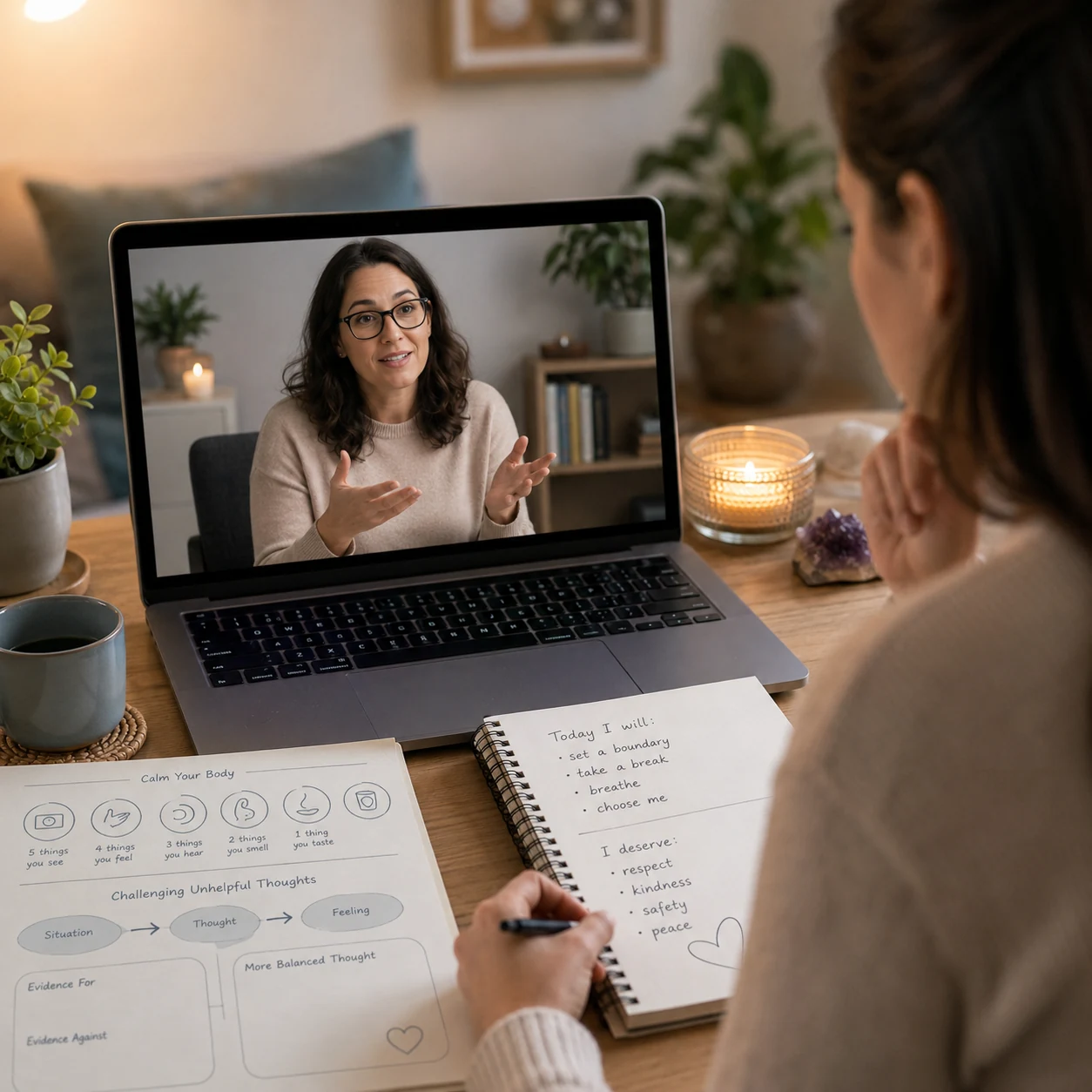
Psychologist providing online emotional abuse counselling and recovery therapy at LeapHope
Psychologist-led care Clinical formulation guides treatment

Clinical methods & psychological approaches

Clinical Methods Used in Emotional Abuse Recovery

LeapHope psychologists may combine evidence-informed and formulation-led approaches depending on the client’s history, current concerns and clinical needs. Therapy may support recovery after emotional abuse, psychological abuse, gaslighting, coercive control and other abusive relationship experiences.

  • Cognitive Behavioural Therapy (CBT)
  • DBT-Informed Skills
  • Attachment-Informed Psychotherapy
  • Behavioural & Assertiveness Interventions
  • Mindfulness / MBCT-Informed Work
  • Trauma-Focused Work When Clinically Indicated
  • Clinical Formulation & Integrative Psychotherapy

Therapy is not selected from a fixed list. The psychologist decides the approach after understanding the abuse history, current psychological impact and wider clinical picture.

India · NRIs · Worldwide

Online Emotional Abuse Counselling for Indians & NRIs

You should not have to spend therapy explaining why family, culture, faith, distance or where you live matters to your relationship.

LeapHope psychologists work with Indian and NRI clients across dating, marriage, long-distance, cross-cultural and interfaith relationships with space to understand your life before making assumptions about it.

  • India & Indians living abroad
  • Same-city & long-distance relationships
  • Cross-cultural & interfaith relationships
Start with your experience. Your psychologist will understand the context around it with you.
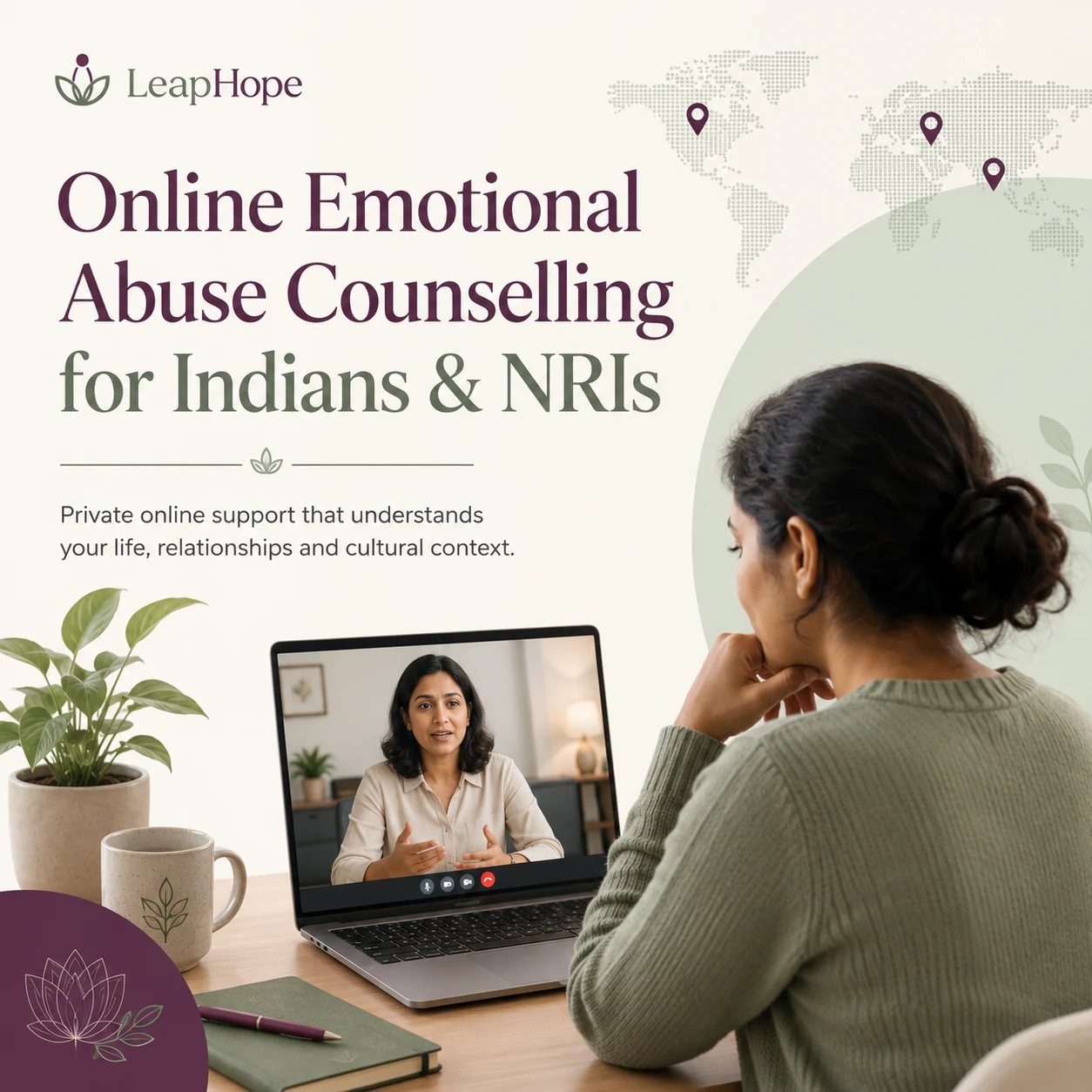
Online emotional abuse counselling for Indians and NRIs worldwide
India · USA · UK · Canada · UAE · Australia · Singapore

Clinical care · structured therapy · reviewed progress

Why Choose LeapHope for Emotional Abuse Counselling?

LeapHope focuses on psychologist-led care rather than generic advice. Your therapy is shaped by clinical understanding, clear goals and the psychological impact the experience has had on your life.

01

Qualified Psychology Team

Care is provided by experienced psychologists, including RCI-registered professionals and clinicians with advanced psychology training across the LeapHope team.

02

Clinical Formulation First

Your psychologist understands the history, current impact, relationship context and wider psychological picture before deciding how therapy should proceed.

03

Individual, Structured Care

Therapy is built around your needs rather than a fixed emotional abuse recovery programme or the same approach being used for every client.

04

Progress Is Reviewed

Therapy can be adjusted as your confidence, emotional responses, boundaries, decision-making and everyday functioning begin to change.

Progress may include
Self-trustDecision confidenceBoundary consistencyReduced self-blameEmotional stabilitySense of selfRelationship trustDaily functioning

Your therapy can change as your needs change. The focus is reviewed as new information appears, your circumstances shift or another clinical direction becomes more useful.

Choose a LeapHope Psychologist

Questions before starting emotional abuse counselling

FAQs About Emotional Abuse Counselling & Recovery

Answers to questions about recovery, relationship decisions, individual therapy and starting psychological support.

Can a relationship recover from emotional abuse?

It depends on what is happening in the relationship. Meaningful change requires the abusive behaviour to stop and responsibility to be taken for it. Therapy should not pressure you to preserve a relationship where fear, control or abuse is continuing.

Do I need to leave the relationship before starting therapy?

No. You can begin individual counselling while you are still in the relationship, after leaving, during separation or when you are unsure what you want to do. Therapy can begin from your current situation rather than requiring a decision first.

Will my psychologist tell me whether I should stay or leave?

The goal is not to make the relationship decision for you. Your psychologist can help you understand what has happened, how it is affecting you and what matters to you so that your decisions are made with greater clarity and self-trust.

Should we try couples counselling if emotional abuse is happening?

Couples counselling is generally not the starting point when there is active abuse, coercive control, intimidation or fear. Individual assessment is safer because abuse involves more than an ordinary communication or relationship conflict.

Can therapy still help if the abusive relationship ended years ago?

Yes. Therapy can begin even when the relationship ended a long time ago. Some people seek help later because its effects are showing up in confidence, trust, relationships, emotional reactions or everyday life now.

Can emotional abuse cause PTSD?

Some people who have experienced abuse develop significant trauma-related symptoms or PTSD, while others do not. Emotional abuse does not automatically mean you have PTSD. A psychologist can assess your symptoms before deciding whether trauma-focused treatment is appropriate.

How long does recovery from emotional abuse take?

There is no standard recovery timeline. The work can differ depending on how long the situation lasted, whether contact is continuing, its psychological impact and what you want from therapy. Your psychologist can review the plan as therapy progresses.

Do I need proof that emotional abuse happened before I see a psychologist?

No. Psychological therapy does not require you to arrive with messages, recordings or other evidence. You can talk about your experience and its effect on you. Legal or forensic evidence is a separate matter from starting therapy.

Can I have online counselling if I still live with the person?

It may be possible when you have enough privacy to speak safely. If another person monitors your phone, computer or conversations, tell your psychologist so privacy can be considered carefully. Online counselling should not create additional risk for you.

Can my psychologist tell me whether my partner is a narcissist?

Therapy should not diagnose another person who has not been clinically assessed. If you use terms such as narcissistic abuse, your psychologist can still explore the behaviour you experienced, its pattern and its psychological impact without needing to assign your partner a personality disorder.

Can therapy help if I still have contact with my ex because of children?

Yes. Recovery does not always mean having no further contact. Therapy can work with the reality that communication may continue because of children, family responsibilities or other practical reasons while keeping the focus on your psychological wellbeing.

Do I have to confront the person as part of emotional abuse therapy?

No. Confronting the other person is not a requirement for psychological recovery. Therapy can focus entirely on your own understanding, choices and wellbeing without requiring contact, disclosure, forgiveness or a conversation with the person involved.

LeapHope provides psychological therapy and counselling and is not an emergency or crisis service. If there is immediate danger or you cannot remain safe, seek urgent local emergency or specialist domestic violence support.

Scroll to Top