
Last Updated on September 2, 2026
Do you feel lonely in your relationship? Your partner is there, but you miss talking, affection or having someone who takes an interest in you. Maybe you keep asking for their time. Maybe you have stopped asking because nothing changes.
Or they treat you well, but you still feel unsatisfied. Is it loneliness, boredom or wanting something different?
Feeling lonely in a relationship can follow changes in dating or married life. Let’s look at what happens between you and your partner, and how it affects your trust, stress levels and feelings about yourself.
What Can Cause Loneliness in a Relationship?
1. Your Partner Gives You Less Time and Affection Than Before
Your partner used to call, arrange dates and ask how your day went. Now you make most of the calls and plans. If you live together, you rarely talk beyond meals, bills or the children.
You miss the hugs, conversations and interest they used to show. Time together has become mostly about getting through the day.
2. You Go Through Difficult Times Without Their Support
You lose your job, a parent becomes ill or you have problems at work. You tell your partner, but they change the subject, say “don’t worry” or never ask about it again.
You need someone to listen, check on you or help with daily responsibilities. Instead, you handle the problem largely on your own, even though you have a partner.
3. Cheating or Repeated Lies Break Your Trust
You discover your partner’s affair, hidden messages or another lie after they promised to be honest. You stay together, but the issue is avoided or you are told to “move on.”
The person you used to turn to is now the person you are hurt by. You still share a home or go on dates, but no longer feel comfortable telling them everything.
4. You Keep Arguing About the Same Problems
You argue about money, chores, family or time together. Then you stop talking, say sorry or carry on as usual but nothing is agreed or changed.
Soon, the same argument happens again. You spend more time repeating complaints than enjoying each other’s company.
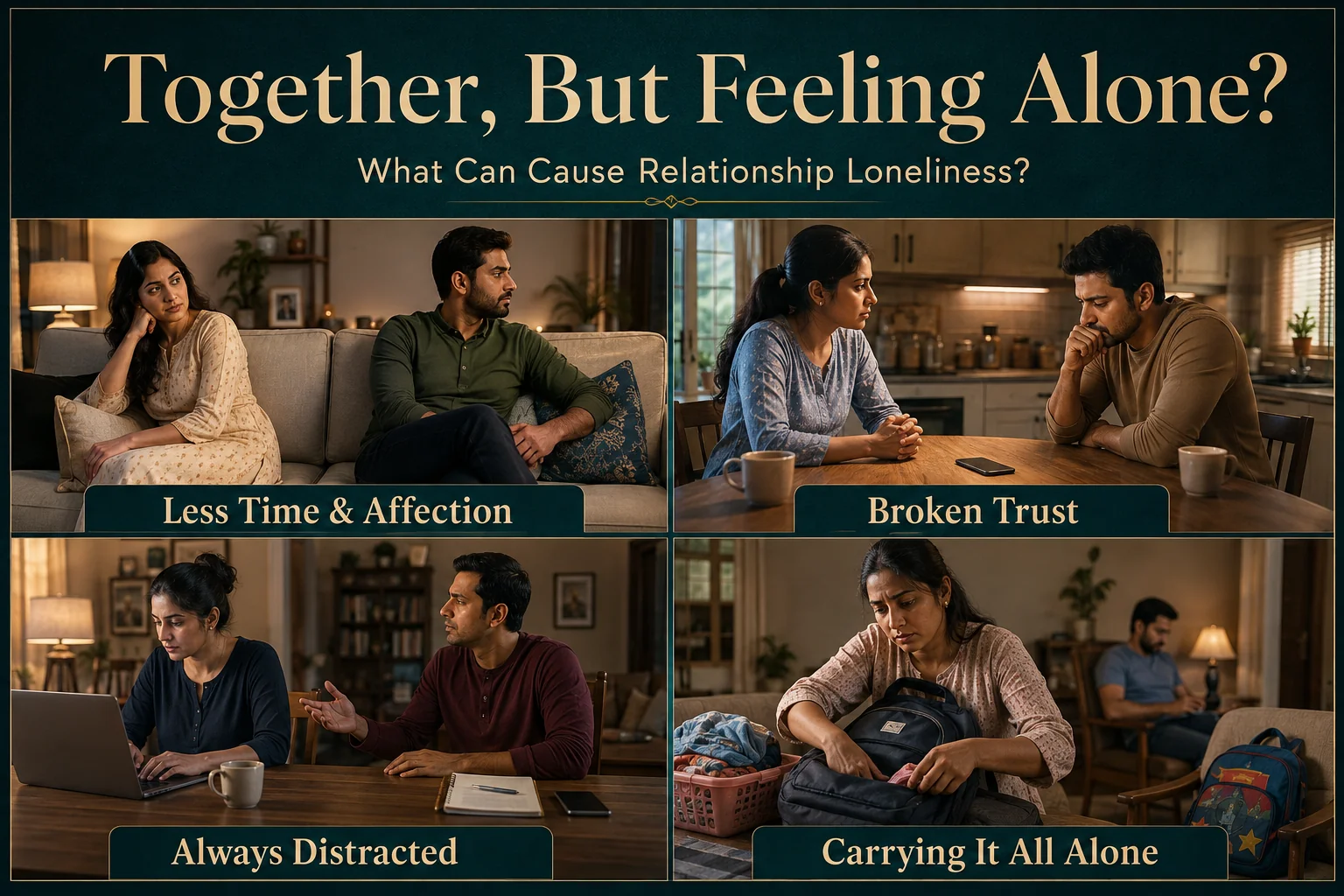
5. Work, Phones or Different Schedules Leave Little Time Together
Your partner comes home, answers work messages, scrolls or starts gaming. You eat together, but barely talk before bed. Balancing work and your marriage becomes harder when work follows you home.
Or your schedules genuinely clash. One leaves for work as the other comes home. Calls in a long-distance relationship keep getting postponed. Days pass without a proper conversation or anything you do together.
6. You Handle Most of the Parenting and Housework
You remember school dates, arrange appointments, plan meals and notice what needs doing. Your partner may help, but only after you ask and explain.
Most conversations become reminders about chores or the children. You need them to share the responsibility, but managing their part becomes another job for you.
7. You Move for the Relationship and Lose Your Own Support
You move to your partner’s city or country, leaving friends, family or your job behind. They still have their usual routine and people to meet. You spend much of the day alone, waiting for them to come home.
If you live with their family, you may have company but little privacy. You struggle to talk openly with your partner or feel at home yourself.
8. Illness, Loss or Retirement Changes Your Life Together
Illness can mean appointments, caring duties and cancelling things you used to enjoy together. After a loss or fertility difficulties, you may want to talk while your partner avoids the subject or copes differently.
Other changes leave more time but less company. Your children move out, or you retire and lose daily contact with colleagues. You and your partner now have more time together, but few shared plans or interests.
9. You Want Different Things From the Relationship
You want regular affection and personal conversations. Your partner is happy with less. You want to discuss marriage, children or where to live, but they keep avoiding the subject or want a different future.
Sometimes these differences were there from the start. You hoped closeness would grow after commitment or marriage, but you still struggle to find things you enjoy or want together.
Psychological Reasons You May Feel Lonely in a Relationship
Feeling alone in a relationship can involve emotional loneliness: you have a partner but do not feel understood or supported. The responses below can overlap and are not diagnoses. Some can also begin before the current relationship.
1. Loss of Emotional Safety Makes You Guarded
After repeated hurt, you may start expecting rejection before anything happens. You watch your partner’s mood, question their intentions or struggle to relax around them.
You want comfort from them, but hesitate to trust it. Even a kind gesture may leave you wondering whether another hurtful interaction will follow. That uncertainty can make it difficult to feel close.
2. Relationship Anxiety and Attachment Patterns Can Leave You Feeling Alone
Even after years together, an anxious attachment pattern can make less attention feel like rejection. You keep asking whether your partner loves you, but reassurance does not last.
With an avoidant pattern, you may want closeness but find depending on someone uncomfortable. You pull away when conversations get personal, leaving your partner unsure what you need.
Both can contribute to loneliness, but your partner’s actual behaviour matters too. Relationship anxiety and attachment therapy can help explore these patterns without assuming every concern comes from your attachment style.
3. Chronic Stress and Emotional Exhaustion
When stress continues for weeks or months, you may struggle to concentrate, become easily irritated or want to be left alone. Even a caring conversation can feel like another demand.
You still want support, but have little energy to explain what is wrong or listen in return. You spend less time connecting and can start feeling lonely despite wanting the space. If this exhaustion persists, stress counselling can help you examine the pressures affecting daily life.
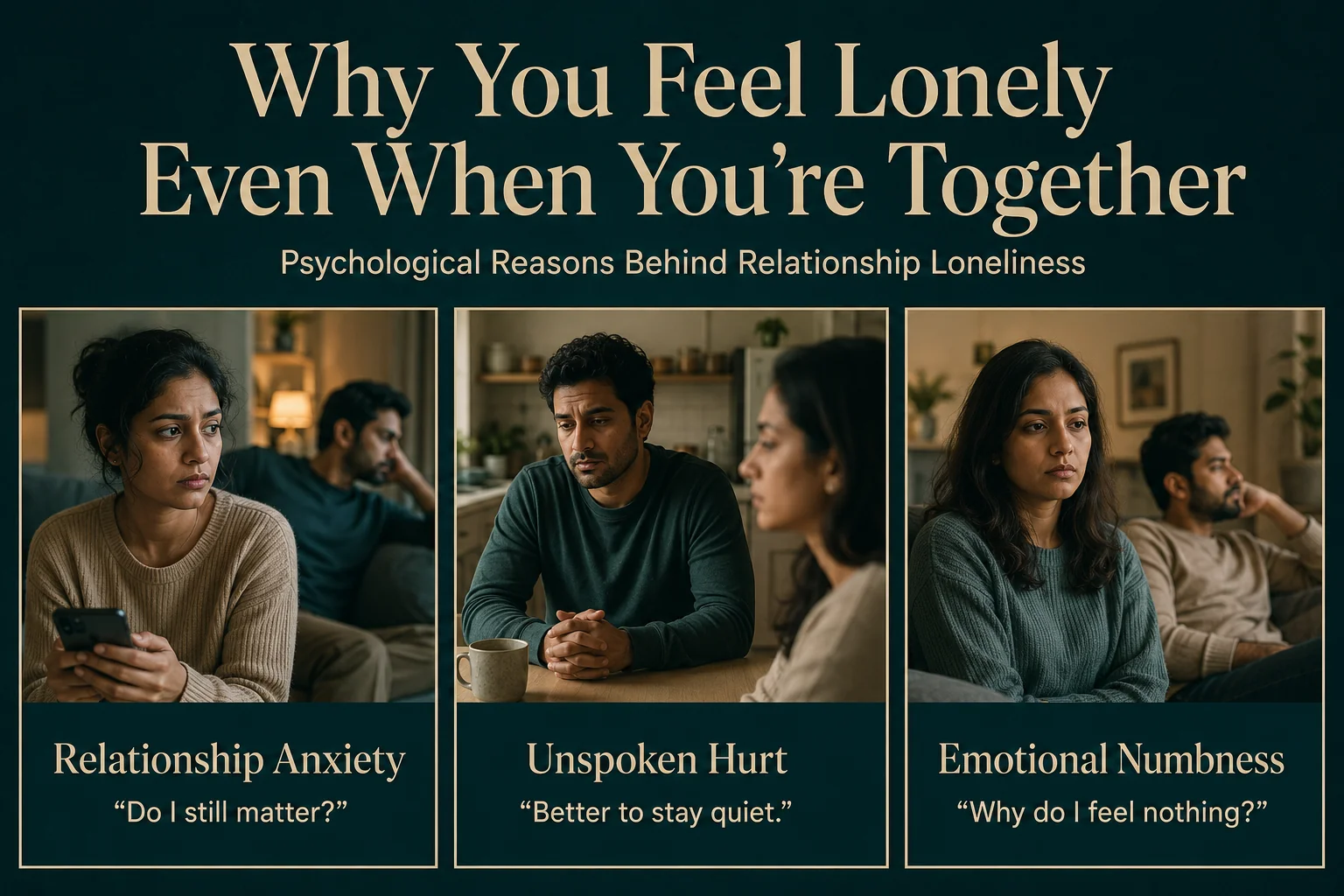
4. Emotional Suppression and Withdrawal
Your partner disrespects you, starts arguments or makes you feel guilty for raising a concern. You want to confront them, but stay silent to avoid another fight.
You swallow your anger, say “it’s fine” and leave your needs unspoken. The relationship may look peaceful, but the feelings have not gone away. You are handling them alone instead of addressing them together.
5. Self-Doubt and Reduced Self-Worth
When your partner repeatedly criticises, compares or rejects you, you may start thinking, “I’m not attractive enough” or “I’m asking for too much.” Their behaviour begins to shape how you see yourself.
You may stop expressing your needs or accept treatment that hurts because you begin believing you do not deserve more. Rather than questioning what is happening in the relationship, you blame yourself. Self-esteem counselling can help you examine these beliefs without excusing how you are being treated.
6. Resentment and Repeated Negative Thoughts
You keep replaying what your partner said, the promises they broke or the times they let you down. Even during a good moment, you think, “How long will this last?”
This repeated thinking, called rumination, can keep the hurt at the centre of your attention. You find it harder to enjoy time together because your thoughts keep returning to what remains unresolved.
7. Hopelessness About Change
You have explained what hurts, heard promises and seen the same problems return. Eventually, you think, “What’s the point? Nothing will change.”
You stop asking for time, affection or support, not because you no longer need them, but because you expect disappointment. You stay in the relationship while no longer expecting it to meet those needs, which can deepen the loneliness.
8. Emotional Numbness
After prolonged stress or hurt, you may feel emotionally flat. You stop getting excited about time together, struggle to respond to affection or feel little during arguments that once upset you.
This numbness can make closeness hard to feel, even when your partner reaches out. It does not automatically mean love is gone. If you also feel disconnected from friends, hobbies and other parts of life, it may extend beyond the relationship.
Are You Lonely or Bored and Dissatisfied?
You may be wondering, “Am I really feeling lonely in my relationship, or am I bored and dissatisfied?”
Ask yourself what you miss:
- Lonely: Someone who listens, understands and supports you.
- Bored: Flirting, surprises and the excitement you had earlier.
- Dissatisfied: More attraction, shared interests or a different future together.
You may have a caring partner but miss being pursued by someone new. If you think, “I deserve more,” ask what “more” means – respect and support, or novelty and attention?
These feelings can overlap, but they are not interchangeable. Less excitement does not automatically mean less love, and wanting new attention does not necessarily mean you are lonely.
How Can a Therapist Help If I Feel Lonely in My Relationship?
A therapist assesses when loneliness began, what happens between you and your partner, and whether anxiety, low mood or past hurt also contribute. Conversations and, where appropriate, questionnaires help guide the approach.
Depending on your needs and the therapist’s training:
- Cognitive Behavioural Therapy (CBT) addresses self-blame, rejection fears and repeated negative thinking without dismissing genuine relationship problems.
- Emotionally Focused Therapy (EFT) helps partners understand emotional needs and patterns of pursuing or withdrawing.
- Gottman-informed work focuses on listening, conflict repair and everyday connection.
- Trauma-informed support considers safety and distress after painful experiences.
LeapHope’s online marriage counselling offers experienced therapists, structured approaches and culturally aware support. You can attend individually or together and continue with your chosen therapist.
Where threats or control are present, safety assessment comes before joint therapy.
Final Thoughts
Whether you are feeling lonely in marriage or while dating, you do not have to assume things will always stay this way. Loneliness can ease, relationship problems can be worked through, and affection and excitement can return.
That takes more than another promise. When both of you listen, address what has hurt and follow through on changes, you give closeness a chance to grow again. If you keep getting stuck, counselling can help you work out what needs to change.
Frequently Asked Questions
Is it normal to feel lonely in a relationship?
Feeling lonely in a relationship can happen occasionally, especially during stress or time apart. But if you regularly feel unheard, unwanted or unable to share your feelings, it deserves attention. Being common does not mean you have to accept it indefinitely.
Why do I feel lonely even though my partner loves me?
You can feel lonely even though your partner expresses love if the support or closeness you need is missing. They may help with responsibilities while you miss personal conversations or affection. Anxiety or difficulty opening up can also contribute; loneliness alone cannot tell you what your partner feels.
Why do I feel more alone with my partner than by myself?
Feeling more alone with your partner can come from expecting connection and repeatedly not receiving it. Sitting beside someone who ignores your attempts to talk may feel more painful than spending time alone by choice.
Can you feel lonely in a new relationship?
You can feel lonely in a new relationship if dates are enjoyable but contact between them is limited, conversations stay superficial or commitment is unclear. Getting to know each other takes time, but it also matters whether both people show interest and respond to each other’s needs.
Can both partners feel lonely in the same relationship?
Both partners can feel lonely in the same relationship while missing different things. One may want more conversation; the other may want affection or shared activities. Each can feel rejected without understanding what the other is asking for.