
Last Updated on September 2, 2026
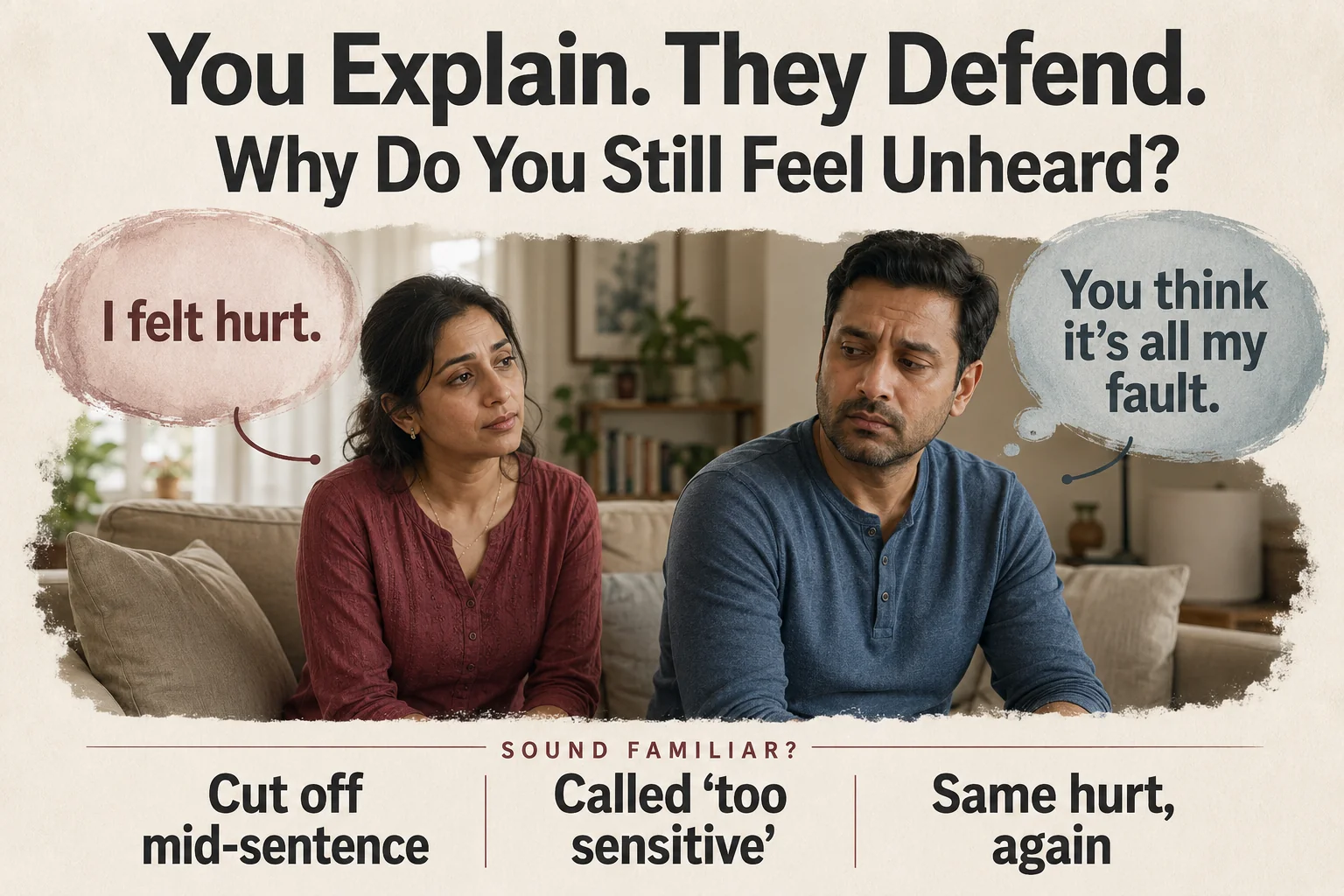
Do you tell your partner that something hurt, only to hear, “You’re overthinking,” or “That’s not what I meant”?
Maybe they give advice before you finish. They bring up your mistakes or say they understand, but keep doing the same thing. You end the talk feeling worse.
If you keep thinking, “My partner doesn’t understand me,” look at what happens when you speak. Do they get the wrong idea, disagree with you or brush your feelings aside? These are different problems, and each needs a different response.
Things Your Partner Does That Make You Feel Emotionally Unheard
One bad reply does not tell you everything about your relationship. Look at what happens often and whether your partner tries to put things right.
1. They Give Advice Before You Finish Explaining
You start talking about a hard day at work. Your partner cuts in: “Speak to your boss,” or “Then find another job.”
You may already know what to do. Right now, you want to explain why you felt hurt or upset.
Some people give advice because they want to help. But a quick answer can feel like they want to end the talk. The Gottman Institute explains why listening should come before advice.
2. They Say “You’re Overreacting” When You Explain Your Feelings
Your partner went ahead with a plan you had hoped to make together. You say you felt left out.
“It’s not a big deal. You’re too sensitive.”
Now you have to explain why you are upset, rather than talk about the plan. They do not need to feel the same way to take your hurt seriously.
3. They Say “I Didn’t Mean It” Instead of Discussing What Hurt
A joke about your pay, weight or family makes everyone laugh. You laugh too, but later tell your partner it hurt.
They reply, “Come on. You know I was joking.”
They may not have meant to hurt you. Still, they can say, “I didn’t know it upset you. I won’t joke about that again.” You are asking them to care about the effect, not admit that they planned to hurt you.
4. They Bring Up Your Mistakes Whenever You Raise a Concern
You ask why they did not call when their plans changed.
“You didn’t call me last week either.”
They may have a fair point about last week. But both issues need time. If your concern always turns into a list of your faults, you may stop bringing things up.
Over time, you might doubt yourself and fear speaking up, even when something needs to be said.
5. They Check Their Phone or Change the Subject While You Talk
You are worried about your mum’s test results. Your partner keeps scrolling, says “hmm,” then asks what is for dinner.
You may ask, “Did you hear what I just said?”
Everyone loses focus at times. The problem is when your worries rarely get their full attention. If work messages keep taking over, you may also need to look at how work affects your marriage.
6. They Leave Hard Talks and Never Come Back to Them
You start crying or raise an issue they do not want to discuss. They leave the room, stop replying or say, “Not this again.”
Later, they act as if nothing happened.
A break can help when someone is too upset to listen. But it needs a way back: “I need some time to calm down. Can we talk after dinner?” The next step is to return as promised.
7. They Tell You Other People Have Bigger Problems
You say you are worn out from work, meals, school runs and broken sleep.
“Other parents do all that without help.”
Knowing that other people struggle does not make you less tired. You can be glad to have a family and still need help. That reply may leave you feeling guilty for asking.
8. They Say “I Understand” but Keep Doing What Hurts
You ask your partner not to share your private arguments with friends. They agree. A few weeks later, a friend mentions something you only told your partner.
This may no longer be a problem with how you explain yourself.
Ask what happened to the agreement. Did they forget? Do they disagree with it? Are they willing to keep it? You need a clear answer and a change, not just another “sorry.”
It is also fair for either partner to seek private support from a trusted person or therapist. That is different from sharing personal details for gossip.
9. You Listen to Their Problems, but They Rarely Make Time for Yours
You hear about their boss, money worries and family stress. When it is your turn, they are too tired or say they do not want “more drama.”
No one can listen at every moment. “Can we talk tonight when I can focus?” is a fair reply.
But if that time never comes, you are doing most of the listening and getting little support back.
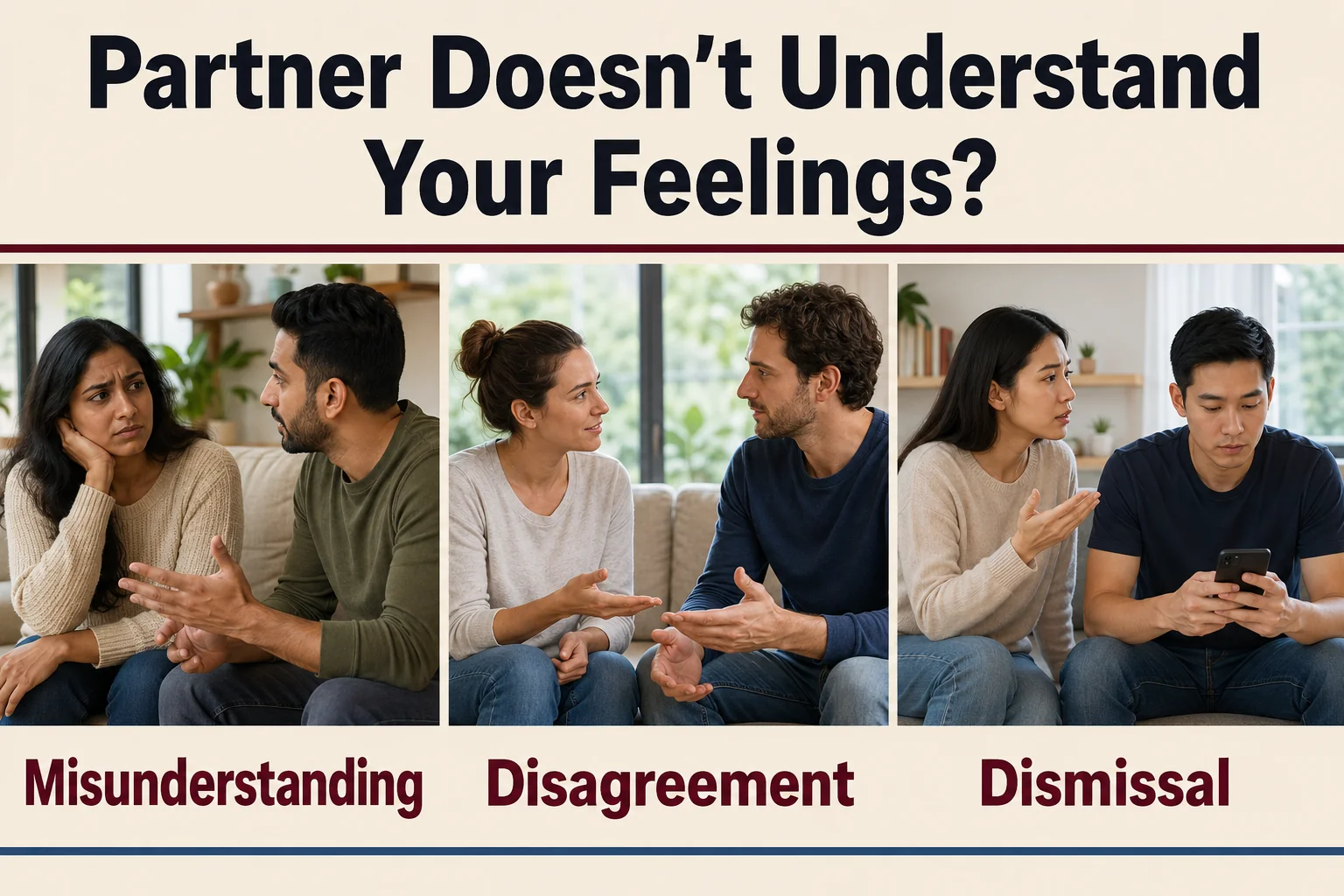
Does Your Partner Misunderstand You, Disagree or Dismiss Your Feelings?
Imagine your partner makes weekend plans with friends. You had hoped to spend that time together.
Their reply can help you see where the problem lies.
They Misunderstood You
“I thought you wanted a quiet weekend on your own. I didn’t know you wanted us to go out.”
They got the wrong idea. Once you explain, they ask questions or rethink the plan.
They Understand but Disagree
“I get why you’re upset. I still want to see my friends. Can we plan some time for us too?”
They hear your feelings but do not agree to everything you want. Both of you can have needs, and those needs may clash.
They Dismiss Your Feelings
“You’re so needy. Stop complaining.”
If you think, “My partner dismisses my feelings,” notice whether they try to understand or just shut down the talk.
Taking your feelings seriously does not mean they must agree with every thought or request. It means they can hear that you are hurt without mocking you or telling you that your feelings do not matter.
What to Do When Your Partner Doesn’t Understand Your Feelings
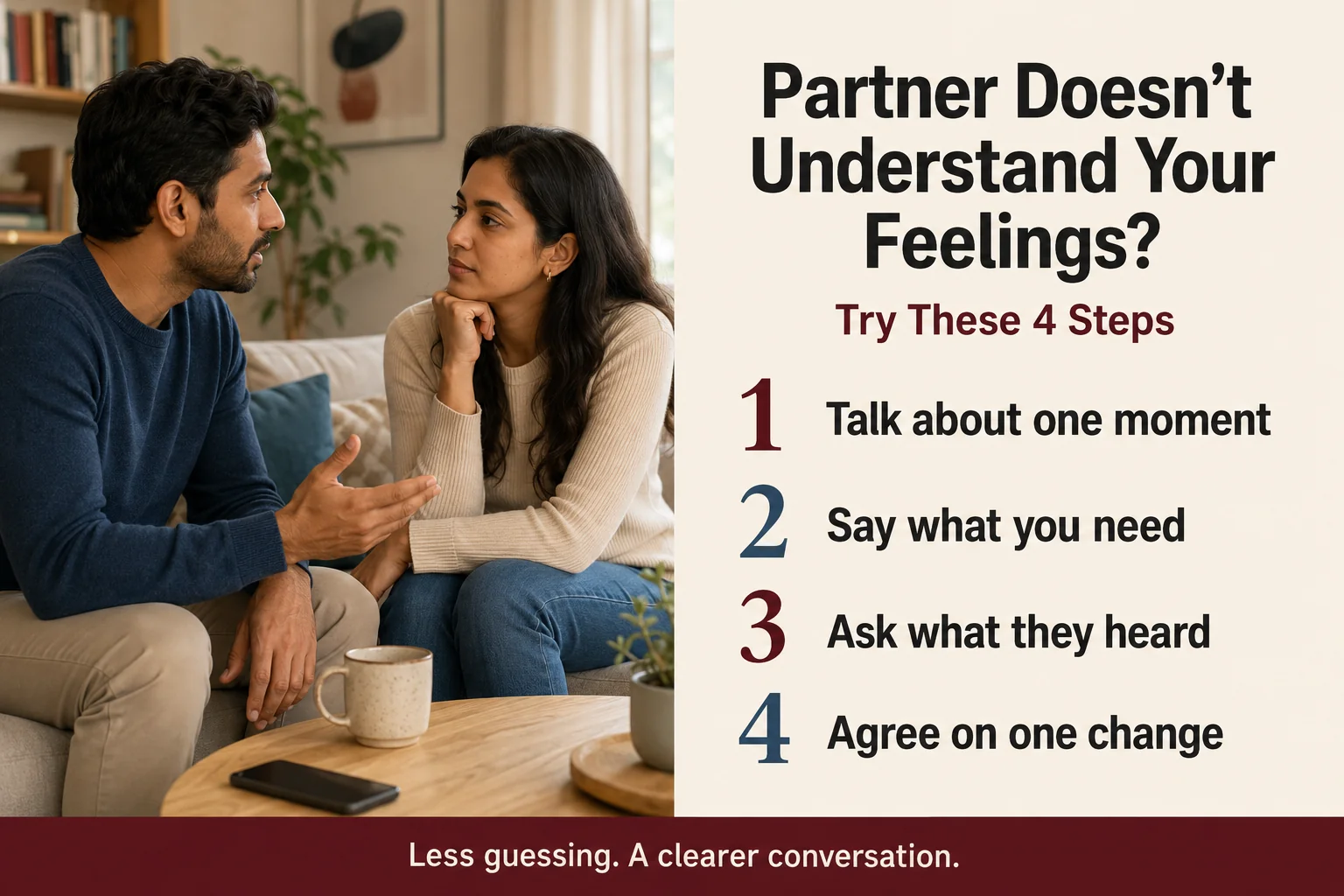
Talk About One Thing That Happened
“You never understand me” shows that you are upset, but your partner may not know which problem to address.
Try one clear example:
“When you cancelled our date and didn’t tell me, I waited all evening. I felt let down. Please call me if the plan changes.”
Stay with that issue long enough to discuss it. Bringing in every past hurt can make it hard to work out what needs to happen now.
Tell Them What Kind of Help You Need
Do you want them to listen, give you a hug or take a task off your hands? Say so.
- “Can you hear me out before giving advice?”
- “Could you sit with me for a bit? I’m upset.”
- “I’m too tired to do bedtime tonight. Can you take over?”
You should not have to teach your partner every kind response. But this can help if they care and are unsure what to do.
Ask What They Think You Mean
If you keep arguing about a point you did not make, pause.
“What do you think I’m asking for?”
They might say, “You think I never help.” You can reply, “I’m asking you to get the children ready for school without waiting for me to tell you each step.”
This checks the message they heard. It is not a test of whether they can repeat your words.
Give Their Concern a Turn Too
Your partner may also feel hurt. You can hear them without losing the issue you raised.
“I want to talk about that too. Can we finish this first, then hear your side?”
If either of you is too upset to listen, agree on a time to come back. If this happens often, help with managing strong feelings may be useful alongside work on how you talk.
Agree on One Clear Change
Instead of ending with “Try harder,” choose something you can both see.
For example: “When one of us says we need to talk about something important, we put our phones down. If it is a bad time, we agree on another time that day.”
Start with the change that matters most. Check later whether it helped and whether you both kept the agreement.
What if You Have Already Explained Your Feelings Many Times?
You may have tried calm talks, long texts and clear requests. If nothing changes, another speech may not help.
Ask: “We have talked about this several times. What is stopping us from changing it?”
Listen to the answer, then look at what happens next.
A partner who is trying may still get things wrong. But they might catch themselves, ask for help or bring up the issue without you chasing them.
If they do not agree to your request, you need to discuss that honestly. For example, they can care that you miss them without agreeing to spend every free hour together.
If they laugh at you, refuse to talk or make promises only to end the argument, you cannot fix that by choosing better words.
Being unheard for a long time can leave you feeling lonely in your relationship. You can seek support on your own, even if your partner will not join you.
If you fear their reaction, or they threaten, hurt or control you, focus on safety first. Get private help from a trained professional or abuse support service. Couples therapy may not be safe in that situation.
How Can Couples Therapy Help You Feel Understood?
A therapist can ask you to talk through a recent argument, step by step.
What did you say? What did your partner hear? When did the talk turn into blame, silence or shouting?
For example, you may mean, “I miss spending time with you.” Your partner may hear, “You do nothing right.” The therapist can help you check those meanings before the argument takes over.
They may also look at:
- Hurt from past lies or broken trust
- Different needs for time, space or affection
- Stress, sleep and mental health
- Family rules about showing feelings
- Problems both of you avoid discussing
In sessions, you can practise listening, asking clear questions and staying with a hard topic. If your needs do not match, therapy can help you talk about that too.
LeapHope’s online marriage counselling offers support from experienced psychologists and couples therapists. Their methods may include Gottman-based work, emotion-focused therapy or CBT, based on their training and your needs.
You can attend together or begin on your own. The goal is to understand what is going wrong and work out what each person is willing to change.
Final Thoughts
You do not need perfect words to deserve a kind reply. Your partner may get it wrong at first, but they can ask, listen and try again.
Look for small changes: they put the phone down, let you finish or remember what you asked. Those moments can help you feel close again.
But it takes both of you. You cannot do all the talking, listening and changing for two people.
FAQs
Why Doesn’t My Boyfriend Understand Me Emotionally?
Your boyfriend may not understand you emotionally if he gives advice when you want comfort or hears your hurt as blame. Tell him what would help. Notice whether he asks questions and tries, rather than assuming he should know—or accepting a hurtful reply each time.
What Should I Do When My Husband Doesn’t Understand My Feelings?
When your husband doesn’t understand your feelings, use one clear example and say what you need. “I’m tired” may need a more direct request, such as “Please take over bedtime.” If you have already asked, talk about why the agreed change has not happened.
Why Does My Wife Say I Don’t Understand Her Even When I Listen?
Your wife may feel you do not understand her if you stay quiet but give no sign of what you heard. Try, “It sounds like you felt left out. Have I got that right?” She may also need you to act on a request you have already discussed.
Can My Partner Love Me but Still Not Understand My Feelings?
A partner can care about you and still struggle to understand your feelings. Love does not make someone good at every hard talk. But care should include a willingness to learn. This problem alone cannot tell you whether they love you.
Why Does My Partner Understand Other People’s Feelings but Not Mine?
Your partner may find it harder to hear your feelings when the issue involves something they did. They may rush to defend themselves. Past fights can also shape their reply. These are possible reasons, but they do not make it okay to treat you badly.