

Last Updated on October 28, 2026
Reviewed by Aradhana Gambhir, Senior Child Psychologist & Counsellor.
How much should you push your child to study? When they complain about homework or ask to stop tuition, it can be difficult to decide whether they need encouragement, a break or a different kind of help.
You want to protect their wellbeing without overlooking their education. You may also worry that easing expectations will leave them behind, especially when other children seem to be doing more.
The place to start is understanding what schoolwork has become like for your child.
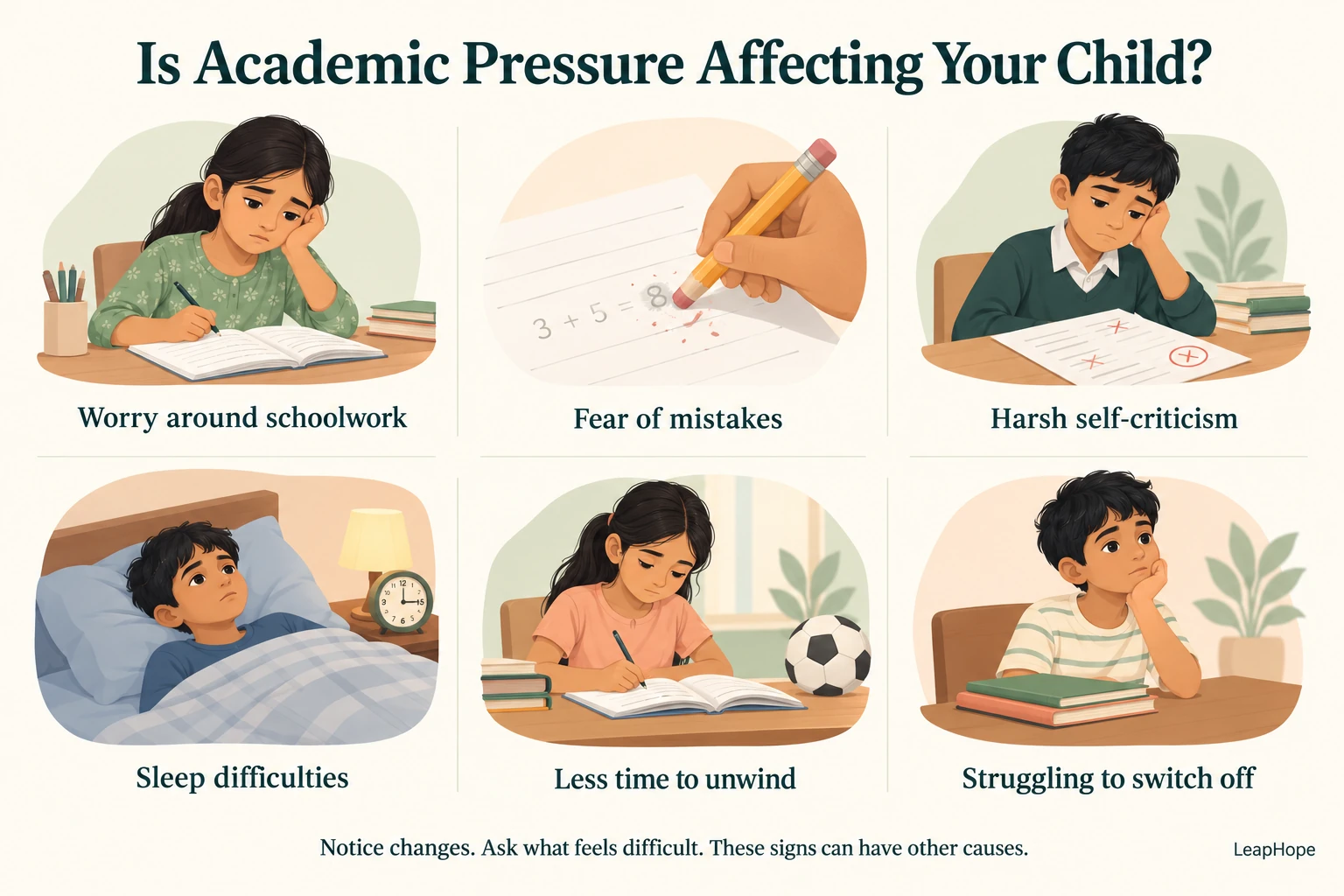
How to Tell If Academic Pressure Is Affecting Your Child
The changes below deserve attention, especially when they keep returning. They can have several causes, so consider them alongside what your child says about school and studying.
Schoolwork Regularly Leaves Them Worried or Upset
Feeling nervous before an examination is common. Worry needs closer attention when it continues after the task is finished or makes ordinary assignments and lessons difficult to manage.
Find out what your child is worried about. Not understanding a subject, having too much homework and fearing someone’s reaction to a low mark are different problems.
Notice whether the distress centres on one lesson or occurs throughout the week. Ask about the work, teacher expectations and classmates. A difficulty that appears to concern studying may also involve teasing, embarrassment or feeling unable to ask for help.
Pressure can remain even when parents do not demand high marks. Children may compare themselves with friends or believe they must maintain a particular position in class.
They Become Afraid to Make Mistakes
Repeatedly rubbing out answers, restarting work or asking you to check the same response can mean that getting something wrong feels difficult to tolerate.
Ask what concerns your child about making a mistake. They may be unsure of the answer, worried about criticism or afraid of being compared with others. Understanding the task does not necessarily remove that fear.
If the behaviour repeatedly delays work or prevents participation, discuss it with the teacher. More practice may not address the concern. LeapHope’s guide to perfectionism in children explains this pattern further.
A Disappointing Mark Changes How They See Themselves
Pay attention when disappointment turns into statements such as “I’m stupid” or “I’m not good enough.”
An occasional frustrated comment is different from repeatedly treating results as proof of personal failure. Ask what the result means to your child and listen before reassuring them.
A study following 3,409 early adolescents found a link between self-worth that depends on achievement and school burnout. It does not show that disappointment over marks inevitably leads to burnout.
The practical concern is whether your child can separate a difficult result from their view of themselves. Classroom rankings, comparisons and expectations about future success may influence how they interpret a mark.
Studying Is Affecting Their Sleep, Health or Time With Others
Consider the whole day, including travel, tuition and homework from extra lessons.
If completing everything regularly cuts into sleep or leaves no time for activities your child enjoys, review the schedule. Also distinguish having too little time from losing interest. A child who no longer wants to see friends or take part in favourite activities may need a broader assessment.
Headaches, stomachaches, appetite changes and sleep difficulties can accompany anxiety. They can also have physical causes. Do not dismiss recurring symptoms as an excuse to avoid studying or assume they are caused by pressure.
A doctor can investigate physical complaints and consider whether further support is needed.
They Get Good Marks but Cannot Relax About Studying
Good results can make distress less visible.
Some children continue achieving but feel unable to take a break or become deeply distressed by results below their usual standard. Quiet, cooperative children may not tell adults how worried they feel.
Working hard and wanting to succeed are not themselves warning signs. Consider whether your child can enjoy time away from studying, adjust plans and recover from ordinary setbacks.
Ask how manageable the preparation felt, as well as how the test went. The answer may tell you something the final mark cannot.
Schoolwork Has Become Harder to Manage
When a child who previously coped begins struggling, check what has changed.
Secondary school can introduce several teachers, different homework platforms and greater responsibility for deadlines. Missing an assignment does not automatically mean the child is careless.
There may also be difficulty with reading, writing, attention or understanding instructions. Work can take much longer when the child needs support with the skills it requires.
Discuss persistent problems with the school. The American Academy of Pediatrics recommends considering learning, emotional, developmental and medical factors when children struggle academically. Reducing demands may help, but it should not replace investigating the difficulty.
What Parents Can Do to Help
Listen Before Deciding What Needs to Change
Choose a time when neither of you is already upset about unfinished work. Ask which part is difficult and allow your child to explain without immediately correcting their view.
If they cannot describe it, review an assignment together and notice where they get stuck. This may show whether they need an explanation, help organising the work or a discussion about expectations.
Be willing to hear that something intended as encouragement has felt stressful. Acknowledging that gives you a starting point for changing it.
Check What Tuition Is Helping Your Child Learn
Other families’ choices can make you question whether your child needs more lessons. Start with the reason for attending.
Is your child understanding the subject better? Does the tutor explain difficulties? How much additional homework and travel does it involve?
If your child wants to stop, ask why. Discuss the concern with the tutor before deciding whether to change the teaching approach, schedule or lessons themselves. Continuing unchanged is not the only alternative to stopping.
There is no single tuition timetable that suits every child.
Keep Expectations Specific and Realistic
Repeated instructions to improve marks offer little help if the child does not know how.
Speak with the teacher about the skills that need attention and the support available. Agree on something your child can work towards, taking account of their current abilities.
Avoid using classmates’ results as targets. Where there is a genuine concern about progress, ask what improvement would look like for your child and how it can be supported.
Help Without Hiding the Difficulty
Explaining instructions or helping your child organise an assignment can be useful. If you regularly supply answers, tell the teacher how much help the work requires.
Share what your child can complete independently and where assistance becomes necessary. Otherwise, finished homework may give an inaccurate picture of their understanding.
Ask what the teacher observes in class. Support may involve clearer instructions, additional teaching, help with organisation or assessment. Include concerns about comparisons, teasing or fear of punishment when these are relevant.
When to Seek Professional Help

Seek an assessment when distress is significant, worsening or interfering with everyday life. You do not need to wait for academic performance to decline.
A doctor can investigate physical symptoms and health concerns. A qualified child mental-health professional can assess emotional difficulties. Ongoing learning difficulties may also need a specialist assessment.
The appropriate support depends on what the assessment finds. More than one professional may need to be involved.
For families considering LeapHope, school stress counselling addresses emotional difficulties connected with school. Parenting counselling is available for parents seeking help with repeated conflict or their responses to their child.
You can review child counselling options for India, the UAE, the UK and the USA.
If your child talks about self-harm, wanting to die or being unable to stay safe, seek urgent professional help. If there is immediate danger, stay with them and contact local emergency services or go to the nearest emergency department.
Let’s Recap
Before increasing study time or removing lessons, understand the difficulty. Your child’s experience, the demands of the work and information from school should guide the response. Seek assessment when the problem remains unclear or distress is affecting daily life.
Clinical resources
- NHS: Anxiety in children — signs of anxiety, support at home and when to seek help.
- American Academy of Child and Adolescent Psychiatry: Anxiety and Children — anxiety that may be overlooked and the role of assessment.
- American Academy of Pediatrics: What to Do If Your Child Is Falling Behind in School — investigating school difficulties and coordinating support.
- Achievement-dependent self-esteem and school burnout — the longitudinal study discussed in this article.