

Last Updated on October 22, 2026
Clinically Reviewed by Mohit Yadav, RCI-Registered Clinical Psychologist (CRR A100623)
Your child was sleeping alone without much trouble a few weeks ago. Now, bedtime has become a struggle. They ask you not to leave, worry that something bad might happen or insist that you stay until they fall asleep. The moment you get up, they call you back.
You may have tried reassuring them, leaving a light on or sitting beside their bed. These things help for a while, but the fear returns the next evening.
Bedtime anxiety in children can make an ordinary part of the day feel frightening. Your child may be tired and want to sleep, yet feel unable to settle without knowing you are nearby.
Understanding what makes bedtime difficult is the first step towards helping your child feel more secure and confident.
What Is Bedtime Anxiety in Children?
Bedtime anxiety describes fear or worry that appears or becomes stronger when a child is preparing to sleep.
Some children fear darkness or being alone. Others worry about their parents’ safety, tomorrow’s school day or something bad happening during the night.
A child who is anxious may feel sleepy but remain alert because they are frightened.
Bedtime anxiety is not a separate psychiatric diagnosis. It can be part of normal childhood development, although persistent fears may sometimes be associated with separation anxiety or another anxiety disorder.
This matters because a child who is frightened needs a different response from one who simply isn’t ready to sleep.
Signs of Bedtime Anxiety in Children
Your child may not say, “I’m anxious.” Instead, you might notice a change in their behaviour as bedtime approaches.
Common signs include:
- Crying or becoming distressed: Your child becomes visibly upset when you mention bedtime or prepare to leave.
- Refusing to sleep alone: They insist you remain beside them or ask to sleep in your bed.
- Worrying about safety: They fear darkness, unfamiliar noises or something happening to you overnight.
- Repeated reassurance-seeking: They ask the same questions about being safe or whether you will come back.
- Delaying bedtime: They repeatedly leave their room or find reasons to keep you nearby.
- Physical complaints: They mention a stomachache, nausea or feeling unwell when bedtime approaches.
- Difficulty falling asleep: They remain awake because they cannot stop worrying.
Not every child who delays bedtime is anxious. Look for signs that fear, rather than simply not feeling sleepy, is driving the behaviour.
If your child also worries frequently at school, during social activities or in other everyday situations, understanding the wider signs of anxiety in children may be useful.
Why Does My Child Get Anxious at Night?
A child who seems comfortable during the day may become frightened when the house is quiet and they are expected to settle without you.
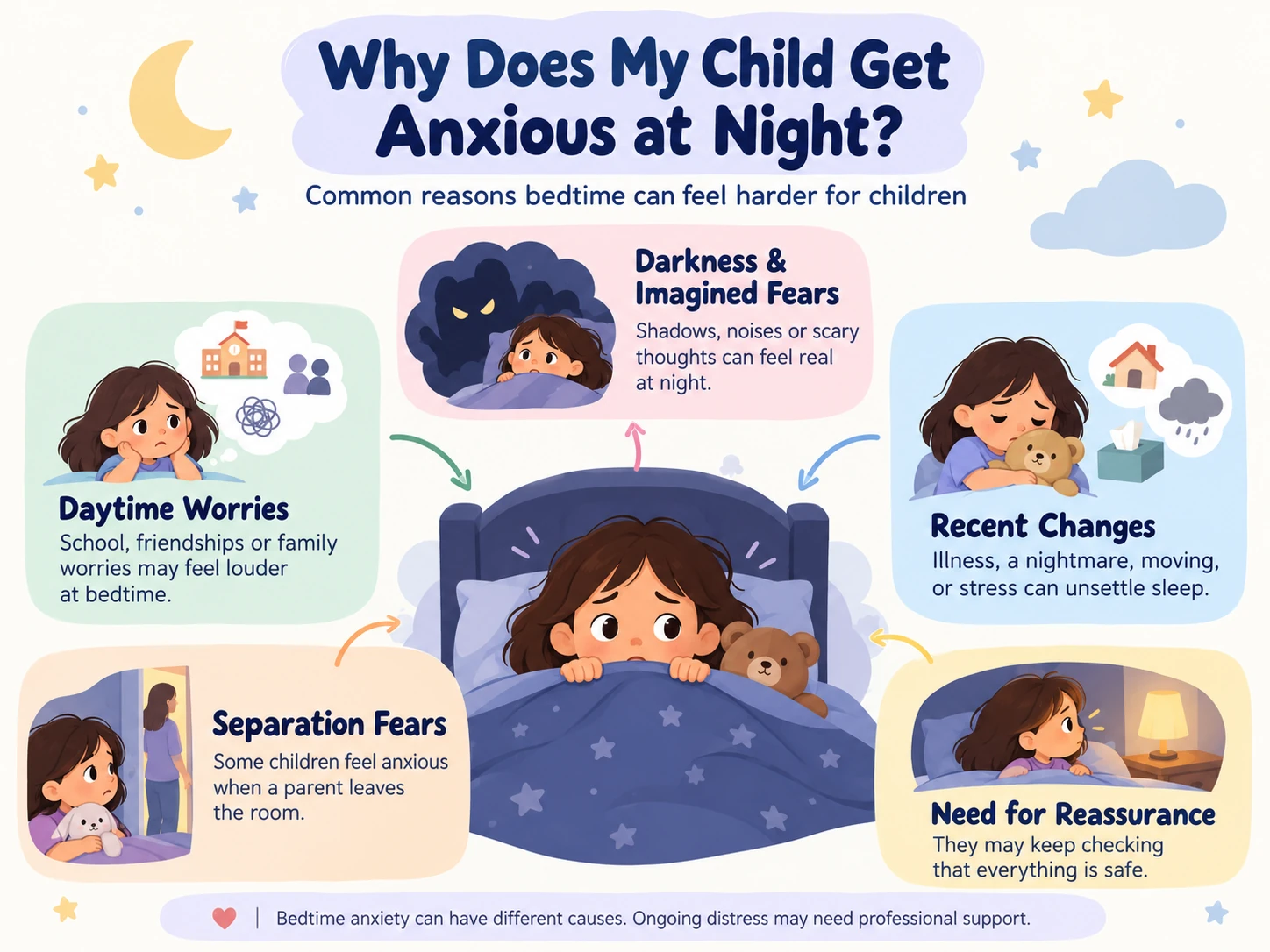
There may be several reasons.
Fear of Darkness or Imagined Threats
Young children can become frightened by shadows, unfamiliar sounds or things they imagine might be hiding in their bedroom.
A frightening film, story or dream may make an ordinary noise seem threatening.
These experiences can occur during normal development. But when fears become persistent and interfere with sleep or daily activities, parents may need to consider whether they are part of broader childhood fears or phobias.
Worries About School, Family or Tomorrow
Some children become more aware of worries once the day’s activities have ended.
Your child may suddenly remember an argument with a friend, worry about an examination or wonder whether a family member is safe.
They might not mention these concerns during the day because they are distracted or unsure how to explain them.
Why Has My Child Suddenly Become Afraid to Sleep Alone?
If your child previously slept comfortably but now becomes upset when you leave, think about when the change began.
Did they recently have a frightening nightmare? Have they been unwell, moved bedrooms, started a new school or experienced tension at home?
Sometimes a particular experience makes bedtime feel less predictable or safe. At other times, the reason is not immediately clear.
Ask your child gently what feels different. You do not need to identify a dramatic event or assume that something traumatic has happened.
Pay attention to whether the fear happens only at bedtime or has begun affecting other parts of their day. That distinction can help you understand what kind of support they need.
Separation Anxiety in Children at Bedtime
Your child may happily play without you during the afternoon but become distressed when you leave their bedroom.
Bedtime can feel different because the separation is longer, the room is quiet and your child cannot easily see what you are doing.
Separation-related fears are common in young children and may temporarily reappear during stressful periods.
For example, your child may ask you to promise that you will still be home when they wake up.
However, if they also become intensely distressed when you leave for work, struggle with school drop-offs or repeatedly worry that something will happen to you, the anxiety may extend beyond bedtime.
A professional assessment can help distinguish ordinary separation fears from separation anxiety disorder when symptoms are persistent and interfere with everyday functioning.
Our article on why children become very clingy explores difficulties with separation in other situations.
How Does Bedtime Anxiety Change With Age?
The things children fear often change as they grow.
| Age group | Bedtime fears parents may notice |
|---|---|
| Toddlers (1–3 years) | Distress when separated from a parent or when familiar routines change |
| Preschoolers (3–5 years) | Darkness, imaginary creatures, unfamiliar noises or sleeping alone |
| School-age children (6–9 years) | Safety concerns, nightmares, separation or something bad happening |
| Older children (10–12 years) | School pressure, friendships, family concerns or worries about the future |
| Teenagers | Persistent worrying, overthinking or anxiety about the following day |
These are possible patterns, not rules about what a child should or should not fear at a particular age.
A ten-year-old who is afraid of the dark is not necessarily experiencing something unusual. What matters is how strongly the fear affects them.
Normal Bedtime Fears vs Anxiety That Needs Attention
Occasional fears are part of growing up. But when your child’s distress becomes persistent or begins affecting everyday life, it deserves closer attention.
| Often manageable with ordinary support | May need professional assessment |
|---|---|
| Occasionally asking you to leave a light on | Intense fear regularly prevents the child from sleeping |
| Wanting extra comfort after a nightmare | Severe distress whenever a parent leaves |
| Brief bedtime worries during a stressful week | Persistent anxiety that disrupts sleep and daytime functioning |
| Preferring a parent nearby during a temporary change | Increasing difficulty managing ordinary separations |
| Feeling nervous before an important school day | Worries spread to school, friendships or other daily activities |
Parents do not need to wait until a child has severe symptoms before seeking guidance.
If your child struggles with sleep without clear signs of fear, other causes may be worth considering. Our guide to sleep problems in children explains common sleep difficulties beyond anxiety.
How Can Parents Help a Child With Bedtime Anxiety?
The aim is not to convince your child that they should never feel afraid. It is to help them feel understood while learning that they can manage bedtime without needing constant protection from their worries.
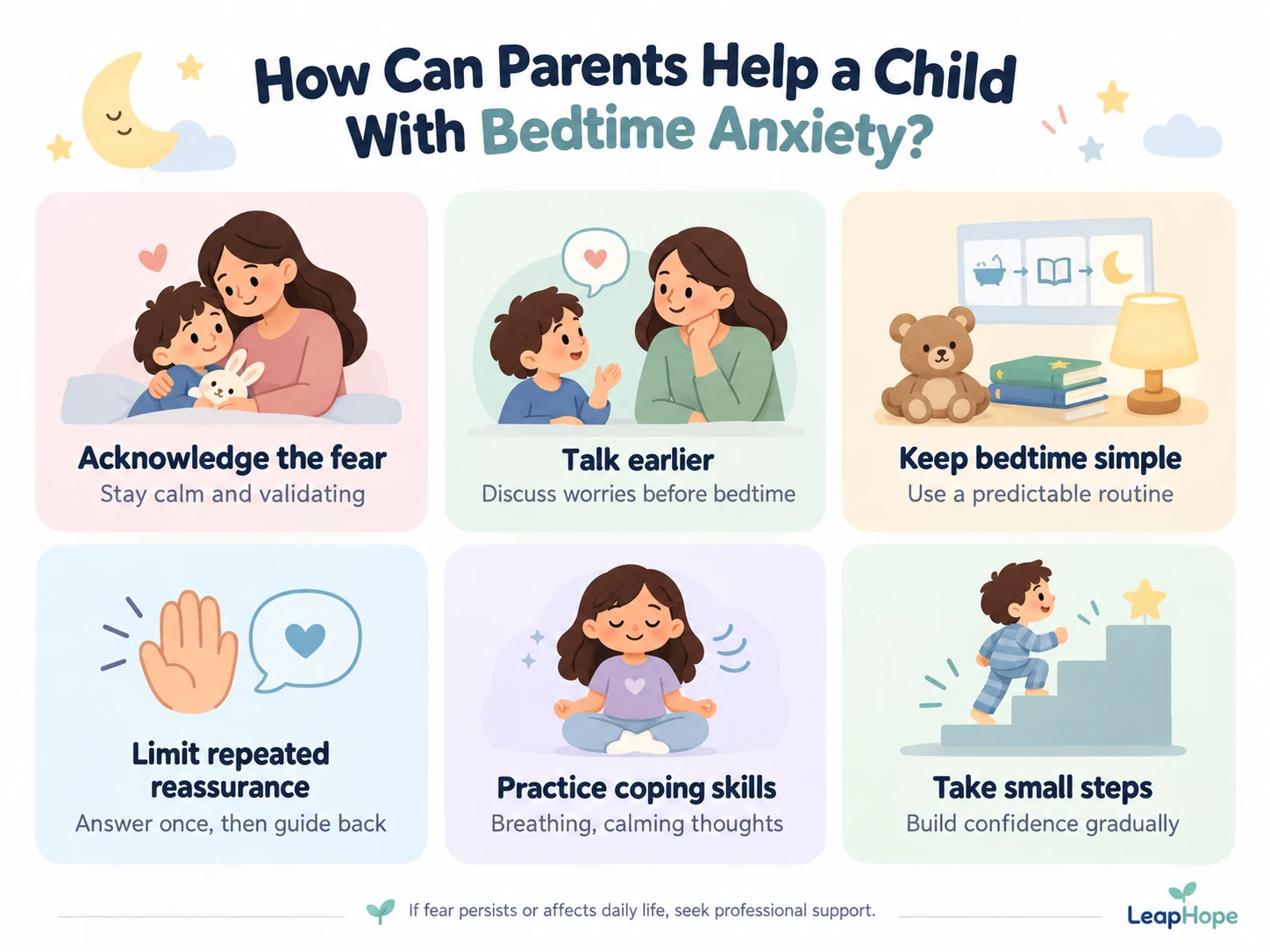
1. Acknowledge Their Fear Without Agreeing That They Are in Danger
Imagine your child says, “There’s something hiding behind the curtain.”
Telling them they are being silly may make them feel misunderstood. But repeatedly searching the bedroom for imaginary dangers can suggest there really is something to find.
You could say:
“I can see that shadow is frightening you. It’s the curtain moving, and you’re safe in your room.”
You are taking their feelings seriously without treating the imagined danger as real.
A familiar toy or dim night-light may provide comfort without turning bedtime into an elaborate safety-checking routine.
2. Talk About the Fear When Your Child Is Calm
If your child is crying at bedtime, they may struggle to explain what is wrong.
Try talking earlier in the evening or during the next day.
Ask what feels most difficult about sleeping. Is it being alone, the darkness, a particular sound or something they are worried might happen?
A younger child may find drawing or playing easier than answering direct questions.
If they cannot explain, avoid repeatedly questioning them. You can still help them feel supported while observing when the anxiety occurs.
3. Keep Bedtime Predictable Without Adding Endless Rituals
A familiar routine can help a child know what to expect.
For example, your child might change into nightclothes, read a story with you and then settle into bed.
But notice whether the routine keeps growing because your child feels they must complete another check, ask another question or repeat something before they can sleep.
When that happens, adding more rituals may make bedtime increasingly difficult.
Keep the routine simple and agree on expectations when your child is calm.
4. Respond to Repeated Reassurance With Warmth and Consistency
Your child asks whether you will still be home in the morning.
You answer, but they ask again five minutes later. Soon, they want another promise before they can settle.
Reassurance can offer temporary relief. The difficulty arises when your child feels unable to manage uncertainty without asking repeatedly.
Give a clear, comforting answer. If they ask again, gently remind them that you have already answered and help them return to the agreed bedtime plan.
Do not ignore genuine distress or refuse comfort as a punishment.
The aim is to help your child gradually become less dependent on repeated reassurance, not to make them feel alone with their fear.
You can read more about why children constantly seek reassurance.
5. Practise Managing Worries During the Day
A child who is extremely frightened at bedtime may find it difficult to learn a new coping strategy at that moment.
Practise when they feel calm.
An older child might learn to recognise the difference between a worried thought and something that is actually happening.
For instance:
“I’m worried Mum might disappear” is a frightening thought, not evidence that Mum is going to disappear.
Some children may also find slow breathing or a brief calming exercise helpful.
These skills can support emotional regulation, but they are not substitutes for addressing persistent or severe anxiety.
6. Help Your Child Build Confidence in Small Steps
When bedtime has become difficult, choose one manageable change rather than expecting your child to overcome every fear at once.
Discuss the step beforehand, explain what will happen and recognise their effort.
For example, if your child is frightened when you move away from their bed, you might agree to sit in a nearby chair instead. The next section explains how this can work in practice.
7. Look Beyond Bedtime When Nothing Is Improving
If your child has become increasingly anxious despite your efforts, consider whether the problem is limited to nighttime.
Are they also avoiding school, worrying throughout the day or becoming distressed during ordinary separations?
These patterns may suggest that broader anxiety needs attention.
If they are in pain, snore regularly or have other physical symptoms, consult a paediatrician rather than assuming their difficulty is psychological.
What If Your Child Refuses to Sleep Alone?
Suppose your seven-year-old has started insisting that you stay until they fall asleep. If you stand up, they panic and ask you to sit down again.
Instead of deciding what to do during another difficult bedtime, discuss a small plan together during the day.
You might agree that you will sit in a chair near the bed rather than lying beside them. Explain where you will be, what you will do if they call and what the next small step might look like when they feel ready.
If they manage to stay in bed while you sit farther away, acknowledge that effort. You do not need to wait until they fall asleep independently before recognising progress.
As their confidence grows, you can gradually reduce your presence.
For some children, particularly those with significant anxiety, sensory needs or developmental differences, this may require more individualised guidance.
The goal is to help your child feel increasingly capable of sleeping without constant reassurance—not to force independence through overwhelming distress.
When Should Parents Seek Professional Help for Bedtime Anxiety?
It may be time to speak with a child psychologist or paediatrician if:
- Your child experiences intense distress around bedtime on a regular basis.
- Fear causes persistent sleep loss or significant daytime tiredness.
- They avoid school, social activities or ordinary separations because of anxiety.
- Repeated reassurance or checking becomes difficult to manage.
- Bedtime fears are getting stronger despite appropriate support.
- Your child or family is struggling to manage the situation.
A professional can assess whether the difficulty is a developmentally common fear, part of a broader anxiety disorder or related to another concern.
If your child has loud habitual snoring, breathing pauses, persistent pain or unexplained physical symptoms, medical assessment is important.
How Is Bedtime Anxiety in Children Treated?
Not every child with bedtime fears needs therapy. Many can become more comfortable with consistent, age-appropriate parental support.
When anxiety is persistent or significantly affects daily functioning, psychological treatment may help.
Cognitive Behavioural Therapy (CBT) is an evidence-based treatment for childhood anxiety disorders. Depending on the child’s age and needs, treatment may help them recognise anxious predictions, develop coping skills and gradually approach situations they fear.
Parent-focused treatment can also be useful. Supportive Parenting for Anxious Childhood Emotions (SPACE), for example, helps parents respond supportively while reducing patterns of accommodation that may maintain anxiety.
A randomised clinical trial involving children aged 7–14 with anxiety disorders found SPACE was noninferior to child-focused CBT on the study’s anxiety outcomes. This does not mean the study established SPACE as a specific cure for bedtime anxiety, or that it suits every family.
If persistent bedtime fears are affecting your child’s sleep and wellbeing, online child anxiety counselling may help families understand and address the underlying emotional concerns.
Treatment should be chosen following an appropriate assessment of the child’s needs.
Final Thoughts
If bedtime has become a nightly struggle, try to understand what your child fears will happen when you leave. That fear, rather than simply their refusal to sleep alone, is often the more useful starting point.
With patient support and manageable steps, many children can become more confident at bedtime. When anxiety remains intense or affects other parts of their life, a professional can help you work out what is getting in the way.
Clinical References
- American Academy of Pediatrics. Separation Anxiety & Sleeping Trouble in Young Children. HealthyChildren.org.
- Cincinnati Children’s Hospital Medical Center. Bedtime Fears: Helping Overcome Them. Health Library.
- Seattle Children’s Hospital. Nighttime Fears. Patient and Family Education.
- Lebowitz ER, Marin C, Martino A, Shimshoni Y, Silverman WK. Parent-Based Treatment as Efficacious as Cognitive-Behavioral Therapy for Childhood Anxiety: A Randomized Noninferiority Study. Journal of the American Academy of Child & Adolescent Psychiatry. 2020;59(3):362–372.
This article is for general educational purposes and does not replace an individual medical or psychological assessment.