Last Updated on October 7, 2026
Reviewed by Mohit Yadav, Clinical Psychologist
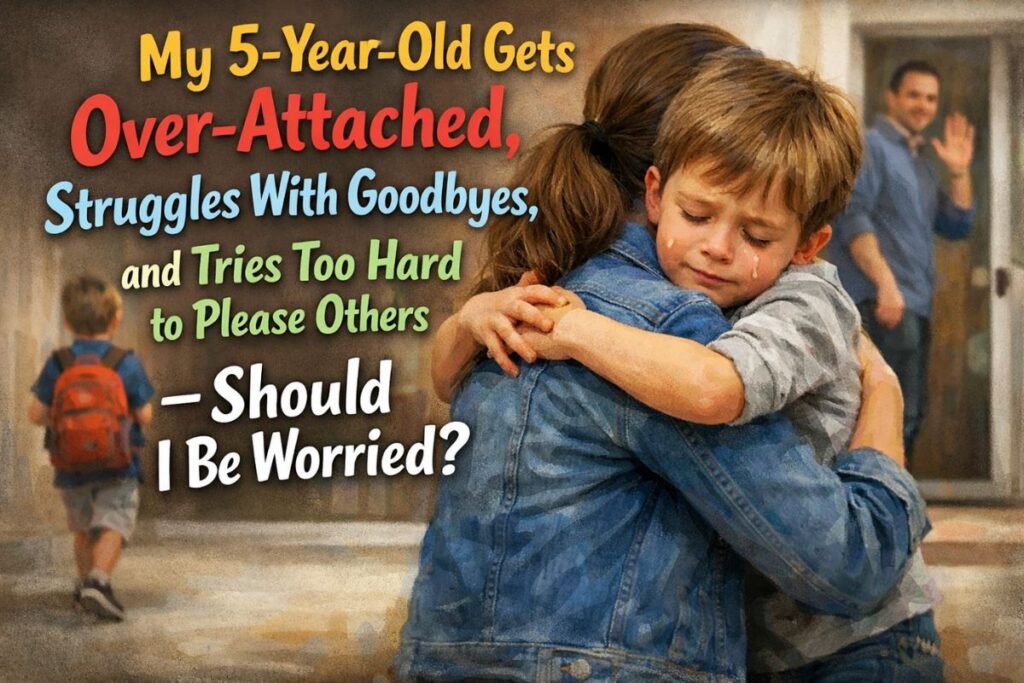
Some children become attached to people very quickly.
They may want to stay close to a parent all day, become unusually fond of a teacher or relative, cry when someone leaves, or repeatedly ask when that person will return.
Being affectionate or forming close relationships is not a problem by itself. The concern is when separation causes so much distress that it starts affecting school, sleep, everyday activities or your child’s ability to be independent.
Is It Normal for a Child to Be Very Attached?
Yes. Children naturally seek comfort and reassurance from people they trust.
Younger children may cry when a parent leaves, follow them from room to room or need time to settle with another caregiver. Some children are also naturally more affectionate or socially attached than others.
The better question is not whether your child seems “too loving” or “too attached.”
Look at what happens when that person is unavailable.
Can your child:
- go to school without prolonged distress?
- stay with another trusted caregiver?
- enjoy activities without constantly checking for you?
- settle after saying goodbye?
- sleep without needing repeated reassurance?
- cope when a favourite teacher, relative or friend leaves?
A close relationship can be completely healthy. Difficulty coping with normal separation is the part worth paying attention to.
Why Does My Child Struggle So Much With Separation?
Children can struggle with separation for different reasons. It is rarely useful to assume that a child is simply “too dependent.”
Separation Feels More Threatening Than It Does to Other Children
Some children experience much stronger worry when someone important leaves.
They may worry that the parent will not return, that something bad will happen, or that they will not be able to cope without them.
A parent may hear the same questions repeatedly:
“Are you definitely coming back?”
“How long will you be gone?”
“Can I come with you?”
“Will you stay until I fall asleep?”
The child is usually not trying to control the parent. They are trying to reduce uncertainty.
They Rely on Reassurance to Feel Calm
Reassurance works quickly.
A child asks whether you are leaving. You tell them you will stay. Their anxiety drops.
The difficulty is that some children begin needing more and more reassurance before they feel comfortable.
They may repeatedly call a parent, ask the same questions, need someone beside them to fall asleep or refuse activities unless a familiar adult stays nearby.
This can gradually make separation feel even harder.
Avoiding Separation Can Keep the Fear Going
When a child becomes extremely distressed, the natural response is often to remove whatever is upsetting them.
A parent stays longer at school drop-off. A planned evening out is cancelled. The child sleeps with the parent because sleeping alone leads to tears.
Occasionally adjusting plans is not a problem.
But if anxiety repeatedly decides what the family can and cannot do, the child gets fewer opportunities to learn:
“I can feel worried, manage it, and be okay until my parent returns.”
Research on childhood anxiety has found an association between greater family accommodation, changing family behaviour to reduce a child’s anxiety, and greater anxiety severity. Research on family accommodation and childhood anxiety
This does not mean parents caused the anxiety. Parents usually make these adjustments because they are trying to help a distressed child.
The goal is gradually helping the child cope, not abruptly withdrawing support.
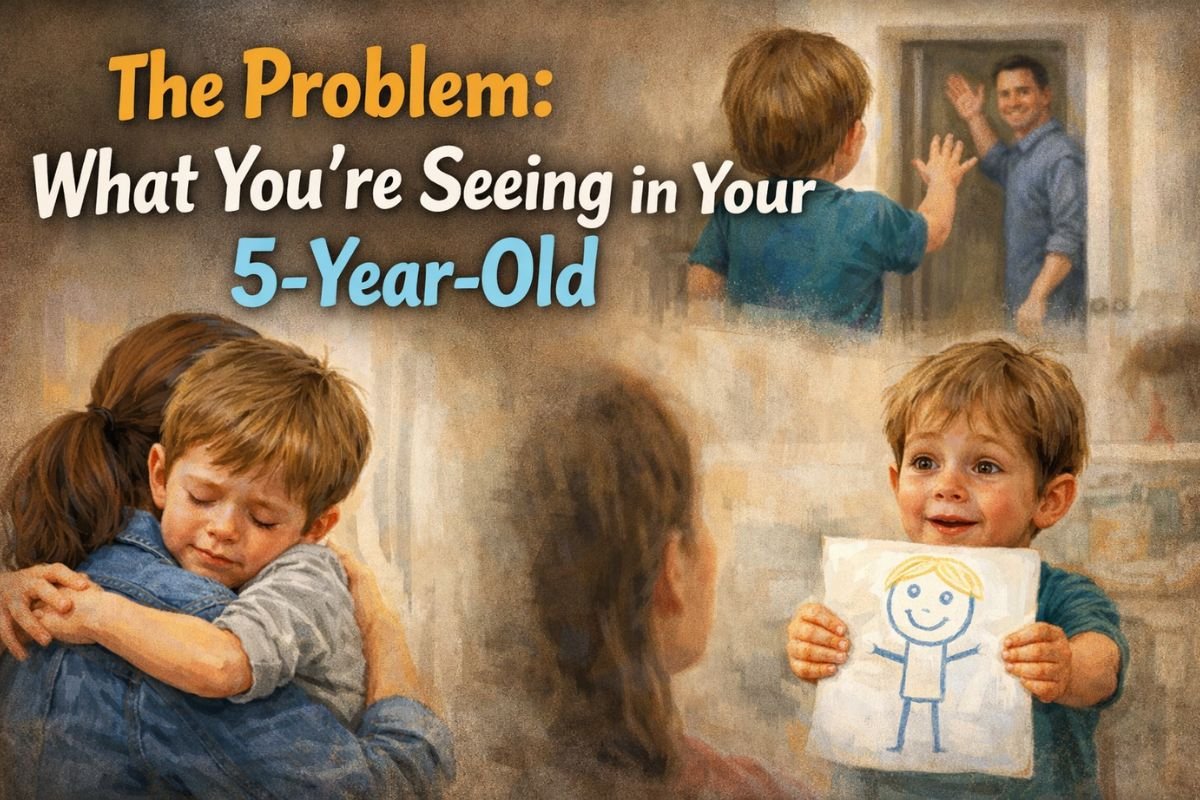
Stress or Change Can Make a Child More Clingy
Sometimes increased attachment has an obvious starting point.
A child who was previously comfortable separating may become much more dependent after:
- starting or changing school
- moving home
- parental separation
- illness
- losing someone important
- family conflict
- changing caregivers
- a frightening experience
- a major change in routine
If clinginess appeared suddenly, think about what was happening in your child’s life around the same time.
School can be particularly important. A child who cries every morning may appear to have separation anxiety when part of the problem is actually something happening at school.
If distress mainly appears around school days, it may be worth looking more closely at school-related stress.
A major loss can also change how secure a child feels about people leaving. Children struggling after bereavement may need support that addresses grief and loss rather than treating the behaviour simply as clinginess.
Why Does My Child Get Attached to Other People So Quickly?
Some parents are less concerned about attachment to themselves and more confused by how quickly their child becomes attached to other people.
A child may meet a teacher, babysitter, relative or family friend and quickly want that person’s attention, affection or company. They may then become very upset when the person goes home.
This does not automatically indicate an attachment problem.
Some children are naturally warm, sociable and emotionally expressive. Others particularly value attention from adults or find endings difficult once they feel comfortable with someone.
For some children, the pattern may involve reassurance.
Being close to a trusted adult helps them feel settled. When that person leaves, the reassurance disappears too.
That is different from simply enjoying someone’s company.
Pay attention to whether your child:
- becomes distressed whenever a familiar person leaves
- repeatedly needs adult attention to feel settled
- struggles with endings even after short visits
- immediately looks for another adult when one leaves
- has difficulty playing independently
- becomes anxious about whether someone will return
These behaviours tell you more than how quickly the child becomes affectionate.
Also avoid assuming that a friendly child has an “attachment disorder.” Clinical attachment disorders involve much more specific patterns and histories. A child liking adults, hugging relatives or becoming attached to teachers is not enough to make that conclusion.
Why Does My Child Cry When Someone Leaves?
Sometimes the crying is about missing the person.
Sometimes it is about the ending itself.
A child may struggle to move from one situation to another. They may have been enjoying someone’s undivided attention and find the sudden change difficult.
Other children become anxious because they do not know exactly when they will see the person again.
Notice what your child says.
“I don’t want Grandma to go” may simply mean they were enjoying the visit.
“Will Grandma come back? What if she doesn’t? Can I call her? When exactly will she come?” suggests more anxiety around the separation.
The behaviour may look similar, but the emotion underneath it is different.
Is This Separation Anxiety?
It can be, but not every clingy child has a separation anxiety problem.
Separation anxiety becomes more concerning when the fear or distress is greater than expected for the child’s developmental stage and begins interfering with everyday life.
A child may:
- become extremely distressed before separation
- refuse school because they do not want to leave a parent
- constantly follow a parent around the house
- worry that something bad will happen while the parent is away
- struggle to sleep without a parent nearby
- repeatedly call or message for reassurance
- complain of stomach aches or headaches around separation
- avoid activities that require being away from a parent
- take a very long time to settle after someone leaves
One behaviour alone is not enough to tell you whether your child has an anxiety disorder.
Look at how persistent the pattern is and how much it restricts normal life.
If anxiety seems to be driving the behaviour, LeapHope’s child anxiety support focuses on understanding what the child fears and helping them develop more confidence in situations they currently avoid.
What Can Parents Do?
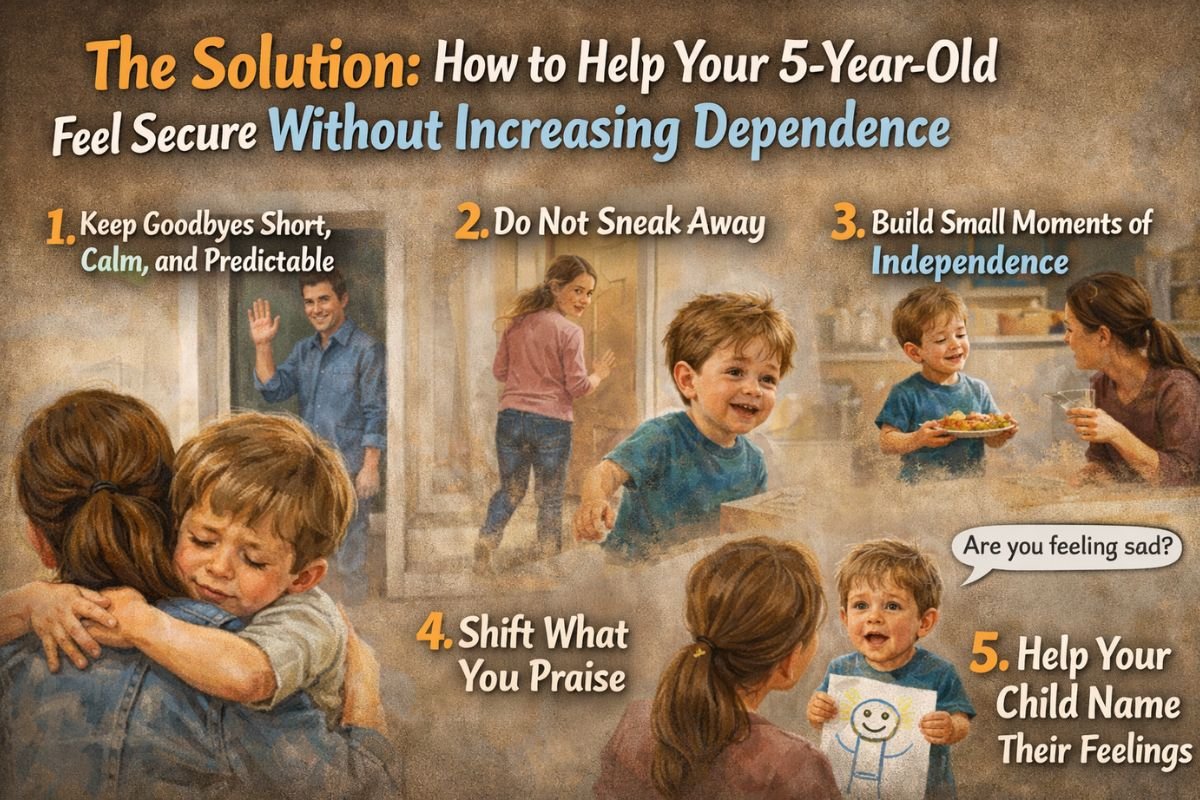
- Keep goodbyes warm but clear. Long, repeated goodbyes can make leaving feel like a major event.
- Tell your child when you will return. Use language they understand, such as “after lunch” rather than a vague “later.”
- Do not disappear without saying goodbye. Sneaking away may stop an immediate protest but can increase uncertainty about when adults might suddenly leave.
- Practise manageable separations. Start with situations your child can reasonably cope with rather than expecting sudden independence.
- Avoid cancelling every separation because your child cries. Support them through manageable anxiety instead of teaching them that crying always removes the situation.
- Reduce repeated reassurance gradually. Answer the concern clearly, then help your child move on rather than having the same conversation repeatedly.
- Prepare for predictable separations. School drop-offs, travel, bedtime and changes in caregivers are easier when the child knows what will happen.
- Praise coping. Notice when your child stays at school, spends time with another caregiver or settles after initially feeling worried.
- Look for recent changes. Sudden clinginess may make more sense when viewed alongside changes at school, home or in important relationships.
The aim is not to make your child less affectionate.
It is to help them discover that closeness and independence can exist together.
When Should You Seek Professional Help?
Consider professional support when separation anxiety is beginning to control what your child or family can do.
This may include:
- regular school refusal
- intense distress before ordinary separations
- being unable to stay with trusted caregivers
- persistent sleep problems related to separation
- repeated physical complaints before leaving a parent
- constant reassurance seeking
- family plans frequently being changed to prevent distress
- clinginess becoming noticeably worse
- anxiety affecting friendships or activities
- a sudden behavioural change after a stressful event or loss
- distress continuing despite gradual attempts to build independence
Getting help does not mean the child is “too dependent” or that the parent-child relationship is unhealthy.
The goal is to understand what makes separation feel threatening to this child and help them develop confidence without removing the supportive relationships they need.
LeapHope provides child and teen counselling for families seeking support with anxiety, behaviour and emotional difficulties.
Online support is also available for families in India, the USA and the UK.
Final Thoughts
Being deeply attached to a parent or becoming fond of other people quickly is not automatically something that needs fixing.
Pay more attention to what happens when separation occurs.
Can your child feel sad but eventually settle? Or does every goodbye lead to intense anxiety, avoidance or a need for repeated reassurance?
The important question is not:
“Why is my child so attached?”
It is:
“Why does separation feel so difficult for my child, and is that difficulty stopping them from becoming appropriately independent?”
That distinction can help you respond to the real problem rather than trying to make an affectionate child less attached.