Last Updated on August 21, 2026
LeapHope analysed mental health counselling records from January 1, 2025 to August 1, 2026, using the final mental health issues recorded by therapists for Indian and Indian-origin clients.
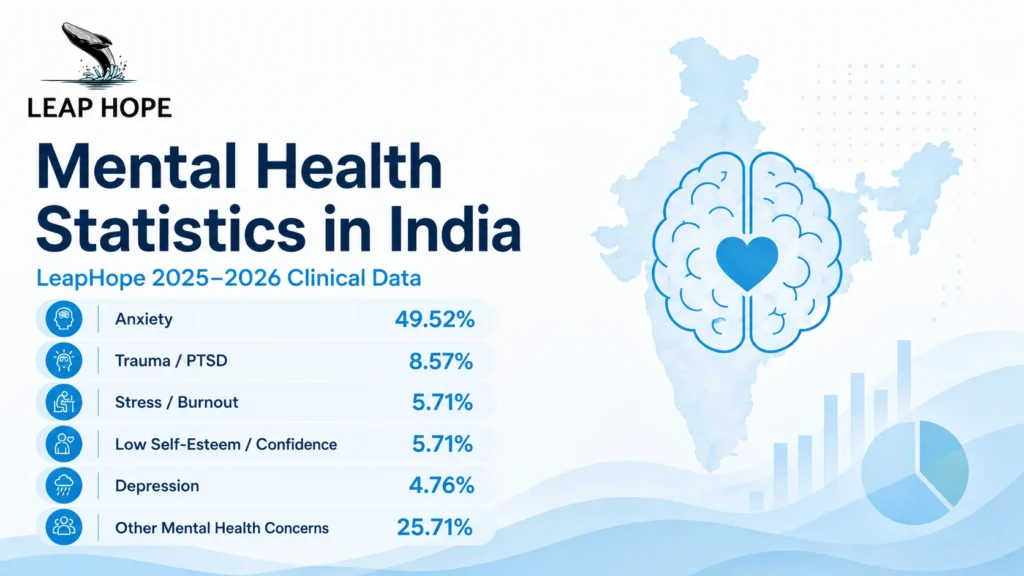
These mental health statistics in India from LeapHope’s 2025–2026 clinical data show that anxiety accounted for 49.52% of classified mental health concerns, making it the largest specifically recorded category. Trauma and PTSD represented 8.57%, low self-esteem and confidence concerns 5.71%, stress and burnout 5.71%, and depression 4.76%. Other mental health concerns accounted for 25.71%.
The findings add current clinical context to wider mental health data in India, including anxiety, stress, trauma and depression statistics in India. However, these figures show the distribution of concerns within LeapHope’s clinical records and should not be read as national prevalence rates for the Indian population.
Key Mental Health Statistics in India: 2025–2026
| Mental health concern | Share of classified concerns |
|---|---|
| Anxiety | 49.52% |
| Trauma / PTSD | 8.57% |
| Low Self-Esteem / Confidence | 5.71% |
| Stress / Burnout | 5.71% |
| Depression | 4.76% |
| Other Mental Health Concerns | 25.71% |
Anxiety formed the largest specifically classified mental health concern in LeapHope’s 2025–2026 clinical data.
Source: LeapHope clinical service data, January 1, 2025–August 1, 2026.
About the LeapHope 2025–2026 Mental Health Data
- Data period: January 1, 2025–August 1, 2026
- Primary category: Mental Health / General
- Population: Indian and Indian-origin/NRI clients
- Data source: Therapists’ final clinical issue records
- Analysis: LeapHope clinical team
- Privacy: Non-identifiable final issue records only; no client names, contact details, therapy conversations, or identifying information were available for the analysis
- Clinical review: Mrs. Mansi More Nopany — RCI-Registered Clinical Psychologist, M.Phil. Clinical Psychology, PhD Scholar, 10+ years of experience
- Clinical oversight: Shwati Singh — Founder & Clinical Lead, LeapHope
What Are the Most Common Mental Health Problems in India?
Mental health problems in India commonly include anxiety, depression, stress and burnout, trauma-related conditions, low self-esteem, and other emotional or psychological difficulties.
A Government of India mental health backgrounder, drawing on the National Mental Health Survey, reported that about 10.6% of Indian adults were estimated to have a diagnosable mental health disorder. The World Health Organization also identifies anxiety and depression as major contributors to the country’s mental health burden.
LeapHope’s 2025–2026 clinical data adds a more current counselling perspective. Anxiety was the largest specifically classified mental health concern, accounting for 49.52% of analysed concerns. Trauma and PTSD were the next largest named category, while stress and burnout, low self-esteem and confidence concerns, and depression were also recorded.
LeapHope’s figures are not national prevalence rates. They show which mental health concerns appeared among Indian and Indian-origin clients represented in its clinical analysis.
People seeking support for these concerns can explore LeapHope’s online mental health counselling.
How Does LeapHope’s Data Compare With Mental Health Trends in India?
National mental health statistics and LeapHope’s clinical data answer different questions.
National data looks at prevalence. The National Mental Health Survey reported that about 10.6% of Indian adults were living with a mental disorder, with depression, anxiety and other conditions contributing to the wider mental health burden.
LeapHope’s data looks at what reaches counselling. In the 2025–2026 clinical analysis, anxiety formed the largest share of specifically classified concerns, followed by trauma/PTSD, stress and burnout, low self-esteem, and depression.
This difference matters. A condition may have one prevalence rate in the general population but appear very differently among people who actively seek psychological support.
That is where LeapHope’s data adds value to existing mental health statistics in India: it offers a clinical view of the concerns Indian and Indian-origin clients are actually bringing into counselling.
How Should These Mental Health Statistics Be Read?
LeapHope’s figures are based on clinical counselling records, not a nationwide population survey. They show the distribution of final mental health concerns recorded among Indian and Indian-origin clients included in the 2025–2026 analysis.
The data therefore answers a specific question: which mental health concerns were reaching counselling most often at LeapHope? It does not estimate how many people across India have anxiety, depression, PTSD, or other conditions.
Because the analysis also includes Indian-origin and NRI clients, the findings reflect people seeking culturally familiar psychological support both within India and abroad.
Frequently Asked Questions
What are the latest mental health statistics in India?
National mental health statistics in India come from government surveys, WHO data, and academic research. LeapHope’s 2025–2026 data adds a clinical counselling perspective by showing which concerns were most often recorded among Indian and Indian-origin clients who reached therapy.
What was the most common mental health concern in LeapHope’s data?
Anxiety was the largest specifically classified concern, accounting for 49.52% of LeapHope’s analysed mental health records.
How common was trauma and PTSD in LeapHope’s counselling data?
Trauma and PTSD accounted for 8.57% of classified mental health concerns, making them the second-largest named category in LeapHope’s 2025–2026 analysis.
What do depression statistics in India mean compared with LeapHope’s data?
National depression statistics estimate prevalence across populations. LeapHope’s 4.76% figure instead represents the share of classified counselling concerns recorded as depression within its own clinical data.
Are these figures representative of everyone in India?
No. The findings describe concerns recorded among Indian and Indian-origin clients represented in LeapHope’s clinical analysis. They should not be treated as national prevalence estimates.
References
- Press Information Bureau, Government of India. Understanding Mental Health: Global Perspectives and Indian Initiatives (2025). The report summarises National Mental Health Survey findings, including the estimate that 10.6% of Indian adults had a diagnosable mental health disorder.
View Government of India source - World Health Organization. Mental Health – India. Provides wider context on mental health conditions and mental healthcare in India.
View WHO India source
How to Cite This Report
LeapHope. (2026). Mental Health Statistics in India: LeapHope 2025–2026 Clinical Data.