

At LeapHope, many couples come into marriage counselling saying things like, “I don’t mind helping family, but why is my partner hiding it from me?” or “We are struggling ourselves, yet money keeps going to parents or siblings every month.”
Helping family financially is not always wrong. Many people support parents or relatives because of love, responsibility, guilt, or cultural expectations. But problems usually begin when the support becomes secretive, excessive, emotionally pressured, or starts affecting the couple’s own financial stability and emotional trust.
In this article, our therapists will explain why this situation becomes emotionally painful in relationships, why some partners feel unable to say no to family, and how couples can handle these conflicts without damaging the marriage.
Common Situations Couples Secretly Struggle With
You will probably relate to some of these situations if family money conflicts have started affecting your relationship:
- Your partner secretly sends money to parents every month, even when both of you are struggling financially yourselves
- One partner keeps financially supporting siblings who are adults, earning, and capable of managing their own life
- Hidden cash withdrawals, transfers, or expensive gifts are discovered accidentally
- Your partner says the amount is “small,” but the support slowly becomes frequent and financially draining
- House plans, children, savings, or debt repayment keep getting delayed because family always “needs help”
- One partner feels emotionally pressured or guilt-tripped by parents to keep sending money
- In-laws or relatives only contact your partner when they want financial help
- Your partner becomes defensive or angry whenever you try to discuss family money
- One partner feels like they are sacrificing and working hard while extended family keeps benefiting
- The family relationship itself feels emotionally unhealthy, yet financial expectations never stop
- One partner starts feeling emotionally secondary to parents, siblings, or in-laws
- Couples stop feeling like a financial team because important money decisions are being hidden or made alone
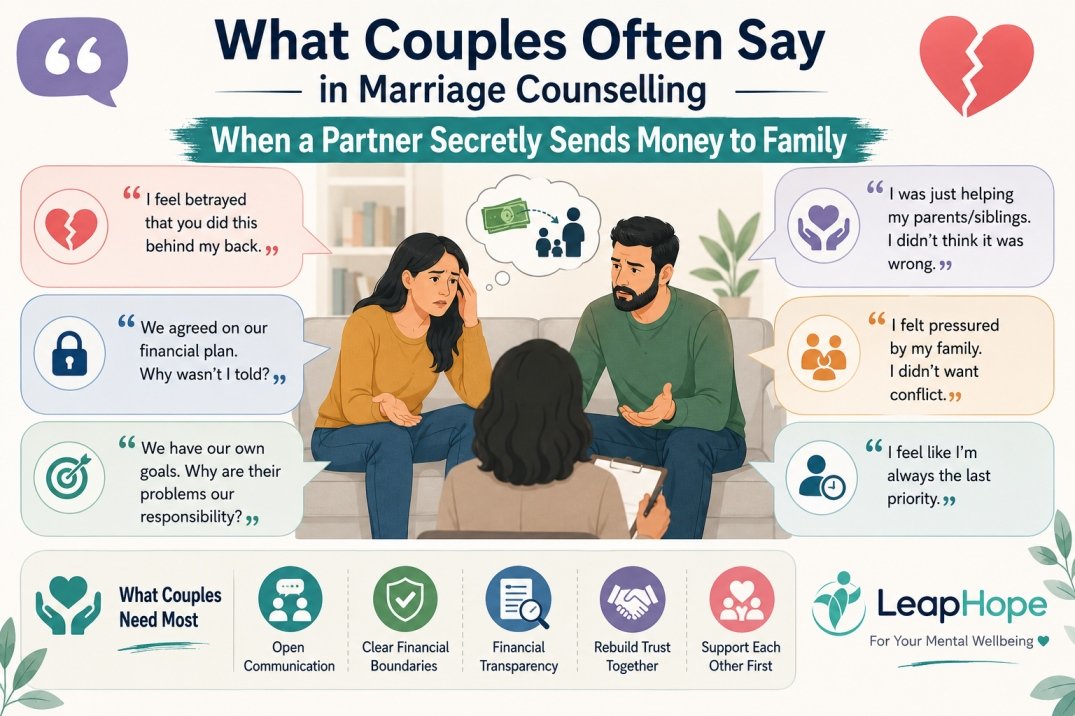
What Couples Often Say in Marriage Counselling When a Partner Secretly Sends Money to Family
“I Don’t Mind Helping Family, I Mind Feeling Lied To”
Many people say the real pain did not start when their partner sent money to parents or siblings. It started when they discovered hidden transfers, secret cash withdrawals, or repeated payments that were never honestly discussed.
Some partners describe slowly becoming anxious around money after this. They start wondering what else is being hidden, feel uncomfortable when family members call, or stop feeling fully included in important financial decisions.
In many relationships, the problem is not simply helping family. The deeper hurt comes from secrecy, repeated dishonesty, and feeling like important decisions are happening behind their back instead of together as a couple.
“I Feel Like Our Marriage and Future Keep Getting Sacrificed for Other People”
This is one of the most painful feelings many partners talk about. They are not always angry that money is being sent to parents or relatives. The deeper frustration comes when house plans, savings, children, debt repayment, or financial stability keep getting delayed because someone in the family always needs help again.
Some people describe feeling like their relationship is constantly adjusting around other people’s financial problems. Over time, this can create resentment, especially when the couple themselves is already struggling, working hard, or trying to build a stable future together.
In counselling, many partners say they eventually stop feeling like the relationship is moving forward as a team. Instead, they begin feeling like their marriage is financially carrying the emotional and financial weight of the extended family.
“My Partner Always Chooses Their Family’s Needs Over Our Stability”
Some partners slowly begin feeling like their own relationship always comes second. Every time the couple tries to save money, plan for children, manage debt, or build financial stability, another request from parents, siblings, or relatives suddenly becomes the priority again.
This feeling becomes even more painful when the partner sending money becomes defensive, dismisses concerns, or says things like, “They are my family, I can’t say no.” Over time, the other partner may start feeling emotionally unimportant, unheard, or financially unsafe inside the relationship.
In counselling, many couples realise the issue is not just about money itself. It is about wanting reassurance that the marriage, shared future, and emotional partnership still matter too.
“We Are Financially Struggling While My Partner Keeps Sending Money Secretly”
Many partners describe feeling emotionally exhausted when they are already struggling with bills, savings, debt, rent, or future plans, yet money continues quietly going to parents, siblings, or relatives behind their back.
Some say they can accept occasional help during genuine emergencies. But the situation starts feeling painful when the support becomes frequent, financially draining, or hidden while the couple themselves is under pressure.
In counselling, this often creates a deep feeling of imbalance in the relationship. One partner starts feeling like they are carrying stress, sacrificing goals, or trying to hold the relationship together financially while important money decisions are still being made secretly.
“I Feel Hurt Watching My Partner Hide Money, Gifts, or Transfers From Me”
Some people describe a very specific kind of emotional pain after discovering hidden cash withdrawals, expensive gifts for family members, or money transfers they were never told about. Even when the amount is not huge, the secrecy can leave them feeling excluded, disrespected, or emotionally unsafe in the relationship.
Over time, this can change how couples relate to each other around money. One partner may start becoming suspicious, checking expenses more carefully, or feeling anxious whenever family members ask for help again.
In counselling, many couples realise the hidden spending itself is only part of the problem. The deeper hurt often comes from feeling that honesty, transparency, and teamwork inside the relationship slowly started disappearing.
“My Spouse’s Family Keeps Using Them Financially, but They Still Cannot Say No”
Some partners feel deeply frustrated watching their spouse repeatedly give money to family members who rarely show support, responsibility, or appreciation in return. In some relationships, parents, siblings, or relatives only seem to call when they need financial help, yet the partner still feels emotionally unable to refuse.
Over time, this can create resentment inside the marriage. One partner may start feeling like the relationship is constantly carrying other people’s financial burdens while their own needs, stress, and future goals are pushed aside.
In counselling, many people admit they already know the situation feels unhealthy, but saying “no” to family brings intense guilt, fear, pressure, or emotional conflict. For some, financially helping family has become tied to love, loyalty, responsibility, or fear of disappointing parents.
“I Feel Guilty for Wanting Boundaries Around Financial Support”
Many partners say they feel trapped emotionally in this situation. They understand that helping parents or relatives can be important, especially during difficult times, but they also feel overwhelmed by how frequent, secretive, or financially damaging the support has become.
Some people even start questioning themselves for bringing the issue up at all. They worry about sounding selfish, controlling, or insensitive toward family responsibilities. This guilt becomes even stronger when culture, family expectations, or emotional pressure are involved.
In counselling, many couples realise that wanting boundaries does not mean someone is against helping family. Often, they are simply asking for honesty, balance, and protection for their own relationship and future too.
“I’m Scared This Will Get Worse After Children, Loans, or Bigger Responsibilities”
Many people quietly worry that the situation will become much harder once bigger responsibilities enter the relationship. They fear that if family financial support already feels overwhelming now, it may create even more stress after children, home loans, medical expenses, or future financial pressure increase.
Some partners describe constantly thinking ahead and wondering whether they will ever feel financially secure as a couple. They worry that every future milestone will continue getting affected by repeated family demands, emotional pressure, or hidden money decisions.
In counselling, this fear is often connected to emotional safety. People want reassurance that their relationship, future children, and shared stability will not always come second to ongoing family financial expectations.
“I Feel Like I’m Competing With In-Laws for Emotional and Financial Priority”
Some partners describe feeling emotionally drained because they no longer feel like the relationship is the main priority. They notice that whenever parents or siblings ask for help, their partner immediately becomes emotionally available, financially generous, or deeply protective, even when the marriage itself feels stressed.
Over time, this can create painful comparisons inside the relationship. One partner may start feeling that their needs, concerns, or future plans are treated as less important than the expectations of extended family.
In counselling, many couples realise this feeling is not simply jealousy toward in-laws. Often, it is a deeper fear of no longer feeling emotionally chosen, protected, or prioritised inside the relationship.
“We No Longer Feel Like a Team Because of Secret Financial Decisions”
Many couples say the relationship slowly stopped feeling emotionally connected after repeated hidden money decisions. Secret transfers, undisclosed gifts, hidden withdrawals, or financial promises made to family without discussion can gradually break the feeling of partnership.
Some partners describe feeling like they are planning their future alone while important financial choices are happening privately somewhere else. Even when the relationship still has love and care, the secrecy can slowly damage trust and teamwork.
In counselling, couples often realise that healthy relationships are not built only on love. They also depend on transparency, emotional safety, and the feeling that major life decisions are being handled together instead of separately.
Why Some Partners Feel Unable to Say No to Family, According to Psychologists
- Some people grow up feeling responsible for financially supporting their family from a very young age. Even after marriage, they continue carrying the emotional role of the “provider.”
- Many partners experience intense guilt around disappointing parents or refusing family requests, even when the support is hurting their own relationship financially.
- In some cultures and families, financially helping parents or siblings is seen as a lifelong responsibility, not a personal choice.
- Some parents become emotionally dependent on one child for support, comfort, or financial stability, making boundaries emotionally difficult.
- Family members may use guilt, sacrifice stories, pressure, or emotional reactions to make one person feel responsible for everyone’s problems.
- Some partners secretly continue sending money simply to avoid family conflict, emotional drama, or feelings of rejection.
- People who spent years supporting younger siblings often continue feeling responsible for them long after adulthood.
- Some individuals emotionally connect money with love, loyalty, or being a “good” son, daughter, sibling, or partner, which makes saying “no” feel emotionally painful.
How Couples Can Handle Secret Family Money Problems Without Damaging the Relationship
Stop Arguing Only About Money and Start Understanding the Emotional Pressure Behind It
Many couples stay stuck because every conversation becomes about the amount being sent instead of the emotional reason the partner feels unable to stop. In counselling, therapists often see that the money is only the surface layer. Underneath it are guilt, fear of disappointing parents, childhood conditioning, loyalty pressure, or anxiety around family rejection.
If couples only attack the spending itself, the partner sending money often becomes defensive very quickly. A more productive conversation usually starts with questions like:
- “What makes it so hard for you to say no?”
- “Do you feel responsible for your family’s emotional wellbeing?”
- “Are you helping because you truly want to, or because you feel guilty if you don’t?”
Understanding the emotional attachment behind the behavior often reduces blame and opens the door for healthier boundaries.
Recognise When Family Support Has Quietly Turned Into Emotional or Financial Enabling
Many partners are not against helping parents or siblings during genuine difficulty. The deeper problem usually begins when temporary support slowly becomes permanent dependency.
Psychologists often encourage couples to look at patterns honestly:
- Is the family trying to become financially stable themselves?
- Are requests becoming more frequent over time?
- Does your partner feel fear, guilt, or pressure every time they try to reduce support?
- Are your own savings, future plans, or emotional peace constantly suffering?
In emotionally unhealthy family systems, one person is sometimes treated as the permanent rescuer. Over time, this can create exhaustion, resentment, and financial instability inside the marriage itself.

Create Financial Boundaries That Protect Both Compassion and the Relationship
Healthy boundaries are not about controlling a partner or forcing them to abandon family. They are about creating safety and predictability inside the relationship.
Many couples benefit from discussing:
- what amount feels manageable without damaging the household
- which financial decisions should be discussed together
- what counts as emergency help versus ongoing dependency
- how often support can realistically happen
- how to protect savings, housing goals, children, debt repayment, and long-term stability
Boundaries work better when they are discussed calmly during emotionally safe moments instead of during arguments after another hidden transfer is discovered.
Stop Treating Each Other Like Opponents and Rebuild a “We” Mindset
One of the biggest emotional shifts happens when couples stop seeing the situation as:
“your family versus me.”
When relationships become emotionally divided like this, partners often start hiding information, becoming defensive, or emotionally shutting down.
In healthier relationships, both people slowly move toward:
- “How do we protect our relationship while still handling family responsibilities realistically?”
- “How do we make financial decisions together instead of separately?”
- “How do we reduce guilt, secrecy, and resentment before they damage the relationship further?”
This mindset shift often matters more than the actual amount of money being sent.
Protect the Emotional and Financial Future of the Marriage Before Resentment Becomes Permanent
One of the most damaging patterns therapists see is couples silently adjusting their entire future around ongoing family demands for years without addressing the emotional impact honestly.
Over time, repeated secrecy, delayed goals, financial stress, and emotional imbalance can slowly damage intimacy, trust, attraction, and emotional safety inside the marriage.
Protecting the relationship may sometimes require difficult conversations about:
- unhealthy family expectations
- financial transparency
- emotional manipulation
- shared priorities
- future planning
- saying “no” without guilt
Strong relationships are not built by ignoring problems to keep temporary peace. They are built when both partners feel emotionally protected, respected, and included in important life decisions.
Can Marriage Counselling Help When a Spouse Secretly Sends Money to Family?
Yes, because these situations are usually not just about money. Over time, secrecy, guilt, family pressure, resentment, and repeated arguments can slowly damage emotional trust in the relationship.
Marriage counselling can help couples:
- understand the emotional reasons behind the financial conflict
- communicate without blame or defensiveness
- rebuild trust after financial secrecy
- create healthier financial boundaries together
- manage family pressure without damaging the marriage
At LeapHope, our online marriage counsellors help couples work through financial secrecy, in-law pressure, emotional resentment, and relationship conflicts around family support in a healthier and more balanced way.
Final Thoughts
Supporting family financially does not automatically damage a marriage. Many healthy couples help parents or relatives and still maintain strong relationships.
Problems usually begin when the support becomes secretive, excessive, emotionally pressured, or starts affecting the couple’s own future, trust, and emotional connection.
In many relationships, the real issue is not just the money. It is whether both partners still feel respected, emotionally safe, and included in important financial decisions together.
At LeapHope, we also provide online support for marriage conflicts, relationship stress, child mental health concerns, parenting challenges, anxiety, and other emotional wellbeing issues for individuals and families across places like Dubai and Abu Dhabi.