Clinically reviewed by Mansi More Nopany, RCI-Registered Clinical Psychologist.
At LeapHope, many wives reach out for marriage counselling after discovering that their husband’s gambling problem is far more serious than they first thought. They often ask questions like:
- “My husband keeps gambling despite promising to stop. Does gambling addiction ever get better?”
- “Can I ever trust my husband again after years of gambling, lies, and broken promises?”
- “Am I wrong for wanting to leave my marriage because of my husband’s gambling addiction?”
- “How do I know if my husband is truly recovering or just telling me what I want to hear?”
Most wives don’t discover a gambling addiction overnight. It often starts with missing money, unexplained transactions, unpaid bills, or excuses that don’t quite add up. Over time, what begins as a concern about gambling can turn into something much deeper.
Eventually, the problem becomes bigger than gambling itself. The real damage often comes from secrecy, repeated lies, broken trust, emotional exhaustion, and the constant fear of what might happen next. Many wives find themselves wondering whether their marriage can survive another broken promise, another hidden debt, or another gambling relapse.
If your husband’s gambling addiction is affecting your relationship, understanding the emotional and psychological impact on a marriage is often the first step toward deciding what comes next.
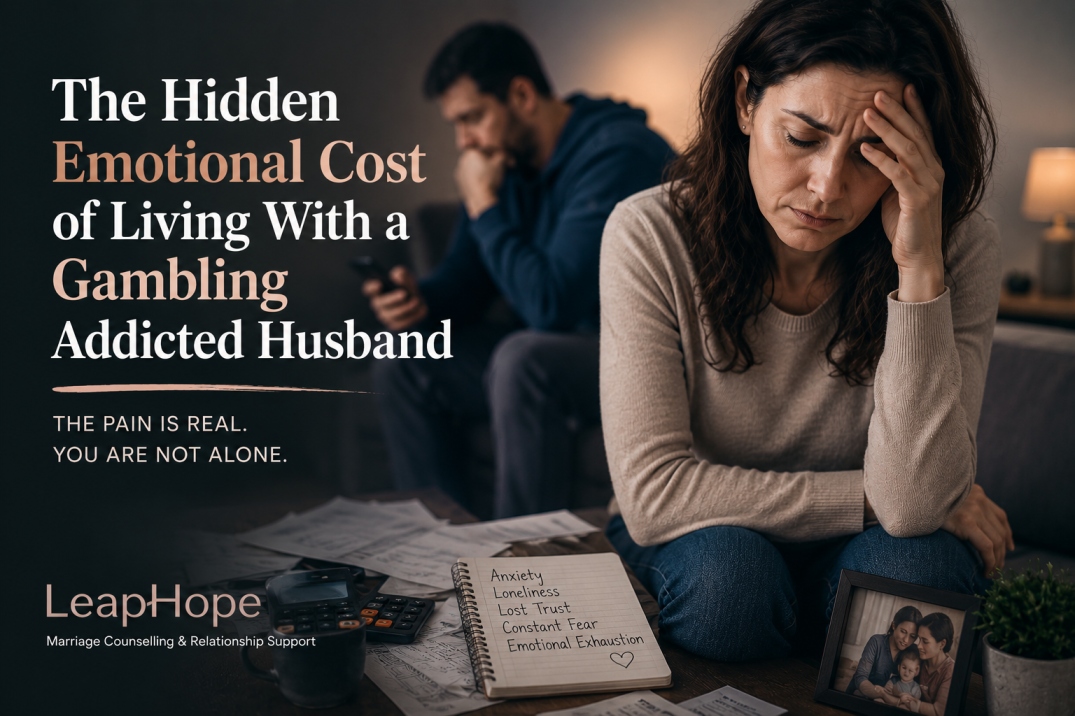
The Hidden Emotional Cost of Living With a Gambling Addicted Husband
You Stop Feeling Financially Safe
In today’s world, financial stability is already under pressure. Rising living costs, expensive healthcare, children’s education, job uncertainty, and economic ups and downs leave little room for major financial mistakes.
When a husband starts using family money for gambling, many wives begin questioning their future. The concern is no longer about a few lost bets. It’s about whether the family’s savings, goals, and financial security are at risk. While occasional gambling for entertainment may not harm a relationship, gambling that threatens a family’s stability can shake a spouse’s sense of safety and trust at its core.
You Start Questioning Everything He Tells You
When gambling addiction becomes part of a marriage, trust often begins to erode. A husband may say, “I only gambled a little,” “I’ve stopped,” “This was the last time,” or “Everything is under control.” But after repeated discoveries, hidden losses, or broken promises, many wives find it difficult to believe those reassurances.
Over time, the doubt can spread beyond gambling. You may start questioning where money is going, whether bills have been paid, or if there is another secret waiting to be uncovered.
Many wives describe hidden gambling, secret debts, and repeated lies as a betrayal that can damage trust in much the same way as an affair.
Anxiety Becomes Part of Daily Life
When gambling addiction becomes an ongoing problem, many wives find it difficult to relax, even at home. Instead of feeling like a place of comfort and security, the relationship can begin to feel filled with uncertainty. Thoughts about money, hidden losses, or another gambling relapse may remain in the background throughout the day.
This constant stress can also affect emotional and physical intimacy. It becomes harder to feel close, affectionate, or connected when trust has been damaged and worries are constantly on your mind. Many couples find themselves spending less quality time together, arguing more often, or feeling emotionally distant even when they are sitting in the same room.
You Feel More Like a Caretaker Than a Partner
Many wives find themselves carrying the weight of the entire household. They are looking after the children, managing the home, handling finances, and constantly worrying about the consequences of their husband’s gambling. Some even feel forced to work extra hours or return to work sooner than planned just to keep the family financially stable.
Even when money is not the immediate problem, gambling can still damage the relationship. Many wives feel hurt watching their husband invest more time, energy, and excitement into gambling than into the marriage. Family trips get postponed, future plans are delayed, and quality time together becomes less important than chasing the next win.
Over time, it can leave a wife feeling less like a loved partner and more like someone carrying the responsibilities while her husband chases a fantasy that rarely delivers the rewards it promises.
The Relationship Becomes Emotionally Exhausting
Living with a gambling addicted husband can place many wives in a prolonged state of stress and uncertainty. Instead of feeling emotionally secure, they may become constantly alert for warning signs, checking finances, questioning explanations, and worrying about what might happen next. This type of ongoing hypervigilance can be mentally exhausting.
Over time, the brain can become stuck in a survival mode mindset. Many spouses report chronic stress, cognitive overload, difficulty concentrating, sleep problems, irritability, anxiety, and even panic attacks. When so much mental energy is spent managing fear, uncertainty, and potential crises, there is often little left for intimacy, joy, emotional connection, or simply enjoying everyday life together.
Children Often Feel the Tension Too
Many parents believe they are protecting their children by hiding financial problems or avoiding difficult conversations. However, children are often far more aware than adults realize. They may notice frequent arguments, tension at home, cancelled plans, financial stress, or changes in a parent’s mood and behaviour.
Growing up in an environment of ongoing uncertainty can affect a child’s sense of security and emotional well-being. Some children become anxious, withdrawn, or overly responsible for their age, while others may struggle with behavioural or emotional difficulties. Even when gambling is never discussed openly, the stress it creates within a marriage often reaches the entire family.
Can a Marriage Survive Gambling Addiction?
Yes, some marriages do survive gambling addiction, but research and clinical experience suggest that recovery depends less on the gambling losses and more on whether trust can be rebuilt. Couples are generally more likely to recover when the gambling partner acknowledges the problem, seeks treatment, becomes financially transparent, and remains committed to long-term change.
On the other hand, continued lying, hidden debts, repeated relapses, refusal to seek help, and blame shifting often place significant strain on a marriage. Psychologists frequently find that it is the ongoing deception and loss of trust, rather than the gambling itself, that causes the most damage to the relationship.
How to Support Your Husband Without Losing Yourself in the Process
Stop Trying to Fix the Addiction Alone
Many wives spend years checking bank accounts, monitoring spending, making excuses, or trying to prevent the next relapse. While these actions often come from love and concern, they can leave you emotionally exhausted. Gambling addiction is a complex behavioural problem that usually requires the person struggling with it to actively participate in recovery.
Focus on Actions, Not Promises
Many gambling addicts genuinely mean it when they say they will stop. However, psychologists often encourage spouses to pay attention to patterns of behaviour rather than words alone. Real recovery is usually reflected through consistent actions, accountability, treatment, and transparency over time.
Protect Your Peace of Mind
Living with uncertainty can take a serious toll on mental health. If you constantly feel anxious, overwhelmed, or emotionally drained, it may be a sign that your own needs are being neglected. Prioritising your well-being is not selfish. It helps you make clearer decisions and maintain emotional resilience.
Have Honest Conversations About Boundaries
Boundaries are not threats or punishments. They are clear expectations about what you need to feel safe and respected in the relationship. Healthy boundaries can reduce confusion, resentment, and repeated conflicts.
Encourage Professional Help Early
Many couples wait until the marriage is in crisis before seeking help. Gambling addiction often affects trust, communication, finances, and emotional connection long before it becomes visible to others. Professional support can help address both the addiction and its impact on the relationship.
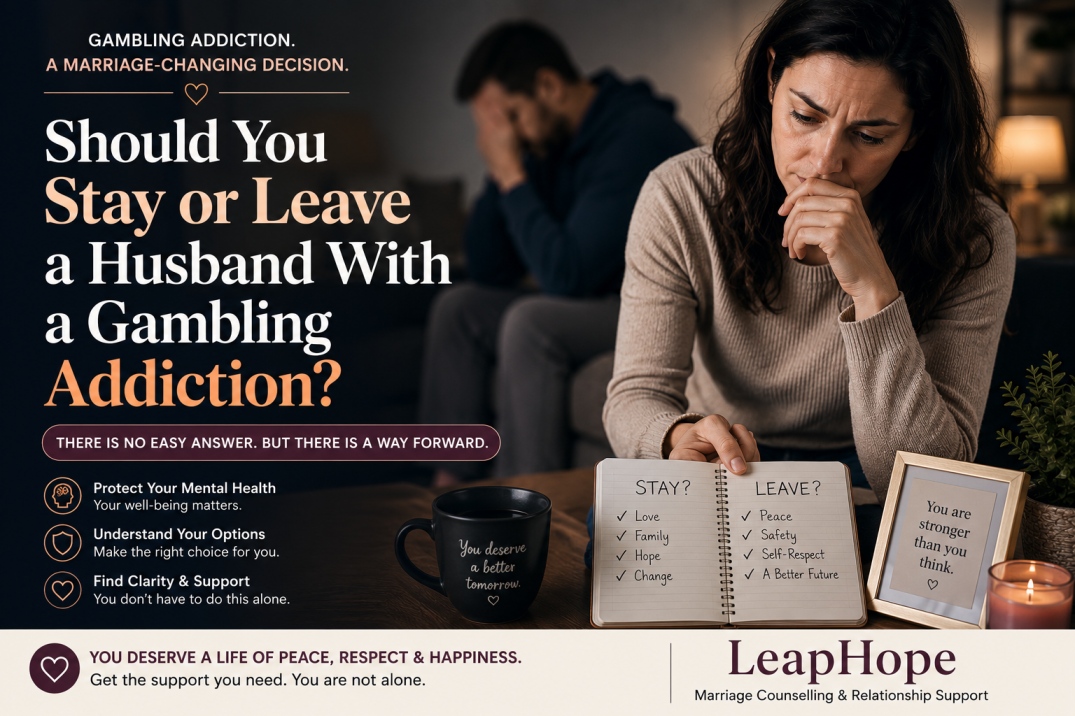
Should You Stay or Leave?
This is one of the most difficult questions many wives face. There is no universal answer because every marriage, addiction, and family situation is different. Some husbands genuinely commit to recovery and rebuild trust over time. Others continue the same cycle of gambling, secrecy, and broken promises for years.
Before making a major decision, it may help to ask yourself a few honest questions:
Is He Taking Responsibility for His Gambling?
Does he acknowledge the problem, or does he blame stress, bad luck, friends, or circumstances?
Are You Seeing Real Change or Repeated Promises?
Anyone can promise to stop. Recovery is usually measured by consistent actions, accountability, and transparency over time.
Is Your Mental Health Suffering?
If the relationship is causing chronic anxiety, panic attacks, emotional burnout, sleep problems, or constant stress, it is important to consider the impact on your own well-being.
Do You Still Feel Safe and Respected in the Relationship?
A healthy marriage requires emotional safety, trust, and mutual respect. Without those foundations, rebuilding the relationship can become extremely difficult.
If Nothing Changed in the Next Two Years, Would You Still Stay?
This question often helps people separate hope from reality and think more clearly about their future.
There is no shame in staying and working on the marriage when genuine recovery is taking place. There is also no shame in deciding that repeated lies, financial harm, and broken trust have become too much to carry. The goal is not to make a decision out of fear, guilt, or pressure, but from a place of clarity and self-respect.
When Marriage Counselling Can Help
Marriage counselling may be helpful if:
- Trust has been damaged by lies, secrecy, or hidden gambling.
- Arguments about money and gambling are becoming frequent.
- You feel emotionally disconnected from each other.
- Recovery efforts are creating new challenges in the relationship.
- You are unsure whether the marriage can be saved.
- The stress is affecting your mental health, family life, or children.
At LeapHope, our experienced online marriage counsellors help couples rebuild trust, improve communication, and navigate the emotional impact of gambling addiction on a relationship.
If gambling-related financial stress, hidden debt, or money conflicts are affecting your marriage, support is available. Learn more about our counselling for couples facing financial challenges and rebuilding financial trust.
Final Thoughts
A gambling addiction does not automatically mean a marriage is over, but recovery requires far more than promises. It requires honesty, accountability, professional support, and consistent actions over time.
If your husband’s gambling addiction has left you feeling anxious, exhausted, or uncertain about the future, know that your feelings are valid. While money can often be recovered, rebuilding trust takes much longer.
Whether you choose to stay and work on the marriage or reconsider its future, try to make decisions based on consistent behaviour rather than repeated promises.