
Last Updated on September 4, 2026
Clinical Review: Mansi More Nopany — Clinical Psychologist, Sex Therapist and Relationship Counsellor with 9+ years of experience.
Are you facing a lack of sex in your relationship? Perhaps you have not had sex for months. Maybe it happens once every two or three months, usually after one person initiates several times.
You may still care for each other, manage the home, raise children and fulfil your responsibilities. But in bed, neither person reaches out. Foreplay has disappeared. One waits for the other to begin, and eventually both turn over and sleep.
This happens mostly in long-term and married relationships. It can also happen earlier after cheating, lying or another deep hurt changes the way someone feels about their partner.
When sex stops in a relationship, sex may not be the first thing that went wrong. The distance may have started with arguments, disrespect, pressure, boredom, body changes or a hurt that was never properly addressed.
Can Lack of Sex Ruin a Relationship?
Yes, lack of sex can ruin a relationship when it leaves one partner feeling rejected and the other feeling pressured. If both partners are comfortable having little or no sex, the frequency alone may not damage their relationship.
Problems begin when only one person is comfortable with the situation.
The unhappy partner may continue managing daily responsibilities while feeling unwanted. They stop initiating because another rejection feels painful. They may also become less affectionate because physical closeness reminds them of what is missing.
The partner with less desire may begin avoiding touch. A kiss, hug or cuddle no longer feels simple because they expect it to become a request for sex.
Resentment then enters other parts of the relationship. Arguments may appear to be about phones, household work or time together, while the unspoken frustration is about feeling rejected, pressured or disconnected.
What Does a Lack of Sex in a Relationship Mean?
There is no correct number of times a couple should have sex. Once a week may feel too little to one person, while once a month may suit someone else.
When clients say, “We stopped having sex,” they usually mean there has been no sex for months or years. Others mean sex now happens once every two or three months with little initiation, foreplay or enjoyment.
A lack of sex may look like:
- One partner always having to initiate
- Both partners waiting for the other person to begin
- Foreplay becoming rushed or disappearing
- Sex happening only after repeated requests
- One person agreeing mainly to avoid an argument
- Affection continuing but sexual desire fading
- Kissing, cuddling and sexual touch all disappearing
- Sex feeling like a responsibility rather than a shared moment
Sex and intimacy are not identical. Some couples have little sex but remain affectionate and emotionally close. Others continue having sex while feeling no real connection.
Is It Normal for Couples to Stop Having Sex?
Sex may decrease during illness, pregnancy, childbirth, grief, parenting, demanding work or a period of severe stress. A temporary pause is not proof that the relationship is failing.
It is easier to manage when both people understand what is happening. Someone recovering from childbirth, dealing with pain or taking medication may need time without being made to feel guilty.
Concern grows when months pass without an honest conversation. One person keeps hoping the situation will improve. The other avoids discussing it. Eventually, both become used to sleeping beside each other without touching.
Ask yourself:
- Do we both know why sex has decreased?
- Are we both satisfied with the present frequency?
- Can we discuss it without fighting or shutting down?
- Is affection still comfortable?
- Has either person stopped initiating only because rejection feels certain?
- Are we making any effort to address what changed?
Having less sex can be normal. Being unhappy and unable to speak about it is the part that needs attention.
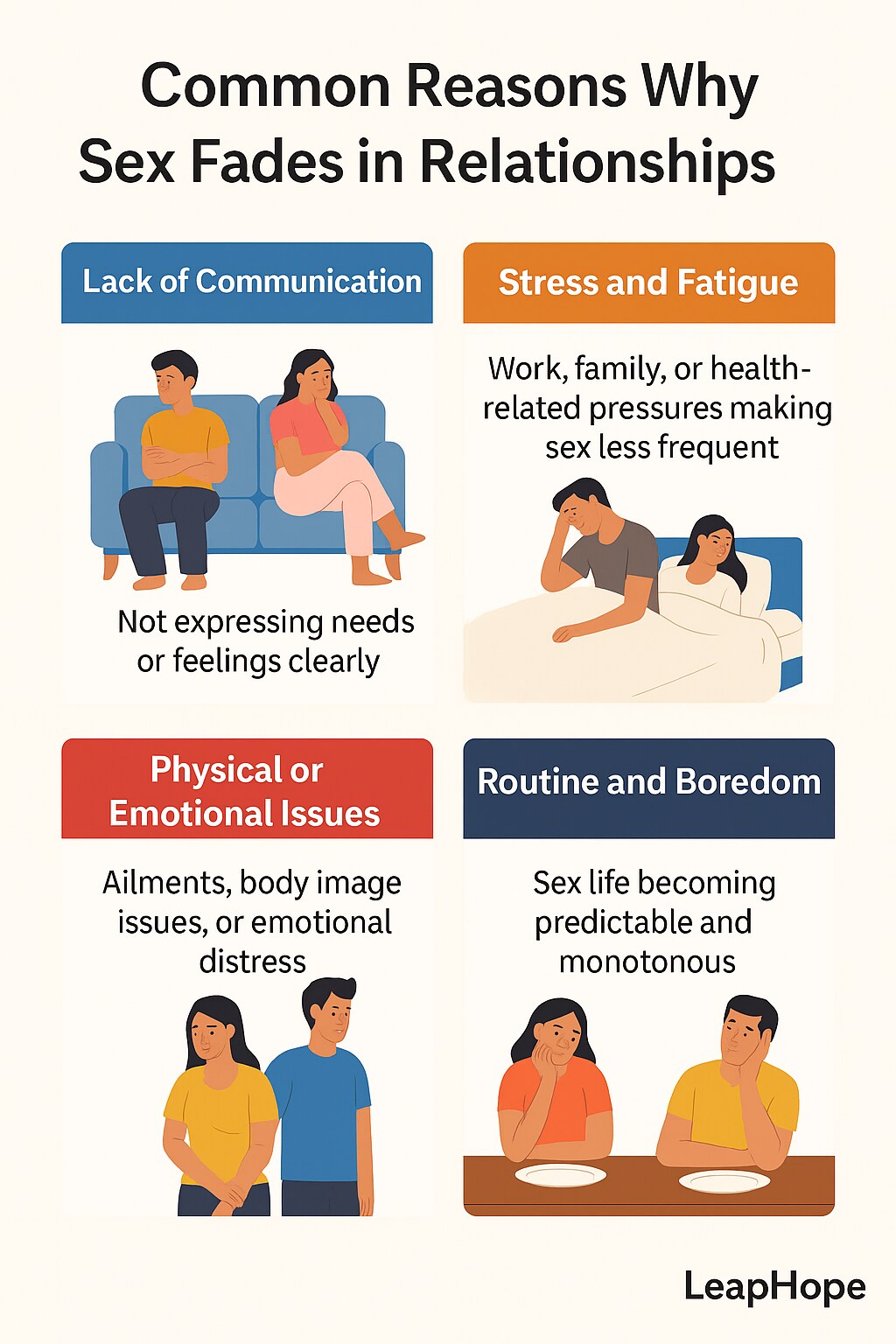
Why Do Couples Stop Having Sex?
Sex often fades slowly. Initiation becomes less frequent, foreplay becomes shorter, and physical closeness starts feeling awkward. Several months may pass before the couple admits there is a problem.
Unresolved Hurt and Disrespect
A relationship may continue after a painful argument, betrayal or insulting incident, but sexual feelings do not always return with the daily routine.
You may still love your partner and care about their well-being while no longer feeling open with them physically. Frequent criticism, shouting or dismissing your feelings can also change how you see them.
In a newer relationship, sex may stop after cheating or lying destroys trust. Staying together does not automatically repair the attraction or connection that was lost.
Sex Has Started Feeling Like Pressure
The partner who misses sex may ask more frequently. The other person begins expecting a request whenever they are touched.
A hug starts feeling like the beginning of sex. Going to bed together creates tension. They may avoid kissing or cuddling because refusing later feels harder.
Sex becomes something they must provide to keep their partner happy, not something they look forward to.
Rejection Has Stopped Initiation
Repeated rejection can make someone stop trying. They may still want their partner, but initiating now feels embarrassing.
This can be mistaken for lost desire on both sides. In reality, one person is waiting to feel wanted for a change. If this has become your pattern, read about feeling tired of initiating intimacy.
Responsibilities Have Replaced the Relationship
Some couples have no dramatic conflict. Their relationship has simply become centred on work, children, bills and household responsibilities.
They speak throughout the day but rarely talk as romantic partners. By bedtime, both are tired. Sex is repeatedly left for another night until neither person expects it anymore.
Body Changes Have Affected Confidence
Pregnancy, weight changes, ageing, surgery or illness can make someone uncomfortable with being seen or touched.
They may still believe their partner finds them attractive but feel disconnected from their own body. Critical comments about appearance can make them withdraw further.
Sex Has Become Painful or Difficult
Painful sex, erectile difficulties, hormonal changes, chronic illness and medication can affect desire and sexual comfort.
Embarrassment often keeps people silent. They refuse sex without explaining the pain, fear or performance concern behind it. Their partner sees rejection and assumes attraction has disappeared.
Performance anxiety and erectile difficulties can worsen each time someone approaches sex expecting another difficult experience.
You Want Different Amounts of Sex
One partner may naturally want sex more often. Low desire itself does not make someone a bad partner, and wanting more sex does not make the other person demanding.
Couples usually struggle when the difference cannot be discussed. One person asks, complains or pushes. The other avoids, delays or makes promises they do not want to keep.
When the difference also involves sexual preferences, comfort or expectations, it may be a question of sexual incompatibility, not only frequency.

What Happens When Sex Stops in a Relationship?
A common pattern begins when one partner initiates and the other refuses. The initiator feels rejected and tries again sooner because they need reassurance. The other person senses more pressure and becomes less interested.
The cycle continues:
- One partner initiates.
- The other declines or avoids sex.
- The first person feels unwanted.
- Their disappointment creates pressure.
- The second person begins avoiding affection.
- Both become more distant.
The partner who wants sex may start questioning their appearance, their partner’s love or whether someone else is involved. The partner avoiding sex may feel that their stress, pain or emotional hurt is being ignored.
Some couples continue working well as a household. They shop, eat and raise children together but feel more like responsible roommates than romantic partners.
A person who feels sexually neglected may rely more on masturbation, fantasy or pornography. They may also become more responsive to attention from others. Lack of sex does not cause or excuse cheating; the person who cheats remains responsible for that decision.
Can You Have a Great Relationship but No Sex?
Yes. A relationship without sex can work when both partners genuinely prefer it that way. They may feel close through affection, companionship and other forms of intimacy.
The answer changes when only one person is satisfied.
You may call the relationship “great” because your partner is caring, responsible and supportive. At the same time, you may feel unwanted every night. Both experiences can be true.
Some people stay quiet because they do not want to seem ungrateful or overly focused on sex. But continuing the relationship does not make the need disappear. You may still feel lonely beside your partner even when the rest of your life together looks stable.
Does No Sex Mean My Partner No Longer Loves Me?
No. Your partner may still love and care for you while feeling little sexual desire.
The change could be connected to stress, unresolved hurt, physical pain, medication, body-image concerns, erectile difficulties or pressure around sex. They may also fear disappointing you and avoid the situation entirely.
No sex does not prove cheating either. Suspicion often grows because there is no explanation, not because there is evidence.
Ask your partner what changed. Do not decide the answer from how often they refuse. Their willingness to talk honestly will tell you more than the frequency alone.
If they remain affectionate but never make the first move, see the possible reasons your partner does not want or initiate sex.
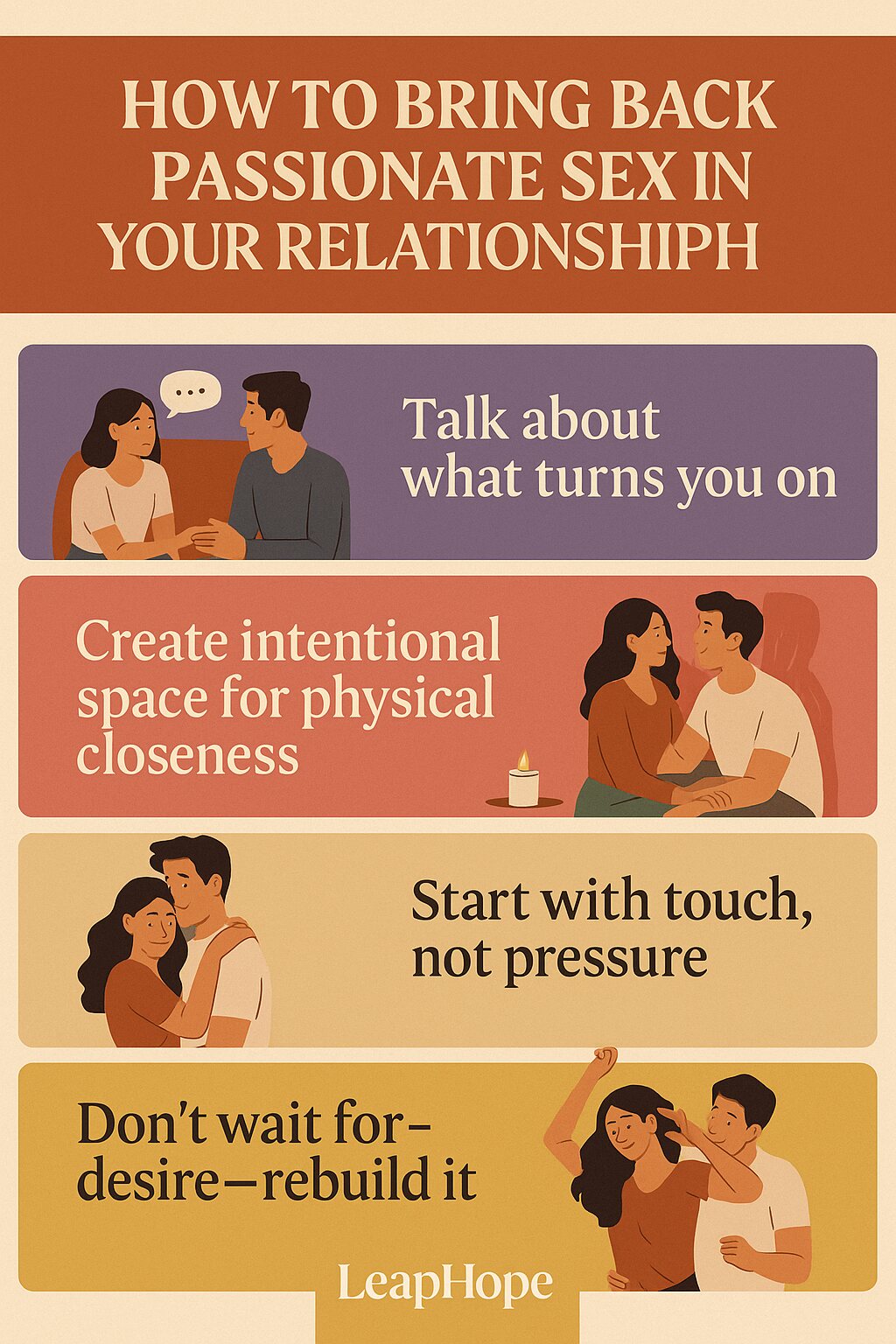
How to Bring Up a Lack of Sex With Your Partner
Do not start the conversation immediately after being refused. You will already feel hurt, and your partner may feel accused before the discussion begins.
Choose a calm, private time outside the bedroom. You can say:
“We rarely have sex now, and I miss that part of our relationship. I am not asking you to do anything tonight. I want to understand what changed for you.”
During the conversation:
- Explain how the distance is affecting you.
- Ask whether sex has become painful, pressured or emotionally difficult.
- Listen without interrupting or correcting their reason.
- Discuss whether affection has also decreased.
- Do not demand a promise about how often sex will happen.
- Decide what needs attention first: health, stress, hurt or the relationship.
Your first goal is to find out what changed. Sex that night is not proof that the problem has been solved.
If you are married and both want to work on the sexual distance, read these steps to repair a sexless marriage without forcing sex.
When Is a Lack of Sex a Serious Relationship Problem?
The problem needs direct attention when:
- One partner has felt rejected or neglected for months or years.
- Any conversation about sex ends in anger or avoidance.
- Affection has disappeared because touch now feels pressured.
- One person agrees to sex only to prevent conflict.
- Refusing sex leads to guilt, threats or silent treatment.
- Sex is withheld deliberately as punishment.
- Pain or sexual difficulties remain untreated.
- One partner refuses both discussion and professional support.
- Resentment is affecting the rest of the relationship.
No one owes their partner sex. But both people owe each other honesty about whether their needs and boundaries can exist in the same relationship.
When Can Therapy Help?
Therapy may help when every discussion follows the same script: one person asks, the other shuts down, and both leave feeling worse.
A sex therapist and relationship counsellor will look at what was happening when sex began to decrease. The work may involve betrayal, resentment, repeated rejection, sexual pressure, shame, body image or loss of emotional connection.
The first improvement may not be more sex. It could be an honest conversation, comfortable affection or finally addressing the incident that changed how one person feels.
Pain, erectile difficulties, hormonal concerns, medication effects and psychiatric conditions may also require support from a doctor or psychiatrist. Therapy can continue alongside that treatment.
Online sex therapy can address desire, fear, sexual confidence and pressure. Online relationship counselling may be more suitable when arguments, disrespect or unresolved hurt are driving the distance.
Final Thoughts
Can lack of sex ruin a relationship? It can when rejection, pressure and silence continue for so long that the couple stops feeling close.
Look at what changed before sex disappeared. Was it trust, respect, initiation, foreplay, affection, confidence or physical comfort?
You do not need to follow another couple’s idea of a normal sex life. You need to know whether both of you are satisfied and whether you are willing to address what is not working.
FAQs
Can Lack of Sex Ruin a Relationship?
Lack of sex can damage a relationship when it creates rejection, pressure, resentment or distance. It may not be a problem when both partners accept the frequency and continue feeling emotionally and physically close.
Is It Normal for Couples to Stop Having Sex?
Couples may temporarily stop having sex during illness, childbirth, grief, stress or exhaustion. It becomes concerning when the situation continues, one partner is unhappy or the couple cannot discuss what has changed.
What Does No Sex in a Relationship Mean?
No sex may point to unresolved hurt, pressure, low desire, pain, health concerns or emotional distance. It does not have one fixed meaning and does not automatically prove lost love or cheating.
Why Do Couples Stop Having Sex?
Couples often stop after initiation, foreplay and enjoyable touch gradually decline. Arguments, disrespect, boredom, pressure, rejection, body changes, medical difficulties and different levels of desire may all contribute.
Can a Relationship Survive Without Sex?
A relationship can survive without sex when both partners genuinely accept it. If one person feels unwanted or deprived, the relationship may continue outwardly while resentment, loneliness and emotional distance grow.
Does No Sex Mean My Partner Is Cheating?
No. Less sex does not prove cheating. Stress, pain, medication, low desire, relationship hurt or sexual pressure may also cause withdrawal. Ask what changed instead of treating frequency as evidence.
What if My Partner Refuses to Discuss Sex?
Explain clearly how the silence is affecting you and the relationship. Give them time to respond, but look for a willingness to engage. Continued refusal may require you to reconsider whether your needs can be addressed.