

Last Updated on September 10, 2026
Reviewed by Sanford M, Relationship and Sex Health Counsellor
In many relationships, one partner stops initiating sex, and it’s not always clear why. You might be in a long-term marriage or a new relationship, but the pattern feels the same:
You’re always the one reaching out. They rarely, if ever, make the first move.
At first, you may try to ignore it. But over time, it can leave you feeling frustrated, rejected, or even unattractive. You start wondering:
“Why doesn’t my partner want sex?”
“Why am I always initiating intimacy?”
“Is something wrong with our relationship?”
You may worry that bringing it up will make you seem needy or make it sound like sex is all you care about. So the conversation gets postponed.
Here are nine reasons sexual desire or initiation can change, even when a relationship still matters to both people.
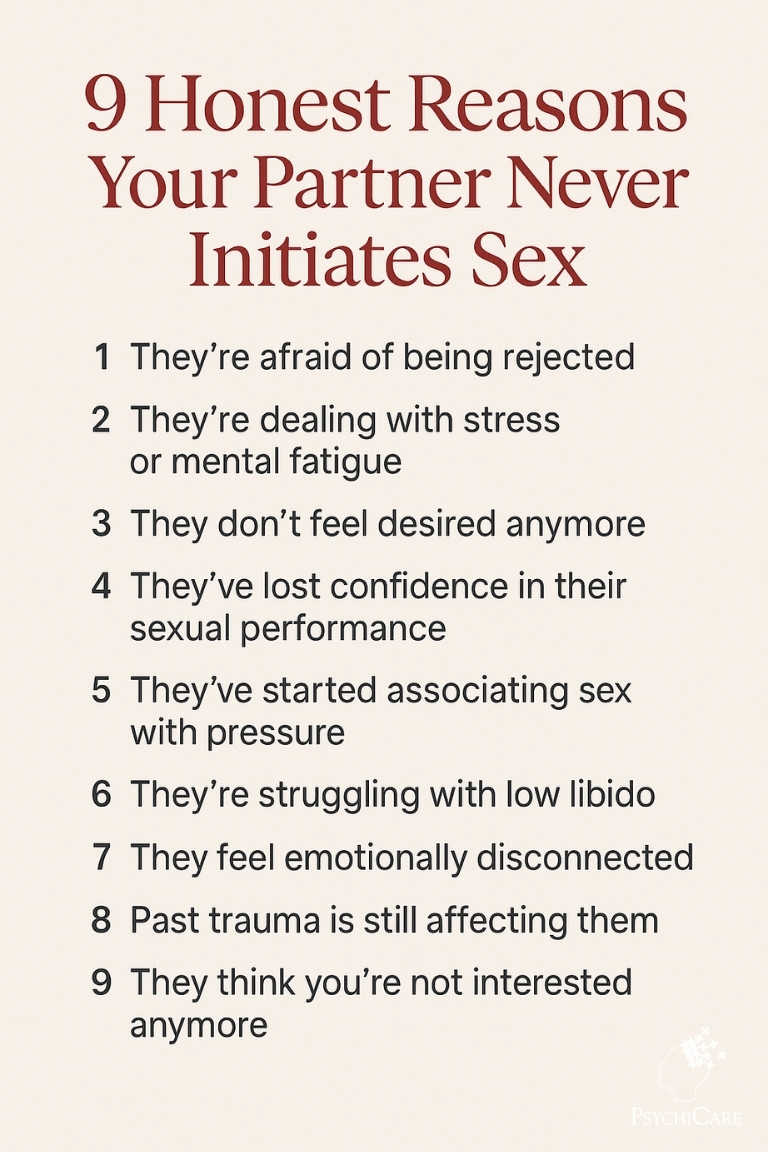
9 Honest Reasons Your Partner Never Initiates Sex
1. They’re Afraid of Being Rejected
One reason a partner may stop initiating sex is fear of being turned down.
Sexual rejection can feel surprisingly personal. Even a gentle “not tonight” may leave someone embarrassed or unwanted, especially when rejection has happened several times.
After a while, they may simply stop trying.
This is more likely when someone:
- Has been turned down repeatedly
- Struggles with self-esteem
- Feels anxious about initiating
- Has experienced rejection in previous relationships
They may still want sex but wait for you to make the first move because that feels safer.
If this has become the main pattern between you, our guide for people who feel tired of always initiating intimacy looks more closely at what one-sided initiation can do to both partners.
2. They’re Dealing With Stress or Mental Fatigue
Work pressure, parenting, financial worries, health problems, and poor sleep can leave very little mental space for sex.
Your partner may spend all day solving problems, answering messages, dealing with people, or thinking about money. By evening, initiating intimacy may barely cross their mind.
This is particularly common when stress has been going on for months rather than days.
You may notice other changes too: less energy, poor sleep, irritability, withdrawing after work, or constantly wanting to be left alone.
When work is taking most of your partner’s attention and emotional energy, it may help to look at whether job stress is spilling into the relationship.
3. They Don’t Feel Desired Anymore
The person who rarely initiates can still wonder whether you find them attractive.
In longer relationships, compliments and flirting often become less frequent. You know you love each other, so saying it out loud starts feeling unnecessary.
Your partner may notice that:
- You rarely compliment them anymore
- Flirting has disappeared
- Sex feels predictable
- Everyday physical affection has reduced
- You seem distracted when they approach you
After enough doubt, initiating can start feeling risky.
They may wait for you to start because your initiation gives them the reassurance they were looking for.
4. They’ve Lost Confidence in Their Sexual Performance
Sexual confidence can change after only a few uncomfortable experiences.
Someone may worry about erections, orgasm, stamina, body image, or whether they are satisfying their partner.
Instead of discussing the concern, they stop putting themselves in situations where it might happen again.
Performance anxiety can involve worrying about:
- Getting or maintaining an erection
- Reaching orgasm too quickly or too slowly
- Whether a partner is enjoying sex
- Body appearance
- Comparing themselves with previous partners or pornography
Initiating sex can feel like putting their performance up for evaluation.
That fear may be much harder for them to admit than simply saying they are tired.
5. Sex Has Started Feeling Like Pressure
If every kiss, cuddle, or moment in bed seems expected to lead to sex, a partner can start becoming cautious about affection altogether.
Maybe one person initiates often and the other regularly feels guilty saying no.
Maybe arguments about frequency have made sex a sensitive subject.
Maybe phrases such as “we never have sex anymore” have started appearing during disagreements.
Eventually, sex starts carrying the weight of expectation.
You may then notice your partner pulling away from ordinary affection too. Our article on why a partner may stop touching you looks more closely at what can happen when physical affection itself begins to feel difficult.
Bringing back touch that does not automatically lead to sex can sometimes make closeness feel less loaded.
6. They’re Struggling With Low Libido
A drop in sexual desire can have physical, psychological, and relationship-related causes.
Hormonal changes, menopause, low testosterone, depression, anxiety, chronic illness, fatigue, pregnancy, and medication can all affect libido.
If your partner’s sexual desire has changed noticeably, think about what else changed around the same time.
Was there a new medication?
A health problem?
Pregnancy or childbirth?
A period of intense stress?
Poor sleep?
Low mood?
When desire has stayed low for a while, our guide to low sex drive in marriage goes deeper into the possible reasons.
7. They Feel Emotionally Disconnected
Sex can become harder to initiate when the relationship itself feels distant.
Maybe there are unresolved arguments.
Maybe one person feels misunderstood or unappreciated.
Maybe you spend plenty of time together but rarely talk about anything beyond work, children, bills, or household tasks.
For some people, sexual desire becomes much easier when they feel emotionally connected first.
If closeness has been fading outside the bedroom too, it may help to explore why intimacy starts fading in a marriage.
The sexual distance may be one part of a bigger change between you.
8. Past Trauma Is Still Affecting Them
Past sexual abuse, assault, coercion, or emotionally abusive relationships can affect how someone experiences sex years later.
They may want closeness and still struggle to initiate it.
Certain situations may bring up:
- Anxiety
- Shame
- Feeling trapped
- Fear of losing control
- Flashbacks
- Discomfort with particular kinds of touch
A shame-based upbringing around sex can have an effect too.
Someone raised to think sex is dirty, embarrassing, or something they should not openly want may find initiation especially difficult.
If past experiences are still affecting present intimacy, trauma-informed support may help. LeapHope also has information on healing from sexual trauma.
9. They Think You’re Not Interested Anymore
Sometimes both people are waiting.
Your partner noticed that you turned them down several times.
You were tired, stressed, or simply not interested on those particular days.
They interpreted it differently.
Maybe they stopped flirting.
Then you noticed they had stopped initiating.
You pulled back too.
Now both people feel unwanted.
This can happen quietly in long-term relationships, especially when neither person talks about the change.
Instead of asking, “Why don’t you ever want me?” try something more specific:
“I’ve noticed I initiate most of the time lately. How has sex been feeling for you?”
That gives your partner more room to tell you what is actually happening.
What “Not Wanting Sex” Can Look Like
Low desire does not always look like a complete lack of sex.
Your partner might rarely think about sex first but still enjoy it once intimacy begins.
They may enjoy cuddling but avoid sexual touch.
They may want sex during relaxed periods but lose interest completely during stressful weeks.
Or desire may have dropped across the board.
Notice the pattern before deciding what it means.
If the main problem is simply that you are always making the first move while your partner participates once things begin, that is slightly different from having no sexual desire at all.
How Modern Life Can Affect Sexual Desire
Long work hours, irregular sleep, stress, parenting, financial pressure, medication, health problems, and constant screen use can all leave less room for sexual interest.
Couples often notice this after a major change in routine.
One partner starts working later.
A baby arrives.
Someone begins a stressful job.
Bedtime turns into scrolling.
Weeks pass without either person deliberately choosing time for intimacy.
If the relationship still feels good but sex has become repetitive or easy to postpone, small changes can sometimes help. You can also explore practical ways to improve your sex life as a couple.
What Happens When Desire Problems Go Unspoken
The person initiating may start feeling rejected.
The person with lower desire may feel watched or pressured.
A simple invitation for sex begins carrying much more meaning than it used to.
One partner thinks:
“They never want me.”
The other thinks:
“Every time they touch me, I’m expected to do something.”
That cycle can gradually affect affection outside the bedroom too.
When different levels of desire have become a long-term source of conflict, understanding sexual incompatibility in a relationship can help separate a temporary low-desire period from an ongoing mismatch.
What Helps When Sexual Desire Starts Fading
Start with a conversation that is not happening immediately before or after sex.
Ask what has changed.
Listen for practical things as well as relationship problems.
Stress?
Medication?
Pain?
Poor sleep?
Performance anxiety?
Feeling pressured?
Not feeling emotionally close?
If your partner gives you an answer, resist the urge to immediately argue against it.
You may also want to bring back affection that does not have to become sexual.
Sit close.
Kiss.
Cuddle.
Touch each other without making every moment a test of whether sex will happen.
When a couple has gone a long time with little or no sexual intimacy and both are distressed by it, sexless marriage counselling may offer a more focused place to address the pattern.
Final Thoughts
When your partner does not want sex or rarely initiates it, it can affect more than your sex life.
You may start questioning your attractiveness, the relationship, or what your partner really feels about you.
Try to find out what has actually changed before settling on an explanation.
Sexual desire can be affected by stress, health, medication, confidence, relationship tension, previous rejection, or experiences your partner may find difficult to discuss.
Start with curiosity rather than accusation.
If concerns around desire, sexual initiation, or emotional closeness continue to cause distress, online sex therapy can give individuals or couples a private space to talk through what is happening.
Sometimes the first useful conversation is simply:
“How has sex been feeling for you lately?”
FAQs
Why does my partner never initiate sex?
Your partner may never initiate sex because of fear of rejection, low libido, stress, sexual performance concerns, emotional distance, or feeling pressured around intimacy. They may still enjoy sex even if they rarely make the first move.
Why does my boyfriend never initiate sex?
Your boyfriend may never initiate sex because he worries about rejection, feels stressed, has lower sexual desire, lacks confidence, or expects you to initiate. Notice whether he still enjoys intimacy once it begins before assuming he has lost interest.
Why does my partner never initiate intimacy?
A partner may never initiate intimacy because physical closeness feels pressured, they have become used to you initiating, they fear rejection, or their desire has changed. Talking about the pattern directly can clarify what initiation means to each of you.
Why doesn’t my boyfriend initiate intimacy anymore?
If your boyfriend used to initiate intimacy but has stopped, think about what changed around the same time. Stress, repeated rejection, relationship tension, low desire, performance anxiety, or emotional distance can all affect someone’s willingness to initiate.
Why doesn’t my husband initiate intimacy anymore?
Your husband may stop initiating intimacy because of stress, low libido, sexual confidence problems, previous rejection, health concerns, or unresolved relationship issues. A sudden change is worth discussing, especially if affection and sexual interest have both decreased.
Why does my wife never initiate intimacy?
Your wife may rarely initiate intimacy because of stress, exhaustion, hormonal changes, discomfort during sex, emotional distance, sexual pressure, or differences in how desire develops. Lack of initiation alone does not tell you how much attraction she feels.