
Last Updated on August 26, 2026
Reviewed by Mansi More Nopany, Clinical Psychologist for clinical accuracy and trauma-informed guidance.
Are you still feeling affected by sexual trauma from your past? Unable to feel comfortable with touch, trust someone fully, enjoy intimacy, or understand why certain situations still trigger you?
Healing from sexual trauma is possible, but it often becomes easier with the right professional guidance. A qualified clinical psychologist can help you understand trauma responses, work through fear and self-blame, rebuild boundaries, and regain a sense of safety and control.
What Is Sexual Trauma?
Sexual trauma is the psychological and emotional impact of an unwanted, coercive, abusive, or frightening sexual experience. It can result from sexual assault, childhood sexual abuse, pressure within a relationship, unwanted touching, exploitation, or any sexual experience where a person felt unsafe, powerless, or unable to freely consent.
The effects can continue long after the event and may influence trust, intimacy, boundaries, body responses, self-esteem, and relationships.
Sexual Trauma Symptoms and Its Effect on Your Body and Intimacy
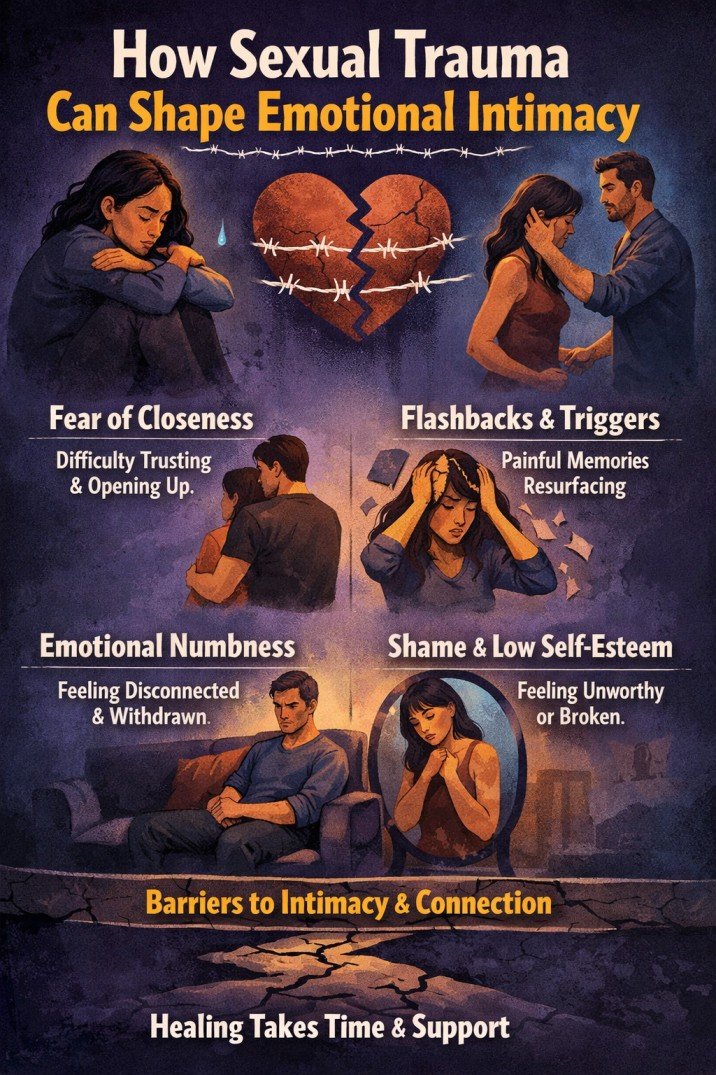
Sexual trauma can affect emotions, trust, body responses, and intimacy in different ways. Some reactions may appear immediately, while others can become more noticeable later in relationships or sexual situations.
Common effects can include:
- feeling unsafe, anxious, or easily startled
- emotional numbness or feeling disconnected
- shame, guilt, or self-blame
- flashbacks, intrusive memories, or nightmares
- difficulty trusting yourself or other people
- freezing or shutting down during intimacy
- avoiding sex or certain types of touch
- reduced desire or difficulty becoming aroused
- difficulty expressing boundaries or saying no
These reactions do not necessarily mean you no longer love or feel attracted to your partner. In many cases, they are trauma responses. You can also read about why your body shuts down during intimacy and why intimacy can feel frightening.
How to Heal From Sexual Trauma
Today, advice about trauma is everywhere, from AI tools and social media to self-help content and wellness influencers. But sexual trauma healing needs a more careful approach.
Let’s look at the right way to heal, using support from qualified psychologists, evidence-based therapy, and safe self-care practices that can support recovery without replacing professional care.
1. Rebuild a Sense of Safety First
Sexual trauma can leave your mind and body feeling unsafe even when the danger has passed. Healing often begins by rebuilding that sense of safety in daily life, relationships, and physical closeness.
This can mean noticing what makes you uncomfortable, reducing situations that feel overwhelming, and giving yourself more control over your surroundings, boundaries, and personal choices.
2. Start With a Qualified Mental Health Professional
A qualified clinical psychologist can first understand how sexual trauma is affecting your life now. This may include fear, flashbacks, emotional shutdown, self-blame, difficulty trusting others, or problems with intimacy.
The right support should be based on your current needs, not a fixed recovery plan. Trauma and PTSD counselling can help you work through these responses in a structured and safe way.
3. Understand Your Trauma Responses
After sexual trauma, your mind and body may still react as if danger is present. This can show up as freezing, avoiding touch, feeling numb, becoming anxious, or suddenly wanting to leave a situation.
These reactions are common trauma responses. Understanding why your body may shut down during intimacy can reduce confusion and self-blame and help you recognize what your mind and body are responding to.
4. Work on Shame and Self-Blame
Many people keep questioning what they did, why they did not react differently, or whether they could have prevented what happened. These thoughts can keep the trauma active long after the event itself.
A psychologist can help you separate responsibility from self-blame and rebuild confidence in the way you see yourself. If the experience has deeply affected your self-worth, self-esteem counselling can also support this part of recovery.
5. Rebuild Your Boundaries and Sense of Control
Sexual trauma can make it harder to recognise what feels comfortable, say no, or trust your own decisions. Rebuilding these boundaries is an important part of recovery.
This can mean learning to notice discomfort earlier, communicate your limits clearly, and remember that you are allowed to change your mind. People-pleasing and boundaries counselling can help when saying no or protecting your personal space feels difficult.
6. Reconnect With Your Body Without Forcing Intimacy
Healing does not mean pushing yourself into touch or sex before you feel ready. The focus should be on noticing what feels safe, what feels uncomfortable, and where you still feel tension or fear.
For some people, intimacy can feel difficult even with a trusted partner. Understanding why intimacy can feel frightening can help make sense of these reactions without treating them as rejection or failure.
How to Heal When Sexual Intimacy With Your Partner Feels Dead
During sexual trauma recovery, intimacy should be rebuilt slowly. Start with emotional closeness before trying to bring sex back into the relationship.
- spend relaxed time together and talk openly
- begin with safe touch such as holding hands, hugging, or kissing
- stop if touch causes fear, numbness, tension, or discomfort
- give yourself more time instead of forcing sexual intimacy
- move toward sex only when both partners feel safe and comfortable
If intimacy continues to feel difficult while healing from sexual trauma, online sex therapy can help you understand the reaction and rebuild sexual closeness at a safer pace.
What If Sexual Trauma Is Making Me Avoid Dating, Relationships, or Marriage?
After sexual trauma, some people start avoiding dating, emotional closeness, or marriage because relationships themselves begin to feel unsafe or overwhelming.
This can show up as:
- losing interest when someone gets emotionally close
- avoiding dating even when you want a relationship
- fear of commitment or marriage
- pulling away when a relationship becomes serious
- difficulty trusting someone’s intentions
- choosing distance because it feels safer
During sexual trauma recovery, the goal is not to force yourself into a relationship. It is to understand what feels unsafe, rebuild trust in your own choices, and move toward closeness at a pace that feels manageable.

Therapies Used for Healing Sexual Trauma in India
In India, sexual trauma treatment should be provided by a qualified clinical psychologist or trauma-trained mental health professional. The approach depends on how the trauma is affecting the person now.
Common evidence-based therapies include:
- Trauma-Focused CBT: helps work on fear, avoidance, negative thoughts, and trauma-related beliefs
- Cognitive Processing Therapy (CPT): useful for guilt, shame, self-blame, trust, and safety concerns
- EMDR: helps process distressing trauma memories in a structured therapeutic setting
- Exposure-based therapy: may be used carefully when trauma memories or safe situations are being strongly avoided
- Sex therapy: can help when sexual trauma continues to affect desire, touch, arousal, boundaries, or intimacy with a partner
The right therapy is not chosen only by the type of sexual trauma. A psychologist considers the person’s current symptoms, emotional safety, relationships, and readiness before deciding how treatment should proceed.
How to Know Your Sexual Trauma Healing Progress
Healing from sexual trauma is usually seen in small changes rather than one clear moment when everything feels “fixed.”
Signs of progress can include:
- triggers feel less intense
- you recover faster after feeling overwhelmed
- you understand your reactions better
- setting boundaries feels easier
- shame and self-blame reduce
- you trust your own choices more
- touch or intimacy feels more manageable
- the trauma affects your daily life less
Progress does not mean you never feel triggered again. The U.S. National Center for PTSD also recommends tracking improvement during trauma treatment rather than judging recovery from one good or bad day.
Final Thoughts
Healing from sexual trauma is possible, but it may take time and the right support. The aim is not to forget what happened, but to feel safer, trust yourself again, and regain control over your body, choices, relationships, and intimacy.
Progress can be gradual. What matters most is that the trauma starts having less control over your daily life and you feel more able to live, connect, and make decisions on your own terms.
FAQs About Healing From Sexual Trauma
Why Do I Still Panic as an Adult After Childhood Sexual Trauma?
Childhood sexual trauma can affect your sense of safety even years later. Certain situations, touch, intimacy, or memories may trigger fear before you have time to think about it. Therapy can help reduce these trauma responses and make them easier to manage.
Why Do I Freeze During Intimacy Even When I Trust My Partner?
Freezing can be an automatic trauma response. You may love and trust your partner while your body still reacts to intimacy as if something is unsafe. This does not necessarily mean you have lost attraction or feelings for them.
Can Sexual Pressure in a Past Relationship Cause Trauma?
Yes. Sexual trauma can also result from coercion, repeated pressure, manipulation, or sexual activity you did not freely want. An experience does not have to involve physical violence to have a lasting psychological impact.
Why Do I Feel Guilty Saying No to Sex After Sexual Trauma?
Sexual trauma can make boundaries feel difficult, especially when saying no previously led to pressure, conflict, or fear. Recovery often involves learning to recognise your own limits and feeling safer expressing them.
Why Am I Avoiding Dating and Relationships After Sexual Trauma?
Dating and relationships involve trust, vulnerability, and physical closeness, which can feel threatening after sexual trauma. Some people avoid relationships even when they still want companionship because distance feels safer.
Can I Have a Healthy Sex Life After Sexual Trauma?
Yes. Many people are able to build safe and satisfying sexual relationships after trauma. Recovery may involve rebuilding trust, communicating boundaries, becoming comfortable with touch again, and approaching sexual intimacy gradually.