
“I feel guilty asking my husband for money.”
“He says it’s his money because he earns it.”
“I know nothing about our savings or bank accounts.”
“I feel more like a child asking for permission than a wife.”
These are some of the most painful things wives quietly say in marriage counselling when husbands control all the finances.
For some women, the husband simply takes financial leadership and the marriage still feels loving, safe, and respectful. But for others, money slowly becomes connected to fear, shame, emotional dependence, and loss of freedom inside the relationship.
The hardest part is that many wives do not even know whether what they are experiencing is normal, unhealthy, or emotionally abusive.
In this article, our marriage therapists explain the difference between healthy financial leadership, anxiety-based financial control, and financial abuse in marriage and how controlling money can slowly change emotional safety, trust, and equality between husband and wife.
3 Types of Marriages Where Husbands Control the Finances
Healthy Financial Leadership in Marriage
In some marriages, the husband naturally takes the lead in managing finances because he is genuinely better at budgeting, planning, saving, or handling financial pressure. The wife may not enjoy dealing with bills, investments, taxes, or long-term financial decisions, and both partners feel comfortable with this arrangement.
In these relationships, the wife still feels emotionally safe, respected, included, and financially secure. She does not feel afraid asking questions about money, and she is aware of savings, major financial decisions, and future plans. Even if the husband manages most of the finances, the marriage still feels like a partnership, not a system of permission or control.
Many husbands in this category are not trying to dominate their wives. They often carry strong provider pressure and genuinely want to protect their family from financial stress. Some wives also prefer their husband taking financial leadership because it creates stability and reduces anxiety in the home.
A healthy financial leadership dynamic usually includes:
- transparency
- trust
- emotional safety
- mutual respect
- financial awareness for both partners
The wife may not manage the finances daily, but she never feels powerless, trapped, or emotionally small in the marriage.
Anxiety-Based Financial Control
This is one of the most common situations in modern marriages. The husband may genuinely love his wife and want the best for the family, but his relationship with money is heavily driven by stress, fear, or pressure. He may constantly worry about bills, future security, debt, or providing for the family.
In many cases, these husbands do not see themselves as controlling. They believe they are simply being careful, responsible, or protective. Some grew up in financially unstable homes or carry deep anxiety about money and failure.
Over time, however, financial leadership can slowly become emotionally controlling.
The wife may start hearing things like:
- “Ask me before buying this.”
- “I’ll handle all the finances.”
- “You don’t need to worry about money.”
- “I’m better at managing these things.”
At first, this may feel caring or harmless. But slowly, the wife may begin feeling:
- emotionally excluded
- financially dependent
- guilty spending money on herself
- afraid to discuss finances openly
In these marriages, the issue is often not hatred or cruelty, but emotional imbalance. Love may still exist, yet money slowly starts creating fear, tension, resentment, and emotional distance in the relationship.
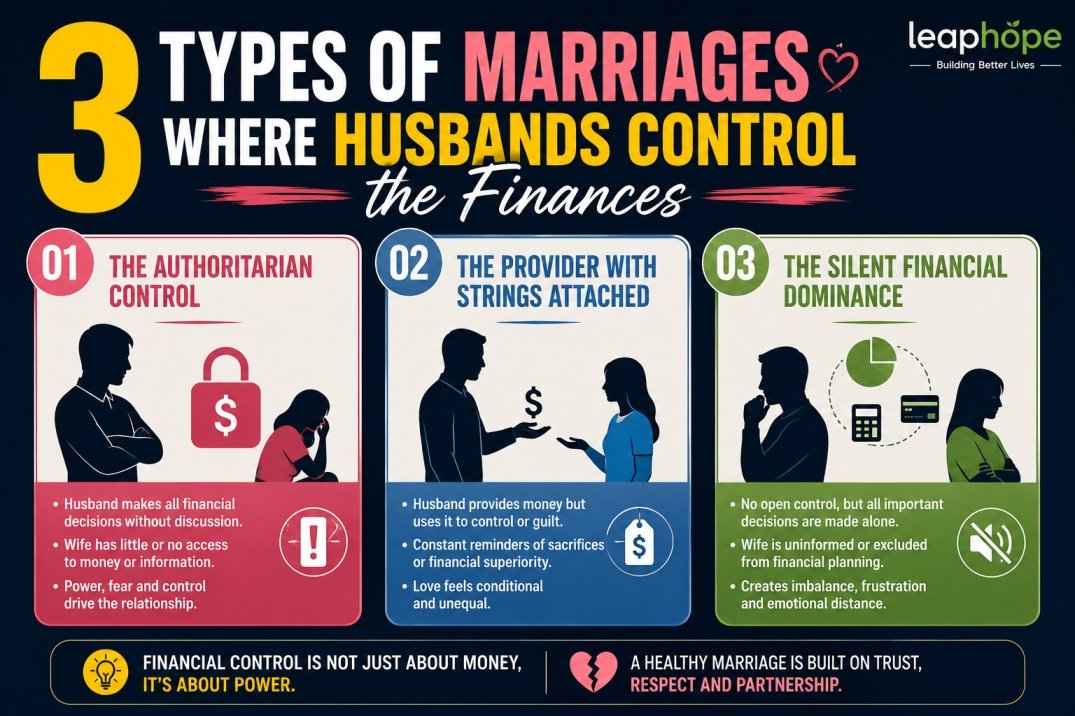
Financial Abuse & Total Financial Control
This is when money is used to control the wife’s freedom, choices, and emotional security in the marriage.
The husband may:
- refuse access to accounts or savings
- make the wife ask for money for basic needs
- monitor every purchase
- hide financial information
- give very little personal money
- say things like “It’s my money because I earn it”
- become angry when finances are discussed
Over time, the wife may start feeling:
- powerless
- emotionally trapped
- ashamed asking for money
- scared spending on herself
- financially dependent with no real freedom
At this stage, the marriage no longer feels emotionally safe or equal. Money starts becoming a tool of fear, permission, and control instead of partnership and security.
What Wives Often Say in Marriage Counselling When Husbands Control Money
“I Feel Like I Need Permission to Live My Own Life”
Many wives describe feeling emotionally exhausted because even small decisions start requiring approval from their husband. Over time, simple things like buying clothes, meeting friends, spending on self-care, or purchasing basic household items can start feeling stressful instead of normal.
Some women say they constantly think:
- “Should I ask first?”
- “Will he get upset?”
- “Will he question why I spent this?”
Slowly, the marriage stops feeling emotionally equal. The wife may begin feeling more like someone asking permission to exist comfortably rather than an independent and respected partner in the relationship.
“I Feel Guilty Buying Even Basic Things for Myself”
Many wives in financially controlling marriages slowly start feeling guilty spending money on themselves, even for basic needs. Things like shampoo, clothes, skincare, medical needs, or small personal purchases can begin creating anxiety and shame.
Some women stop buying things altogether because they fear being questioned, judged, or made to feel irresponsible. Over time, this can damage self-worth and create the feeling that their own needs are less important inside the marriage.
“My Husband Treats Me Like I’m Bad With Money”
Some wives say their husband constantly acts like they are irresponsible, careless, or incapable of making good financial decisions. Even normal spending may be criticised, questioned, or monitored too closely.
Over time, this can make a wife start doubting her own judgment around money. Instead of feeling trusted and respected, she may begin feeling emotionally small, dependent, or treated more like a child than an equal partner in the marriage.
“I Don’t Feel Like an Equal Partner in This Marriage”
Many wives say the emotional pain is not just about money, but about feeling excluded from important parts of the marriage. When one partner controls all financial decisions, secrecy and imbalance can slowly replace the feeling of teamwork.
Some women describe feeling like they have responsibilities in the relationship, but very little voice, control, or financial security. Over time, the marriage may stop feeling like an equal partnership and start feeling emotionally one-sided.
“He Says He’s Providing, But I Feel Emotionally Controlled”
Some husbands genuinely believe they are taking care of the family by managing all the money and handling financial pressure alone. They may work hard, pay the bills, and see themselves as responsible providers.
But many wives say that despite being “provided for,” they still feel emotionally controlled. When money comes with permission, monitoring, anger, or lack of transparency, the relationship can slowly stop feeling emotionally safe and equal.
“I’m Scared to Ask Questions About Money”
Some wives say they avoid asking about savings, spending, debt, or bank accounts because financial conversations quickly turn into anger, defensiveness, or emotional tension. Over time, they may start staying silent just to avoid conflict.
This can slowly create fear and emotional distance in the marriage. Instead of feeling comfortable discussing finances as a team, the wife may begin feeling like money has become a sensitive topic she is not allowed to question.
“I Feel Financially Dependent and Emotionally Trapped”
Many wives say the hardest part is feeling like they no longer have financial freedom or security of their own. Some may have left work to raise children or become fully dependent on their husband over time.
When a wife has little access to money, savings, or financial decision-making, she may slowly begin feeling trapped inside the marriage. Even if love still exists, dependence and fear can create deep emotional stress and insecurity.
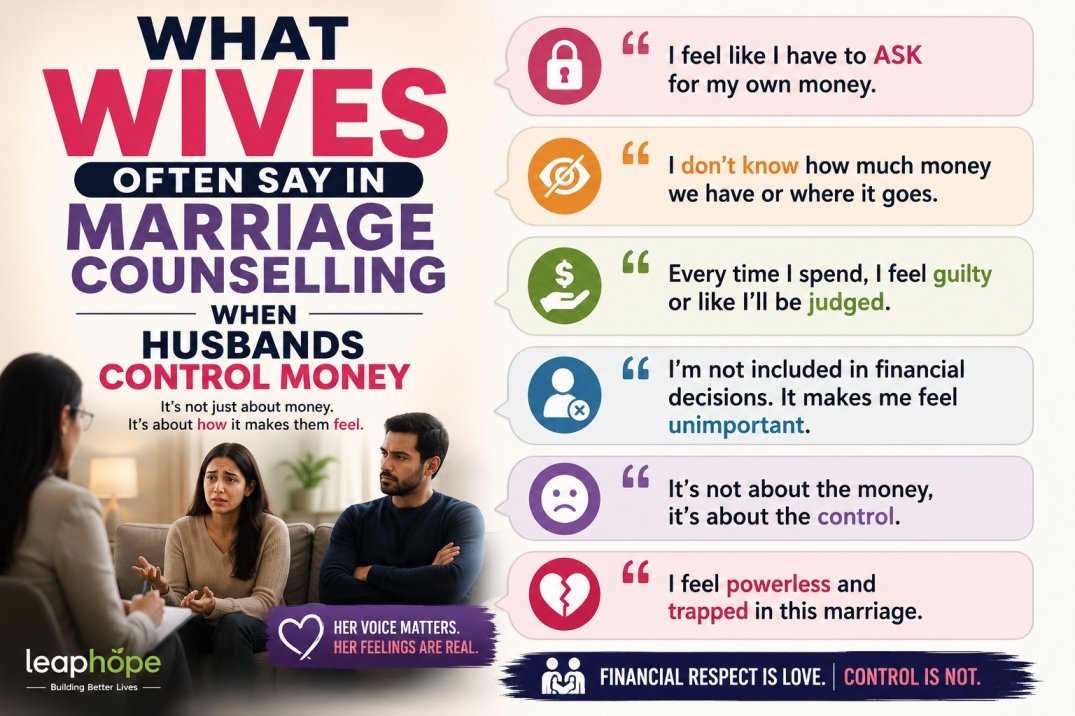
“My Husband Knows Everything About Our Finances, But I Know Nothing”
Some wives say their husband handles all the finances, but keeps them completely uninformed about savings, bank accounts, debts, investments, or financial plans. At first, this may seem like convenience or trust, but over time it can create emotional insecurity.
Many women begin feeling excluded from an important part of the marriage and anxious about what would happen if an emergency, separation, or financial crisis ever occurred.
“I Feel More Like a Child Asking for an Allowance Than a Wife”
Some wives say they are given limited money for groceries, household expenses, or personal needs, while their husband controls the rest of the finances. Over time, constantly asking for money can start feeling humiliating and emotionally painful.
Many women describe feeling less like an equal life partner and more like someone who has to justify every expense or ask permission for basic independence.
“I’m Afraid I Couldn’t Survive Financially on My Own”
Some wives quietly fear that they have become so financially dependent on their husband that they would struggle to support themselves if the marriage ever became unhealthy, unstable, or emotionally unsafe.
Over time, this fear can create emotional pressure, helplessness, and anxiety inside the relationship. Even when problems exist, some women stay silent because they feel they have no financial safety or independence outside the marriage.
Should You Stay or Leave if You Feel Financially Controlled by Your Husband?
Not every husband who controls finances is emotionally abusive. Some marriages can improve through honest conversations, transparency, emotional understanding, and marriage counselling, especially when the husband is willing to listen, change, and rebuild trust.
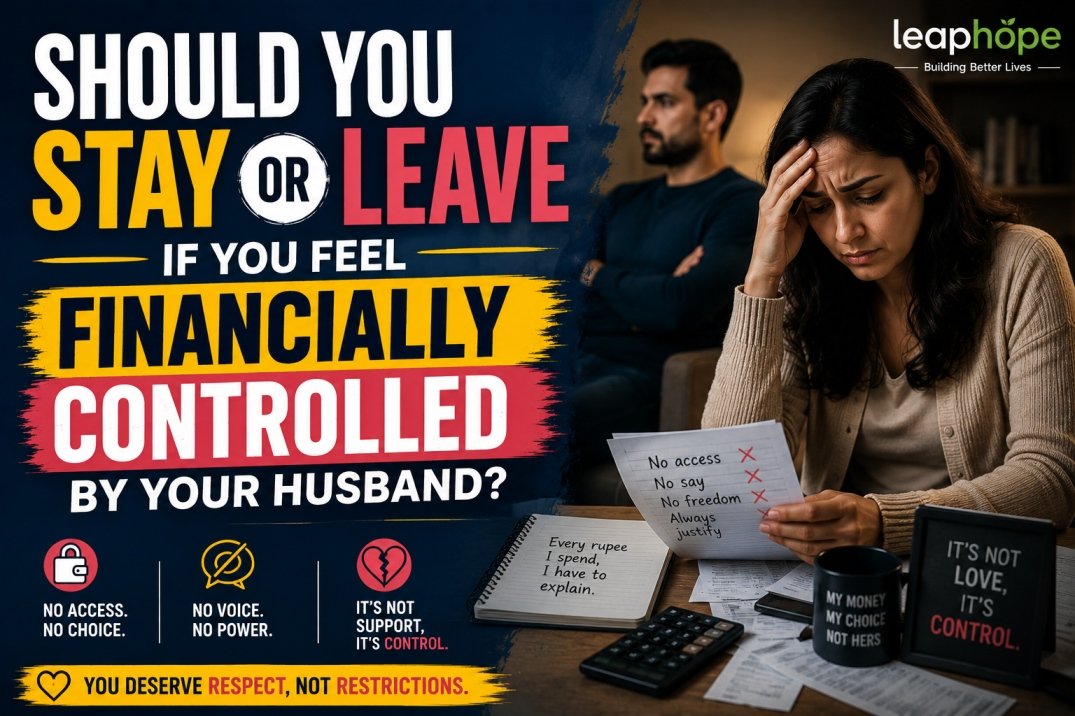
But when money starts creating fear, emotional dependence, shame, isolation, or loss of freedom, the situation becomes much more serious.
A healthy marriage should not make a wife feel:
- afraid asking for money
- ashamed spending on herself
- emotionally trapped
- financially powerless
- excluded from important financial decisions
At the same time, the decision to stay or leave is deeply personal. Every marriage has different emotional, financial, family, and practical realities. Before making any major decision, it is important to honestly look at:
- your emotional safety
- your husband’s willingness to change
- the level of trust and transparency
- the emotional damage the relationship is causing
- whether the marriage still feels supportive more than painful
The real question is not:
“Who controls the money?”
It is:
“Do you still feel emotionally safe, respected, and secure in this marriage?”
When to Seek Marriage Counselling or Professional Support
Many couples wait too long before talking about financial control because they assume it is “just a money issue.” But over time, these problems can slowly damage emotional safety, trust, communication, and equality in the marriage.
Marriage counselling may help when:
- money conversations always turn into arguments
- one partner feels emotionally unheard or controlled
- financial secrecy is creating distrust
- the wife feels trapped, anxious, or powerless
- resentment around money keeps growing
- the relationship no longer feels emotionally safe
A good marriage counsellor can help couples understand the deeper emotional issues behind financial control, improve communication, and rebuild healthier partnership dynamics around money.
If financial control, emotional stress, or money-related conflict is affecting your marriage, professional support may help. LeapHope offers online marriage counseling and online therapy for couples and individuals struggling with relationship and emotional issues connected to money, trust, control, and communication.
Final Thoughts
Not every husband who controls finances is intentionally abusive, and not every marriage with traditional financial roles is unhealthy. In some relationships, financial leadership creates stability, trust, and emotional safety for both partners.
But when money starts creating fear, shame, emotional dependence, loss of freedom, or feelings of powerlessness, the issue becomes much deeper than finances alone.
A healthy marriage should never make one partner feel emotionally small, trapped, or afraid to speak openly about money. At its healthiest, financial partnership should create security, transparency, respect, and the feeling that both husband and wife matter equally in the relationship.