
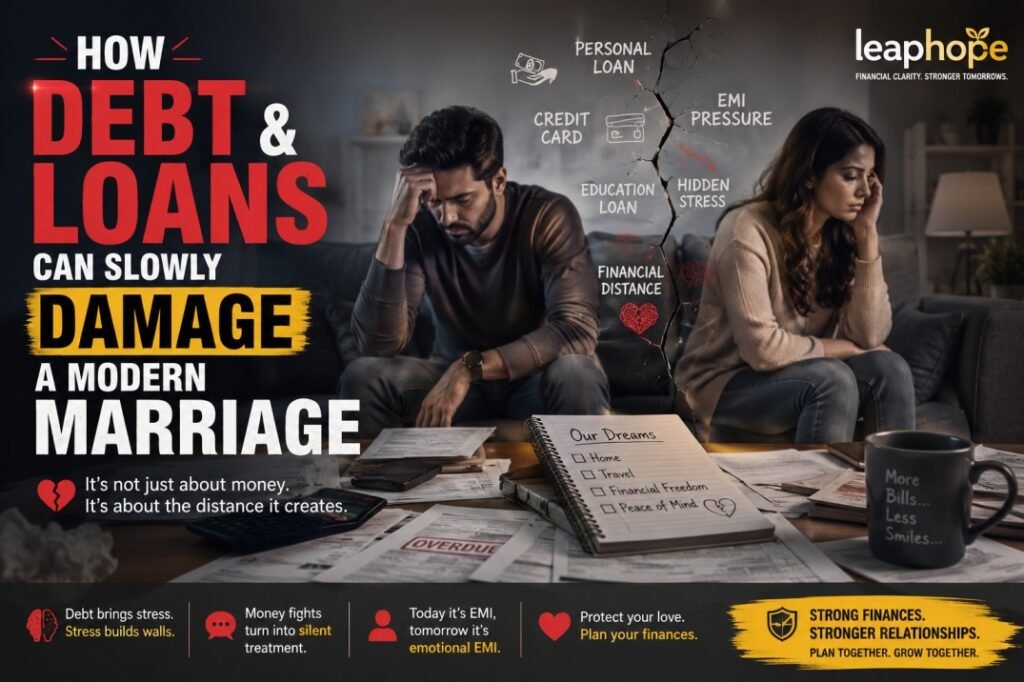
Many couples who come to Online Marriage Counselling are not struggling because love disappeared from the marriage. Sometimes, it is debt that slowly changes the emotional atmosphere between two people who genuinely wanted a good life together.
It often starts with good intentions. A wedding loan, honeymoon expenses, house EMI, furniture payments, credit cards, or personal loans taken to build a comfortable life together. At first, couples believe they will manage everything with time.
But slowly, most of the income starts disappearing into EMIs, bills, rent, and repayments before the month even begins. Even couples with two incomes start feeling financially stuck and emotionally exhausted.
One partner starts stressing about every expense while the other feels pressured, judged, or tired of constantly “managing.” Some couples begin using one credit card to survive another payment cycle, while others quietly take new loans hoping things will improve later.
At LeapHope, many modern couples say they no longer feel emotionally relaxed around each other because financial stress is always sitting in the background. Small conversations become arguments, emotional closeness starts fading, and the relationship slowly begins feeling more stressful than peaceful.
Types of Couples Struggling With Debt in Marriage
Couples Hiding Debt From Each Other
Some couples enter marriage already carrying hidden debt, while others slowly begin hiding financial problems after marriage. It may start with a secret personal loan, hidden credit card spending, unpaid bills, or borrowing money without discussing it openly with their partner.
Many people hide debt because they feel ashamed, scared of judgment, or afraid of creating conflict at home. They keep thinking they will “fix it later” before their partner finds out. But over time, secrecy itself becomes more damaging than the debt.
Once a partner discovers hidden loans, secret spending, or financial lies, the relationship often stops feeling emotionally safe. Small doubts slowly turn into bigger questions about honesty, responsibility, and trust inside the marriage.
The Saver and Emotional Spender Couple
In many modern marriages, one partner spends money for emotional comfort while the other constantly worries about financial security. One wants to enjoy life and feel temporary relief from stress, while the other keeps thinking about EMIs, bills, savings, and future stability.
At first, these differences seem manageable. But once debt starts increasing, repeated spending habits slowly create emotional tension inside the marriage.
The saver starts feeling financially unsafe and emotionally exhausted, while the spender starts feeling constantly judged or controlled. Over time, even small expenses begin turning into repeated arguments about responsibility, priorities, and trust.
Couples Drowning in Credit Card Debt
Many modern couples slowly fall into a cycle where credit cards stop feeling like convenience and start becoming survival tools. One card is used for groceries, another for bills, another for managing old payments, while minimum dues quietly keep growing every month.
Even couples with stable jobs and two incomes often find themselves living paycheck to paycheck. Most of the salary disappears into EMIs, credit card payments, late fees, and interest charges before they get a chance to actually enjoy life together.
Over time, the pressure becomes emotionally exhausting. Couples start feeling trapped despite working hard every day, and financial stress slowly enters conversations, moods, intimacy, and the overall peace inside the marriage.
Couples Carrying Old Debt Into Marriage
Many couples enter marriage already carrying financial baggage from their past. It may be student loans, business losses, family responsibilities, unpaid credit cards, or personal debt that existed long before the relationship became serious.
At first, both partners may try to be understanding and supportive. But over time, when a large part of the income keeps going toward old financial problems, resentment can slowly start building inside the marriage.
One partner may begin feeling emotionally burdened by responsibilities they never created, while the other quietly struggles with guilt, shame, or pressure about bringing debt into the relationship.
Couples Trying to Keep Up With a Lifestyle They Cannot Sustain
Many modern couples take on debt while trying to build a life that looks successful, comfortable, or “settled.” Expensive homes, luxury purchases, frequent trips, branded lifestyles, and social media comparisons slowly create pressure to spend beyond what the relationship can realistically sustain.
At first, the spending may feel exciting and rewarding. But over time, EMIs, credit card bills, and financial pressure start replacing the happiness those things were supposed to create.
Some couples begin realizing they are working harder only to maintain appearances, while their emotional peace, savings, and relationship stability slowly disappear underneath the pressure of keeping up.
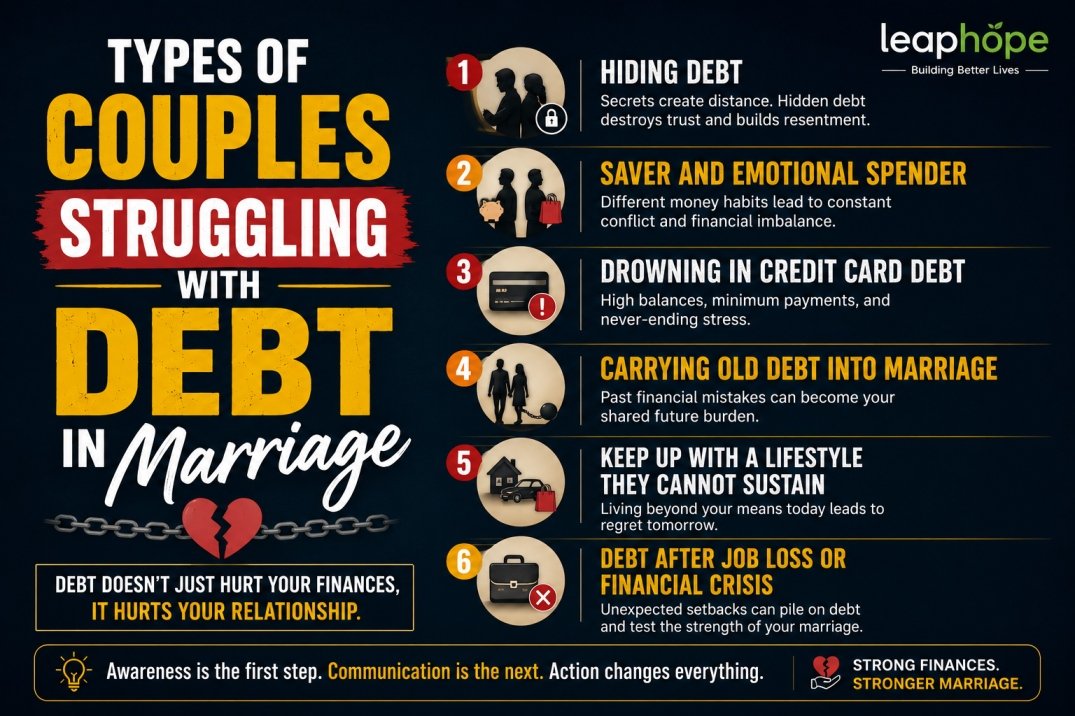
Couples Facing Debt After Job Loss or Financial Crisis
Some marriages become financially strained after unexpected life changes like job loss, business setbacks, medical emergencies, or sudden financial instability. A relationship that once felt stable can quickly become emotionally heavy when income reduces but loans, EMIs, and responsibilities continue.
The pressure often goes beyond money. One partner may start feeling ashamed for not being able to contribute the same way anymore, while the other silently carries fear about bills, survival, and future stability.
Over time, stress, guilt, and emotional withdrawal can slowly replace comfort, openness, and emotional connection inside the marriage.
How Debt Slowly Damages a Marriage
Constant Financial Stress Changes the Atmosphere at Home
When couples are constantly worried about EMIs, bills, credit card payments, or overdue loans, the stress rarely stays limited to finances alone. It slowly enters the emotional atmosphere of the home.
Anxiety starts sitting quietly in the background every day. Even normal conversations begin feeling tense because both partners are already mentally exhausted from financial pressure.
Over time, couples stop feeling emotionally relaxed around each other. The relationship starts feeling heavier, more reactive, and less emotionally peaceful than before.
Small Arguments Start Becoming Bigger
Debt pressure often starts showing up in arguments that do not even seem related to money at first. A small discussion about food, shopping, housework, outings, or daily expenses suddenly turns into a much bigger emotional fight.
One partner may already be stressed about bills, while the other is emotionally exhausted from constantly trying to “manage” everything. Because the financial pressure never fully leaves their mind, even tiny frustrations begin triggering bigger reactions.
Over time, couples stop fighting only about money. Debt stress quietly starts hiding underneath everyday conflicts, making the relationship feel emotionally tense almost all the time.
Resentment Slowly Builds Between Partners
In many marriages, debt slowly creates an emotional imbalance between partners. One person may feel they are carrying most of the financial burden, while the other feels constantly blamed for the stress at home.
A partner paying most of the bills may quietly start feeling exhausted, unappreciated, or financially trapped. At the same time, the other partner may begin feeling judged, controlled, or emotionally cornered whenever money becomes part of the conversation.
Because these feelings often remain unspoken for a long time, resentment slowly builds underneath the relationship. Couples may still love each other deeply, but the emotional warmth between them gradually starts getting replaced by frustration, irritation, and emotional distance.
Couples Start Feeling Like Opponents Instead of Teammates
As debt pressure keeps growing, many couples slowly stop feeling emotionally connected during financial struggles. Conversations start becoming filled with phrases like “your spending,” “your loan,” “my salary,” or “my sacrifices,” instead of feeling like shared responsibility.
One partner may start keeping score of who is sacrificing more, while the other feels constantly blamed for the financial situation. Over time, emotional support gets replaced with defensiveness, frustration, and blame.
Instead of feeling like two people trying to survive a difficult phase together, couples slowly begin feeling like they are standing on opposite sides of the same problem.
Hidden Debt Can Break Trust Completely
For many couples, the real damage begins when debt is hidden instead of discussed openly. Secret loans, hidden credit cards, unpaid bills, gambling losses, or lying about spending can deeply shake the emotional foundation of a marriage.
Financial secrecy often feels personal because the relationship no longer feels emotionally transparent or safe. A partner may start wondering what else has been hidden, especially if they were already carrying stress about money and responsibilities.
Once trust is damaged, the issue stops being only about debt. Couples often begin questioning honesty, reliability, emotional safety, and the overall stability of the relationship itself.
Shame and Guilt Start Replacing Emotional Openness
Many people struggling with debt slowly stop feeling emotionally open inside the marriage. Every conversation about money starts bringing embarrassment, guilt, fear, or anxiety, especially when financial pressure has already created tension between partners.
One partner may start feeling like a burden because a large part of the household income keeps going toward their loans, mistakes, or financial responsibilities. Instead of talking honestly, they may begin avoiding difficult conversations just to escape judgment, disappointment, or another argument.
Over time, emotional openness starts disappearing from the relationship. Couples may still live together and function normally, but internally, both partners often begin feeling emotionally isolated with their stress.
Debt Starts Affecting Emotional Intimacy
When financial stress becomes constant, it slowly starts affecting the emotional connection between partners. Couples who once felt emotionally close may begin feeling mentally exhausted, emotionally reactive, or disconnected most of the time.
There is usually less patience, less warmth, and less emotional energy left for affection, understanding, or quality time together. Even simple conversations can start feeling emotionally draining when stress about money is always sitting in the background.
Over time, emotional closeness slowly gets replaced by tension, silence, irritation, or emotional distance, making the marriage feel more stressful than comforting.
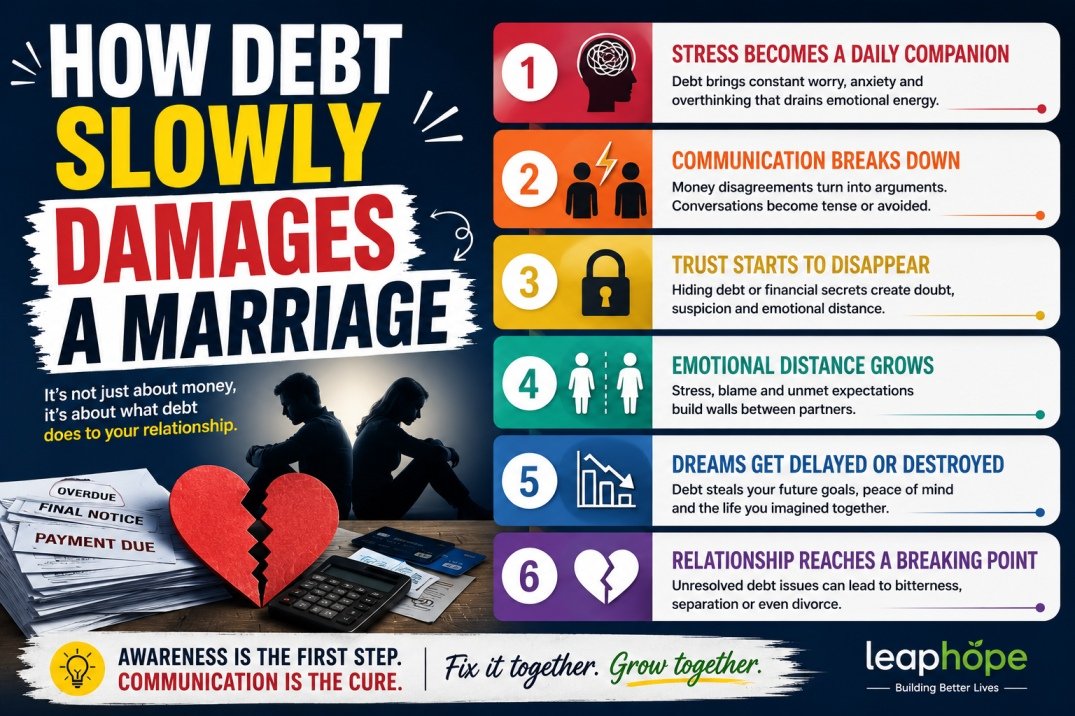
Couples Start Living in Survival Mode
As debt keeps building, many couples slowly stop enjoying life together and start focusing only on surviving month to month. Most conversations begin revolving around bills, repayments, overdue amounts, financial pressure, or how to somehow manage the next few weeks.
The constant worry about EMIs, credit cards, rent, and future uncertainty creates ongoing emotional exhaustion inside the relationship. Even couples with decent incomes may start feeling trapped because so much money disappears into repayments before they get a chance to actually live comfortably.
Over time, the marriage stops feeling emotionally peaceful. Instead of feeling excited about the future together, many couples begin feeling mentally stuck, financially drained, and emotionally tired all the time.
How to Reconnect When Debt Has Damaged the Relationship
Stop Treating Every Conversation Like a Financial Meeting
Many couples slowly stop talking like partners and start talking like stressed roommates trying to manage life. Every conversation becomes about bills, expenses, repayments, or who is doing more.
Over time, the relationship stops feeling emotionally safe because both people are constantly tense. Before fixing finances, couples often need to bring back calm conversations, emotional softness, and simple moments where they are not only discussing stress.
Stop Trying to “Look Fine” While Secretly Drowning
A lot of modern couples are emotionally exhausted from trying to maintain a life that looks stable from the outside. Social media, lifestyle pressure, expensive habits, and constant comparison quietly push couples into deeper financial stress.
Sometimes healing starts when couples finally accept:
“We cannot live like this anymore.”
Not every trip, upgrade, purchase, or lifestyle pressure is worth losing peace inside the marriage.
Talk About the Fear Behind the Money Stress
Most debt arguments are not only about money. One partner may be scared about survival, future stability, failure, or disappointing the family. The other may feel emotionally trapped, overburdened, or constantly anxious.
When couples only argue about spending, the real emotional pain stays hidden underneath. Honest conversations about fear, shame, pressure, and exhaustion often bring more emotional closeness than discussing numbers alone.
Stop Keeping Count of Who Is Sacrificing More
Many debt-heavy marriages slowly become emotionally bitter because both partners feel unseen. One keeps thinking, “I am carrying everything,” while the other feels constantly blamed or guilty.
Once couples start emotionally competing over sacrifices, the relationship slowly loses warmth. The marriage begins feeling like survival instead of partnership.
Bring Back Small Feelings of Peace in the Relationship
Debt becomes emotionally dangerous when stress takes over every part of daily life. Couples stop laughing together, resting together, or feeling emotionally relaxed around each other.
Financial problems may take time to improve, but emotional connection often starts healing through small things, calmer conversations, less blame, more understanding, and feeling emotionally safe again inside the relationship.
Understand That Emotional Stability Often Comes Before Financial Stability
Many couples wait for the debt to disappear before trying to feel close again. But when the relationship stays emotionally damaged, stress usually keeps affecting financial decisions too.
Couples who feel emotionally supported often handle pressure better, think more clearly, make calmer decisions, and slowly rebuild stability together instead of emotionally breaking apart under stress.
When to Seek a Marriage Counsellor
It may be time to seek online marriage counselling for money problems when:
- Every money conversation turns into a fight
- One partner starts hiding loans, spending, or financial information
- Debt starts affecting emotional or physical intimacy
- Resentment feels stronger than emotional connection
- Couples feel emotionally exhausted or hopeless
- Financial stress creates constant tension at home
Many couples also develop psychological stress because of long-term debt pressure, including:
- Anxiety
- Overthinking
- Panic about the future
- Sleep problems
- Emotional burnout
- Irritability and emotional withdrawal
Online marriage counselling can help couples rebuild communication, trust, and emotional safety, while individual online therapy can help partners manage anxiety, stress, and emotional exhaustion caused by ongoing financial pressure.
The Bottom Line
Debt becomes emotionally dangerous when couples stop feeling psychologically safe with each other. The relationship slowly stops feeling like a place of comfort and starts feeling mentally exhausting, tense, and emotionally heavy.
Over time, financial pressure changes how couples communicate, react, and emotionally connect. Stress replaces softness, resentment replaces patience, and many couples quietly begin living in survival mode without realizing how deeply debt has affected the marriage.
Many modern couples are not irresponsible. They are emotionally overwhelmed by rising expenses, unstable finances, social pressure, career stress, and the constant fear of falling behind in life.
But relationships often begin healing when couples stop fighting each other and start understanding the emotional pain both partners are carrying underneath the financial stress.