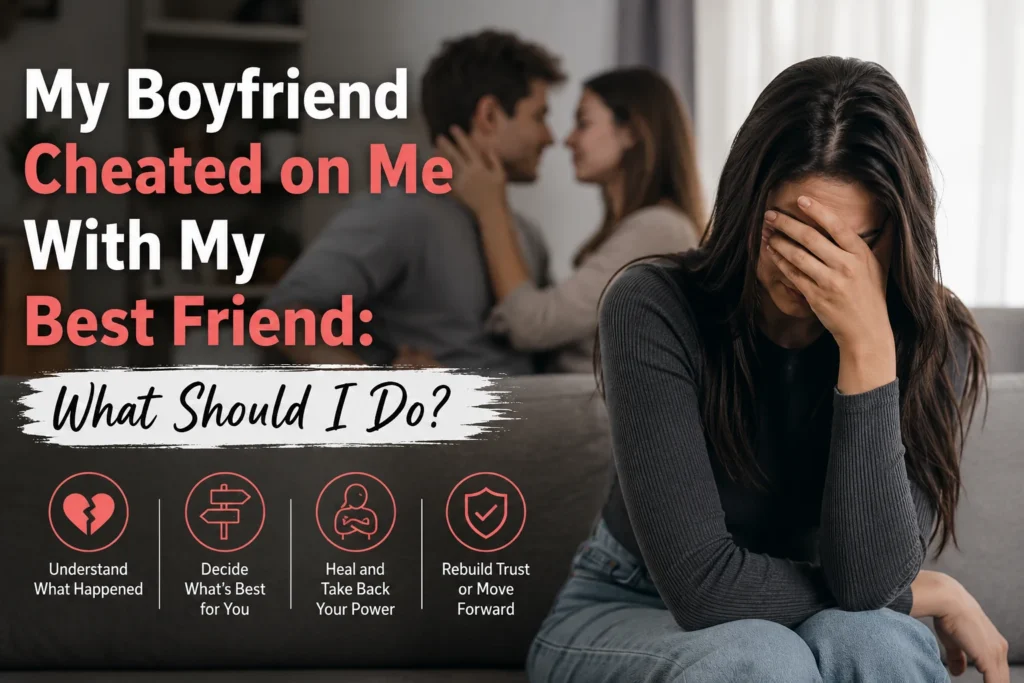

We work with both men and women who come with this concern:
“My partner is emotionally close to someone else, and I don’t know if this is normal or something is wrong.”
Sometimes it’s a friend, sometimes a colleague, sometimes an ex. It can be same gender or opposite gender. The confusion is not really about who the person is, it’s about what role they are starting to play in your partner’s life.
There may not be anything clearly wrong on the surface, but it starts to feel like you are no longer the first person they turn to. They share things with someone else before you. That person seems to know more about what’s going on in your partner’s life. Conversations feel deeper there, and more limited with you.
This is where the discomfort grows. You may still trust your partner, but you start feeling less valued, less prioritised, and slightly replaced in ways that are hard to explain.
It doesn’t clearly look like cheating, but it doesn’t feel right either.
In this article, we’ll break down what this situation actually means, when it becomes a problem, and what you should do if it starts affecting your relationship.
What Counts as Emotional Cheating?
Emotional cheating is not one action. It is when emotional closeness, attention, and priority start shifting outside the relationship.
It happens when your partner:
- shares personal thoughts and feelings with someone else instead of you
- turns to them first for support or validation
- feels more emotionally open or understood there
- invests consistent time and energy into that connection
It becomes a problem when:
- emotional intimacy is redirected
- there is some level of secrecy
- your importance starts reducing
There may be no clear event, but the shift is noticeable.
Emotional cheating is not about what happened once.
It is about where emotional priority is moving.
The Difference Between Emotional Cheating vs. Friendship – Where Is The Line?
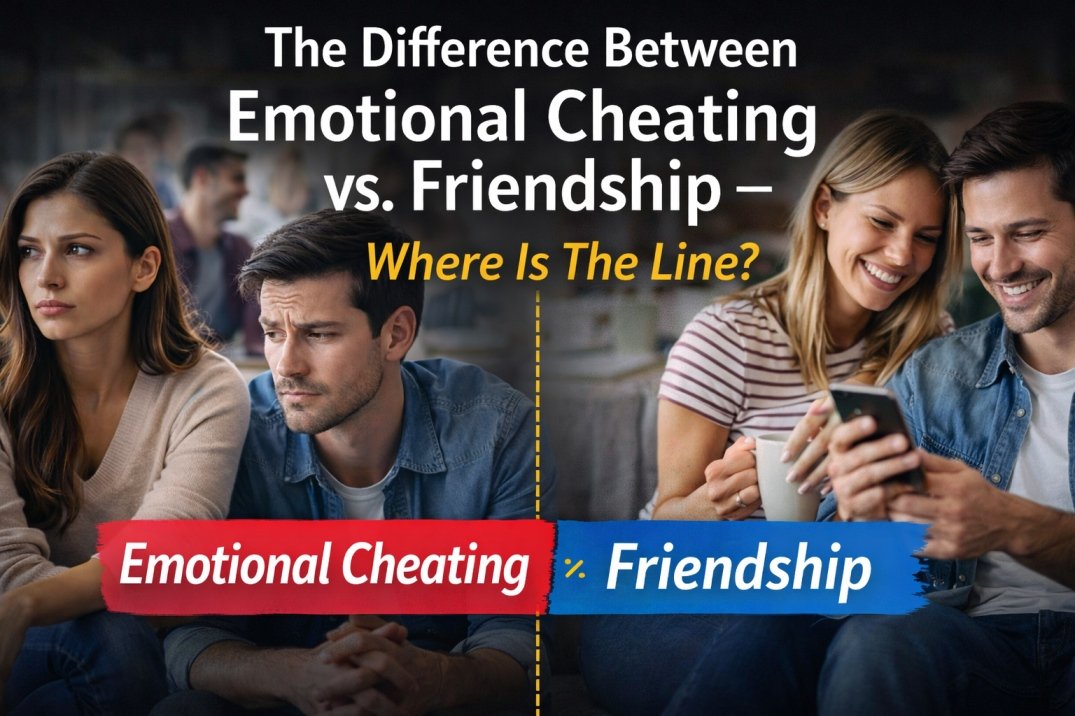
A friendship is not the problem. The problem starts when that connection begins to take the place that should belong to you.
If your partner is still open with you, shares things with you first, and that connection stays in limits, it remains a friendship. But if they start sharing their thoughts, problems, and emotional side more with that person, feel more connected there, or begin to prioritise that interaction, then the line is crossed.
At that point, it is no longer just a friendship. It is emotional cheating because the emotional connection is shifting outside the relationship.
Why You Feel Like You’re Losing Your Place in the Relationship
This feeling usually comes from a mismatch you start noticing.
You may still live together, spend time together, even have physical intimacy. On the surface, the relationship looks fine. But emotionally, something feels missing.
Your partner is not opening up to you the same way. Instead, they seem more expressive, more comfortable, more emotionally available with someone else, it could be a colleague, a childhood friend, or even a relative.
So while you are sharing daily life and physical closeness, they are sharing emotional closeness somewhere else.
That creates a quiet but strong impact.
You start feeling:
- less important
- less chosen
- less emotionally connected
Over time, it can affect how you see:
- your partner → “Why am I not enough for them to open up?”
- the relationship → “Are we really close, or just functioning?”
- yourself → “What am I missing?”
This is why it feels deeper than just discomfort.
You are not just losing attention.
You feel like you are losing your emotional place in their life.
Why Your Partner Is Opening Up to Someone Else Instead of You
They find it easier to talk to someone else than fix things with you
Instead of putting effort into the relationship, they are choosing the easier option. It is simpler to open up to someone who is not part of the problem than to work through discomfort with you.
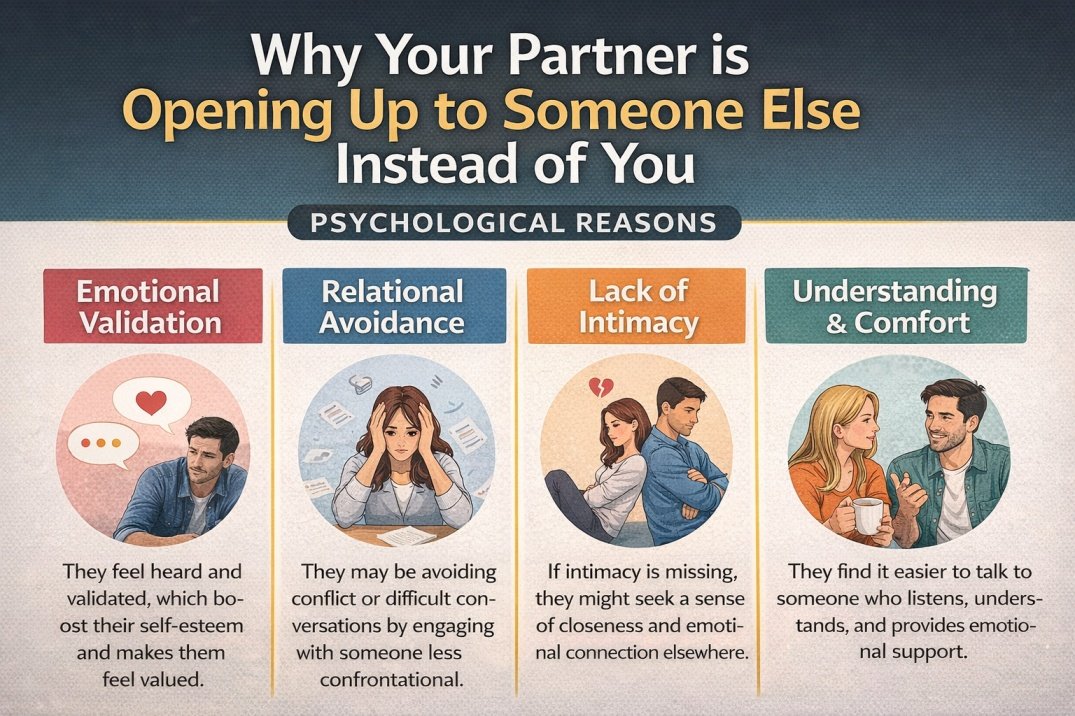
They are avoiding responsibility in the relationship
If something is not working, they are not addressing it with you. They are stepping out emotionally instead of dealing with it directly.
They are getting validation and attention outside
The other person listens, agrees, and makes them feel good. That attention becomes rewarding, so they keep going back to it.
They have no clear boundaries with that person
They are sharing things that should stay within the relationship. Personal thoughts, emotional struggles, and private conversations are being given to someone else.
They are building emotional closeness outside the relationship
This is not casual anymore. Repeated conversations, emotional sharing, and time investment are creating a connection that is growing stronger.
They are choosing that connection despite knowing the impact
At some level, they are aware this affects you. But they are still continuing. That means this connection is being prioritised over your comfort and the relationship.
Warning Signs This Has Become Emotional Cheating
You can see emotional cheating in how things start changing.
Your partner begins sharing their thoughts, feelings, and personal matters with someone else instead of you. They feel more open and emotionally connected there.
There is some level of hiding. You don’t know the full picture, and when you ask, you don’t get clear answers or they say it’s “nothing serious.”
They stay in regular contact, and that emotional connection keeps growing. At the same time, your conversations with them become limited or surface-level.
When you bring it up, they dismiss your concern or become defensive.
Over time, emotional closeness shifts outside the relationship, and you start feeling less important.
Emotional cheating is not about one action.
It is when emotional connection and priority move to someone else.
Does Cheating Require Romantic Feelings or Physical Affection?
No. Cheating does not require romantic feelings or physical involvement.
A person can still be emotionally invested in someone else without calling it love or acting on it physically. What matters is where their attention, time, and emotional energy are going.
If your partner is consistently turning to someone else for connection, sharing personal thoughts there, and prioritising that bond over the relationship, it affects the relationship regardless of labels.
Cheating is not defined only by romance or physical actions. It is defined by a shift in emotional priority and connection outside the relationship.
What to Do If Your Partner Is Emotionally Close to Someone Else
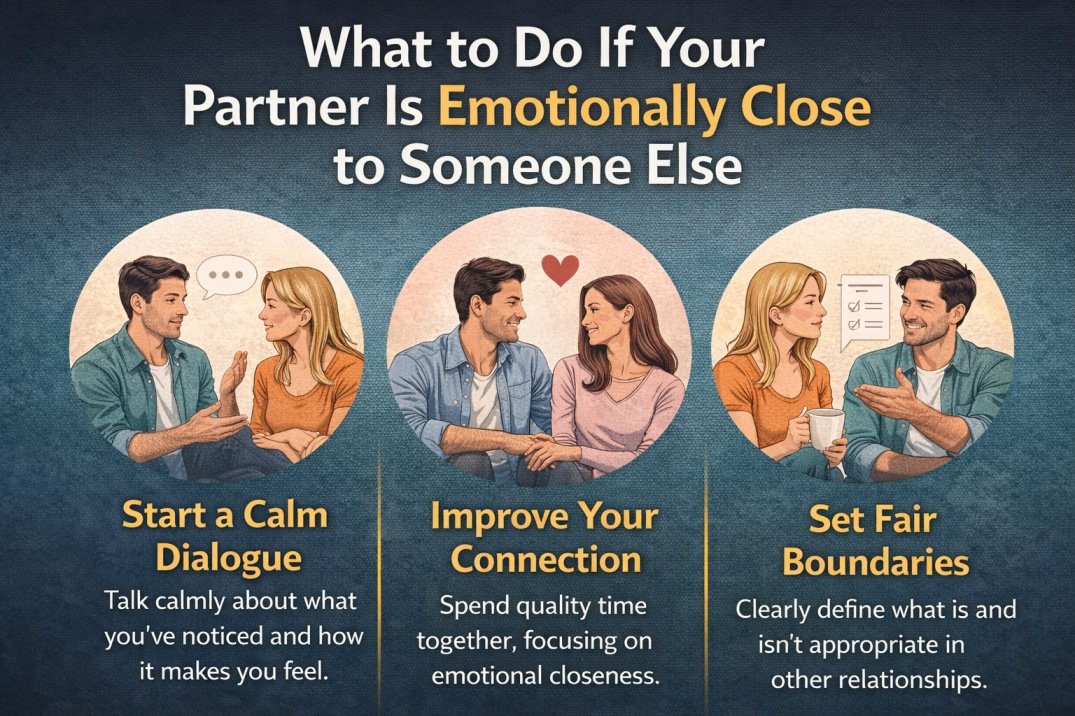
If you want this to change, you can’t just complain about it. You have to rebuild your position in the relationship and set clear limits at the same time.
1. Fix what made them drift (don’t ignore your part)
Be honest.
- Were conversations mostly routine or stressful?
- Did they stop feeling heard, respected, or understood?
- Did conflicts stay unresolved?
If you don’t address this, they will keep going back to that person.
2. Remove emotional barriers between you
If your partner hesitates to open up, there is a reason.
- Stop reacting instantly with judgement, advice, or criticism
- Let them speak without interruption
- Make it easier for them to talk to you than anyone else
If talking to you feels heavy, they will choose someone else.
3. Become their emotional space again (not just daily partner)
Right now, someone else is playing that role.
You need to take it back:
- Ask about their thoughts, not just their day
- Be part of their stress, not just their routine
- Say it clearly: “You can talk to others, but I want to be the person you come to first.”
4. Improve physical and emotional connection together
Don’t ignore this.
- Increase quality time, not just presence
- Rebuild physical closeness and intimacy
- Make the relationship feel alive again, not just functional
If the relationship feels dull, outside connections feel more exciting.
5. Set a clear boundary (no confusion)
This is important.
Say it directly:
- “It’s not okay that someone else knows more about you than I do.”
- “This is affecting how I see our relationship.”
If it’s crossing limits:
- reduce contact
- no private emotional sharing
- no secrecy
This applies whether it’s same gender or opposite gender.
6. Watch what they choose after this
This is where truth shows.
- Do they open up more with you?
- Do they reduce that connection?
- Do they take responsibility?
If nothing changes, then your words didn’t matter to them.
7. Decide based on reality, not hope
You cannot fix this alone.
If they:
- work with you → rebuild together
- continue the same pattern → accept what they are choosing
If it feels complex or stuck, go for:
- online clinical psychologist (for emotional patterns)
- online marriage counselling at LeapHope (for relationship repair)
You don’t get your place back by competing.
You get it back when your partner chooses to reconnect and prioritise you again.
The Bottom Line
This is not just about cheating. It is about where your partner’s emotional connection is going.
If someone else is becoming the person they open up to, rely on, and feel closer to, it will affect your relationship, even if nothing physical is happening.
What matters is not what they call it, but what it is doing to you and the relationship.
If it is making you feel less important, less connected, or replaced, it needs to be addressed. And if nothing changes after that, you have to take that seriously.
A healthy relationship is not just about staying together. It is about being emotionally present for each other.
FAQs
Is emotional attachment to someone else considered cheating?
Emotional attachment becomes cheating when there is a shift in emotional investment and priority. If your partner starts sharing emotional intimacy, vulnerability, and personal thoughts with someone else instead of you, it indicates a boundary breach and emotional displacement in the relationship.
Is it cheating if there is no physical relationship?
Yes, it can be. Cheating is not limited to physical actions. Emotional infidelity occurs when there is a consistent transfer of attention, intimacy, and connection outside the relationship, which weakens trust, attachment security, and relational bonding.
Is texting or talking to another person cheating?
Texting or talking alone is not cheating. It becomes emotional cheating when communication turns into frequent, emotionally intimate exchanges, especially if there is secrecy, prioritisation, or dependency. The issue is not the action, but the emotional meaning behind it.
Does emotional closeness with someone else mean my partner is in love with them?
Not always. Emotional closeness can be driven by validation needs, comfort-seeking behaviour, or familiarity. However, it still creates emotional triangulation, where a third person starts influencing the primary relationship.
Can someone love their partner and still emotionally cheat?
Yes. A person can experience dual emotional processes, where they love their partner but still seek external emotional fulfilment. This often happens due to unmet needs, avoidance patterns, or weakened emotional connection within the relationship.
How do I know if my partner’s connection is just friendship or emotional cheating?
Healthy friendship is transparent, boundaried, and non-intrusive to the relationship. It becomes emotional cheating when there is emotional exclusivity, increased reliance, and reduced openness with you, indicating a shift in relational priority.
Is it okay to ask my partner to stop talking to someone they are emotionally close to?
Yes, if the connection is affecting your relationship. Setting boundaries is not control, it is about protecting emotional safety and relationship integrity. Clear boundaries help restore trust and emotional balance.
What should I do if my partner talks to someone else every day?
Daily communication often leads to emotional bonding and habit formation. You need to address the pattern, understand the emotional function of that connection, and see if your partner is willing to re-establish primary emotional connection with you.
Can emotional cheating be fixed in a relationship?
Yes, but only if there is accountability and behavioural change. Repair requires rebuilding emotional intimacy, trust, and communication patterns. Without active effort, the emotional disconnection usually continues.
Should I stay in the relationship if emotional cheating continues?
If the pattern continues despite clear communication, it reflects ongoing boundary violations and lack of prioritisation. In such cases, you need to evaluate your emotional well-being, self-worth, and long-term relationship stability before deciding to stay.