Finding out your spouse cheated when the marriage has barely started can make you question everything.
Should you give them another chance? Or leave now rather than spend years wondering whether it will happen again?
There is no answer that fits every marriage. Your parents, friends or therapist can support you, but they cannot make this decision for you.
What can help is looking clearly at what happened, whether it is a pattern, and how your spouse is behaving now.
First, Understand What Actually Happened
Not every case of cheating is the same.
Before deciding whether to stay or leave, look at the situation itself:
- Was it one incident or repeated cheating?
- Was the person an ex, friend, colleague, someone online or a stranger?
- Did it begin before marriage or after?
- Was it one encounter or an ongoing relationship?
- Did your spouse confess, or did you catch them?
- Did they stop voluntarily or only after being discovered?
- Is this the first known incident or part of an older pattern?
One impulsive incident during a difficult period is not the same as maintaining another relationship for months, repeatedly lying and assuming you would never find out.
That does not make a one-time betrayal harmless. It simply tells you what kind of problem you are deciding about.
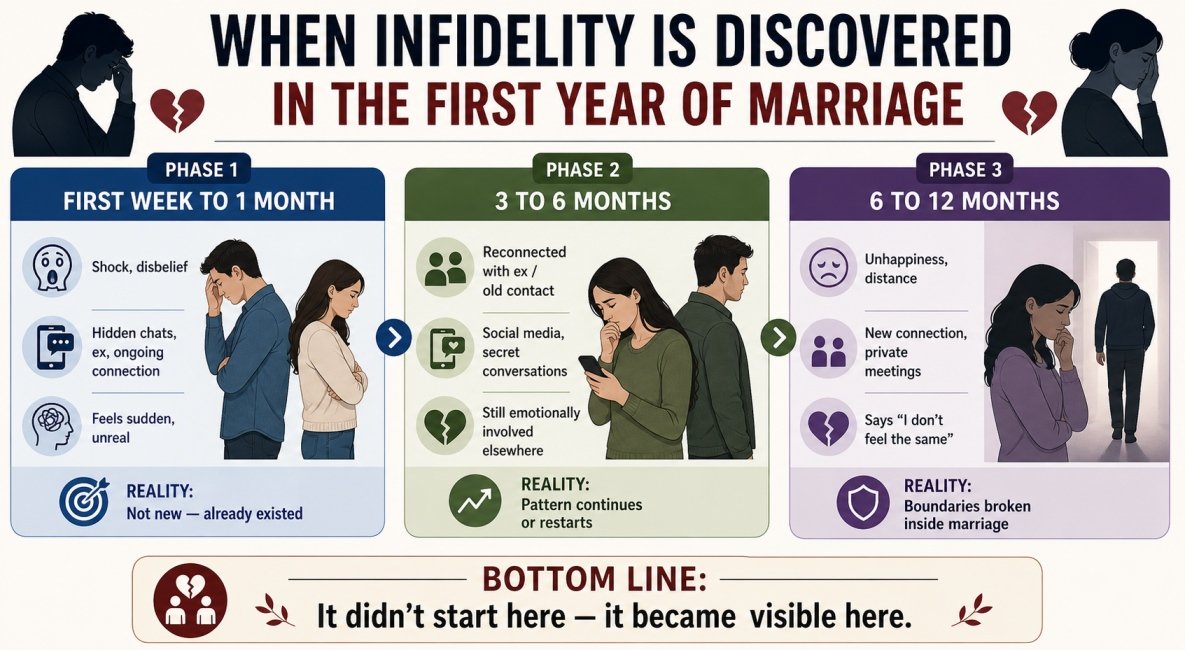
Look Closely at How Your Spouse Responds Now
An apology matters, but what happens after the apology matters more.
Your spouse may be showing genuine responsibility if they:
- answer reasonable questions honestly
- stop contact with the other person
- do not blame you for their choice
- acknowledge how the cheating affected you
- stop hiding information
- make consistent changes rather than giving promises
Be more cautious if they:
- keep changing their story
- say you caused the cheating
- minimise it because it “only happened once”
- get angry whenever you ask about it
- continue contact secretly
- seem more worried about divorce or family finding out than about hurting you
There is also a difference between regret and remorse.
Regret can be about getting caught and facing consequences. Remorse includes understanding the harm caused and taking responsibility for changing the behaviour.
Should You Give the Marriage Another Chance?
You do not have to decide immediately after finding out.
Mayo Clinic’s guidance on infidelity also advises against rushing major decisions while emotions are at their highest.
Giving the marriage another chance may be worth exploring when:
- the cheating appears isolated rather than habitual
- the outside relationship has ended
- you are getting clear answers
- your spouse accepts responsibility
- their behaviour is changing consistently
- you still genuinely want the marriage
Giving someone another chance does not mean pretending nothing happened.
It means seeing whether there is actually something left to repair.
When Leaving Deserves Serious Consideration
Sometimes the bigger issue is not one act of cheating. It is the pattern around it.
You may need to think more seriously about leaving when there is:
- repeated cheating
- more than one hidden relationship
- continued contact with the other person
- repeated lying after discovery
- blame shifting
- no meaningful remorse
- promises without behaviour change
- intimidation, manipulation or abuse
If you keep discovering new pieces of the story, you may not even know yet what you are being asked to forgive.
The marriage being new is not a reason to ignore a serious pattern.
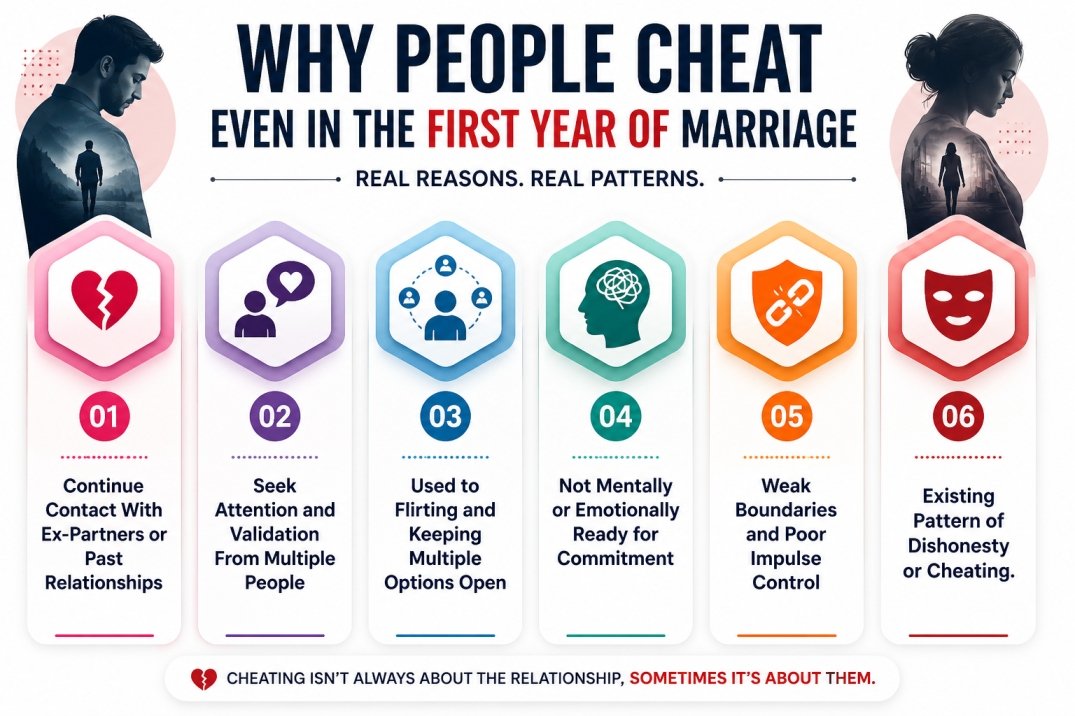
Are You Staying Because You Want To—or Because Divorce Feels Scary?
For many people in India, this is not only a relationship decision.
You may also worry:
- What will my parents say?
- What will relatives think?
- Will divorce make remarriage harder?
- Will people say I did not try enough?
- So much money was spent on the wedding. Should I give it more time?
These concerns are real, but they should not make the decision for you.
Ask yourself something simpler:
If there were no relatives, social pressure or fear about being divorced, would I still want to explore this marriage?
Staying because you want to see whether trust can be rebuilt is different from staying only because leaving feels socially difficult.
If separation is becoming a serious possibility and you feel stuck between your own wishes and outside pressure, separation and divorce counselling can help you think through the decision more clearly.
If You Stay, What Needs to Change?
Trust will not return because your spouse repeatedly says, “Believe me.”
Look for actions.
That may include:
- ending inappropriate outside contact
- clear boundaries with an ex, friend or colleague
- honest answers without changing versions
- greater transparency while trust is being rebuilt
- taking responsibility without excuses
- consistent behaviour even when you are not checking
Transparency should not turn into permanent surveillance. The goal is eventually to reach a point where you do not have to keep checking phones, locations or messages to feel safe.
If both of you genuinely want to work on the marriage, infidelity counselling can help you understand what happened and whether trust can realistically be rebuilt.
Family Advice or Marriage Counselling?
Family can be very helpful after cheating. You may need emotional support, somewhere to stay or simply someone who cares about you.
But family members also have their own emotions.
Your parents may want you to leave immediately. Your spouse’s family may insist you forgive. Others may worry mainly about reputation, relatives or divorce.
A marriage therapist has a different role.
Online marriage counselling is not simply about convincing couples to stay together. It can help you look at the cheating, your spouse’s response, whether trust repair is realistic and what you actually want without every conversation becoming a family argument.
Sometimes counselling helps a couple rebuild.
Sometimes it helps them realise that they cannot.
Both are forms of clarity.
Final Thought
Your spouse cheating early in marriage does not automatically tell you whether you should stay or leave.
Look at the whole situation.
Was it one incident or an established pattern? How much lying was involved? Has the outside relationship ended? Is your spouse genuinely taking responsibility? Is their behaviour changing?
Then ask yourself whether you still want the marriage if repair is possible.
Do not stay only because divorce feels frightening.
And do not leave simply because you think giving someone another chance makes you weak.
It is your marriage, and ultimately, it is your decision.