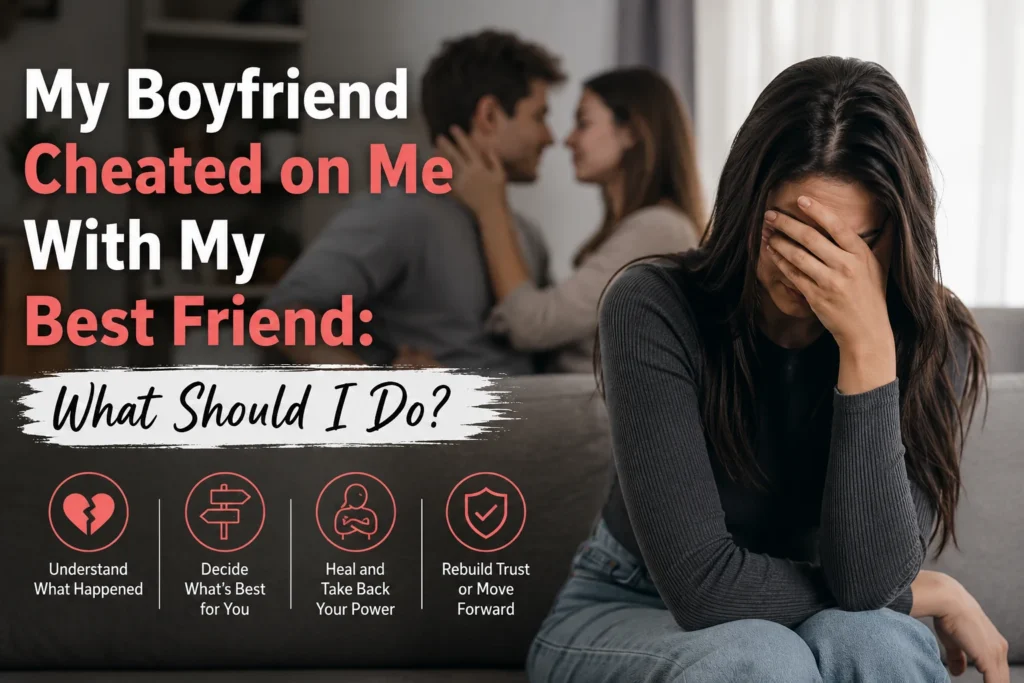
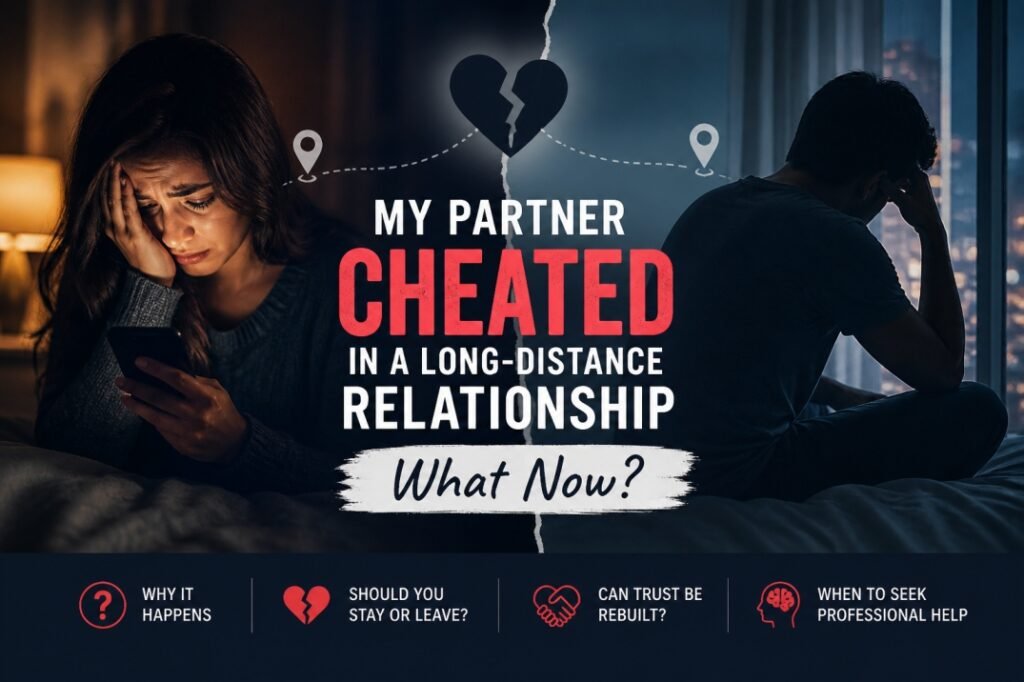
We work with men and women who come to counselling saying the same thing in different ways:
“My partner cheated in our long-distance marriage.”
“My boyfriend or girlfriend was cheating on me in our LDR.”
In many cases, the relationship feels normal until the day everything comes out. Some people sensed that something was off but couldn’t explain it. Others didn’t notice anything at all, because long-distance relationships rely heavily on trust, not daily visibility.
Then the truth comes out, and everything shifts.
What felt stable suddenly feels uncertain. What you believed about the relationship no longer feels clear. And a difficult question starts forming:
What changed, and why did this happen?
If you’ve just found out, your mind is probably jumping between questions:
- Was any of this real?
- How long has this been going on?
- Should I stay, or am I just afraid to leave?
In this article, our marriage therapists explain why cheating happens in long-distance relationships and what you should consider next before making any decision.
Real Reasons People Cheat in Long-Distance Relationships
Unmet Physical Needs and Sexual Frustration
One of the most common and overlooked realities in long-distance relationships is the lack of physical closeness.
It’s not just about sex. It’s about everyday touch, a hug after a long day, sitting next to each other, feeling physically connected. Over time, that absence starts to create a gap.
For some people, especially when physical intimacy is an important part of how they feel loved, that gap becomes difficult to ignore. They may not consciously plan to cheat, but they become more vulnerable to situations where someone nearby offers that same closeness.
In many cases, it doesn’t start with intention. It starts with a need that has been unfulfilled for a long time.
Emotional Disconnection and Feeling Unprioritised
In many long-distance relationships, this shift builds slowly.
Arguments increase. Calls feel tense or are avoided. Messages become shorter and less meaningful.
At the same time, they seem more relaxed with others, spending more time with friends or coworkers, while calls and plans with you keep getting delayed.
You may notice:
- Calls being ignored or cut short
- Plans to meet getting postponed
- Work or friends taking priority
- Feeling unsupported when you need them
Over time, they stop opening up to you. That emotional space often gets filled by someone else who is physically present and easier to talk to.
And that’s where boundaries begin to blur.
Loneliness Within the Relationship (Not Just Distance)
Even in a long-distance relationship, people still want to feel loved, supported, and emotionally held.
But life doesn’t stay the same. One partner may get busy with work, new routines, or other priorities. The relationship continues, you still talk, still check in, but something starts to feel different.
The connection loses its intensity.
Conversations begin to feel like they’re happening out of habit, built on history and past investment, rather than present emotional closeness. You’re still in the relationship, but you don’t feel as cared for or supported as before.
And that’s where loneliness starts, not because of distance alone, but because the emotional experience of the relationship has changed.
Decline in Effort, Investment, and Emotional Intensity
In the beginning, there is visible effort. You plan visits in advance, travel to see each other, send small gifts, make time despite busy schedules, and make each other feel like a priority.
Over time, that effort can start to reduce.
Visits become less frequent or keep getting postponed. The excitement around meeting fades. Calls feel routine. The small things, surprise messages, thoughtful gestures, checking in properly, slowly disappear.
What once felt like “you matter the most to me” starts to feel like “I’ll get to you when I can.”
The relationship shifts from active effort to basic maintenance. And when someone no longer feels like a priority, the emotional intensity drops, making it easier for outside attention to start filling that gap.
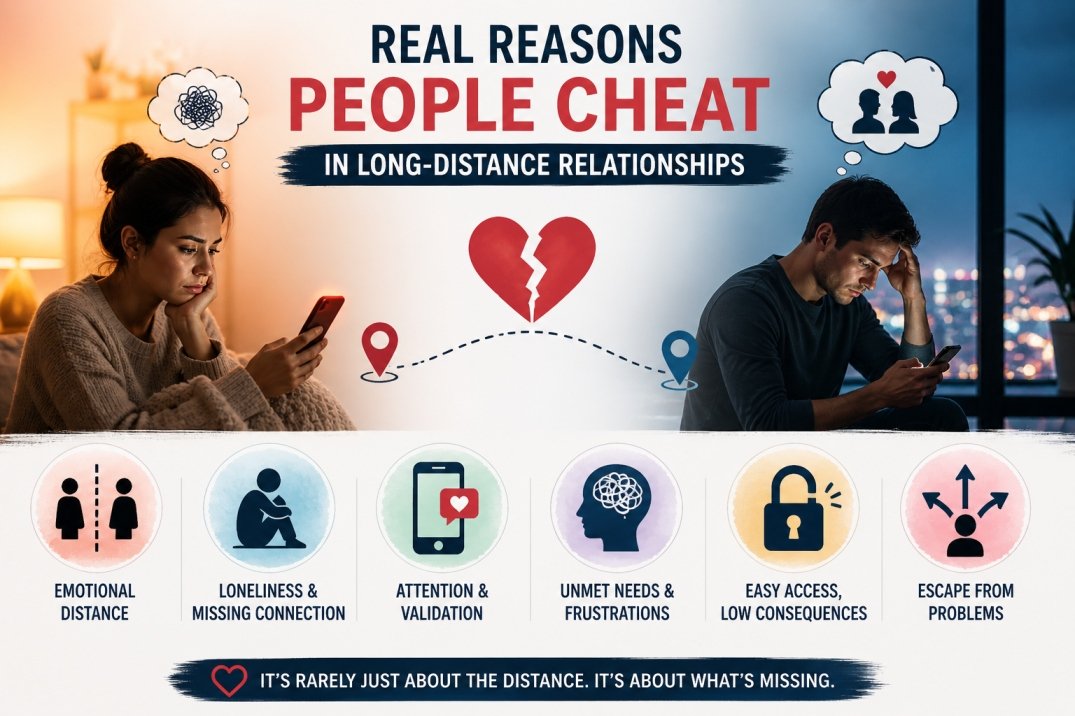
Seeking Validation Due to Insecurity or Low Self-Worth
Some people don’t feel secure in themselves, even when they’re in a relationship.
They may need constant reassurance that they are wanted, attractive, or important. In a long-distance relationship, that reassurance doesn’t always come consistently, not because the partner doesn’t care, but because of distance, time gaps, and limited interaction.
When that need for validation isn’t met, they may start seeking it elsewhere.
It often begins with small things, talking to someone who gives attention, compliments, or makes them feel good about themselves. That attention feels immediate and easy.
Over time, it becomes less about the other person and more about how they feel when they receive that validation. And that’s where boundaries can start to shift.
Opportunity Combined With Weak Boundaries and Poor Self-Control
Long-distance creates more opportunity than people realise.
You’re not around. Daily life happens separately. New people become part of their routine, coworkers, friends, social circles, and there is less immediate accountability.
This is where the “out of sight, out of mind” mindset can quietly develop.
Some people start treating the relationship as something stable in the background, while living a more free, social life in the present. They go out, attend parties, spend time with coworkers or friends, and in those moments, the relationship can feel distant, almost separate from their current reality.
For some, it turns into a risky thinking pattern:
- “It’s just for fun.”
- “They’ll never know.”
- “This doesn’t affect my relationship.”
They may keep the long-distance relationship for emotional security, stability, or future plans, while seeking novelty, attention, or excitement elsewhere.
At that point, it’s not just opportunity. It’s a combination of weak boundaries and the choice to cross them.
Because in the end, distance doesn’t cause cheating, but it can make it easier for someone to justify it to themselves.
Avoidance of Conflict or Inability to End the Relationship
Some people know the relationship is not working, but they don’t end it.
They avoid difficult conversations. They don’t want to deal with emotional reactions, guilt, or the discomfort of breaking up, especially in a long-distance relationship where everything already feels fragile.
Instead of being direct, they slowly pull away.
They stop putting in effort, become inconsistent, and start living more independently. At the same time, they may begin connecting with someone else without clearly ending the relationship.
In some cases, they hold on to the relationship for stability, familiarity, or emotional security, while mentally moving on.
Cheating, in these situations, is not always about desire alone. It’s often a way of avoiding a decision they should have made earlier.
Why Men Cheat in Long-Distance Relationships
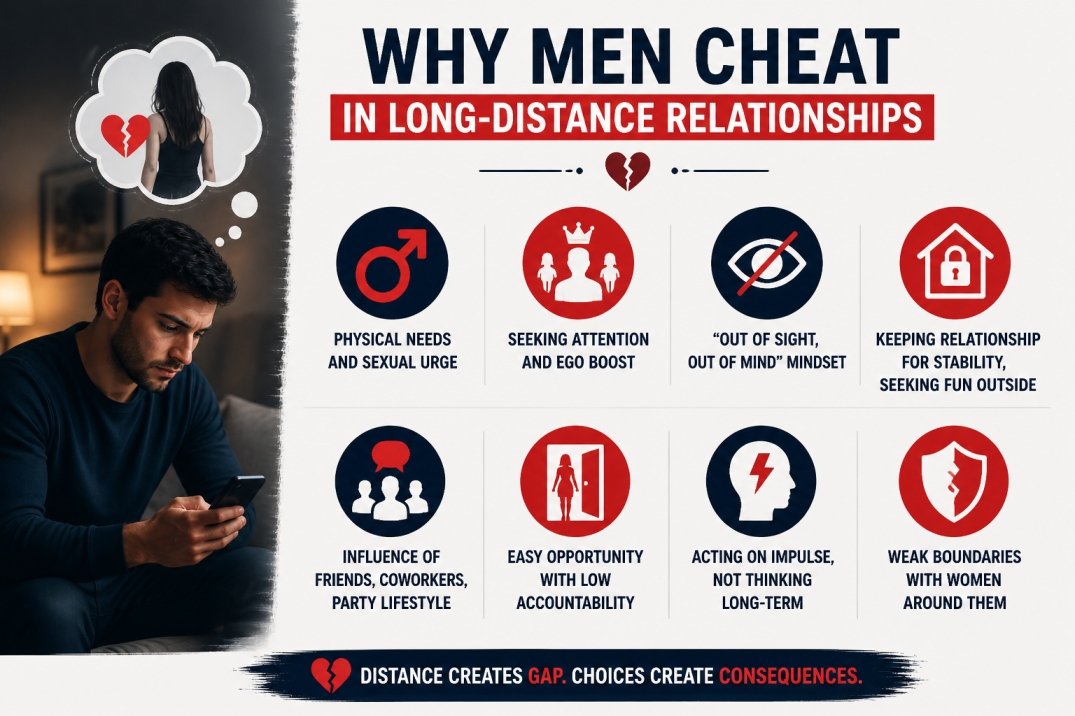
For both married and unmarried men, distance can make it easier to separate needs. They may stay in the relationship for stability, but look elsewhere for attention, excitement, or physical connection instead of addressing what’s missing.
- Strong pull toward physical intimacy and sexual release
- Keeping the relationship for stability while seeking novelty outside
- “Out of sight, out of mind” thinking during daily life
- Acting differently in social settings (friends, work, parties)
- Ego boost from attention, flirting, or being desired
- Not thinking long-term in the moment, acting on impulse
Why Women Cheat in Long-Distance Relationships
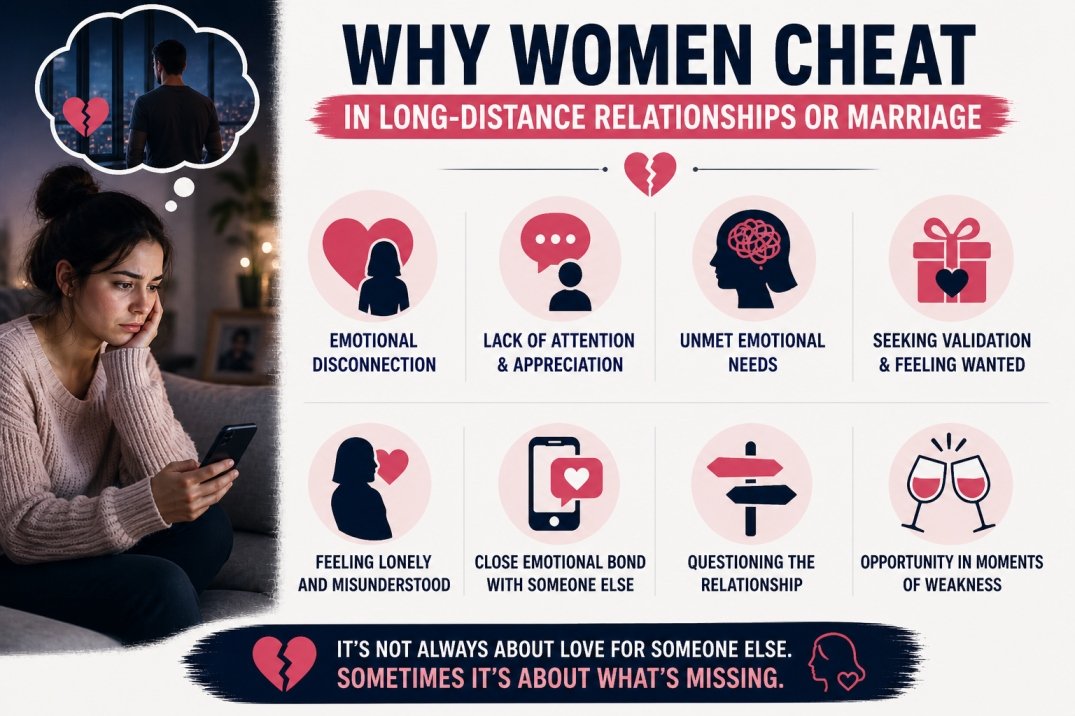
For both married and unmarried women, cheating often begins when they stop feeling emotionally connected in the relationship. When they don’t feel heard, valued, or supported for a long time, they may slowly pull back and open up to someone who feels more present in their daily life.
- Feeling emotionally alone even while in the relationship
- Repeatedly feeling unheard or dismissed during conversations
- Not receiving support during stress, problems, or important moments
- Sharing personal thoughts and feelings with someone else instead
- Feeling more comfortable and understood with another person
- Gradually detaching before crossing the line
Should You Stay or Leave After Long-Distance Cheating?
The pain is real, but what follows is often even harder, deciding whether to stay or leave.
For couples who are dating, the decision is usually about trust and emotional safety. You may not have legal or family ties, but the emotional investment is still deep. The question becomes: Can you trust them again, or will this always stay in your mind?
For married couples, the stakes are higher. There may be years of history, shared responsibilities, family involvement, or children. The decision is not just about feelings, but also about stability, long-term impact, and what rebuilding would realistically look like.
In both cases, the core question remains the same:
Can this relationship feel safe and real again, or will it continue to feel uncertain?
Can Trust Be Rebuilt After Cheating in a Long-Distance Relationship?
Trust can be rebuilt, but not in every situation.
If the cheating was a one-time mistake, often out of impulse, weakness, or a specific situation, there is a possibility to rebuild. This usually depends on how the person responds after it comes out. If they take full responsibility, are open about what happened, become transparent, and are willing to put effort into fixing the relationship, including therapy if needed, then trust can slowly return over time.
But if the cheating is repeated, hidden, or mixed with lying, blaming, or avoiding responsibility, rebuilding becomes very difficult. Some people take advantage of distance, using it to hide things, avoid conversations, or continue the behaviour without being fully accountable.
In those cases, the issue is not just the mistake, it’s the pattern.
So the real difference is not just what happened, but how they are showing up after it.
When to Seek Professional Help
- Constant overthinking, anxiety, or checking behaviour
- Unable to trust even after trying to move forward
- Repeated arguments or communication breakdown
- Feeling emotionally shut down, numb, or overwhelmed
- Obsessing over details of what happened
- Difficulty deciding whether to stay or leave
- Both partners want to fix things but don’t know how
For emotional impact, trust issues, or anxiety, you can consider online therapy available worldwide at LeapHope.
For rebuilding the relationship or making a clear decision together, online marriage counselling can help provide structure and direction.
The Bottom Line
Cheating in a long-distance relationship doesn’t happen in isolation. It builds over time, through gaps, choices, and how those gaps are handled.
What matters now is not just what happened, but what it shows about the relationship and the person.
If there is honesty, effort, and real change, some relationships can recover. If there is avoidance, blame, or repeated behaviour, it usually continues.
At the end, the decision is not just about love.
It’s about whether you can feel secure, respected, and at peace in this relationship going forward.