Last Updated on October 26, 2026
Clinically Reviewed by Mohit Yadav, RCI-Registered Clinical Psychologist
Does your child often forget what you just told them? Do they spend an hour on homework that should take 20 minutes, or come home without their books, water bottle or assignments?
Perhaps their teacher says they’re bright but easily distracted. Yet the same child can spend hours drawing, building something or playing a favourite game. You wonder why they can’t give their schoolwork the same attention.
Maybe you’ve tried reminders, stricter routines or sitting beside them during homework, but nothing seems to change for long.
Could these be signs of inattentive ADHD in children, or are you expecting too much for their age? And how can you tell when it’s time to get your child assessed?
What Is Inattentive ADHD in Children?
Inattentive ADHD, officially called ADHD, predominantly inattentive presentation, is a presentation of attention-deficit/hyperactivity disorder characterised by persistent symptoms of inattention that interfere with functioning or development.
Under DSM-5-TR diagnostic criteria, a child with this presentation meets the criteria for inattention but not the full criteria for hyperactivity-impulsivity.
The older term ADD is sometimes used for inattentive ADHD, although it is no longer a separate formal diagnosis.
What Are the Signs and Symptoms of Inattentive ADHD in Children?
The DSM-5-TR identifies nine symptoms of inattention. Here’s how they may appear in everyday life.
| Recognised symptom | At home or school |
|---|---|
| 1. Overlooks details | Your child misses parts of questions or makes mistakes by overlooking instructions. |
| 2. Difficulty sustaining attention | They struggle to remain focused during lessons, reading or other activities. |
| 3. Seems not to listen | They appear not to hear you, even when you’re speaking directly to them. |
| 4. Does not follow through | They begin homework or chores but leave them unfinished. |
| 5. Difficulty organising tasks | They struggle to plan assignments, manage materials or organise several steps. |
| 6. Avoids sustained mental effort | They regularly postpone schoolwork or activities requiring prolonged concentration. |
| 7. Frequently loses things | Schoolbooks, stationery or other necessary belongings regularly go missing. |
| 8. Easily distracted | Unrelated sounds, activities or thoughts interrupt what they’re doing. |
| 9. Forgetful in daily activities | They forget routines, responsibilities or everyday instructions. |
For a child to meet diagnostic criteria, these difficulties must be more frequent or severe than expected for their developmental level and affect everyday functioning.
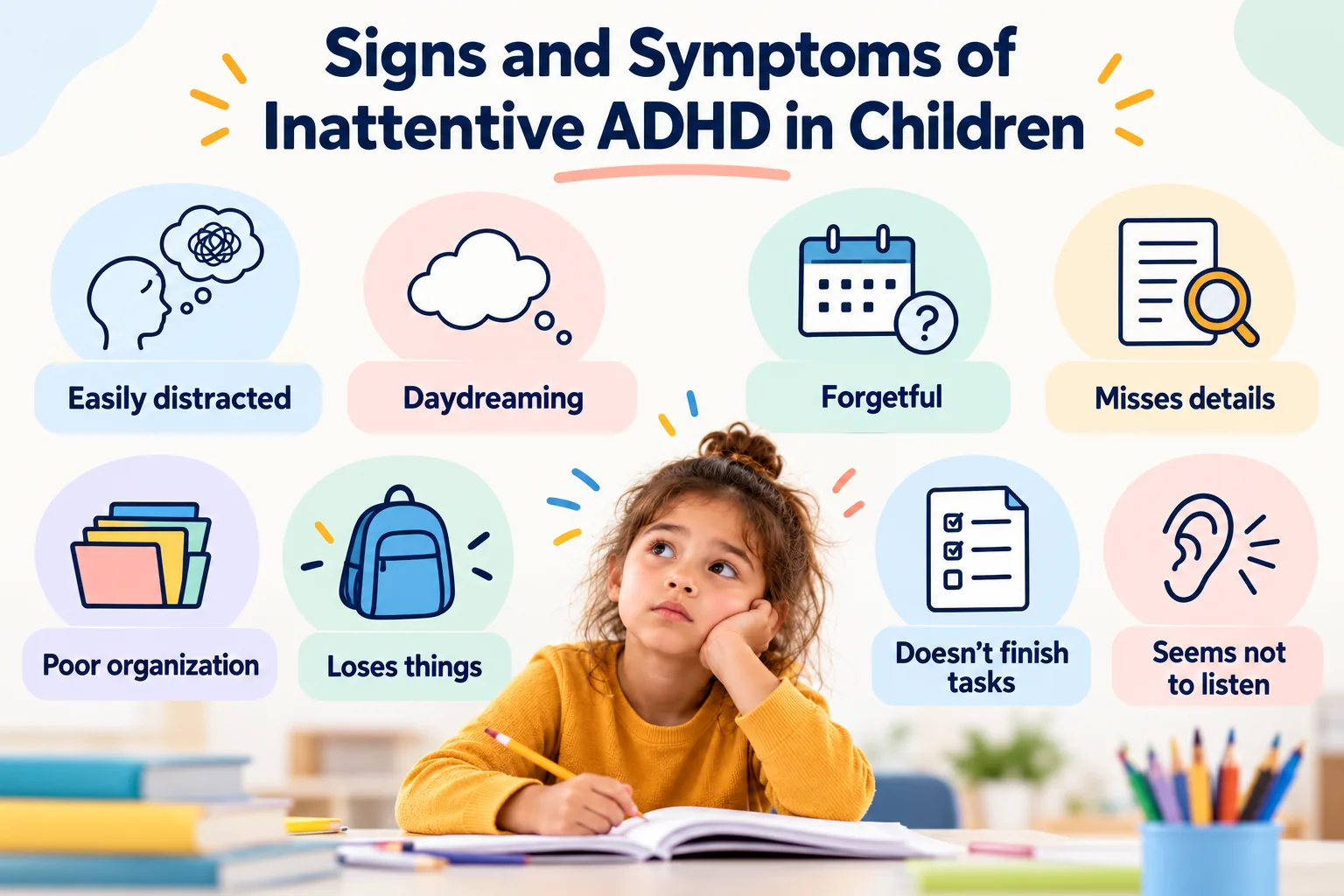
A child doesn’t need to display all nine symptoms. The required number, duration and wider diagnostic criteria are explained below.
What Does Inattentive ADHD Look Like in Children? Real-Life Examples
1. Your Child Knows the Answers but Cannot Finish Homework
Your eight-year-old understands the maths lesson. When you sit beside them, they solve the questions correctly.
But when you leave them to work independently, they lose their place, stare out of the window or start doing something else.
Half an hour later, only a few questions are complete.
You may have assumed they didn’t understand the lesson, when the difficulty could involve sustaining attention and completing the task.
2. Your Child Is Well-Behaved but Falls Behind in Class
Your child’s teacher has never complained about their behaviour. They don’t interrupt lessons, argue or disturb other children.
Yet their classwork is frequently incomplete.
When the teacher moves to the next activity, your child is still working on the previous one or isn’t sure what they’re supposed to do.
The problem may be overlooked because your child isn’t causing any disruption.
3. Your Child Can Focus on Games but Not Routine Tasks
Your child spends an entire afternoon building an elaborate model. They remember small details and return to the activity without being reminded.
But the next morning, they need several prompts to get dressed and prepare for school.
You might wonder, “If they can concentrate on that, why can’t they concentrate on homework?”
Being able to focus on enjoyable activities does not rule out ADHD. Attention can vary with interest, task demands and the surrounding environment.
Why Is Inattentive ADHD Often Missed in Children?
Children with inattentive ADHD may be overlooked because they don’t necessarily display the obvious restlessness or disruptive behaviour people associate with ADHD.
Other reasons include:
- Quiet behaviour: A child can sit through lessons without following everything being taught.
- Acceptable grades: Some children achieve reasonable results despite spending considerably longer on assignments.
- Constant adult assistance: Parents may manage much of the child’s organisation without realising how much help is required.
- Increasing academic demands: Problems may become clearer when children have to manage homework, deadlines and materials independently.
Sometimes these children are described as careless, lazy or capable of doing better if they tried harder.
Those labels don’t explain why a child is struggling and can delay an appropriate assessment.
Can Young Children Have Inattentive ADHD?
Yes, although assessing ADHD in preschool-aged children requires particular care.
Young children are still developing their attention, memory and self-control. A four-year-old who forgets instructions or frequently changes activities isn’t necessarily showing signs of ADHD.
Clinicians consider how a child’s abilities compare with developmental expectations and whether difficulties are persistent and interfering with daily life.
Some children show noticeable symptoms early. Others are identified later, when schoolwork and independent responsibilities become more demanding.
If you’re concerned about your preschool child’s attention or development, discuss the behaviours with a paediatrician.
ADHD cannot be reliably identified in babies from ordinary distractibility or changing attention.
How Is Inattentive ADHD Diagnosed in Children?
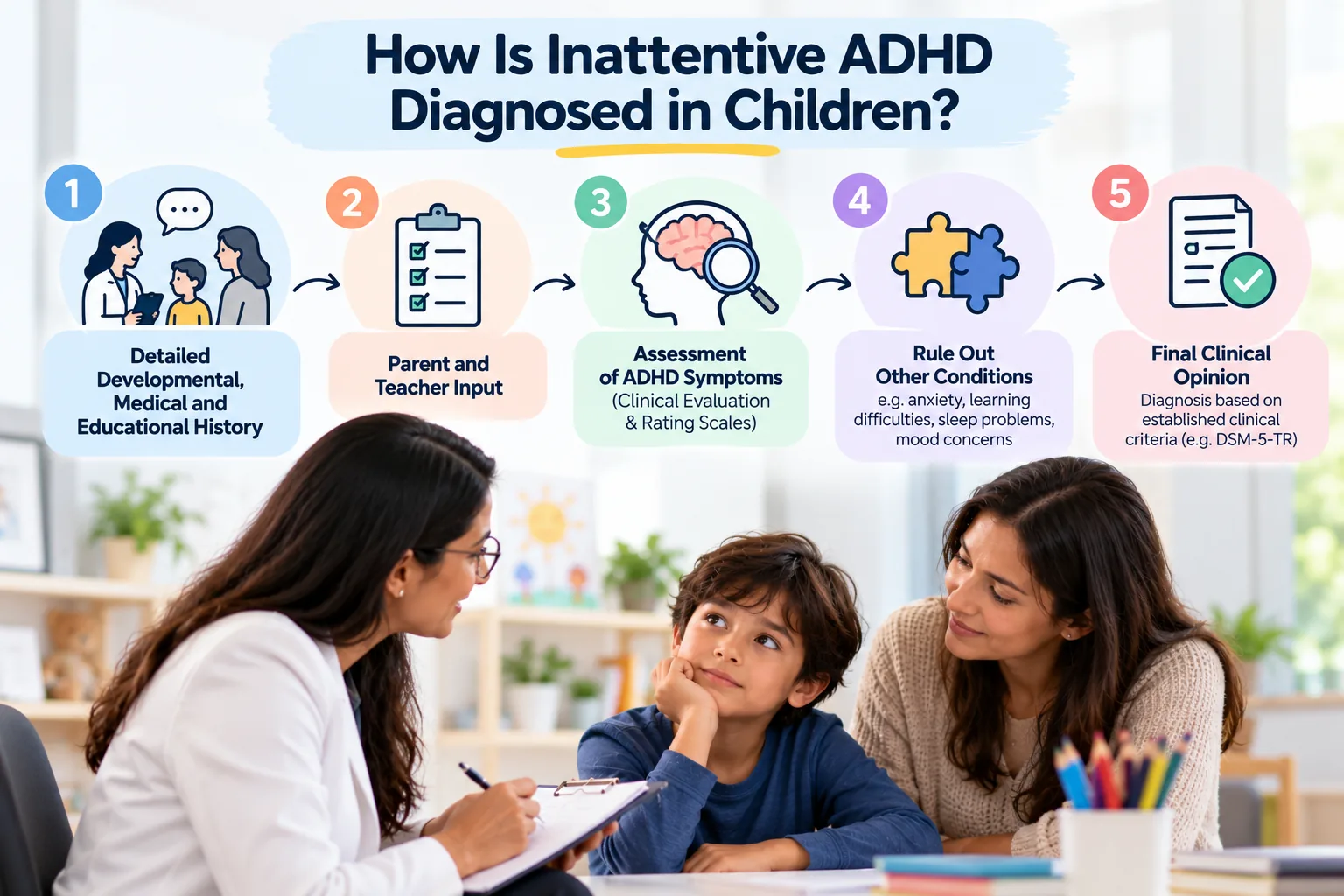
There is no single blood test, brain scan or online questionnaire that confirms inattentive ADHD. Diagnosis requires a comprehensive clinical assessment.
What Are the Diagnostic Criteria?
Under DSM-5-TR criteria, predominantly inattentive ADHD requires:
- Six or more symptoms of inattention for children up to age 16, or at least five from age 17.
- Symptoms that have persisted for at least six months.
- Symptoms that are inconsistent with the child’s developmental level.
- Several symptoms present before age 12.
- Symptoms occurring in at least two settings, such as home and school.
- Clear evidence that symptoms interfere with functioning or development.
- Symptoms that are not better explained by another mental disorder.
The child must also not meet the full symptom threshold for hyperactivity-impulsivity.
What Happens During an Inattentive ADHD Assessment?
An appropriately qualified professional may:
- Review your child’s developmental, medical and educational history.
- Ask when the attention difficulties first appeared.
- Gather observations from you, your child and their teachers.
- Use standardised ADHD rating scales alongside clinical assessment.
- Consider learning difficulties, sleep problems, emotional concerns and other possible explanations.
You might find free inattentive ADHD tests or child ADHD checklists online. These can help organise your observations, but they cannot confirm or rule out ADHD.
The CDC’s ADHD diagnosis guidance explains why clinicians gather information from multiple sources and consider other possible causes.
You can seek professional advice as soon as the difficulties concern you; there’s no requirement to wait six months before asking for help.
Can Anxiety or Other Conditions Look Like Inattentive ADHD?
Yes. Several conditions can affect a child’s concentration, memory and school performance.
- Anxiety: Worry can occupy a child’s attention during lessons or homework.
- Sleep difficulties: Poor sleep may affect memory, concentration and behaviour.
- Learning disorders: Reading, writing or maths difficulties may interfere with classroom work.
- Depression: Low mood can make concentration and completing activities harder.
- Hearing or language difficulties: A child may miss instructions because they cannot fully hear or understand them.
Some of these conditions can also occur alongside ADHD.
If your child seems particularly worried or fearful, our guide to ADHD vs Anxiety in Children explains the differences and possible overlap.
You can also read Why Can’t My Child Concentrate? for other causes of attention difficulties.
How to Help a Child With Inattentive ADHD
ADHD-focused parent training and organisational skills interventions have evidence supporting their use. The following practical strategies are drawn from behavioural management approaches, although each child’s needs and response may differ.
1. Reinforce One Specific Behaviour
Choose a behaviour your child can reasonably achieve, such as putting completed homework in their bag.
Explain what you expect, then provide immediate, specific praise when they do it.
For example: “You put your homework in your folder without being reminded.”
Structured reward systems can also be used as part of ADHD-focused behavioural parent training. A qualified professional can help parents set achievable goals and use reinforcement consistently.
2. Use a Predictable Routine
Keep recurring activities in a consistent order.
For school mornings, create a short visual checklist showing each step. Younger children may find pictures easier to follow than written instructions.
Place the checklist where your child completes the routine, and practise using it together before expecting them to manage it independently.
3. Break Larger Tasks Into Smaller Steps
If your child regularly becomes distracted halfway through homework, divide the assignment into shorter sections.
Agree on the first achievable goal, such as finishing three questions, and review progress before moving to the next section.
Keep instructions clear and manageable rather than giving several directions at once.
4. Teach Organisational Skills
Choose one area where your child repeatedly struggles, such as remembering school materials.
Introduce a simple system: a designated folder, a regular place for their bag and a short checklist of what needs to be packed.
Practise the system with them. Reduce reminders gradually as they develop the skill.
Structured organisational skills training may be particularly useful for school-age children with ADHD.
5. Adjust the Environment to Reduce Distractions
Observe what repeatedly interrupts your child during activities requiring concentration.
For example, moving unnecessary materials off the desk or separating homework from entertainment may make a task easier to manage.
Some children benefit from planned breaks or opportunities for movement. Adjustments should reflect what helps your child rather than following a rigid rule for every child.
These approaches can make daily routines more manageable, but they aren’t substitutes for an individual assessment or recommended treatment.
What Treatments Are Available for Inattentive ADHD in Children?
Treatment for inattentive ADHD depends on a child’s age, level of impairment and any coexisting conditions.
Evidence-based options include:
- Parent training in behaviour management: Structured programmes that teach parents ADHD-focused behavioural strategies.
- Behavioural interventions: Individualised approaches targeting specific difficulties in everyday functioning.
- Organisational skills training: Interventions focusing on planning, managing materials and completing activities.
- Educational and environmental adjustments: Changes that reduce barriers to learning and daily activities.
- Medication: Stimulants such as methylphenidate or suitable non-stimulant medications, including atomoxetine or guanfacine, may be prescribed when clinically appropriate.
- Support for coexisting conditions: Anxiety, learning disorders or other diagnosed difficulties may require additional care.
Is Medication Necessary for Every Child?
No. Not every child diagnosed with inattentive ADHD needs medication.
For children younger than six, US CDC/AAP guidance recommends parent training in behaviour management as the first-line approach. For school-age children, medication and behavioural treatment may be recommended together.
The UK NICE ADHD guideline uses different age thresholds and takes account of impairment, environmental adjustments and previous support when recommending medication.
There is no single best medication for all children. A suitably qualified prescriber must decide whether it is appropriate and monitor its effects.
When Should Parents Seek Professional Help?
If your child repeatedly struggles with attention, forgetfulness or completing age-appropriate activities, particularly when schoolwork or daily routines are affected, consider speaking with a paediatrician or qualified ADHD assessment professional.
At LeapHope, you can explore online child ADHD counselling for help with attention-related concerns, behaviour and parent support. Formal diagnosis and medication decisions require appropriately qualified professionals.
You can begin by sharing a few specific examples of what happens at home and what your child’s teacher has noticed.
Clinical Resources
- CDC — Diagnosing ADHD — Diagnostic criteria and assessment.
- CDC — Parent Training in Behavior Management — Evidence-based behavioural support.
- CDC — Treatment of ADHD — Treatment recommendations for different ages.
- NICE — ADHD: Diagnosis and Management — Clinical recommendations for diagnosis and treatment.