
Last Updated on October 26, 2026
Clinically Reviewed by Mohit Yadav – RCI-Registered Clinical Psychologist
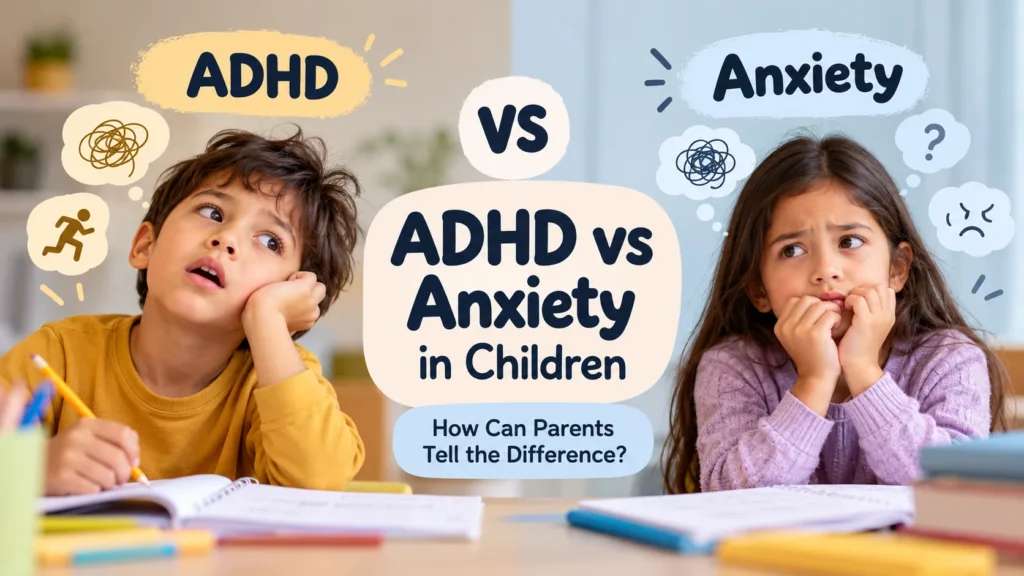
Your child sits down to do homework but keeps losing concentration. Sometimes they leave the table. Other times, they repeatedly ask whether their answers are correct.
Is it ADHD, anxiety, or both?
ADHD and anxiety can look similar, but the reasons behind a child’s behaviour may differ. A child with ADHD may struggle to stay with a task, follow instructions or control impulses. A child with anxiety may find it hard to concentrate because they’re thinking about something that worries or frightens them.
These patterns can help parents understand what they’re seeing, but they cannot confirm a diagnosis. Some children have both conditions.
ADHD vs Anxiety in Children: What’s the Difference?
The most useful difference to consider is whether your child is struggling mainly with attention and impulse control, with worries or fears, or with both.
| What you notice | ADHD may involve | Anxiety may involve |
|---|---|---|
| Poor concentration | Losing track of instructions or getting distracted | Thinking about worries instead of the activity |
| Restlessness | Fidgeting, moving around or struggling to stay seated | Feeling nervous, tense or unable to relax |
| Unfinished homework | Losing track of steps or struggling to maintain effort | Repeatedly checking work or fearing mistakes |
| Avoiding activities | Putting off tasks requiring prolonged attention | Avoiding situations that feel frightening or stressful |
| When it happens | Difficulties across different tasks and situations | Difficulties that may increase around particular worries |
For example, one child may leave homework unfinished because they repeatedly lose track of what they’re doing. Another may take just as long because they’re afraid of giving a wrong answer.
The behaviour looks similar, but the experience may be different. Neither example is enough to distinguish ADHD from anxiety on its own.
For a detailed symptom guide, see LeapHope’s 9 signs of ADHD in children.
Can Anxiety Make a Child Look Like They Have ADHD?
Yes. Anxiety can affect concentration, memory, sleep and behaviour.
Imagine your child has a test tomorrow. During today’s lesson, they keep thinking about what might happen if they fail. They miss parts of the teacher’s instructions and struggle to finish their work.
Parents might see distraction, but the child may be occupied by worry.
Other possible clues include:
- Frequently asking whether something bad will happen.
- Repeatedly seeking reassurance about mistakes or failure.
- Avoiding particular activities because they’re frightened.
- Complaining of stomach aches or feeling sick around stressful situations.
Not every anxious child experiences these signs. Younger children may also find it difficult to explain their worries.
If these behaviours sound familiar, see LeapHope’s guide to signs of anxiety in children.
What Can Parents Notice Before Seeking an Assessment?
You don’t need to identify the condition yourself. Three observations can help you describe your child’s difficulties more clearly.
1. Is Your Child Worried About Something Specific?
Suppose your child takes an hour to complete a short assignment.
Are they losing track of the questions? Or do they keep checking answers because they’re afraid of getting something wrong?
Try asking:
“Which part is difficult — knowing what to do, staying with it, or worrying about getting it wrong?”
Your child may not know the answer, and that’s okay. The question is meant to open a conversation, not test them.
2. When Did You First Notice the Difficulty?
Think about whether your child has long struggled with attention, instructions or organisation, or whether the problems became more noticeable during a period of worry.
Both ADHD and anxiety can begin in childhood. The timing doesn’t prove which condition is present.
However, knowing when changes occurred can help a clinician understand your child’s history.
3. Is It Affecting School, Home or Friendships?
Consider the actual effect on your child.
- Are they regularly unable to finish age-appropriate schoolwork?
- Do worries stop them from joining activities they previously enjoyed?
- Are attention difficulties or fears affecting friendships?
- Is your child becoming distressed about school or everyday tasks?
These concerns deserve attention whether they arise from ADHD, anxiety or another difficulty.
If you are unsure whether your child’s activity level or distraction is typical for their age, read ADHD vs Normal Child Behaviour.
Can a Child Have Both ADHD and Anxiety?
Yes. A child can experience ADHD and anxiety at the same time.
For example, a child with ADHD may repeatedly forget assignments or struggle to organise schoolwork. Over time, they might begin worrying about criticism, falling behind or getting into trouble.
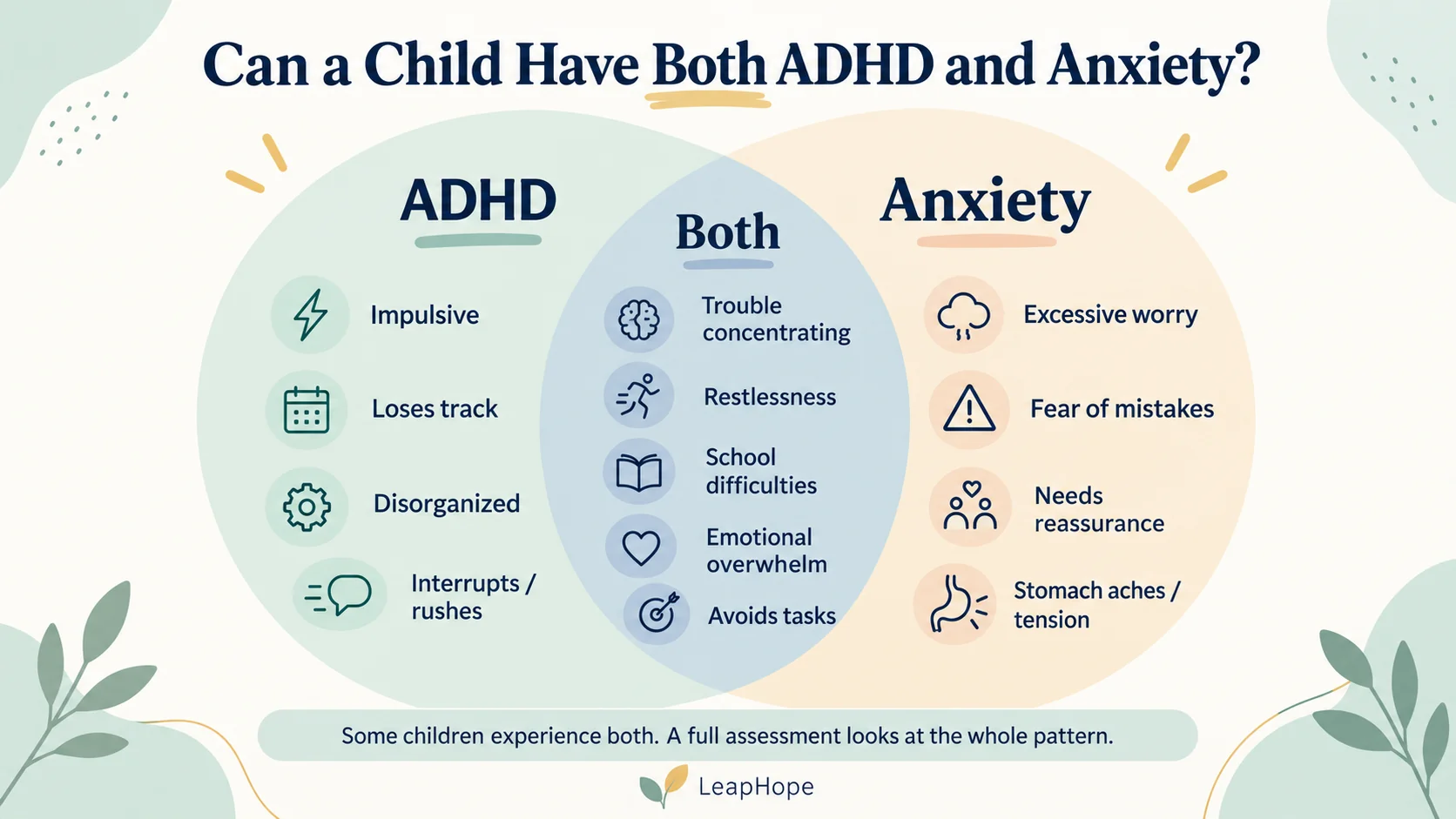
They may then have two difficulties to manage: organising their work and coping with worry.
Anxiety can also exist independently of ADHD. One diagnosis doesn’t rule out the other.
This is why clinicians assessing ADHD also consider emotional difficulties, including anxiety, rather than assuming every problem has the same cause.
What Should Parents Do If They Suspect ADHD or Anxiety?
If your child is repeatedly struggling, you don’t need to choose between ADHD and anxiety before asking for help.
Start with these three steps:
- Talk to your child. Ask what feels difficult during homework, school or social situations. Listen for worries, but don’t assume they can explain everything.
- Speak with the teacher. Ask whether your child loses track of instructions, seems worried, repeatedly seeks reassurance or avoids particular activities.
- Consult a qualified professional. Share specific examples, when they began, and how they’re affecting your child.
An assessment may include your child’s developmental history, emotional wellbeing, attention difficulties, sleep, learning and observations from home and school.
The NICE ADHD guideline recommends a comprehensive clinical assessment by an appropriately trained professional. Questionnaires alone cannot confirm ADHD.
If you’re looking for support, LeapHope provides information about child ADHD counselling and child anxiety counselling. An appropriately qualified clinician can help determine whether further assessment is needed.
You can begin by telling the professional what your child is finding difficult. You don’t need to arrive with a diagnosis.
Clinical Resources
- CDC — Diagnosing ADHD
- American Academy of Pediatrics — Anxiety Disorders and ADHD
- NICE — ADHD: Diagnosis and Management


