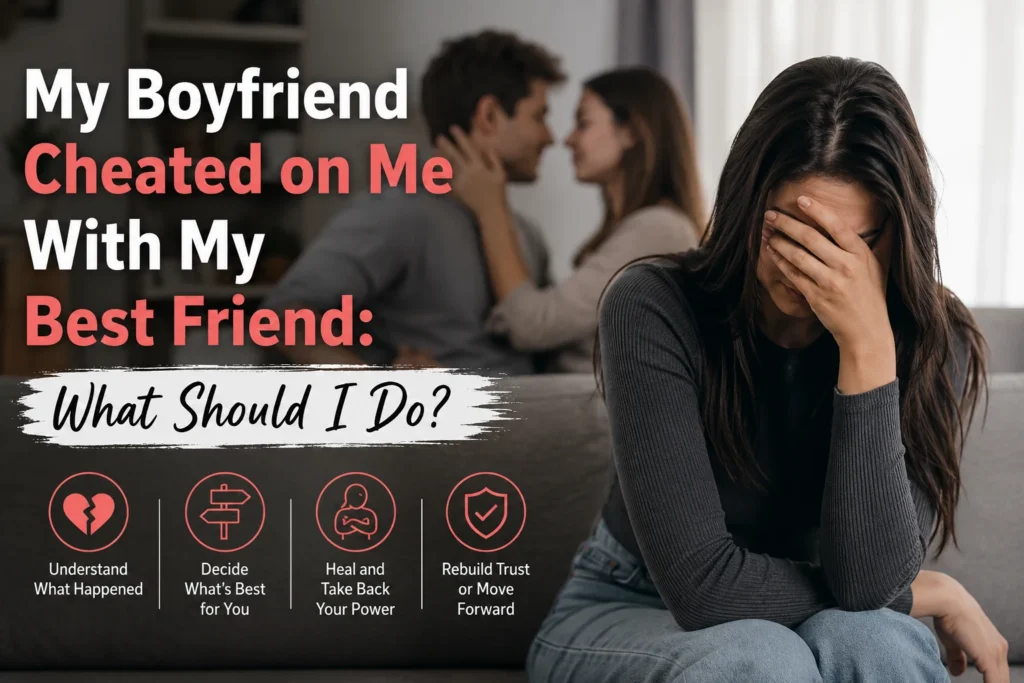

You can leave someone because they cheated and still miss them afterwards.
That can be hard to understand. The betrayal may have been serious enough for you to end the relationship, yet weeks or months later you may find yourself remembering the good parts, checking what they are doing, wondering whether you reacted too quickly, or imagining what would have happened if you had stayed.
The regret can become even stronger when your ex looks happy without you. Maybe they are travelling, going out, meeting new people or already dating someone else.
Then another thought appears:
“They hurt me, so why do I feel like I am the one who lost?”
Regretting leaving does not automatically mean that leaving was wrong. Psychologically, regret can reflect attachment, grief, uncertainty and the loss of the future you expected—not necessarily evidence that the relationship should restart.
Why You Can Regret Leaving Someone Who Cheated on You
Infidelity can change your view of a relationship in one moment.
Attachment usually does not change that quickly.
You may have discovered the cheating on Monday, ended the relationship on Tuesday and still had months or years of emotional attachment sitting underneath that decision.
That creates a painful contradiction:
“I know why I left, but I still want them.”
Both feelings can be real.
Your decision ended the relationship. It did not instantly end the attachment.
When you become emotionally attached to someone, your mind does not relate to them only as a romantic partner.
They become part of routines, plans, memories and expectations.
You may be used to:
- talking to them when something happens
- sleeping beside them
- making weekend plans together
- sharing financial or household responsibilities
- seeing their family
- imagining holidays, children or a future together
- turning to them when you feel stressed
Cheating can destroy trust while many of these attachment patterns are still active.
So after leaving, you are processing two losses at once: the person who betrayed you and the person you were emotionally attached to before the betrayal.
That is one reason people can miss someone they are also angry with.
Once the anger settles, other feelings become easier to notice
Immediately after discovering betrayal, anger, shock or disbelief may dominate everything else.
Those emotions can make leaving feel very clear.
Later, the emotional intensity may reduce.
Now there is space for loneliness, affection, nostalgia and uncertainty.
This can create the impression that your view of the relationship has changed completely.
It may not have.
The betrayal is simply no longer the only thing you can feel.
You can remember being loved and remember being betrayed by the same person.
Seeing Your Ex Happy or With Someone New Can Make the Regret Stronger
Sometimes regret does not become intense until your former partner starts moving on.
Seeing them happy can make the breakup feel final in a way that simply being separated did not.
You may have thought:
“Maybe we will eventually talk again.”
Then you see them dating somebody else and suddenly realise they may build a life that no longer includes you.
That can activate attachment, jealousy and fear of replacement.
It can also create a painful sense of unfairness.
You may think:
“They cheated. Why are they already happy while I am still dealing with what they did?”
Or:
“What if they become a better partner for the next person?”
This is where regret can become misleading.
Seeing your ex with someone new gives you information about what they are doing now. It does not tell you what your relationship would have become if you had stayed.
Their new relationship also does not prove that they have changed.
And feeling jealous does not necessarily mean that you want them back.
Sometimes jealousy is the mind reacting to being replaced, losing access to someone important or recognising that the relationship is genuinely ending.
If seeing an ex move on is keeping you caught between returning and letting go, breakup counselling can help you separate grief, attachment, loneliness and jealousy from the decision itself.
What Does Regretting Leaving a Cheater Say About You?
People sometimes judge themselves harshly for missing somebody who betrayed them.
They think:
“Why do I still love someone who did this to me?”
“Do I have no self-respect?”
“Was I too emotional when I left?”
Regret does not automatically tell us any of those things.
It may simply tell us that the relationship carried emotional importance.
There is also a difference between wanting the pain of separation to stop and genuinely wanting the relationship back.
Ask yourself what you are actually missing.
Is it:
- this person as they are today?
- the relationship before you discovered the cheating?
- having someone beside you?
- the routines you shared?
- the future you thought you would have?
- physical intimacy?
- financial or family stability?
- being chosen?
- the feeling that your ex may now choose somebody else?
- certainty about your future?
The answer matters.
If what you mainly miss is familiarity, companionship or your old future, returning to the person does not necessarily restore those things in the form you remember.
The relationship has already changed.
Fear of starting again can also look like regret
Leaving means giving up something known for something uncertain.
You may wonder whether you will meet somebody else.
Whether another relationship will be better.
Whether the next person could also cheat.
Whether you have wasted years.
Whether you should have accepted one betrayal rather than face an uncertain future.
That fear can make the previous relationship look safer in hindsight than it actually felt while you were living through the betrayal.
This does not mean the fear is irrational.
It means fear of the future and desire for the ex are not always the same feeling.
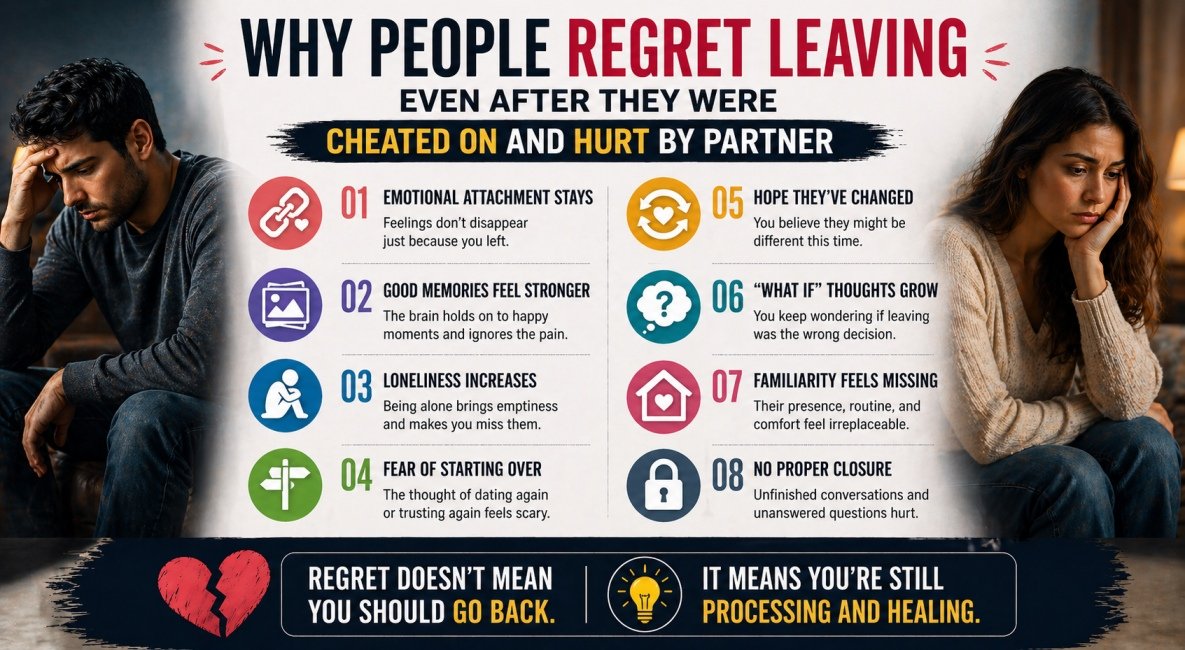
Regret Is Information. It Is Not a Decision.
You may decide to go back.
You may decide to stay separated.
You may eventually meet someone else.
You may not want another relationship for some time at all.
You might instead put more energy into friendships, work, fitness, travel, learning something new or a passion that gives your life meaning outside the relationship.
There is no single psychologically correct choice.
The useful question is not:
“What am I supposed to do after being cheated on?”
It is:
“Which decision makes sense when I look at the relationship as it exists now—not only at how much I miss it?”
Regret deserves attention.
But regret alone is weak evidence that reconciliation will work.
If You Go Back, the Betrayal Does Not Disappear
One of the biggest mistakes in reconciliation is assuming that returning to the relationship will remove the uncertainty.
Often, it does not.
You may feel relief because you are together again, but the betrayal is now part of what your mind knows about this person.
Certain situations may bring that knowledge back sharply:
- a late reply
- an unexplained change in routine
- a work trip
- a new colleague
- a hidden phone screen
- emotional distance
- less intimacy
- periods when the relationship feels vulnerable
A reaction to these situations does not automatically mean you are “too insecure.”
After trust has been broken, reminders of the original betrayal can make your mind pay closer attention to possible danger.
For some people these reactions gradually reduce as safety is rebuilt.
For others, they remain strong because the partner continues to behave unpredictably.
That distinction matters.
Trust is not rebuilt because the betrayed person tries harder to stop worrying.
It is rebuilt partly through repeated experiences showing that the partner is now behaving differently.
If you are considering reconciliation, our guide on how to rebuild trust after cheating explains what repair looks like beyond simply promising not to cheat again.
Before Going Back, Ask What the Partner Who Cheated Has Actually Changed
It is easy for the betrayed partner to focus almost entirely on themselves:
Can I forgive?
Can I trust again?
Can I stop checking?
Can I stop thinking about what happened?
Those questions matter.
But another question should come first:
What has the person who broke the trust done to make trusting them more reasonable?
You cannot prevent another person’s infidelity by being sufficiently loving, attractive, sexually available, calm or understanding.
You also cannot repair their behaviour for them.
If the relationship is going to be reconsidered, look beyond how badly they say they feel.
Look at behaviour.
Have they:
- taken responsibility without blaming you?
- been honest about what happened?
- ended the outside relationship or inappropriate contact?
- stopped hiding information?
- accepted that trust will not return immediately?
- understood the impact of the betrayal?
- examined what allowed them to cross the relationship boundary?
- changed the behaviour surrounding the cheating?
- remained consistent after the immediate fear of losing you passed?
The Mayo Clinic’s guidance on recovering after infidelity similarly places responsibility on the person who had the affair to end it, take accountability and participate actively in rebuilding trust.
An apology matters.
But repair is easier to judge through patterns over time than through one emotional conversation.
A One-Time Betrayal and a Repeated Pattern Are Not the Same Situation
It is useful to distinguish a single episode of infidelity from repeated cheating accompanied by ongoing lies, concealment or manipulation.
A one-time betrayal can still cause serious harm.
It is not automatically “just a mistake.”
But if the partner takes responsibility, understands what happened and consistently changes their behaviour, some couples are able to rebuild.
Repeated betrayal gives different information.
If someone cheats repeatedly, creates secret accounts, continues contacting other partners, lies when confronted or repeatedly promises change before doing the same thing again, the problem is no longer simply one event.
It is a pattern.
Research on serial infidelity also cautions that repeated cheating can sometimes occur alongside deception, gaslighting or coercive relationship dynamics, so it is important not to treat every case of infidelity as psychologically equivalent.
You do not have to decide whether someone is a “good” or “bad” person.
You need to look at the behaviour you would actually be returning to.
Can a Relationship Fully Recover After Cheating?
Some relationships do recover after infidelity.
But “recovery” does not necessarily mean returning to exactly how the relationship felt before.
You now know something you did not know then.
Trying to erase that reality can keep both partners stuck.
A more realistic form of recovery is building enough safety, honesty and consistency that the betrayal no longer controls the relationship.
Research on couples recovering after affairs has highlighted rebuilding safety and trust, communication and how partners respond to reminders of the betrayal as important parts of the healing process.
That work cannot be carried by the betrayed partner alone.
The person who cheated has to participate actively in making the relationship trustworthy again.
The betrayed partner then gets to decide whether what is being rebuilt is something they still want.
So, Should You Go Back?
Try replacing that question temporarily with:
“What would I actually be going back to?”
Not the person before the affair.
Not the relationship you remember on good days.
Not the future you had imagined.
The relationship that exists now.
Ask yourself:
- Has anything genuinely changed since I left?
- Do I want this person, or do I want relief from missing them?
- Would I feel this much regret if they were still single and asking for me back?
- Has seeing them move on increased my desire to return?
- Am I afraid I will not find somebody else?
- Can I imagine gradually trusting them again?
- Have they demonstrated accountability rather than only remorse?
- Was the betrayal one event or part of a wider pattern?
You do not need to answer all of these immediately.
And therapy should not decide for you.
If you are seriously considering reconciliation, online infidelity counselling can help you examine the betrayal, the attachment that remains, the behaviour since it happened and whether rebuilding the relationship is something both partners genuinely want.
The purpose is not to convince you to stay.
It is also not to convince you to leave.
It is to make the decision with more information than regret alone can provide.
Final Thought
Missing someone who betrayed you can feel contradictory, but psychologically it is not unusual.
Attachment can remain after trust is broken.
You may grieve the person, the relationship you had before the cheating, the future you expected and even the version of yourself who felt secure in that relationship.
Seeing your former partner move on can make all of those losses feel stronger.
None of that automatically means you should return.
And none of it automatically means you should stay away.
If you consider going back, look less at how strongly you miss them and more at what has actually changed since the betrayal.
Regret tells you that the relationship still carries emotional weight.
It does not, by itself, tell you what your next decision should be.
FAQs
Is it normal to regret leaving someone who cheated on you?
Yes. Ending the relationship can stop contact without immediately ending attachment. You may still miss the person, routines, future plans or emotional security you associated with the relationship. Regret does not automatically mean leaving was the wrong decision.
Why do I want my cheating ex back after seeing them with someone else?
Seeing an ex with someone new can make the breakup feel more final and trigger jealousy, comparison, attachment and fear of being replaced. Those feelings can increase the desire to reconnect without necessarily meaning the original relationship has become healthier.
Can trust completely return after cheating?
Trust can improve substantially for some couples, but it usually develops through consistent behaviour rather than reassurance alone. Accountability, honesty, predictable behaviour and time matter, and both partners have to decide whether rebuilding the relationship is something they want.
How do I know whether my cheating partner has really changed?
Look for sustained behaviour rather than promises. Taking responsibility, ending inappropriate contact, reducing secrecy, tolerating difficult conversations and showing consistent honesty over time provide more useful evidence of change than an apology by itself.