
We are living in a high-tech world where social media, apps, and AI have made life fast and always connected. Because of this, infidelity can feel more common than ever. Every day, people see news and reels about cheating, which creates panic and curiosity.
It raises a simple question, is everyone really cheating, or does it just feel that way?
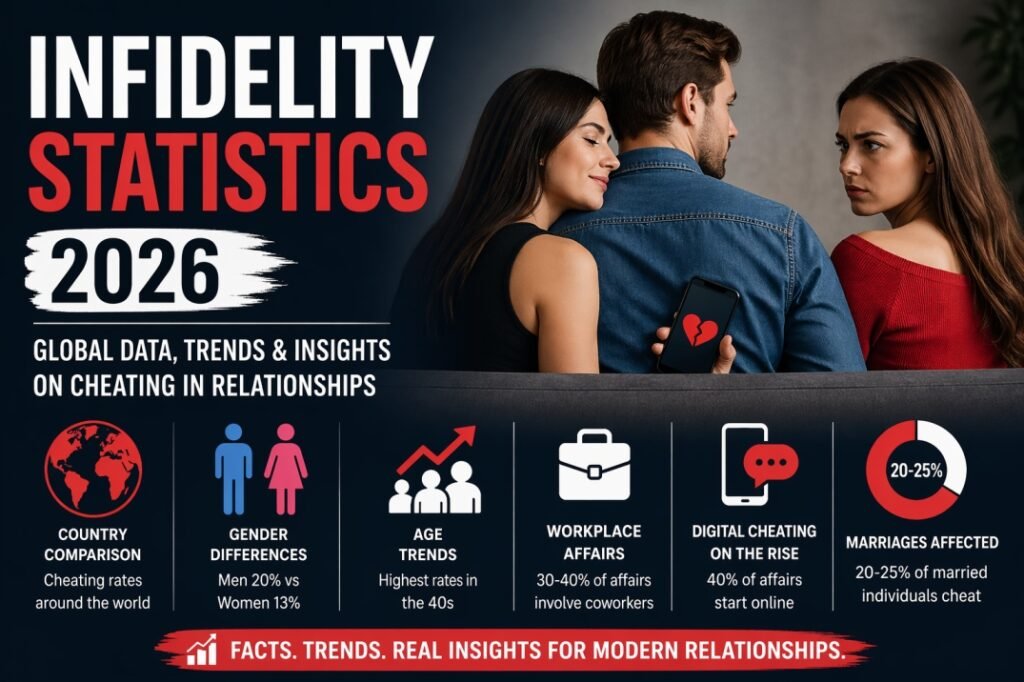
Research-based data shows that around 20–25% of married people and up to 35–40% of people in relationships report infidelity, but the reality is not as extreme as it appears online.
Here, we’re sharing real statistics to show what’s actually happening, including infidelity trends by gender, relationships, professions, and countries.
Key Infidelity Statistics 2026
The most important relationship and infidelity statistics at a glance, based on recent research and survey data.
20–25%
of married individuals report infidelity at some point
~20% vs ~10–15%
men vs women reporting infidelity in marriage
30–40%
of people in relationships report some form of cheating
~45%
of affairs are reported as emotional rather than physical
40%+
of affairs are estimated to begin online or through messaging platforms
3x
higher likelihood of repeat infidelity after first occurrence
60–75%
of couples remain together after infidelity is discovered
~25%
of individuals report admitting to infidelity, indicating underreporting
👩❤️👨 Who Cheats More: Men or Women? (Infidelity Statistics by Gender)
Source: General Social Survey (GSS) and peer-reviewed relationship studies.
💍 Marriage vs Relationship Infidelity Statistics
Source: General Social Survey (GSS), AAMFT, Journal of Marriage and Family.
📊 Reasons for Cheating in Relationships (Men vs Women)
👨 Men
👩 Women
Source: Journal of Sex & Marital Therapy, relationship surveys, and behavioral studies.
📱 Digital Infidelity Statistics 2026
👨 Men
👩 Women
Source: Pew Research Center, Journal of Sex & Marital Therapy, global relationship surveys.
🧑💼 Workplace & Profession-Based Infidelity Statistics 2026
36–40%
of affairs involve a coworker or workplace connection
🔁 Infidelity Patterns & Discovery Statistics
🔁 Repeat Infidelity
🔍 Discovery of Affairs
📈 How Common Is Infidelity?
🧑🤝🧑 Infidelity by Age (Men vs Women)
Rates tend to rise with age, peak in midlife, then gradually decline. Men report higher rates across most age groups.
What These Statistics Don’t Show
- Many people do not admit cheating, so real numbers may be higher
- Emotional impact cannot be fully measured through statistics
- Definitions of infidelity vary between individuals and couples
- Every relationship is different, so outcomes are not the same
Research Sources
- Countries With the Most and Least Cheaters
- Most Adulterous Countries in the World
- Infidelity Statistics: How Common Is Cheating?
- Countries Ranked by Infidelity Rate
- How Common Is Cheating? Global Infidelity Data
- Psychological Study on Infidelity Behaviour
- Emotional and Behavioural Responses to Infidelity
- Why Some People Continue Affairs After Discovery
- Relationship Commitment and Infidelity Study
Infidelity Statistics FAQs
Which country has the highest infidelity rate?
Thailand is often reported as having the highest infidelity rate, with around 50–51% of people admitting to cheating. Several European countries like Denmark, Germany, and Italy also report high rates between 40–46%.
Which countries have the lowest infidelity rates?
Countries such as Uruguay and Slovenia are reported to have lower infidelity rates, usually around 10–15%. However, data is limited in many regions, and cultural differences or underreporting may affect these numbers.
Which professions have the highest infidelity rates?
Infidelity is more common in professions with long hours, frequent travel, and high interaction, such as healthcare, trades, and business roles. These environments increase opportunity and emotional or social connections outside relationships.
Who cheats more, men or women?
Men report higher cheating rates, with about 20% admitting infidelity compared to around 13% of women. However, recent studies show the gap is narrowing as relationship roles and social behaviours continue to change.
Is cheating more common in marriage or dating relationships?
Cheating is more common in dating relationships, with around 35–40% reporting infidelity, compared to 20–25% in marriages. However, the emotional and long-term impact tends to be greater in marriages.
How common are workplace affairs?
Workplace affairs are quite common, with around 30–40% of infidelity cases involving coworkers. Daily interaction, shared stress, and emotional bonding in professional environments often increase the likelihood of these relationships forming.
Are emotional affairs more common than physical affairs?
Emotional affairs are very common, with about 45% of people reporting emotional involvement outside their relationship. These often begin through communication and may develop into physical relationships over time.
Has digital communication increased infidelity?
Yes, digital communication has significantly increased infidelity, with around 40% of affairs now starting online. Social media, messaging apps, and dating platforms have made it easier to form private connections outside relationships.