Clinically reviewed by Aradhana Gambhir, Senior Psychologist & Marriage Counsellor · 25+ years of experience
If your husband hid a previous marriage and you found out only after your wedding, the discovery can feel like a serious betrayal. This is not a small detail from his past. An entire marriage was kept from you while you were deciding whether to marry him, build a life with him and trust him as your partner.
Many women who find out their husband was divorced before are not only angry about the previous relationship. They start questioning the marriage they are in now: Why did he hide it? Did his family know? Was his version of the divorce true? If something this big was concealed, what else might I not know?
Research on betrayal by a romantic partner suggests that serious deception in a close relationship can be psychologically destabilising and affect trust and emotional safety. The research looks at romantic betrayal more broadly rather than hidden previous marriages specifically, but it helps explain why this type of discovery can affect much more than one fact from the past.
At the same time, leaving a marriage is not a simple decision. You may have children, shared finances, property, years of emotional investment, close family ties and a husband you still love despite what he did.
So the real question is not simply, “Should I forgive him?”
It is: What do I need to understand before I decide what happens to my marriage now?
What to Do If Your Husband Hid a Previous Marriage
Do not force yourself to decide immediately whether to forgive him or end the marriage.
The first shock can make everything feel urgent. One part of you may want to leave because the betrayal feels too large, while another part may desperately want to protect the marriage because losing everything you have built feels unbearable.
First get clarity about what was hidden, how long it was hidden, why it was hidden and whether there are other things you still do not know.
Only then can you begin deciding what the concealment means for your marriage.
First Find Out What Actually Happened
You do not need every private detail of his previous relationship, but you do need the facts that affect your own life.
Find out:
- when the previous marriage began;
- when they separated;
- when the divorce was legally completed;
- whether you were already in a relationship with him during any part of that period;
- whether there are children from the previous marriage;
- whether there are ongoing financial or legal responsibilities;
- whether he is still in contact with his former wife;
- who in his family knew;
- whether they knew that you had not been told;
- why he decided to marry you without telling you.
This is not about interrogating him over every small event from years ago. It is about knowing whether the basic story of your own marriage is true.
If important dates keep changing or new information appears only after you find evidence yourself, pay attention to that.
Did He Fail to Tell You, or Did Your Husband Lie About His Previous Marriage?
Both can feel deeply painful, but there is a difference.
One situation is that he never volunteered that he had been married. A more serious situation is that you discussed previous relationships or marriage and he directly told you he had never been married.
There is another level where a husband actively creates a false version of his past. For example, he may have described his former wife as an old girlfriend, changed important dates or asked relatives not to mention the marriage.
If your husband lied about a previous marriage, ask yourself how deliberate that lie was.
Did he have obvious opportunities to tell you? Did you directly ask about previous marriages? Did other people help maintain the false story?
The more effort that went into concealing the truth, the harder it becomes to treat this as one uncomfortable subject he simply avoided.
Why Would a Husband Hide a Past Marriage?
There may be an explanation.
He may say he was ashamed of being divorced. He may have feared that you or your family would reject him. His parents may have pressured him not to disclose it because divorce carries stigma in the family or community.
Those reasons may help explain why your husband hid his past marriage. They do not make the decision harmless.
Fear of losing you does not give someone the right to remove information that could have affected your choice to marry them.
There is also an important difference between someone who accepts, “I was afraid, I handled this badly and you should have known,” and someone who responds by saying the marriage happened before you and therefore should not matter.
The first response acknowledges the harm.
The second dismisses it.
Do Not Let the Entire Issue Become About Whether His Ex-Wife Was Wrong
Once you discover that your husband hid the marriage, you may start questioning everything he told you about his ex-wife.
Perhaps he said she cheated. Maybe his family said she created problems. Maybe you were told that she was responsible for the divorce.
Now you may wonder whether any of that is true.
It is reasonable to want clarity, especially if behaviour from the first marriage may be repeating in yours. But one issue must remain separate.
Even if his former wife was completely responsible for their marriage ending, your husband still decided to hide that marriage from you.
And if your husband behaved badly in the first marriage, that does not automatically prove that every problem will repeat with you.
You do not need to decide which person was the villain in their marriage before deciding how you feel about being deceived in yours.
What If His Family Knew About the Previous Marriage?
This can make the betrayal feel much bigger.
You may start thinking that everyone around you knew something about your husband’s life that you did not know yourself.
But first establish what his family actually knew.
There is a difference between relatives who assumed he had already told you and relatives who knowingly helped him hide the marriage.
The useful question is not simply whether they knew he had been married before. It is whether they knew that you did not know.
If they deliberately participated in hiding it, your trust in the family may also need to be rebuilt. If they believed he had already disclosed it, the situation is different.
Should You Contact His Ex-Wife?
You may feel strongly tempted to hear her side because you no longer know whether your husband’s story can be trusted.
Do not contact her simply because you want someone to tell you who was right and who was wrong. First decide what information you actually need.
If you need to confirm when the divorce happened, documents may be more reliable than either person’s memory. If there are serious contradictions about behaviour, children, finances or the timeline of the relationship, her account may provide useful information, but it is still one person’s account.
Do not assume your husband is telling the full truth simply because he is your husband. But do not automatically assume everything his former wife says must be true because you now feel betrayed by him.
Your purpose is to understand what affects your marriage now.
“If He Hid One Marriage, What Else Has He Hidden?”
After discovering one lie this large, many other things can suddenly start looking suspicious.
A late arrival that you once would have ignored may now make you wonder where he really was. A private phone notification may make you nervous. An unclear answer from his family may make you think they are hiding something again.
You may start checking details that you never checked before.
That reaction makes sense after discovering that something major was concealed. But if you decide to continue the marriage, this cannot become your permanent way of living.
Trust is not repaired when you become better at investigating your husband. It is repaired when his behaviour becomes consistent enough that you gradually stop feeling the need to investigate.
Our guide to rebuilding trust after betrayal in a relationship explains what that repair can realistically require.
You May Start Doubting Yourself Too
One of the most painful thoughts can be: How did I not know?
You may feel foolish because other people knew. You may replay old conversations and wonder whether you missed obvious signs.
But there is a difference between ignoring clear evidence and trusting someone who deliberately kept information from you.
If your husband and possibly others made sure you did not know, blaming yourself for not discovering it earlier only adds another injury to the one you already have.
The person who was deceived should not end up carrying responsibility for failing to uncover the deception.
Check the Legal Position Separately
If there is any doubt about whether his previous divorce was legally completed before your marriage, do not leave that question unresolved.
Verify the relevant documents and speak with a qualified family-law professional in your jurisdiction if needed. There may also be questions about children, financial obligations, maintenance or other legal responsibilities from the previous marriage.
These are different from the emotional questions.
A marriage counsellor can help you deal with betrayal, trust and relationship decisions. A lawyer is the right person to clarify legal status or rights.
“I Found Out My Husband Was Married Before — But I Have Already Invested So Much”
This may be one of the hardest parts.
You may have spent years building the marriage. There may be children, a home, finances, careers, shared responsibilities and close relationships between families.
You may still love your husband.
Ending the marriage could create enormous emotional, practical and financial loss. Those consequences are real and should not be dismissed by someone online saying, “Just leave.”
At the same time, the amount you have already invested cannot be the only reason you stay.
A useful way to think about it is: your investment explains why the decision is difficult. It does not make the decision for you.
What matters is whether the marriage that exists from this point forward is one you can realistically live in.
A Good Husband Can Still Have Done Something Seriously Wrong
This is what makes some cases especially confusing.
Perhaps your husband has otherwise treated you well. He may support you, care about your children, respect your career and have been dependable through difficult periods.
Then you discover this.
You do not have to convince yourself that every good part of the marriage was fake. You also do not have to minimise the betrayal because he has been good in other ways.
Both things can be true.
He may have been a caring husband in many parts of the relationship and still have made a serious decision to deceive you about his previous marriage.
Your decision needs to account for the whole relationship, not only its best part or its worst moment.
His Behaviour After You Find Out Matters a Lot
You cannot change what he chose to hide before the wedding. You can watch what he does now.
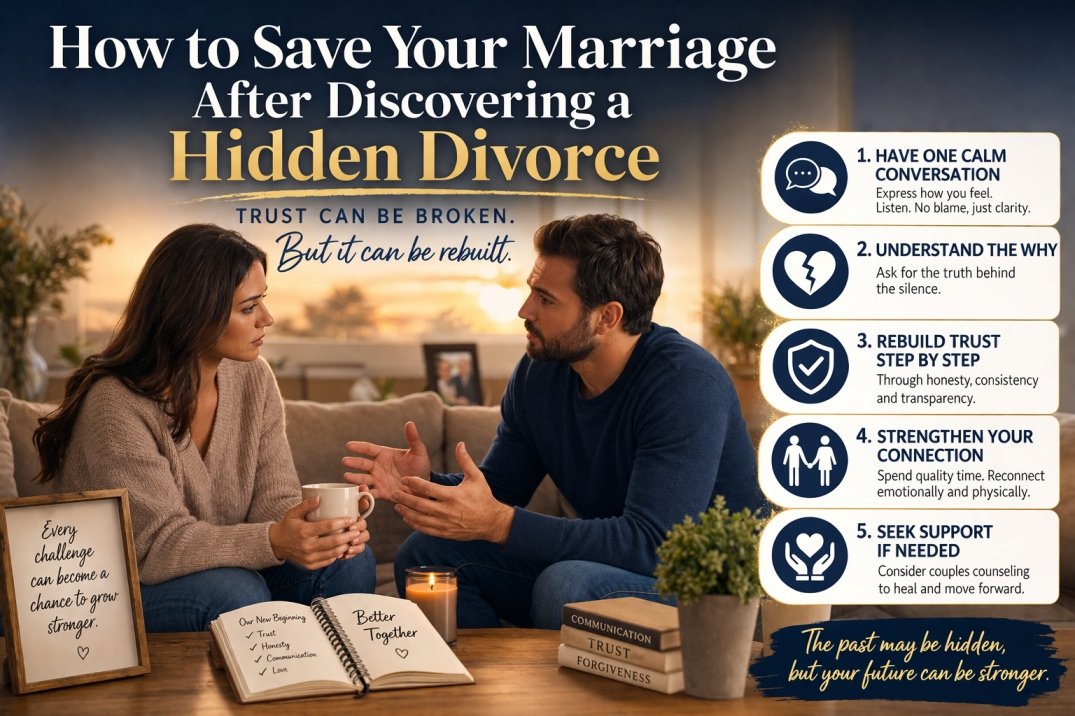
Repair is more possible when he gives you a clear account, takes responsibility, understands why your trust has changed and allows you time to process the shock.
Be more concerned if he:
- keeps changing important parts of the story;
- becomes angry whenever you ask reasonable questions;
- blames everyone except himself;
- tells you that you are overreacting;
- gives you new information only after you find evidence;
- pressures you to forgive quickly;
- tells you the past is none of your business;
- begins hiding other things.
An apology can be meaningful. But the weeks and months after the apology tell you much more about whether trust can actually return.
Watch for Truth Coming Out in Instalments
One hidden marriage is already a major shock. It becomes much harder when the truth keeps expanding.
First you learn about the marriage. Then you discover a different divorce date. Later you learn there are financial obligations, children or contact that was never mentioned.
Each new discovery resets the hurt.
If important facts continue appearing only after you find them yourself, the problem is no longer simply one decision he made years ago. It becomes a current pattern of incomplete honesty.
Do Not Let Strangers Decide Whether You Should Stay or Leave
You may search Reddit, Quora, forums or social media because you desperately want to know what another woman would do.
You will find very strong opinions. Some people will tell you to leave immediately. Others will tell you the previous marriage happened in the past and you should forget about it.
Neither group has lived your marriage.
They do not know your husband the way you do. They do not know what the relationship has been like, whether there are other lies, how he is behaving now, what you have built together or what leaving would mean for you.
Online experiences can help you notice things you had not considered. They should not make your decision.
No psychologist, friend, relative or stranger online can fairly decide whether you should stay married.
You are the person who knows the relationship you have actually lived.
If You Stay, You Are Not Saying That What He Did Was Acceptable
Choosing to try again does not mean saying the lie was small.
You can stay and still require honesty, accountability and change. Trust may take time.
You may need to revisit the subject more than once. You may need greater openness around finances, family involvement or contact with the former spouse.
What matters is whether the need for reassurance and checking gradually becomes smaller because his behaviour becomes more reliable.
If six months or a year later you still feel as if you must monitor everything because you cannot trust his word, the marriage may have continued without the betrayal actually being repaired.
If You Leave, It Does Not Mean Your Entire Marriage Was Meaningless
You may eventually decide that this was a boundary you cannot move past.
That does not mean every good memory was fake or that your years together meant nothing. It means you considered what happened, looked at the relationship as it exists now and decided you could not live with it.
Likewise, staying does not make you weak.
Two women can face the same discovery and make completely different decisions because their husbands, marriages, histories and circumstances are different.
Counselling Can Help You Get Clearer, Not Make the Decision for You
After a betrayal this large, thoughts can become tangled.
You may be trying to understand his past, his ex-wife, his family, the law, your finances, your anger and the future of the marriage all at once.
Counselling can help separate those problems and work through:
- the shock and hurt;
- repeated questioning and fear;
- the loss of trust;
- your husband’s response to the discovery;
- whether there are wider patterns of dishonesty;
- what you would need in order to stay;
- what you are afraid would happen if you left.
If both of you want to understand whether the relationship can be repaired, online marriage counselling can give you a structured place to have these conversations without every discussion becoming another fight.
The counsellor should not decide whether you remain married. The purpose is to help you see your situation more clearly so you can make that decision yourself.
Before You Decide, Ask Yourself Three Things
You do not need fifty tests or twenty opinions.
Start with three questions.
Do I Now Know the Truth?
Do you have a clear understanding of the previous marriage, divorce and anything from that relationship that affects your life today?
Is He Taking Responsibility Now?
Is he becoming more open and consistent, or are you still dealing with denial, minimising, changing stories and new discoveries?
Can I Imagine Trusting This Marriage Again?
Not tomorrow, but eventually.
Can you realistically imagine reaching a point where you are no longer checking every message, questioning every late arrival and wondering whether another truth is about to appear?
If the answer is currently “I don’t know,” you may simply need more truth, more time and more clarity before making a permanent decision.
Final Thoughts
If your husband hid a previous marriage, the betrayal can affect far more than how you see his past. It can change how you see him, his family, your own judgment and the future of your marriage.
You may still love him. You may still value much of the life you have built. You may also feel furious that you made such a major commitment without knowing the truth.
You do not have to let the shock decide for you, and you do not have to let fear of losing your investment decide either.
Find out what is true, watch carefully how your husband responds now and give yourself enough space to understand whether the marriage can become trustworthy again.
Other people can give you opinions. The decision to stay or leave is yours, because you are the one who knows the relationship and you are the one who has to live with what comes next.