Last Updated on October 18, 2026
Clinically Reviewed by Mansi More Nopany, RCI-Registered Clinical Psychologist.
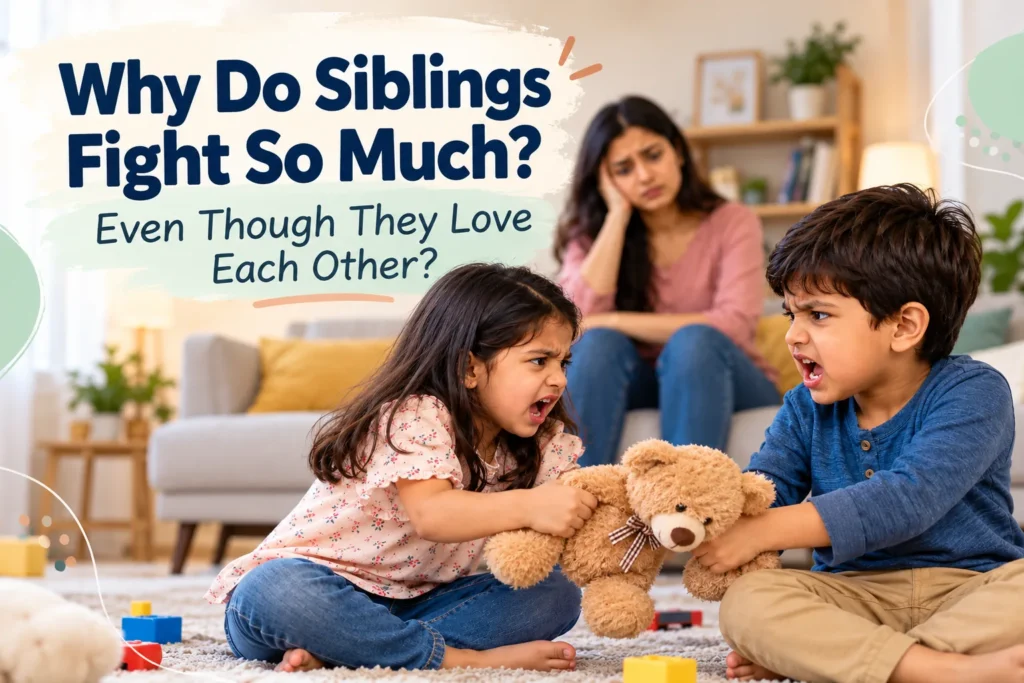
Your children may spend hours playing together, sharing their favourite things and caring for each other. Then suddenly, they’re arguing, grabbing belongings, pushing or hitting each other. A little later, they’re getting along again.
You may find yourself separating them several times a day, repeating the same rules and wondering why they fight so much when they clearly love each other.
Sometimes, the arguments become so frequent that you worry your children are beginning to dislike each other. The constant intervention can also leave you frustrated and exhausted.
Sibling rivalry can begin in early childhood. While occasional disagreements are common, understanding why your children keep fighting can help you recognise what needs attention.
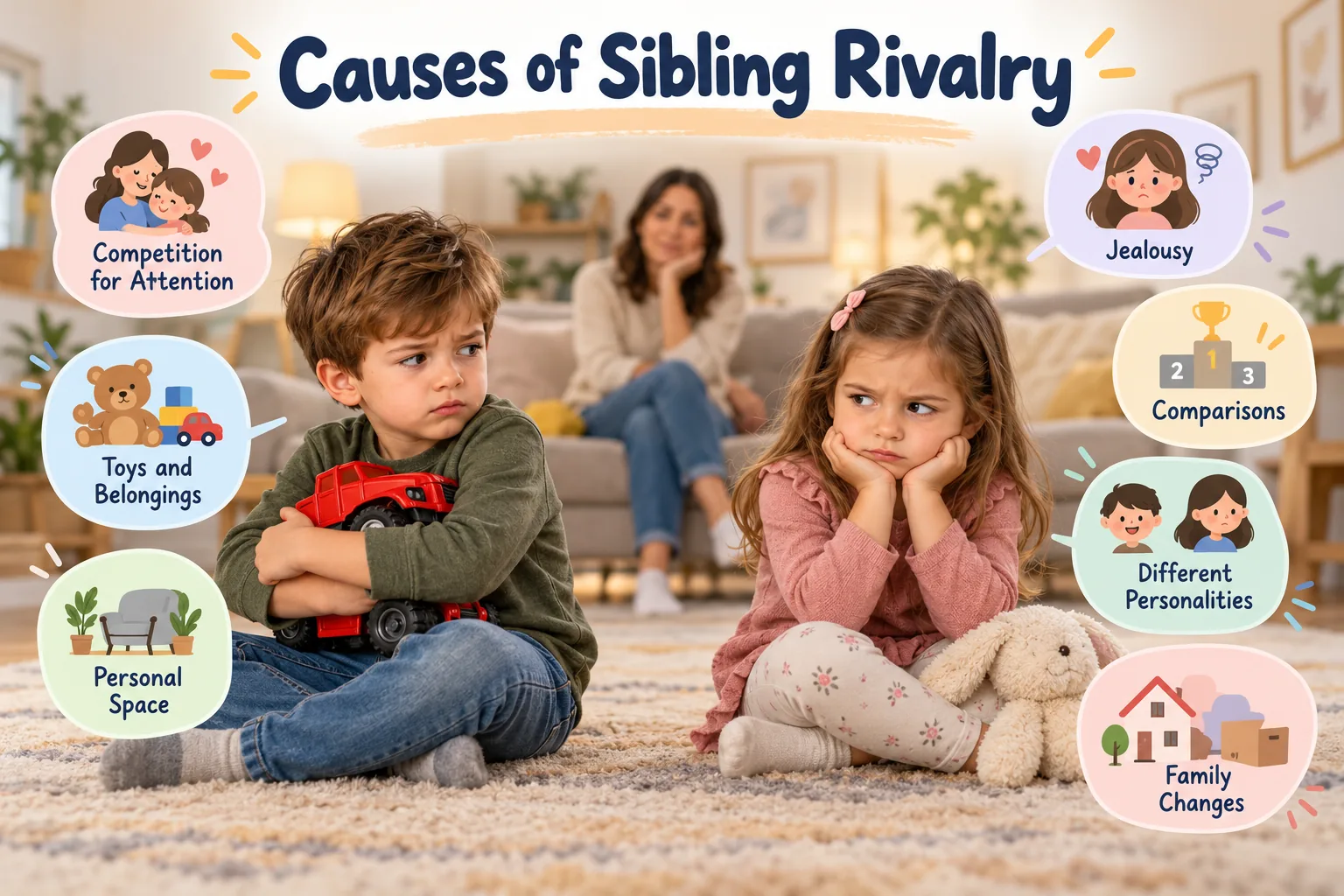
Why Do Siblings Fight So Much? Causes of Sibling Rivalry
Children can feel affection, jealousy and frustration toward the same sibling. Several developmental and family factors help explain why these feelings sometimes lead to repeated conflicts.
1. Young Children Are Still Learning to Manage Anger and Frustration
Your children may understand that hitting is wrong but still struggle to control themselves when they become angry.
Emotional regulation and impulse control develop gradually. Younger children, in particular, may react by shouting, pushing, grabbing or hitting before they can explain what upset them.
A child who becomes aggressive during an argument may still care deeply about their sibling. But affection doesn’t remove the need to teach safer responses or intervene when someone is being hurt.
2. Conflicts Over Toys, Space and Personal Boundaries
Your children may argue because they want the same belongings, disagree about games or struggle to respect each other’s personal space.
One child may want to play together while another wants time alone. Your children may also disagree about borrowing toys, entering bedrooms or interrupting activities.
These conflicts aren’t always caused by jealousy. Sometimes, your children simply have different needs and haven’t yet developed the skills to negotiate them.
When personal boundaries are repeatedly ignored, even small interruptions may begin triggering arguments.
3. Children Can Love Their Siblings and Still Feel Jealous
Your child may happily play with a sibling but become upset when that sibling receives more attention, praise or affection.
Jealousy can arise when children feel they must compete for something important to them, particularly parental attention.
They may start interrupting, demanding reassurance, complaining that you love the other child more or behaving aggressively toward a sibling.
This doesn’t automatically mean they dislike each other. A child can feel affectionate toward a sibling while also resenting the attention that sibling receives.
Research on sibling relationships recognises that warmth and conflict can coexist.
4. Parental Favouritism and Comparisons Can Increase Rivalry
Children notice when their siblings receive different treatment, even when parents believe they’re being fair.
Your child may feel that a sibling gets more affection, faces fewer consequences or receives more praise. Comments comparing their marks, behaviour or achievements can make that feeling stronger.
Research on parental differential treatment has found associations between differences in parental warmth or hostility and children’s emotional and behavioural difficulties.
These findings don’t mean every difference in parenting causes sibling rivalry. Children have different needs, and age-appropriate rules are not necessarily unfair.
However, repeatedly comparing siblings or treating one child as more capable, lovable or troublesome can contribute to resentment.
You can read more about how comparing children with others affects their confidence.
5. Differences in Age, Temperament and Maturity
Your children may have different personalities, interests and ways of interacting.
One may enjoy energetic play while another prefers quieter activities. One may become frustrated quickly, while another continues teasing or arguing.
Age differences can also create unequal expectations. A younger child may want to join activities that an older sibling considers private or unsuitable for them.
These differences don’t automatically indicate behavioural problems. But they may make it harder for siblings to enjoy the same activities or resolve disagreements independently.
Understanding each child’s temperament and developmental abilities can help you set more realistic expectations without labelling either child as the problem.
6. Changes at Home Can Increase Sibling Rivalry
The arrival of a new sibling can change how your children receive attention and spend time with you.
A child who previously had more individual attention may become clingy, demanding or resentful when family routines change.
Starting school, moving house, changes in caregiving arrangements or a stressful period at home may also affect how children interact.
Not every family change leads to sibling rivalry. However, some children find it difficult to adjust when their routines, relationships or expectations change.
Notice whether fighting became more frequent after a particular change. Understanding that connection may help you support your children through the adjustment.
7. Repeated Conflicts Can Become a Family Pattern
Sometimes, the same arguments return because the underlying issue never gets resolved.
One child repeatedly takes belongings without permission. The other reacts angrily. You intervene, separate them and the argument ends, but the original boundary remains unclear.
The next disagreement follows a similar pattern.
Over time, children may begin expecting negative behaviour from each other. Minor incidents can then produce stronger reactions because of previous conflicts.
Family interaction research suggests that children’s behaviour and parental responses can influence one another over time.
Rather than focusing only on who started the latest argument, consider what repeatedly happens before, during and after the fight.
How to Stop Sibling Rivalry: What Actually Helps?
There is no fixed solution to sibling rivalry. What helps depends on your children’s ages, what they’re fighting about and how they respond to each other. Child psychologists recommend the following approaches.
1. Understand What’s Behind the Repeated Fighting
Notice whether your children fight over belongings, personal space, attention or feeling unfairly treated. If the same disagreement keeps returning, address the underlying issue rather than repeatedly punishing them for arguing.
2. Avoid Comparisons and Taking Sides Unfairly
Don’t label one child as difficult or expect the older sibling to compromise every time. Listen to both children, recognise their individual needs and respond to the behaviour rather than deciding who is always at fault.
3. Set Boundaries That Your Children Can Understand
Make it clear which belongings are personal, when children must ask permission and which behaviours are unacceptable. Younger children may need closer supervision and simple reminders, while older children can have more independence and privacy.
4. Help Your Children Learn to Resolve Disagreements
When they’re calm, help each child explain what upset them and listen to the other’s concerns. Encourage them to find a workable solution instead of immediately deciding everything for them. Research on parent-led mediation suggests this can improve children’s negotiation and conflict-resolution skills.
5. Encourage Positive Time Together Without Forcing It
Notice when your children cooperate, help or respect each other’s boundaries. Encourage activities they both enjoy, but allow them separate interests and time alone. Don’t force hugs or apologies just to end an argument.
6. Take Aggression Seriously, Even Between Loving Siblings
Intervene when your children hit, threaten or frighten each other. Make sure everyone is safe before discussing what happened. Repeated intimidation, injuries or one child becoming afraid of another require closer attention and may need professional assessment.
Constant fighting can also be exhausting for parents. If you’re regularly losing your patience or feeling overwhelmed, parenting counselling may help you understand recurring patterns and develop responses suited to your family.
Can a Psychologist Help With Sibling Rivalry and Jealousy?
Yes. Psychological counselling may help when sibling conflict becomes persistent, jealousy causes significant distress or aggressive behaviour affects family life. A psychologist can assess the concerns and recommend support appropriate to your children’s needs.
When Should Parents Seek Sibling Rivalry Counselling?
Consider professional support if your children continue fighting despite consistent efforts at home, one child repeatedly hurts or frightens another, or sibling conflict is affecting daily family life.
Counselling may also be useful when a child becomes withdrawn, avoids their sibling or shows changes in sleep, school behaviour or emotional well-being.
You can seek guidance for your own difficulties managing sibling conflict, particularly when repeated arguments are creating substantial parenting stress.
Occasional jealousy and disagreements don’t automatically require therapy. A psychologist can help determine whether additional intervention is needed.
What Does a Child Psychologist Assess?
A psychologist looks beyond the latest argument to understand the wider family situation.
Depending on the concerns, an assessment may explore:
- Your children’s ages, developmental abilities and emotional regulation.
- How frequently they fight and what triggers the conflicts.
- Jealousy, perceived favouritism and sibling relationship patterns.
- Whether either child is experiencing emotional or behavioural difficulties.
- How parents and caregivers respond to disagreements.
- Any concerns involving aggression, intimidation or safety.
The findings help determine whether support should focus on parenting strategies, an individual child, family relationships or protective measures.
Do Both Siblings Need Therapy Together?
Not necessarily.
Parents may begin with a consultation to discuss the children’s behaviour, family routines and current responses.
Some situations benefit from parent-focused counselling. Others may require an individual psychological assessment or therapy for one child.
Joint or family sessions may be considered when appropriate and safe. If one sibling repeatedly intimidates or harms another, separate assessment and protection may be needed before considering joint work.
Can Parents Get Online Counselling for Sibling Rivalry?
Yes. Online counselling can help parents discuss sibling conflict with a psychologist and receive guidance suited to their children’s developmental needs and family circumstances.
At LeapHope, online parenting counselling can help parents address discipline, family interactions and boundaries.
For persistent aggression or behavioural difficulties, child behaviour counselling may be appropriate.
Parents seeking a broader psychological assessment can also consult an online child psychologist in India.
The recommended approach depends on your children’s needs, the severity of the conflict and whether there are any safety concerns. Serious aggression or abuse may require in-person or local specialist services.
Let’s Recap
Your children can love each other and still become jealous, frustrated or angry. Sibling conflict may begin early because emotional regulation, communication and other social skills are still developing.
Differences in temperament, perceived unfairness, changes at home and recurring conflict patterns can also influence how siblings get along.
You can help by protecting each child’s boundaries, identifying triggers, teaching conflict-resolution skills and encouraging positive interactions without forcing affection.
If fighting involves repeated aggression, intimidation or significant emotional distress, professional assessment can help determine what support is appropriate.
Resources and Research
- Buist, K. L., et al. (2013). Sibling Relationship Quality and Psychopathology of Children and Adolescents: A Meta-Analysis. Clinical Psychology Review.
- Eradus, M., et al. (2024). Parental Differential Warmth, Hostility, and Sibling Differences in Internalizing and Externalizing Behavior Problems: A Meta-Analysis. Journal of Family Psychology.
- Pickering, J. A., et al. (2023). A Randomized Controlled Trial of a Parenting Program to Improve Sibling Relationships. Journal of Child and Family Studies.
- Tucker, C. J., Whitworth, T. R., & Finkelhor, D. (2023). Disentangling Sibling Rivalry from Aggression and Abuse. University of New Hampshire.
- Parenting Programs to Improve Sibling Interactions: A Meta-Analysis (2021).