
Last Updated on October 21, 2026
Clinical Reviewer: Amritha H., Counselling Psychologist
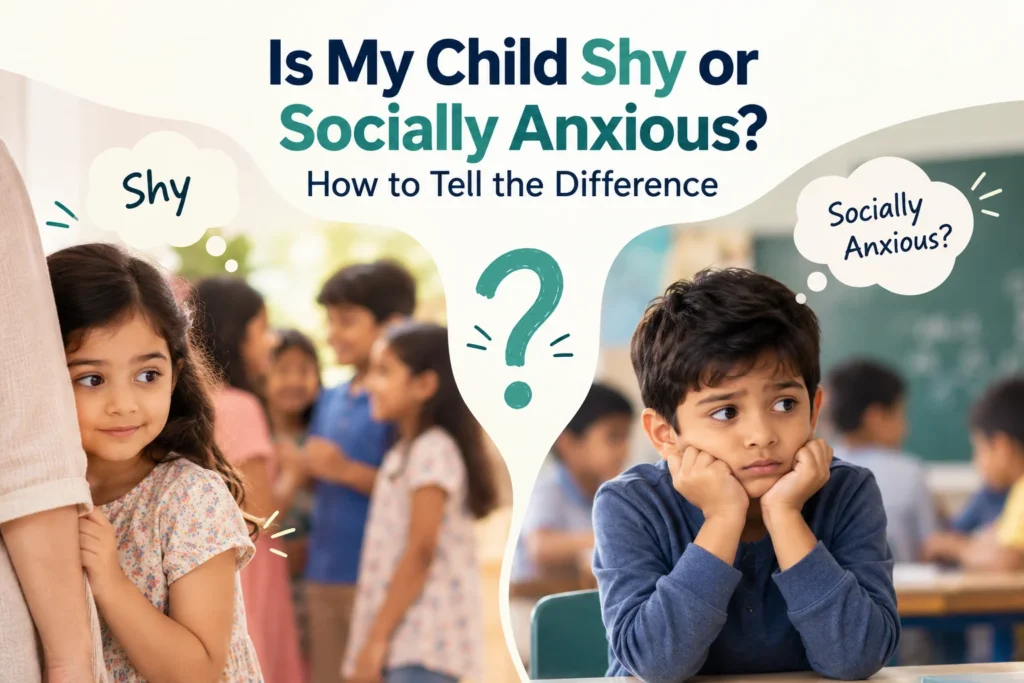
Your child talks freely at home. They laugh with their siblings, tell you stories about school and have plenty to say at the dinner table. But when they meet unfamiliar children, they suddenly become quiet. At birthday parties, they stay beside you. In class, they rarely raise their hand, even when they know the answer.
You may wonder whether your child is naturally shy or struggling with social anxiety.
First, being shy doesn’t mean anything is wrong with your child. Some children take longer to feel comfortable around people, and their confidence in social situations may grow as they get older. Even when a child experiences social anxiety, things can improve with appropriate support.
The important question is whether your child is comfortable being quiet or whether fear is preventing them from participating in experiences they would otherwise enjoy.
Shyness vs Social Anxiety in Children: Key Differences
| What parents notice | Shyness in children | Possible social anxiety in children |
|---|---|---|
| Meeting unfamiliar children | May stay quiet initially and gradually become comfortable. | May strongly fear being judged, embarrassed or rejected. |
| Speaking in class | May prefer listening rather than volunteering answers. | May avoid speaking because they fear getting something wrong or being laughed at. |
| Making friends | May take longer to approach someone new or prefer a few close friends. | May want friendships but feel too frightened to start conversations. |
| Joining activities | May watch for a while before participating. | May avoid activities they want to join or participate despite considerable anxiety. |
| Being the centre of attention | May feel uncomfortable when everyone looks at them. | May experience marked fear of making a mistake or appearing foolish. |
| Becoming familiar with people | May relax as they get to know others. | May continue fearing negative evaluation in certain situations, even around familiar people. |
| Effect on daily life | Many shy children manage school, friendships and activities well, although some experience difficulties. | Fear may interfere with learning, relationships or activities that matter to them. |
Important: These are possible patterns, not a diagnostic test. Shyness and social anxiety can overlap, and a child who appears confident in one setting may experience anxiety in another.
How Can You Tell if Your Child Is Shy or Socially Anxious?
Consider what happens before, during and after situations your child finds uncomfortable. Their behaviour matters, but what they are thinking and feeling can tell you much more.
Your Child Wants to Play but Won’t Approach Other Children
You take your seven-year-old to a birthday party. They stand beside you, watching the other children play. After a few minutes, they recognise someone from school and join the group.
They may simply need time to settle in.
But suppose your child has been excited about the party all week. Once you arrive, they refuse to leave your side. On the way home, they become upset because they didn’t get to play.
When you ask what happened, they say, “I thought nobody would want me there.”
Now you know something you couldn’t have learned just by watching them. They wanted to play, but they were worried about being rejected.
Your Child Knows the Answer but Is Afraid to Speak in Class
Your child comes home with unfinished work because they didn’t understand part of the lesson.
You ask why they didn’t ask their teacher.
“Everyone would have looked at me,” they say.
Some children simply prefer listening in class. Here, however, fear of attracting attention has prevented your child from getting help.
If this happens regularly, it can affect their learning. They may become increasingly reluctant to ask questions, answer aloud or participate in classroom discussions.
Your Child Starts Worrying Days Before a Social Event
Your child has a school presentation on Friday. By Monday, they’re already asking whether they can stay home.
They worry about forgetting their words, their voice shaking or classmates laughing.
Feeling nervous before speaking in public is understandable. But if your child spends days worrying, struggles to sleep or feels physically unwell before such events, the anxiety may be affecting them well beyond the event itself.
Pay attention to how much the worry disrupts their normal routine.
Your Child Is Comfortable With Friends but Frightened of Being Watched
Your child happily plays with two close friends and enjoys family gatherings. Yet they become extremely uncomfortable when asked to read aloud or perform in front of classmates.
This can be confusing because they don’t seem particularly shy at other times.
Social anxiety can affect particular situations involving attention or possible judgement. A child doesn’t have to fear every social interaction to experience it.

Can a Child Have Social Anxiety Without Parents Noticing?
Yes. Some children continue attending school and participating in activities while experiencing considerable anxiety.
Your child might complete a classroom presentation successfully, then spend the evening asking whether they sounded foolish or whether their classmates were laughing at them.
Others worry intensely beforehand but manage to participate when the moment arrives.
If you’re uncertain how your child experiences these situations, talk when they’re relaxed.
You could ask, “How did you feel when the teacher asked you to speak?”
If they say it was difficult, follow with, “What was the hardest part?”
Avoid suggesting the answer. Asking, “Were you scared everyone would laugh?” might introduce a concern your child hadn’t expressed.
Give them time. Some children find it difficult to explain their feelings immediately.
When Should Parents Be Concerned About Shyness?
You don’t need to worry simply because your child is quiet, prefers small groups or takes longer than other children to make friends.
Pay closer attention when social fear starts affecting their daily life.
For example, your child may:
- Repeatedly miss activities they were looking forward to because they feel frightened.
- Avoid asking teachers for help, affecting their schoolwork.
- Want friendships but become very distressed when opportunities to interact arise.
- Experience recurring stomachaches, nausea or trembling around feared social situations.
- Lose sleep worrying about speaking in class or attending social events.
- Continue struggling with similar fears over time, including in familiar settings.
If you’re also noticing anxiety in other areas of their life, LeapHope’s guide to the signs of anxiety in children explains broader patterns parents may observe.
Could Something Else Be Making Your Child Withdraw?
Before assuming social anxiety, consider what’s happening around your child.
A child who has been bullied may feel uncomfortable approaching certain classmates. A child learning in an unfamiliar language may avoid speaking because they struggle to find the words.
Speech and language difficulties, developmental differences and stressful experiences can also affect social participation. These concerns sometimes coexist with anxiety.
If your child speaks comfortably at home but consistently cannot speak in certain settings, such as school, an assessment may need to consider selective mutism or communication-related difficulties.
Understanding the reason matters because different difficulties may require different kinds of support.
Does Social Anxiety Have to Last Six Months?
For a formal diagnosis of social anxiety disorder, diagnostic criteria generally require symptoms to persist for at least six months, alongside other requirements.
A clinician also considers your child’s age, developmental stage, circumstances and whether the fear occurs with peers, rather than only with adults.
But six months is not a waiting period before seeking help. If your child is already experiencing significant distress or difficulties at school, you can ask for professional advice earlier.
How Can Parents Help a Shy or Socially Anxious Child?
You don’t need to make your child more outgoing. Start by understanding what makes social situations difficult for them.
Find out what they’re worried about. If your child refuses to join other children, ask what makes it difficult. “I don’t know anyone” is different from “They’ll laugh at me.” Listening first helps you understand whether they need familiarity, reassurance or support with anxiety.
Help them take a smaller first step. If they want to join a group but feel overwhelmed, they could begin by talking to one familiar classmate. Agree on something manageable together, and recognise their effort rather than expecting immediate confidence.
Don’t force them to speak for other people’s comfort. Your child doesn’t have to greet every relative on demand or perform in front of visitors. Avoid calling them “the shy one” or embarrassing them for staying quiet. At the same time, try not to make avoidance the automatic solution to every situation they find difficult.
Work with their teacher when school is affected. If your child struggles to answer questions or ask for help, find out whether they’re more comfortable speaking individually or in smaller groups. This can help you and their teacher identify appropriate ways to support participation.
If anxiety is severe, gradual steps towards feared situations are best planned with a qualified professional rather than forcing your child to face them.
When Should You Consult a Child Psychologist?
A child psychologist can help establish whether your child’s difficulties reflect shyness, social anxiety or another concern. An assessment considers their experiences, development, school environment and the effect on everyday life.
For children diagnosed with social anxiety disorder, cognitive behavioural therapy (CBT) focused on social anxiety is an evidence-based treatment. With appropriate support, many children make meaningful progress.
LeapHope offers online child anxiety counselling and parenting counselling. Families can also explore child counselling services in India, the USA, the UK, Canada, Australia, the UAE and Singapore, subject to therapist availability and applicable professional requirements.
Your Child Can Be Quiet and Still Be Confident
A confident child doesn’t have to enjoy public speaking, make friends with everyone or be the first to join a group.
Your child may always prefer quieter settings and a few close friendships. That’s perfectly compatible with healthy emotional development.
And if anxiety is making certain experiences difficult, they can learn to manage that fear without having to change who they are.
Resources and Research
- National Institute of Mental Health (NIMH). Social Anxiety Disorder: What You Need to Know. Read the clinical overview.
- National Institute for Health and Care Excellence (NICE). Social Anxiety Disorder: Recognition, Assessment and Treatment. Clinical guideline CG159, particularly recommendations on assessment and CBT for children and young people.
- Burstein, M., Ameli-Grillon, L., & Merikangas, K. R. (2011). Shyness versus social phobia in US youth. Pediatrics, 128(5), 917–925.
- American Psychiatric Association. (2022). Diagnostic and Statistical Manual of Mental Disorders, Fifth Edition, Text Revision (DSM-5-TR). Diagnostic criteria for social anxiety disorder.


