Why do Indian and NRI couples in Singapore seek marriage counselling?
Many couples move to Singapore to build successful careers and create a better future for their families. However, demanding work schedules, parenting responsibilities, financial pressures, relocation stress, limited family support, and the fast pace of life can gradually affect emotional connection within a marriage. Couples often seek counselling when communication has broken down, conflicts keep repeating, intimacy has declined, trust has been damaged, or they feel more like roommates than partners. Marriage counselling provides a structured environment to understand these challenges and work towards meaningful change.
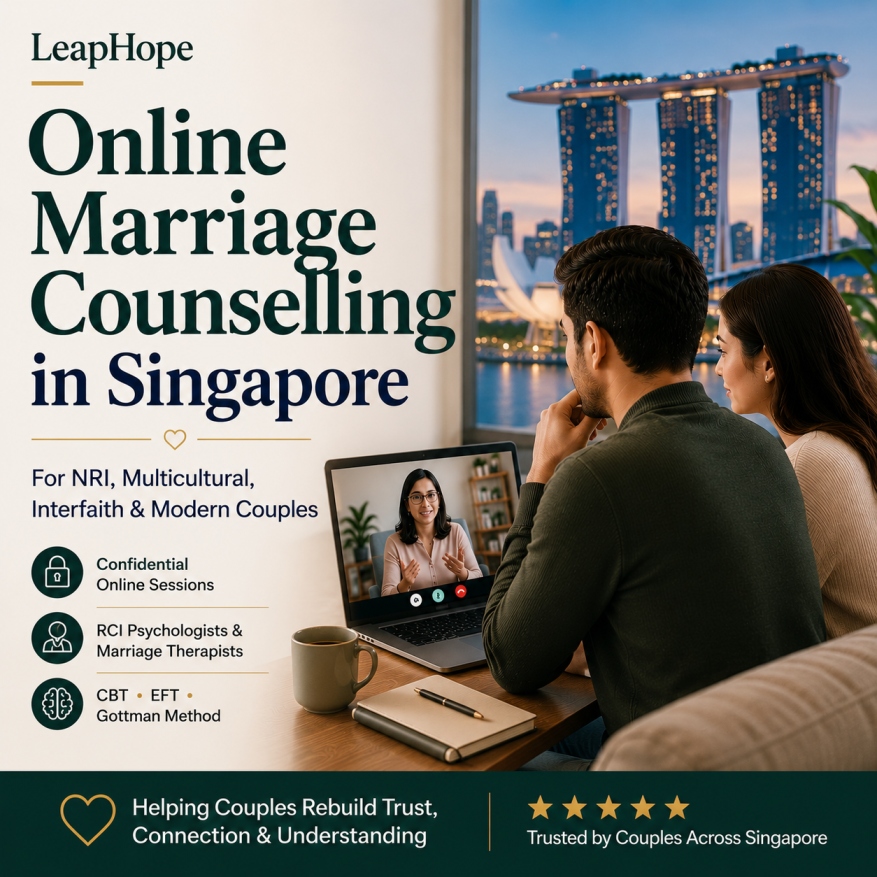
Can online marriage counselling be as effective as in-person counselling?
Research suggests that online couples therapy can be highly effective for many relationship concerns when delivered by qualified professionals. Online counselling offers the same therapeutic principles, interventions, and evidence-based approaches used in traditional face-to-face therapy while providing greater convenience and accessibility. Many couples find it easier to attend sessions consistently when they can join from home, particularly in busy cities such as Singapore where work schedules and commuting can make regular appointments difficult.
What is the difference between marriage counselling and couples therapy?
The terms are often used interchangeably. Generally, marriage counselling focuses on helping married couples improve communication, resolve conflicts, rebuild trust, and strengthen their relationship. Couples therapy may also include unmarried, engaged, long-term, intercultural, or same-sex couples. Both approaches aim to improve relationship functioning, emotional connection, understanding, and overall relationship satisfaction.
Can marriage counselling help save a marriage that feels beyond repair?
Many couples begin counselling when they feel hopeless, emotionally exhausted, or uncertain about the future of their relationship. While no ethical therapist can guarantee a specific outcome, counselling can help couples understand the underlying causes of their difficulties, improve communication, address unresolved resentment, rebuild trust where possible, and gain greater clarity about the future. Some couples repair and strengthen their relationship, while others use counselling to make thoughtful decisions about their next steps.
Can marriage counselling help after infidelity or broken trust?
Yes. Infidelity, secrecy, emotional affairs, hidden communication, and breaches of trust are among the most common reasons couples seek therapy. Rebuilding trust is rarely a quick process. It often involves understanding what happened, addressing emotional injuries, rebuilding transparency, developing accountability, and creating new patterns of communication. With commitment from both partners, many couples are able to rebuild trust and create a stronger relationship than they had before.
How many marriage counselling sessions do most couples need?
There is no universal number of sessions because every relationship is different. Some couples benefit from short-term counselling focused on a specific challenge, while others prefer longer-term work to address deeper relationship patterns. Factors such as the complexity of the issues, the length of time problems have existed, motivation for change, trust levels, and consistency of attendance all influence the counselling process. Most couples begin with a few sessions and then review progress with their therapist.
Do both partners need to attend marriage counselling sessions?
Couples counselling is generally most effective when both partners participate. However, it is not uncommon for one partner to be more motivated than the other initially. Individual sessions can still provide valuable insight into relationship patterns, communication habits, emotional triggers, and personal contributions to recurring conflicts. In many cases, one partner starting therapy encourages the other to become involved later.
How much does online marriage counselling cost in Singapore?
Marriage counselling fees in Singapore often range from SGD 180–350+ per session at private clinics. LeapHope offers a more affordable option, with sessions typically starting from approximately SGD 70–90 (₹4,500–₹6,000), depending on the therapist's experience and qualifications. Fees for each therapist are displayed before booking.
Can counselling help with modern relationship challenges such as social media, digital boundaries, and emotional affairs?
Absolutely. Modern relationships face challenges that previous generations rarely encountered. Social media boundaries, excessive phone use, emotional affairs, workplace relationships, digital privacy concerns, pornography use, influencer culture, micro-cheating, online friendships, and changing expectations around commitment can all create tension within a relationship. Therapy helps couples establish healthy boundaries, improve trust, and navigate these issues in a constructive way.
Why do the same arguments keep happening in our relationship?
Recurring arguments are often symptoms of deeper emotional needs rather than the surface issue being discussed. A conflict about finances, parenting, intimacy, family expectations, or household responsibilities may actually reflect unmet needs for appreciation, security, trust, autonomy, validation, or emotional connection. Marriage counselling helps couples identify these underlying patterns and develop healthier ways of communicating and responding to one another.
Can we attend counselling if one partner travels frequently or lives in another country?
Yes. Online marriage counselling can be particularly helpful for couples who travel regularly, maintain long-distance relationships, or live in different countries due to work commitments. Virtual sessions make it possible for both partners to participate from different locations while still receiving consistent professional support.
How do I choose the right marriage therapist in Singapore?
When choosing a marriage therapist, it is helpful to consider qualifications, experience working with couples, therapeutic approaches, cultural understanding, communication style, and whether both partners feel comfortable with the therapist. A strong therapeutic relationship is one of the most important factors influencing successful outcomes. Couples should look for professionals who combine evidence-based methods with an approach that feels supportive, balanced, and relevant to their specific concerns.