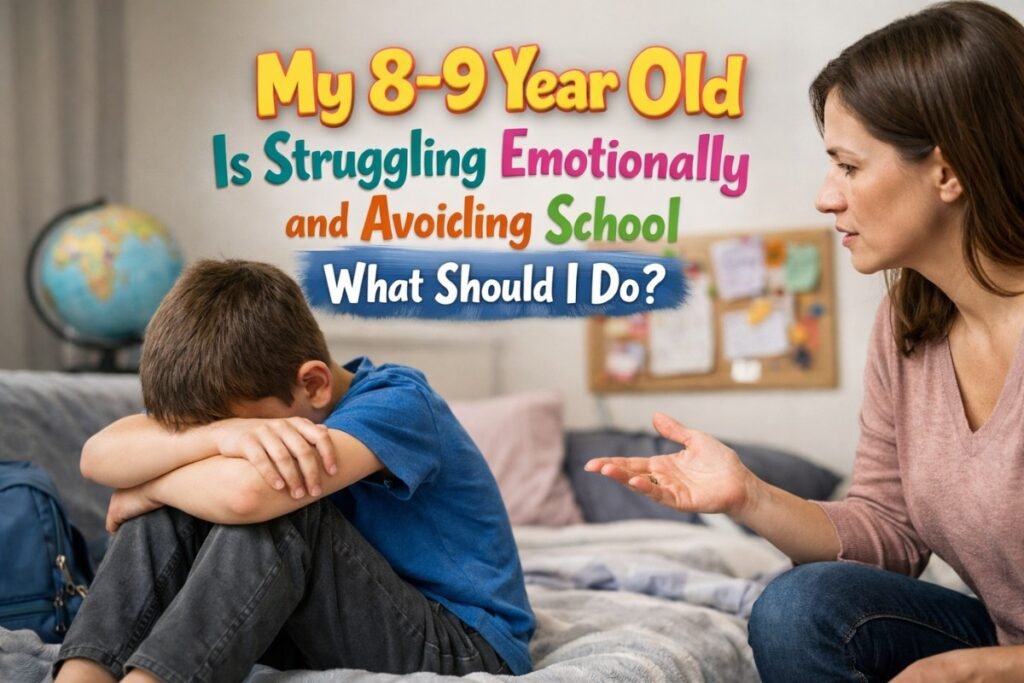
Your 8-year-old begins to hesitate in the morning, takes longer to get ready, or says things like “I can’t do this.” Your 9-year-old may not say much, but comes home quieter, more irritable, or avoids talking about school.
Nothing big has happened. No clear problem. But your child is not the same at school anymore.
At this age, children start thinking more about themselves, what they are good at, where they fall short, and how others see them. An 8-year-old begins to compare. A 9-year-old starts to take those comparisons seriously.
So when something feels difficult, it doesn’t come out clearly. It shows up in behaviour, avoiding school, snapping at small things, or losing confidence.
This is not about unwillingness. It’s about something starting to feel harder than your child knows how to handle right now.
What You’re Seeing in Your 8-Year-Old or 9-Year-Old
At this age, the change is usually gradual.
Your 8-year-old may start delaying school in small ways, taking longer to get ready, saying they don’t feel like going, or complaining of feeling unwell just before leaving. Your 9-year-old may not say much directly, but avoids the topic, gives short answers, or changes the subject when school comes up.
You may begin hearing more self-critical statements:
- “I’m not good at this.”
- “Others do it better.”
- “I’ll get it wrong.”
This is where the shift becomes important. An 8-year-old starts noticing differences. A 9-year-old starts judging themselves based on those differences.
After school, behaviour may change. Your 8-year-old or 9-year-old might:
- get irritated over small things
- react more quickly than before
- Withdraw instead of talking
- avoid anything related to school
In class-related situations, hesitation becomes visible. Your child may stop volunteering answers, avoid participating, or stay quiet even when they understand the work. An 8-year-old may hesitate openly. A 9-year-old may pull back without explaining why.
These patterns often sit together: avoidance, self-doubt, mood changes, and reduced participation. They are connected, not separate issues.
Why Low Self-Esteem and Negative Self-Talk Increase at Age 8 and 9
At this age, children start comparing themselves more clearly.
A 8-year-old notices who finishes work faster, who answers first, and who gets noticed in class. A 9-year-old takes this further and begins to measure themselves against it.
This is where self-talk changes.
A 8-year-old may say, “I’m not good at this.”
A 9-year-old may say, “Others are better than me” or “I always get it wrong.”
These statements usually repeat, especially around schoolwork, class participation, or anything they feel unsure about.
At this stage, feedback and small classroom experiences start carrying more weight. A correction, being slower than others, or not answering in class, can stay with them longer than before.
A 8-year-old or 9-year-old may still continue with school, but becomes more careful, avoids trying new things, or hesitates before responding.
This is where low confidence begins to build, not through one big event, but through repeated small experiences that the child starts interpreting in a certain way.
At this stage, children begin interpreting things more personally. If you want to explore this further, you may also read about how children understand emotions by age, which explains how a 8-year-old and 9-year-old process feedback and comparison differently.
How Mood Swings and Snapping Signal Emotional Overload
At this age, the pressure your 8-year-old or 9-year-old feels during the day does not always come out immediately.
They manage it in school, following instructions, keeping up, and handling social situations. By the time they are home, that effort shows up differently.
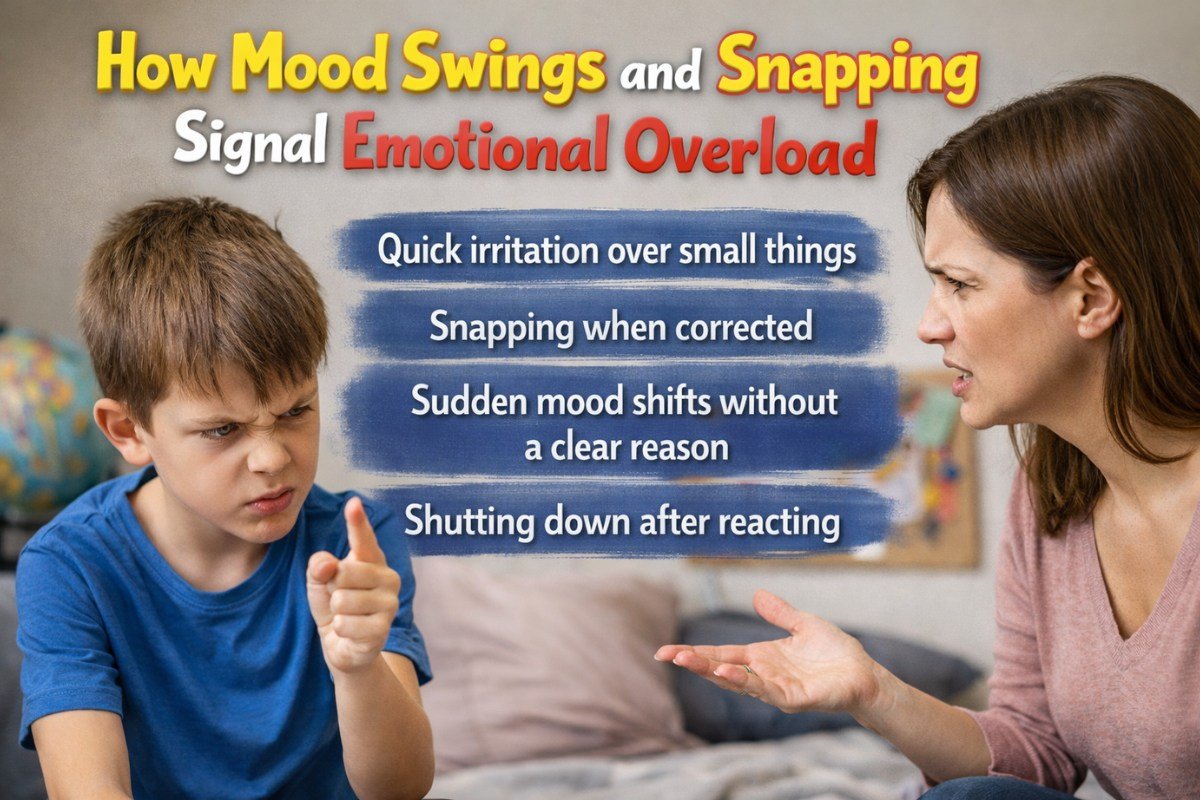
You may notice:
- quick irritation over small things
- snapping when corrected
- sudden mood shifts without a clear reason
- shutting down after reacting
A 8-year-old may react quickly and then move on.
A 9-year-old may hold it in longer, then respond more sharply or withdraw.
These reactions are usually not about the moment itself. They are linked to what has built up earlier, difficulty in class, comparison, or feeling unsure during the day.
The reaction may seem disproportionate, but for your 8-year-old or 9-year-old, it is connected to something that already felt difficult.
These reactions are not random. They often reflect what your child is not able to express directly. If you want to understand this better, you may also read why children express emotions through behaviour.
Why School Avoidance Develops, Especially After Changes Like Moving
School avoidance at this age usually builds slowly.
A 8-year-old may start with small resistance, delaying getting ready, saying they don’t feel like going, or asking to stay home occasionally. A 9-year-old may not refuse directly, but begins avoiding conversations about school or finding reasons to miss certain days.
This behaviour is often linked to something that feels uncomfortable but not easy to explain.
Common triggers include:
- difficulty keeping up with schoolwork
- fear of getting answers wrong in class
- changes like moving to a new school or environment
- not feeling settled socially
A 8-year-old may express this more openly through complaints or reluctance.
A 9-year-old is more likely to internalise it and avoid situations quietly.
After a change like relocation or a new school, the pressure increases. Your 8-year-old or 9-year-old has to adjust to new routines, new expectations, and new social groups at the same time. Even if everything looks fine from the outside, internally it can feel uncertain.
Sometimes, children express emotional discomfort physically. If your child often complains of stomach aches before school, you may also read about physical symptoms in children with emotional causes to understand this pattern more clearly.
How Social Hesitation and Fear of Participation Show Up in Class
At this stage, hesitation is often quiet.
A 8-year-old may start holding back in class, not raising their hand, waiting for others to answer first, or looking at others before responding. A 9-year-old may stop participating altogether, even when they know the answer.
This is usually linked to how they see themselves in front of others.
You may notice:
- avoiding answering questions in class
- hesitation before speaking
- staying silent even when they understand
- worrying about being wrong or noticed
A 8-year-old may still try but with visible hesitation.
A 9-year-old is more likely to withdraw and avoid attention.
At this age, being wrong in front of others starts to feel uncomfortable. It is not just about the answer, it is about how they think others will see them.
So instead of taking part, your 8-year-old or 9-year-old chooses to stay quiet. Over time, this reduces participation and confidence, even when ability is not the issue.
How to Support Your 8–9 Year Old Without Increasing Pressure
At this age, pushing your 8-year-old or 9-year-old to “try harder” usually makes things worse. What helps is reducing the pressure they are already feeling.
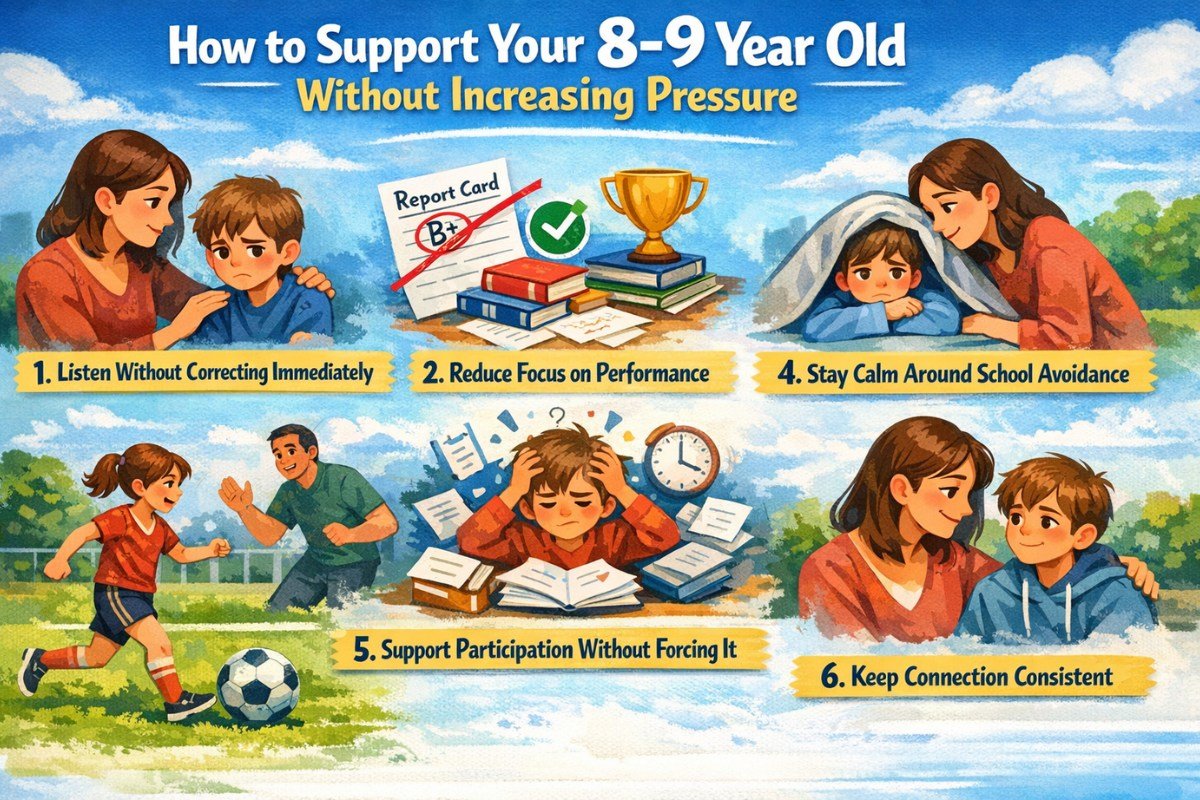
Listen Without Correcting Immediately
When your child says “I’m not good at this,” avoid jumping in with logic or correction. Let them finish, acknowledge it briefly, and stay with what they are feeling. This keeps the conversation open instead of shutting it down.
Reduce Focus on Performance
A 8-year-old or 9-year-old is already comparing themselves. Repeated focus on marks, speed, or outcomes adds to that. Shift attention to effort and progress, not comparison.
Break School Stress Into Smaller Parts
If school feels like one big problem, it becomes harder to manage. Narrow it down. Is it one subject, one activity, or one situation? When the load becomes specific, your 8-year-old or 9-year-old can handle it more easily.
Stay Calm Around School Avoidance
If your child resists school, reacting strongly increases the pressure. Stay steady. A calm response helps your 8-year-old or 9-year-old feel that the situation is manageable, not overwhelming.
Support Participation Without Forcing It
If your child is avoiding speaking in class, don’t push them suddenly into it. Build it gradually, small steps like answering one question or speaking in a smaller group. This reduces hesitation without increasing fear.
Keep Connection Consistent
Your 8-year-old or 9-year-old may not talk much about school, but still needs connection. Sitting together, being available, and listening without pressure helps them feel supported without needing to explain everything.
When to Worry and When It’s a Phase
Some changes at this age settle on their own. Others stay and begin to affect how your 8-year-old or 9-year-old functions day to day.
If the behaviour is occasional and linked to a specific situation, it usually eases once your child adjusts. A 8-year-old may have a few difficult days and then return to normal patterns. A 9-year-old may go quiet for a while and then re-engage once they feel more settled.
You should pay closer attention when the pattern becomes consistent.
For example, your 8-year-old or 9-year-old:
- avoids school regularly, not just on certain days
- repeats negative self-talk across different situations
- shows mood changes that continue daily
- withdraws from activities they previously enjoyed
- avoids participation over time, not just occasionally
The difference is not in the behaviour itself, but in how long it stays and how much it spreads.
A phase shifts. It changes with time or situation.
A concern stays steady and starts affecting confidence, participation, and routine.
It can be difficult to decide when a pattern needs more attention. If you want more clarity, you may also read when to be concerned about a child’s emotional health.
When Should You Seek Professional Support?
If these patterns continue without change, it may need more than home support.
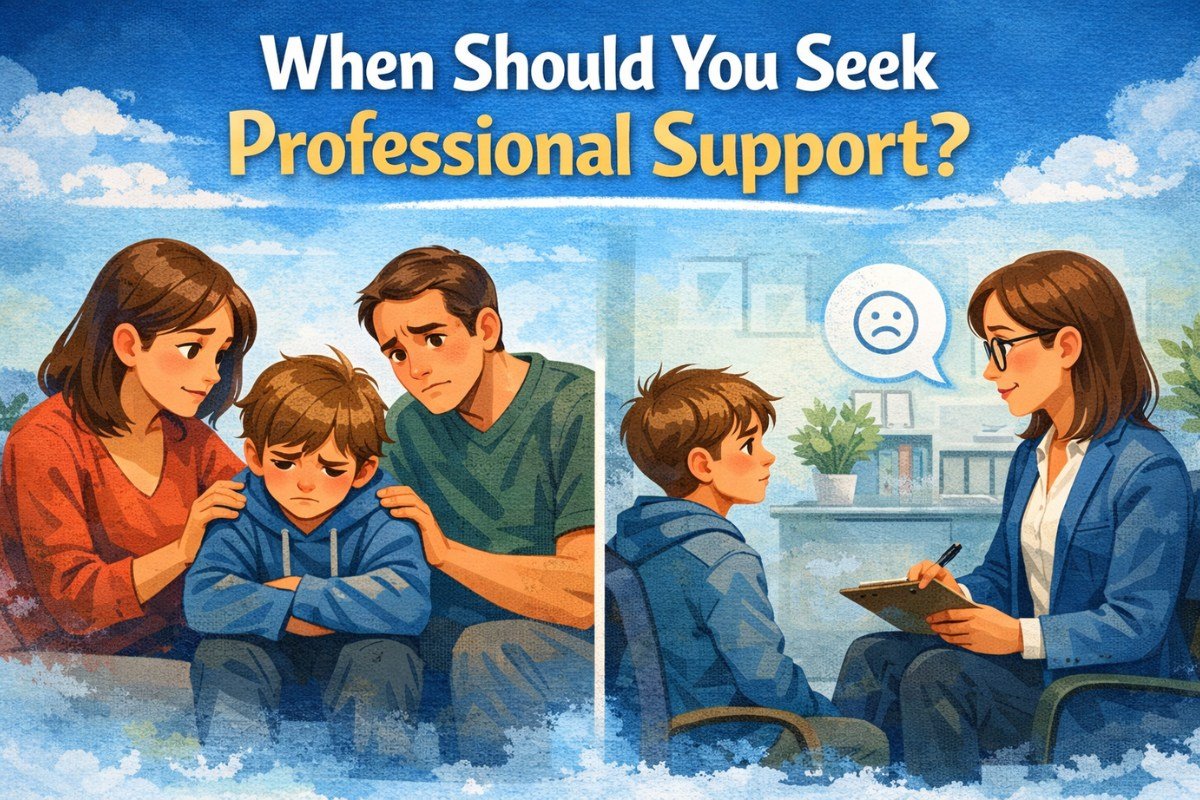
You should consider professional help if your 8-year-old or 9-year-old:
- regularly avoids school or shows strong resistance
- repeats negative self-talk across different situations
- shows daily mood changes that do not settle
- withdraws from class participation or social interaction
- loses interest in activities they were previously comfortable with
Also look at the duration. If this continues for several weeks and there is no improvement, it is less likely to settle on its own.
At this stage, support is not about labelling your child. It is about understanding what is making school feel difficult and helping your 8-year-old or 9-year-old handle it more comfortably.
If your child continues to struggle, you may consider online child and teen counselling, where emotional patterns can be understood and supported in a structured way.
Final Thought
What you’re seeing in your 8-year-old or 9-year-old is not sudden or random. It builds gradually, comparison, pressure, and self-doubt start to come together at this stage.
A 8-year-old begins noticing where they stand. A 9-year-old starts taking it personally.
That is why the change shows up in different ways, avoiding school, hesitating in class, reacting more, or becoming quieter than before.
This does not mean your child is not coping. It means something currently feels harder than they can manage comfortably.
When your response stays steady, less pressure, more understanding, your 8-year-old or 9-year-old slowly becomes more willing to engage again. As that internal pressure reduces, participation and confidence begin to return.
FAQs
Why is my 8-year-old avoiding school?
A 8-year-old may avoid school due to difficulty keeping up, fear of getting things wrong, or discomfort in class situations. It often shows through hesitation or excuses rather than clear explanation.
Why does my 9-year-old have negative self-talk?
A 9-year-old becomes more aware of comparison and performance. This can lead to repeated thoughts like “I’m not good enough” or “others are better.”
Is moodiness normal at age 8–9?
Some mood changes are common, but frequent irritation, snapping, or withdrawal may indicate emotional overload in a 8-year-old or 9-year-old.
Why does my child avoid participating in class?
A 8-year-old or 9-year-old may avoid participation due to fear of being wrong, being noticed, or feeling less confident than others.
When should I worry about my child’s emotional struggles?
You should be concerned if your 8-year-old or 9-year-old shows consistent school avoidance, low confidence, and ongoing emotional changes that do not improve over time.