In counselling, we often hear people say, “I cheated on my partner, but I still love them.” This can be a husband, wife, boyfriend, girlfriend, or fiancé who still cares deeply and cannot imagine life without their partner. What confuses them most is how they could do this while their feelings are still strong.
People have many different reactions afterward. Some feel guilty or worried. Others feel numb, calm, or simply confused. Some blame the situation, while others wonder if something is wrong with them. Most are trying to understand their own thoughts, feelings, and behaviour.
If you feel this way, you are probably not looking for excuses. You want clarity about yourself. Cheating does not always mean you stopped loving your partner, but it often means something important was going on inside you at that time.
In this article, we explain the real psychological reasons people sometimes cheat on someone they love, so you can better understand your inner world and reduce the chances of repeating the same pattern.
Can You Love Someone and Still Cheat?
Yes, you can love someone and still cheat.
After it happens, many people start doubting their feelings. They wonder if they truly love their partner or if they are just used to them, afraid to be alone, or staying out of habit. This confusion is very common when your actions don’t match how you feel.
Love is a feeling of care and attachment. Fidelity is a behaviour, something you choose. In real life, feelings and actions don’t always line up. A person can still care deeply, want the relationship, and not want to leave, yet still make a decision that goes against it.
If you are asking this question, it doesn’t automatically mean your love is fake. It usually means your feelings and behaviour were out of sync, and understanding why matters more than judging yourself.
Why People Cheat on Someone They Love – 12 Real Reasons
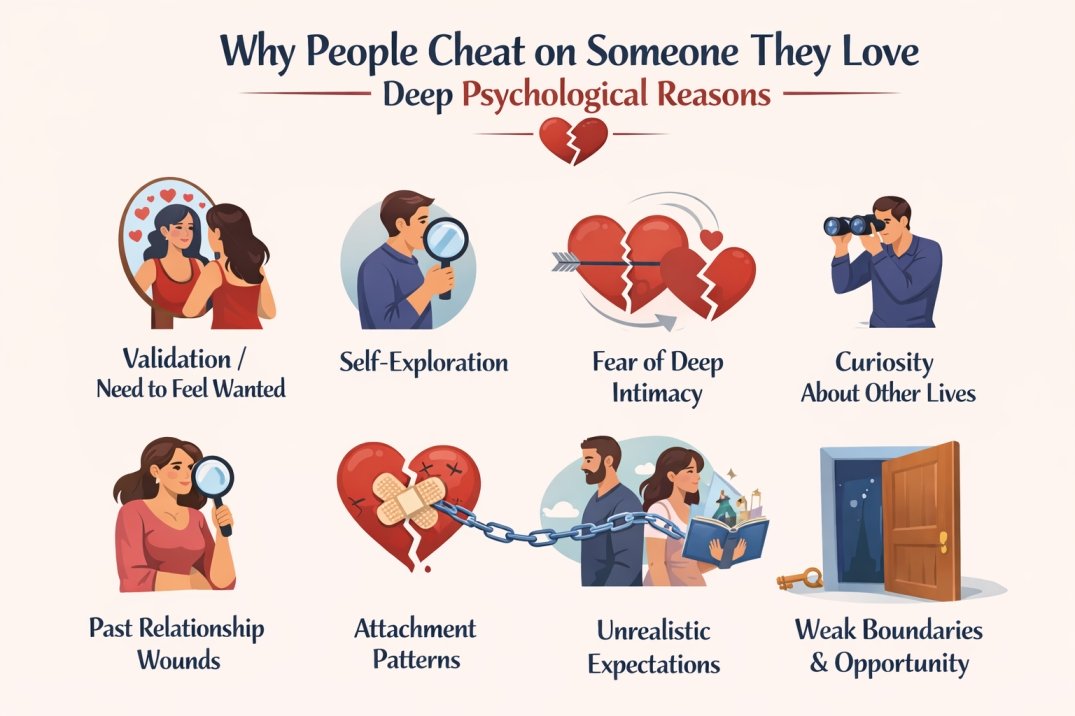
Most people don’t cheat for just one single reason. It usually happens when a few things come together at the same time, unmet needs, inner struggles, weak boundaries, or emotional vulnerability. Understanding which of these applied to you can help you make sense of what happened instead of seeing it as something random or “out of character.”
You Needed Validation or Reassurance
Some people cheat because of deep insecurity and low self-worth. Even in a caring relationship, they may quietly feel inadequate or not “good enough.” Attention from someone new can temporarily boost confidence and ease these painful feelings.
Psychologically, this may involve:
- A fragile self-image that needs reassurance
- Strong dependence on external validation
- Fear of rejection or comparison
- Doubts about attractiveness, success, or value
When someone else shows a strong interest, it can feel like proof that they still matter. In that moment, the pull is less about the new person and more about relief from self-doubt.
You Felt Emotionally Lonely, Even in the Relationship
Love can still be present, but the emotional connection may feel weak, distant, or absent. Over time, this can create a quiet sense of loneliness, even while sharing a life together. You may feel like you are functioning as a team on the surface but not truly known or understood inside.
Psychologically, this may involve:
- Feeling unseen, unheard, or emotionally disconnected
- Difficulty expressing deeper thoughts, needs, or vulnerabilities
- A sense of emptiness despite physical closeness
- Unresolved hurt or unmet emotional needs
This kind of loneliness can build slowly and become hard to ignore, leading to a strong desire to feel emotionally alive, understood, or connected again.
You Craved Novelty, Excitement, or Intensity
Long-term relationships often become stable, predictable, and calm. While this creates safety, it can also reduce the sense of excitement, anticipation, or emotional intensity that exists in the early stages of attraction. Some people begin to feel flat, restless, or under-stimulated without fully understanding why.
Psychologically, this may involve:
- A strong need for stimulation or new experiences
- Reduced dopamine response to routine and familiarity
- Feeling bored, stuck, or emotionally dulled
- Missing the “high” of early attraction and uncertainty
The pull is not necessarily about wanting a different partner, but about wanting to feel energized, alive, or deeply engaged again.
You Struggle With Deep Vulnerability or Intimacy
Closeness can feel exposing or risky. Deep emotional and physical intimacy requires being fully seen, including insecurities, needs, and limitations. For some people, this level of openness feels uncomfortable or overwhelming, even when love is present.
Psychologically, this may involve:
- Fear of judgment or rejection
- Discomfort with emotional dependence
- Difficulty expressing sensitive needs or problems
- A tendency to pull back when intimacy deepens
Sexual difficulties such as erectile problems, premature ejaculation, anorgasmia, or performance anxiety can add pressure, making intimacy feel stressful rather than safe. In response, distance or avoidance may feel easier than vulnerability.
Self-Exploration
Sometimes the behaviour is driven by a need to explore parts of yourself that feel restricted, unknown, or suppressed. You may feel stuck in a fixed role, partner, parent, provider, “responsible one” and want to experience a different side of your identity.
Psychologically, this may involve:
- Curiosity about who you are outside the relationship
- A desire for freedom from expectations or routine
- Unexpressed aspects of personality, sexuality, or lifestyle
- Feeling confined by a stable but limiting identity
In this case, the pull is less about another person and more about discovering or experiencing a different version of yourself.
The Thrill of Doing Something Forbidden
Sometimes the attraction comes from the fact that it is not allowed. Doing something secret or risky can create a strong rush of excitement, adrenaline, and intensity that feels very different from everyday life.
Psychologically, this may involve:
- Excitement from secrecy, danger, or rule-breaking
- A strong response to risk or novelty
- Feeling more alive in high-intensity situations
- Reduced focus on long-term consequences in the moment
For some people, the fact that the other person is already wanted by someone else or that you are “not supposed” to have them, can make the pull even stronger. The exclusivity and competition can increase the sense of importance, desirability, or victory.
In these moments, the attraction is less about the person and more about the emotional rush of the forbidden experience itself.
Your Past Experiences Still Affect How You Love
Sometimes people are reacting to unresolved experiences from childhood or earlier relationships such as neglect, instability, emotional harm, abuse, or feeling unsafe. These experiences can leave lasting emotional wounds that affect how secure, trusting, or connected a person feels in close relationships.
Psychologically, this may involve:
- Difficulty trusting stable love
- Fear of abandonment or rejection
- Strong need for reassurance
- Discomfort with calm, predictable closeness
- Tendency to repeat familiar patterns, even unhealthy ones
These responses are often automatic, not conscious choices. If early experiences taught you that love is unreliable, painful, or unstable, your mind may continue to expect the same pattern, even when you are with someone who genuinely cares about you.
Your Attachment Patterns Influenced Your Behaviour
How you bond with people can shape how you respond to closeness, conflict, and insecurity. Some people fear being abandoned, while others feel uncomfortable when intimacy becomes too deep. Both patterns can lead to actions that damage the relationship, even when love is present.
Psychologically, this may involve:
- Seeking reassurance or attention when you feel insecure
- Panic or impulsive behaviour when you fear losing your partner
- Pulling away or creating distance when closeness feels overwhelming
- Difficulty tolerating uncertainty, conflict, or emotional discomfort
In these states, behaviour can shift toward anything that reduces anxiety or restores a sense of control. The cheating is not necessarily about wanting another relationship, but about coping with fear, insecurity, or emotional pressure in an unhealthy way.
These reactions are usually automatic, not planned, and often leave the person confused about why they acted against their own values.
Curiosity About the Life You Didn’t Choose
Sometimes the behaviour is driven by curiosity about paths not taken. You may wonder who you would be with a different partner, lifestyle, or set of choices. This often appears during periods of stagnation, major transitions, or when life feels predictable.
Psychologically, this may involve:
- Questioning missed opportunities or “what if” scenarios
- Desire to experience a different version of yourself
- Fear of settling too early or permanently
- Restlessness with routine or long-term stability
The pull is not necessarily dissatisfaction with your partner, but curiosity about an alternate life. Acting on that curiosity can feel like a temporary escape from the identity and responsibilities you have now.
Unrealistic Expectations About What One Person Can Provide
Sometimes people expect their partner and relationship to meet nearly all their emotional, social, and sexual needs. When those expectations are not met, even in a healthy relationship, it can create frustration, disappointment, or a sense of deprivation.
Psychologically, this may involve:
- Believing your partner should fulfill every need
- Difficulty tolerating normal limitations in a relationship
- Lack of other emotional supports outside the partnership
- Feeling let down when reality doesn’t match idealised love
No single person can provide everything, attention, excitement, understanding, validation, companionship, and stability at all times. When there are no other outlets for unmet needs, the search for fulfillment may shift outside the relationship.
In this case, the behaviour reflects an attempt to fill gaps rather than replace the partner.
You Wanted to Feel Something Strong Again
Sometimes the drive comes from emotional flatness rather than dissatisfaction. Long-term stability can reduce intensity, and life stress, routine, or burnout can leave you feeling numb, disconnected, or under-stimulated. In that state, strong emotions — excitement, desire, anxiety, passion — can feel energising.
Psychologically, this may involve:
- Emotional numbness or boredom
- Reduced response to everyday experiences
- Craving stimulation or intensity
- Using high-risk situations to feel alive
The behaviour is less about the other person and more about escaping emotional dullness. The intensity of secrecy, risk, and attraction can temporarily cut through numbness and create a sense of aliveness.
You Felt Entitled to Your Needs
Sometimes the behaviour comes from a belief that your needs should be met, even if it conflicts with the relationship. This does not always feel like deliberate selfishness. It can appear as quiet justification, telling yourself that you deserve attention, excitement, or relief because something is missing or life feels unfair.
Psychologically, this may involve:
- Prioritising personal needs over mutual agreements
- Rationalising behaviour to reduce guilt or conflict
- Minimising the impact on the relationship
- Belief that normal rules don’t fully apply to your situation
In this state, the focus shifts from “Is this right?” to “I need this.” The behaviour becomes easier to justify internally, especially if it is framed as temporary, harmless, or necessary for personal wellbeing.
Why Situations Alone Don’t Cause Cheating
In counselling, some people who cheated on someone they love first blame the situation: “I was drunk,” “They approached me,” “I was lonely,” “It just happened.” But over time, many realise the situation did not cause the cheating, it only made it easier.
Many people face the same circumstances and still do not cheat. Opportunity does not equal intention. What usually matters more is what was happening inside you at that time, such as insecurity, unmet needs, emotional vulnerability, or weak boundaries.
A helpful way to understand why you cheated on someone you love is the difference between “Why” and “Why now.”
- Why – the deeper reasons that made the cheating possible
- Why now – the situation that lowered resistance in that moment
When you understand the internal reasons, not just the circumstances, the behaviour stops feeling random and becomes something you can learn from and change.
Should You Tell Your Partner You Cheated?
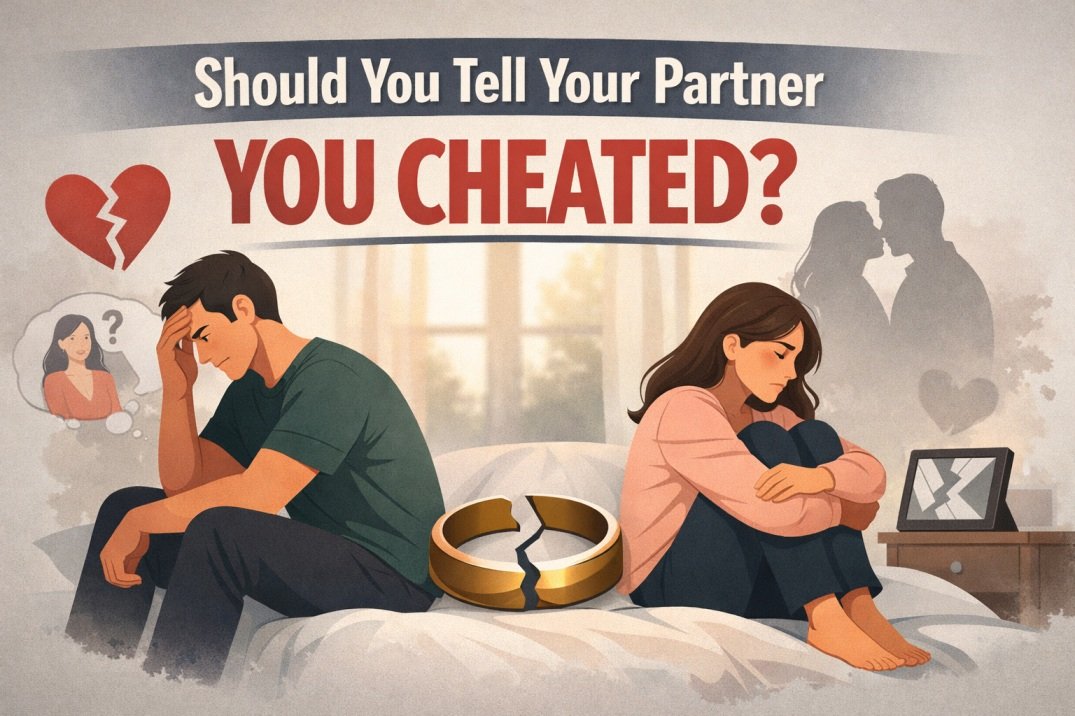
Whether you tell your partner or not is ultimately your personal choice. There is no universal rule that fits every relationship or situation.
If you search online, you will find many experts strongly advising that you should confess. But remember, advice is general; your reality is personal. Only you have to live with the outcome of whatever you decide.
Also, be honest about your reason for telling. If you want to confess mainly to relieve your own discomfort, guilt, anxiety, or the stress of hiding it, understand that telling can transfer that discomfort to your partner and may create serious conflict, loss of trust, or even end the relationship.
Not telling has consequences too, such as carrying the secret or emotional distance. Telling has consequences that cannot be undone. Neither option is painless.
So the real task is to choose which difficulty you are willing to face and which outcome you are prepared to accept. Take time, think carefully, and decide based on your values, your situation, and what you believe is right for both of you.
What Your Feelings After Cheating May Be Telling You
Your reaction afterward can reveal as much as the behaviour itself. People do not all feel the same way after cheating, and whatever you are feeling can offer clues about what was really going on inside you.
If You Feel Overwhelming Guilt or Shame
Strong guilt usually means your actions conflict with your values. You may feel anxious, restless, or preoccupied with what you did. This often shows that the relationship matters to you and that you are struggling to reconcile your behaviour with who you believe you are.
If You Feel Numb or Emotionally Shut Down
Some people feel very little at first – no strong guilt, no relief, just emptiness. This can happen when you are overwhelmed, burned out, or emotionally disconnected in general. Numbness is often a protective response, not a sign that you don’t care.
If Part of You Still Misses the Affair
Missing the other person or the experience does not automatically mean you want to leave your partner. You may be missing how you felt during that time – excited, seen, energized, or different from your everyday self. The loss is often about the emotional state, not just the person.
If You’re Afraid You Might Do It Again
Fear of repeating the behaviour usually means you don’t fully understand why it happened. Without insight, it can feel unpredictable, as if the same conditions could lead to the same outcome. This fear can be a sign that you want control and don’t trust yourself yet.
Understanding your emotional response can help you move from confusion toward clarity. Instead of asking only “What did I do?”, you begin to ask “What was happening inside me?”
Can a Relationship Recover After Infidelity?
Yes, recovery is possible but not guaranteed.
Many relationships survive a one-time betrayal if the person who cheated takes full responsibility, ends the behaviour, and shows consistent change over time. Rebuilding trust after cheating is slow and usually takes months or years.
Repeated cheating makes recovery much harder. It often signals a pattern rather than a mistake, and trust becomes difficult to restore.
Relationships are more likely to survive when both partners still want to stay, honesty replaces secrecy, and real effort is made to repair the damage. Not all relationships do and that is a reality.
When To Seek Professional Help
Professional help can be useful when the situation feels too complex or distressing to handle on your own. Speaking with an online psychologist or online marriage therapist can help you understand what is driving the behaviour and how to move forward.
It may be especially important if:
- The cheating has happened more than once
- There are sexual or intimacy difficulties
- Past trauma or painful experiences are involved
- You feel overwhelming guilt, anxiety, or distress
- The relationship is in serious crisis
Online counselling can help even if your partner is not involved. At LeapHope, you can speak confidentially with online qualified therapists from anywhere.
FAQs
Why didn’t I feel guilty when I cheated on my partner?
Not feeling guilty when you cheated often means your mind was focused on immediate relief, excitement, or escape, not long-term consequences. Arousal, secrecy, stress, or alcohol can narrow awareness. Many people only feel guilt later, once the emotional intensity drops and the reality of their actions becomes clear.
Is it normal to cheat on someone you love and still want them?
Yes, you can cheat on someone you love and still want them. Attachment, comfort, history, and emotional dependence can remain strong even if your behaviour contradicts those feelings. Cheating often reflects unmet needs, inner conflict, or vulnerability rather than a genuine desire to replace your partner.
Can someone cheat once and never cheat again?
Someone can cheat once and never cheat again if the behaviour came from a specific situation, lapse in judgment, or crisis and they fully understand what led to it. Without insight and change, however, the same vulnerabilities can create similar outcomes in the future.
What does it mean if I cheated but don’t want to leave my partner?
If you cheated but don’t want to leave your partner, it usually means the behaviour was not about choosing someone else over them. You may still value the stability, emotional bond, and shared life while trying to cope with dissatisfaction, curiosity, or internal struggles.
Why did cheating feel exciting instead of wrong?
Cheating can feel exciting because secrecy, novelty, and risk activate reward pathways in the brain. The sense of being wanted, the adrenaline of hiding something, and the break from routine can create a powerful emotional high that temporarily overrides caution or moral discomfort.
Does cheating mean there is something wrong with me?
Cheating does not automatically mean you are broken or incapable of love. It usually points to unresolved needs, insecurity, poor boundaries, or emotional distress. Understanding the context and patterns matters more than labelling yourself as a bad person.
Why do I keep cheating on my partner even though I love them?
If you keep cheating despite loving your partner, it often signals an unresolved pattern rather than a single mistake. This may involve chronic dissatisfaction, avoidance of intimacy, need for validation, impulsivity, or difficulty managing emotions, issues that repeat until addressed directly.