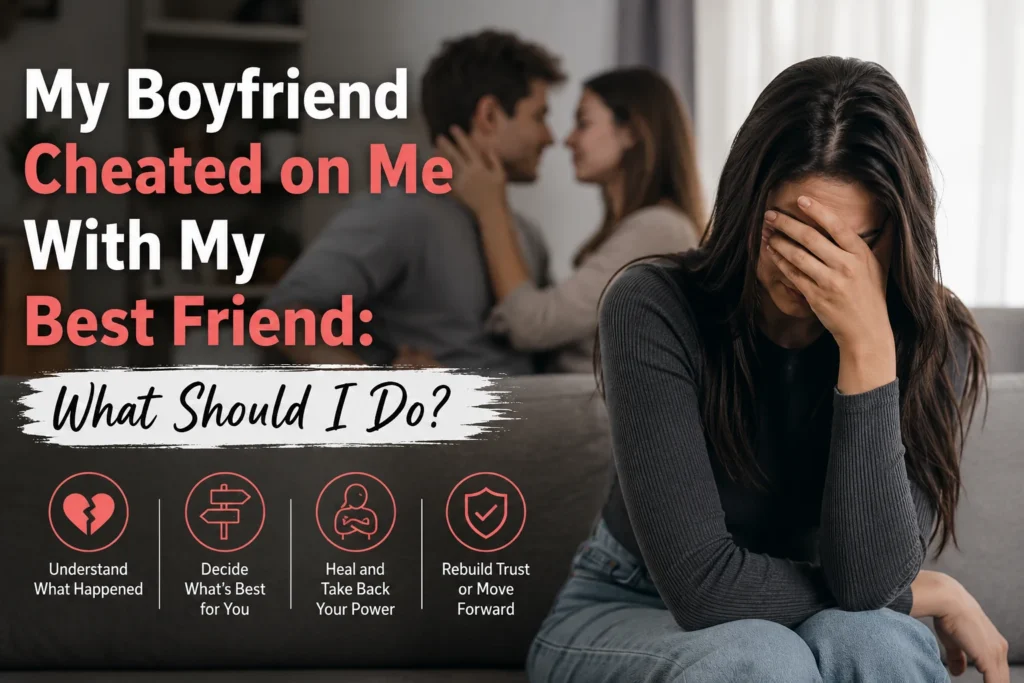
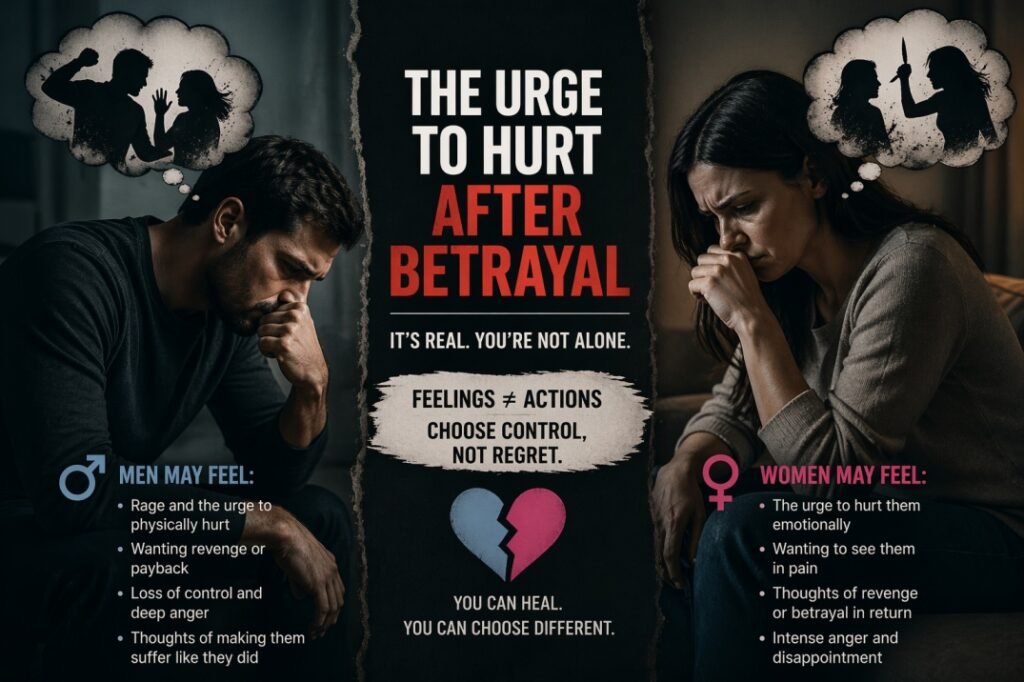
Cheating can trigger extreme anger. Not just irritation, but thoughts about hurting, punishing, or getting back at your partner. You may find yourself thinking about making them feel the same pain they caused.
Physical harm is never acceptable. If you feel close to losing control, create distance immediately.
What you’re experiencing is a psychological reaction to betrayal, not a decision you have to act on. These thoughts often come from emotional overload, loss of control, and the impact of broken trust.
This article explains why this reaction happens and how to control it, so you don’t make decisions that create more damage later.
Reasons You Feel Strong Anger, Urge to Hurt or Punish Your Cheating Partner
Betrayal Trauma (Threat to Safety and Attachment)
When a partner cheats, it breaks emotional safety and trust. This is called betrayal trauma. It can feel like your sense of security is gone.
The brain sees this as a threat, not just a mistake. It reacts quickly to protect you. This is why the reaction feels intense.
This activates a fight response in the stress system. Anger becomes strong and fast. Thoughts about hurting or punishing can come from this reaction.
Emotional Flooding (Overactivation of the Stress Response)
After cheating, the body can release stress hormones like adrenaline and cortisol very quickly. This is called emotional flooding. It puts the body on high alert and makes emotions feel intense.
Normally, this response helps a person pause, step back, and deal with the situation more carefully. As the body calms down, thinking becomes clearer. This helps reduce impulsive reactions.
For some people, this response becomes too strong. Thinking becomes unclear, and it can feel like losing control in the moment. In that state, anger can turn into a strong urge to hurt or punish the partner, but this is a stress reaction, not something that should be acted on.
Loss of Control and Power
Cheating can create a strong sense of loss of control. You cannot change what happened or undo it. This can feel frustrating and destabilising.
The mind naturally tries to restore control in stressful situations. It looks for ways to regain power or reduce the feeling of helplessness. This is a common psychological response.
Because of this, urges to act or “do something back” can come up. These urges are often about control, not resolution. Acting on them usually does not fix the situation and can create more problems.
Perceived Injustice and Equity Drive
Cheating breaks expectations of fairness in a relationship. It can feel like something wrong was done to you. This often brings thoughts like, “How could you do this to me?” or “I won’t tolerate this.”
The mind tries to correct what feels unfair. It looks for ways to restore balance and reduce the sense of being wronged. This is a natural psychological response.
Because of this, thoughts of punishment or payback can come up. These thoughts are about fairness, not resolution. Acting on them usually does not restore real balance.
Rumination and Mental Replay
After cheating, the mind can get stuck in repetitive thinking. You may go over the event again and again. This is called rumination.
This often includes imagining details, scenarios, or “what if” situations. The brain keeps trying to make sense of what happened. Instead of resolving it, this keeps the emotional reaction active.
Because of this, anger does not settle. It builds and stays present for longer. Over time, this can increase thoughts of hurting or punishing the partner, driven by repeated mental replay rather than new events.
Threat to Self-Concept and Status
Cheating can challenge how you see yourself. It can affect your sense of self-worth, value, and your role in the relationship. This is called a threat to self-concept.
The brain may read this as a personal threat. This can activate defensive anger as a way to protect your identity. The reaction is about protecting how you see yourself.
Because of this, aggressive thoughts can come up. These thoughts are often linked to feeling hurt or devalued. Acting on them usually does not restore self-worth or solve the situation.
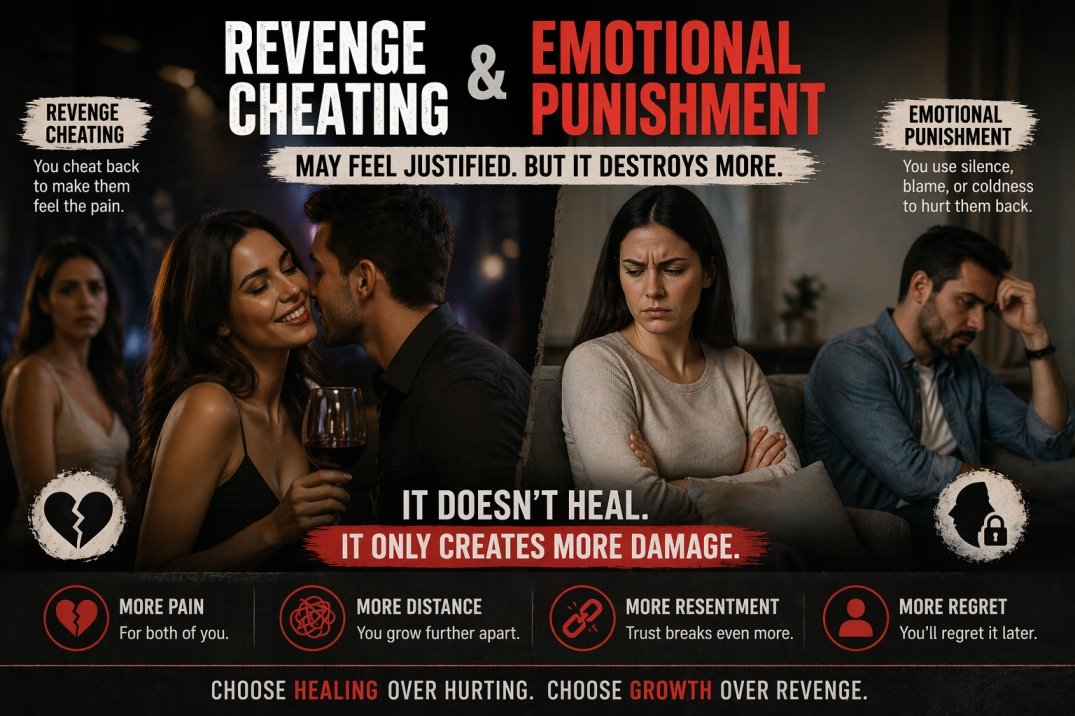
Should You Do Revenge Cheating or Emotional Punishment to Make Them Feel the Same Pain?
Never do that.
They cheated because of their weakness, poor boundaries, or bad decisions. If you respond by cheating back or trying to hurt them, you are acting from the same place. That does not put you in a better position. It only repeats the pattern in a different form.
Revenge cheating and emotional punishment often feel justified in the moment. It may feel like control or fairness. But these actions usually backfire. They increase conflict, damage your self-respect, and make the situation more complicated instead of clearer.
Public humiliation, insults, or trying to make them suffer can escalate the situation quickly. It can push both of you further into anger and reaction. What starts as “making them feel the same pain” often turns into a cycle that is harder to stop.
There are only two clear paths forward.
If you choose to stay, then the focus has to be on repair. That means both partners taking responsibility, rebuilding trust, and often working with a therapist. Without that, the relationship usually stays unstable.
If this situation goes against your values and principles, then leaving is a valid option. You can step away and choose a different path that protects your self-respect and emotional stability.
What is not a solution is trying to punish or hurt your partner because you are hurting. Losing control of your reactions will not fix the damage. It will only add more.
Never use anger as a reason to harm someone you chose as a partner and shared your life with.
How to Stop Thinking About Hurting Your Partner and Control Your Reactions
When anger is high, your mind pushes you to react quickly. The goal is not to suppress the emotion, but to slow down the reaction and regain control. Start by calming the body first, then manage the thoughts. Techniques from therapy can help you reduce intensity and stop acting on impulse.
- Create immediate distance
Step away from arguments and triggering situations. Do not stay and react in the moment. - Pause before any response
Set a rule: no messages, no calls, no confrontation when you are highly angry. Give it time. - Use grounding (5-4-3-2-1 method)
Notice 5 things you see, 4 you feel, 3 you hear, 2 you smell, 1 you taste. This brings your mind out of the loop. - Slow your breathing (4-6 method)
Inhale for 4 seconds, exhale for 6 seconds. This reduces stress response and lowers intensity. - Stop mental replay
Interrupt repetitive thinking. Shift attention to a task, movement, or neutral activity. - Write it out, don’t act it out
Write what you feel or want to say. Do not send it. This releases emotion without damage. - Label the thought (CBT technique)
Say: “This is an anger thought, not a command.” This creates distance from the impulse. - Talk to a neutral person
Speak to a therapist or someone who won’t fuel anger. Get perspective before taking action.
Seek Professional Help
If you can’t control your anger or thoughts, get professional help. Therapy helps you control reactions, stop repetitive thinking, and make clear decisions instead of acting on impulse.
- When to seek help
- anger feels uncontrollable
- thoughts are frequent or intense
- behaviour is getting worse
- daily life is affected
Get support now:
- online therapy for anger and emotional control
- online marriage counselling for relationship repair or couple issues
The Bottom Line
Strong anger after cheating is common. Thoughts about hurting or punishing your partner can come up. These reactions come from emotional overload.
No physical or emotional harm is acceptable. Cheating came from their weakness. If you respond by hurting them, it comes from your weakness too.
Acting on anger creates more damage. It does not fix what happened or bring real relief. It only makes the situation worse.
What matters is control and awareness. How you respond will shape what happens next. If needed, get support and handle this in a way that protects your self-respect.
FAQs
Is it normal to feel like hurting your partner after they cheated?
Strong anger after cheating is common. Thoughts about hurting or punishing your partner can come up during emotional overload. But acting on them is not acceptable. Physical or emotional harm only creates more damage.
Why do I feel the urge to hurt my cheating partner?
This urge comes from betrayal trauma, emotional flooding, and loss of control. The brain tries to restore balance and protect self-worth. This can turn anger into thoughts of punishment, but these are stress reactions, not solutions.
Will revenge cheating or emotional punishment make me feel better?
It may feel justified in the moment, but it usually backfires. It increases conflict, damages self-respect, and keeps you stuck in anger. It does not fix the situation.
How do I stop thinking about hurting my partner after cheating?
Create distance from triggers. Delay your reaction and avoid repeating the situation in your mind. Focus on calming your body first, then your thoughts, so you can regain control before acting.
When should I seek professional help after being cheated on?
If anger feels uncontrollable, thoughts are intense, or your behavior is changing, get help. Therapy helps you control reactions, reduce overthinking, and make clear decisions without acting on impulse.