At LeapHope, we regularly see men and women, husbands, wives, boyfriends, girlfriends, across their 20s, 30s, and 40s, coming in after being cheated on with the same confusion:
“I didn’t do anything wrong… so why do I feel this way?”
They describe very specific experiences:
- feeling numb or emotionally shut down
- sudden, intense anger
- feeling worthless or “not enough”
- a constant heaviness in the chest that doesn’t go away, even after months
Some even admit thoughts of revenge cheating, not because they want to betray, but because they are trying to regain control.
What unsettles them most is not just the betrayal, but how deeply it affects them.
“They cheated, but why does it feel like I’m the one breaking?”
In this article, our marriage therapists explain why being cheated on can make you feel numb, angry, broken, or out of control, and what is actually happening psychologically.
Why Your Emotions Feel So Intense After Being Cheated On, Even After Months or a Year
The intensity of feelings after being cheated on persists because the betrayal is processed by the brain as a threat to emotional safety. This activates a prolonged stress response, keeping your nervous system on high alert.
As a result, your mind continues to scan for meaning and protection, which maintains emotional overload and reactivity. Until a sense of safety is restored, emotions like anger, numbness, and sadness can remain active even months or a year later.
The Psychological Effects of Being Cheated On
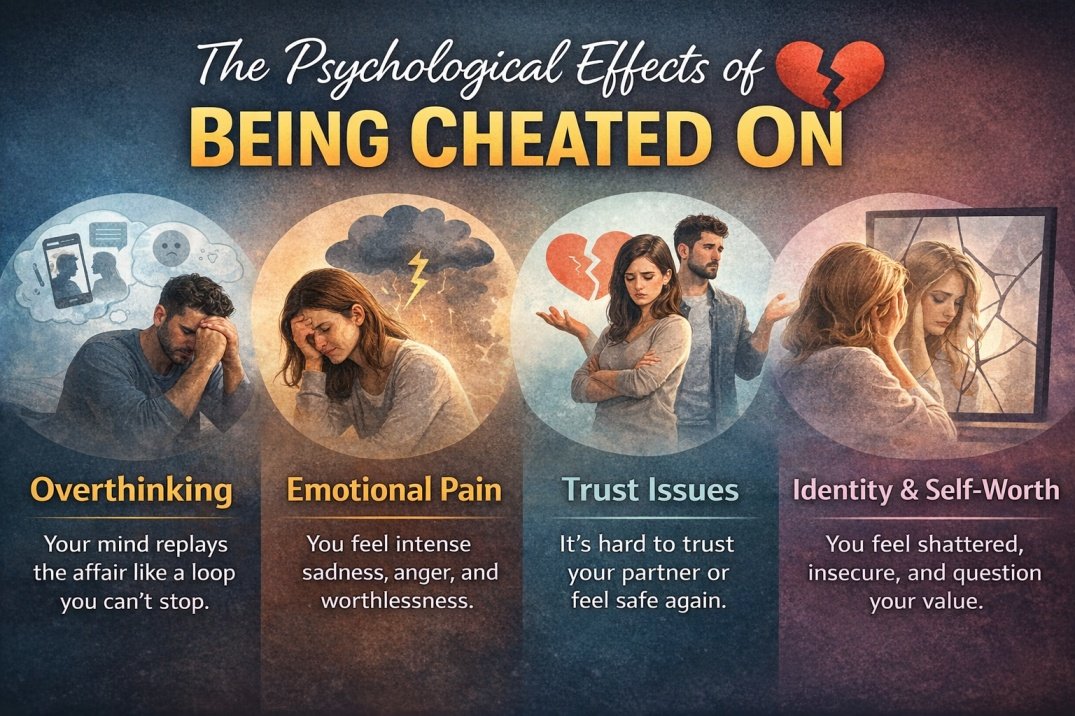
The psychological effects of being cheated on go beyond emotional pain. The experience is often processed as a form of betrayal trauma, where a trusted person becomes the source of hurt. This creates a deep internal conflict, making it hard for the mind to process what is real and what is no longer safe.
This disruption can affect your sense of identity. You may start questioning who you are, your worth, and how you see relationships. Thoughts like “Was I not enough?” or “How did I miss this?” are common because your mind is trying to rebuild a stable sense of self.
At the same time, emotional instability becomes more likely. You may shift quickly between anger, sadness, numbness, and confusion. These reactions are not random, they reflect a system trying to regain balance after a sudden loss of trust and emotional security.
Why You Feel Different Emotions After Being Cheated On
After betrayal, emotions don’t come one at a time, they come in waves, often conflicting. You might feel angry one moment, numb the next, and then suddenly overwhelmed again. This happens because your mind is trying to process a shock it wasn’t prepared for.
Why You Feel Numb After Being Cheated On
Men and women often ask:
“I was expecting to cry or feel angry… but I feel nothing. Is something wrong with me?”
Feeling numb after being cheated on is a common psychological response when the impact becomes too overwhelming.
Your system can shift into a freeze response, where instead of reacting outwardly, it temporarily shuts down. This creates a sense of disconnection, like you’re present but not fully feeling anything.
This emotional shutdown is not indifference. It’s a protective mechanism, your mind is reducing emotional intensity so you don’t get flooded by pain all at once.
Why You Feel Worthless After Being Cheated On
Many men and women ask:
“I know I didn’t do anything wrong… so why do I suddenly feel like I’m not enough?”
Feeling worthless after being cheated on often comes from a sudden collapse in self-worth. When someone you trusted chooses someone else, your mind tries to make sense of it by turning inward.
This leads to internal comparison:
- “What did they have that I didn’t?”
- “Why was I not enough?”
Even though the betrayal was not your fault, your brain looks for explanations, and self-blame can feel like the quickest answer.
This “not enough” thinking is not a reflection of your actual value. It is your mind trying to process rejection and regain a sense of control in a situation that feels deeply personal.
Why You Feel Insecure After Being Cheated On
Many men and women ask:
“Why do I suddenly feel so insecure, even about small things?”
Feeling insecure after being cheated on is a natural response to broken trust. When someone you relied on for emotional safety betrays that trust, your mind shifts into protection mode.
This often shows up as a fear of being replaced:
- “What if it happens again?”
- “What if I’m not enough for them?”
You may also notice hyper-awareness. Small changes in behaviour, tone, or routine can feel significant because your mind is trying to prevent being hurt again.
At the core of this is trust damage. It’s not just about trusting your partner, it’s about trusting your own judgement. Until that sense of safety is rebuilt, insecurity can feel constant and hard to control.
Why You Feel Ugly or Not Attractive Anymore
Many men and women say:
“I keep comparing myself to the other person… and I feel unattractive now.”
Feeling ugly after being cheated on is often driven by automatic comparison. Your mind tries to make sense of the betrayal by looking for differences:
- “Are they better looking than me?”
- “Is that why this happened?”
This can trigger a sudden drop in body image and self-perception, even if you never struggled with it before.
There’s also a misinterpretation of rejection. The betrayal feels personal, so your brain links it to appearance, even when cheating is usually about unmet needs, validation, or poor boundaries, not your attractiveness.
What you’re feeling is not an objective truth about you. It’s your mind trying to explain something painful in the simplest way it can.
Why You Feel Angry or Out of Control
Many men and women ask:
“Why am I so angry all the time? I don’t even recognise myself.”
Anger after being cheated on is a natural response to betrayal. It often acts as a form of protection. When something deeply unfair happens, anger creates a sense of strength and control, especially when you’re also feeling hurt underneath.
There is also emotional overflow. After holding in shock, sadness, and confusion, these emotions can build up and come out as anger because it’s more immediate and easier to express.
That’s why reactions can feel sudden or intense. Small triggers can lead to big responses, not because you’re overreacting, but because your system is already overloaded and trying to release what it has been holding in.
Why You Feel Empty or Broken Inside
Many men and women say:
“I don’t even feel like myself anymore… I just feel empty.”
Feeling empty after being cheated on or feeling broken often comes from emotional exhaustion. After processing shock, anger, and pain for weeks or months, your system can feel drained, like there’s nothing left to react with.
There is also identity confusion. The betrayal can shake how you see yourself, your worth, and your place in the relationship. You may start questioning who you are and what this experience says about you.
Over time, this can lead to detachment. You might feel disconnected from your emotions, your partner, or even your own life, as if you’re just going through the motions.
This doesn’t mean you are permanently broken. It reflects how deeply the experience has affected your emotional stability and sense of self.
Why You Feel Sick, Disgusted, or Physically Affected
Many men and women say:
“I don’t just feel hurt… I feel physically sick thinking about it.”
Feeling sick after being cheated on or feeling disgusted is a common mind–body response to betrayal.
Emotional stress doesn’t stay only in your thoughts. It activates the body, which is why you may notice:
- nausea or a heavy feeling in the stomach
- fatigue or low energy
- disrupted sleep or loss of appetite
There is also a sense of disgust, which often comes from the violation of trust and boundaries. Your mind registers the experience as something deeply wrong, and the body reacts accordingly.
This is how emotional pain becomes physical. Your system is trying to process distress that feels overwhelming, so it shows up not just emotionally, but physically as well.
Why Your Body Reacts This Way (Not Just Your Mind)
Many people ask:
“Why is my body reacting like this even when I’m trying to stay calm?”
After betrayal, your response is not just emotional, it’s physiological. Your nervous system reads the experience as a threat, which is why your body stays activated even when the situation is over.
This can show up through:
- fight → anger, irritability
- flight → anxiety, restlessness
- freeze → numbness, shutdown
These responses are automatic. They are not choices, they are survival patterns.
You may also notice triggers after being cheated on. Small things, like a message notification, a name, or a place, can suddenly bring back intense reactions. This happens because your brain has linked those cues with emotional pain.
Until your system feels safe again, both your mind and body can continue reacting as if the threat is still present.
Is It Normal to Feel This Way After Being Cheated On?
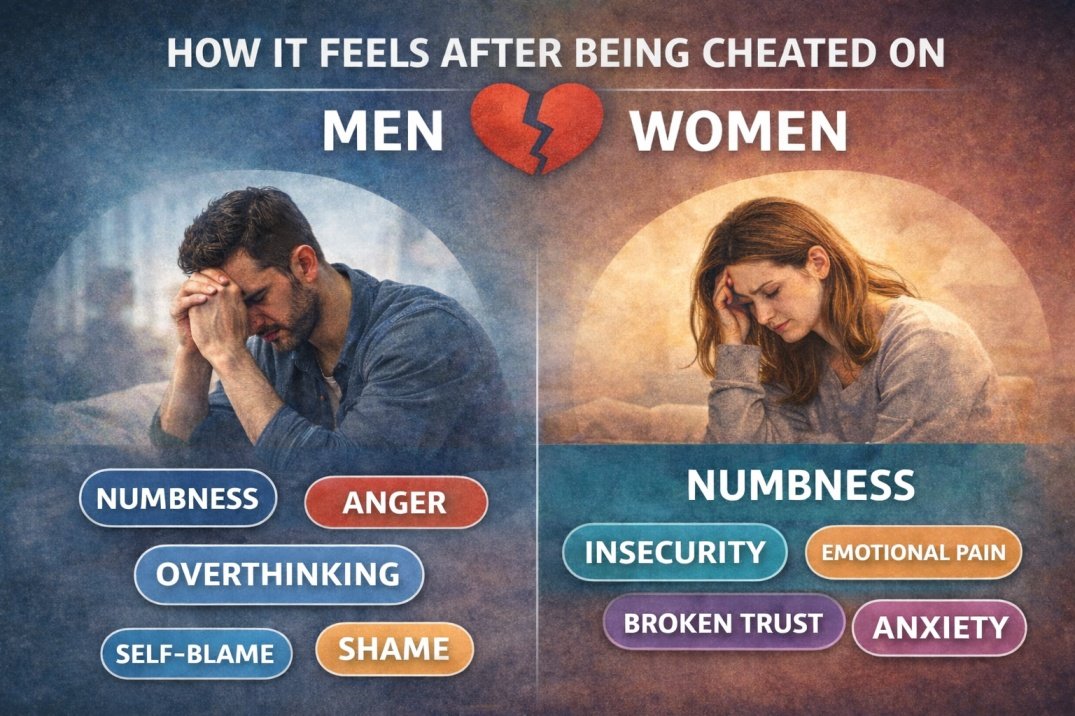
Yes, it is completely normal. The feelings after being cheated on can include numbness, anger, insecurity, sadness, or even emotional confusion.
You may notice:
- sudden mood swings
- feeling worthless or not enough
- emotional numbness or detachment
- intense anger or anxiety
These reactions are not a sign of weakness or overreaction. They are natural responses to a deep breach of trust and emotional safety.
When to seek professional help
For some people, these reactions don’t settle with time. They can remain intense for months, sometimes even years.
You may notice:
- constant emotional breakdowns
- difficulty functioning in daily life
- feeling mentally and emotionally drained
When this continues, it usually means the experience hasn’t been fully processed.
Getting support can help. At LeapHope, our online marriage counselling and online clinical psychologists work with individuals and couples to stabilise emotions and process betrayal in a structured way.
You don’t have to deal with this alone, especially when it’s still affecting you long after it happened.
How to Start Regaining Emotional Stability (Gently)
You don’t need to “fix everything” at once. Start small.
- Ground your body: slow breathing, noticing your surroundings, or brief pauses when emotions rise
- Regulate, don’t suppress: let emotions move without pushing them away or acting on them immediately
- Create small routines: regular sleep, meals, and light activity help stabilise your system
- Limit triggers where possible: reduce exposure to things that intensify reactions, especially early on
The goal is not to remove the feelings, but to make them manageable over time.
If Your Mind Won’t Stop Thinking About the Affair
Many people ask:
“Why can’t I stop thinking about it, even when I want to move on?”
After betrayal, the mind often shifts into rumination, a repetitive thinking loop where it keeps replaying events, searching for answers, or imagining details. This happens because your brain is trying to resolve a threat it doesn’t fully understand.
Strong emotions like shock, anger, and insecurity feed this loop. The more intense the feeling, the more the mind tries to “figure it out,” which is why thoughts can feel constant.
This is also linked to hypervigilance, where your brain stays alert for signs of danger, even when nothing is happening. As a result, small triggers can restart the thinking cycle.
If you feel stuck in this pattern, it’s not a lack of control, it’s your mind trying to regain clarity and safety.
The Bottom Line
What you’re feeling is not weakness.
For some people, these reactions settle in months. For others, they can last much longer, even years, especially if the experience hasn’t been fully processed.
That’s why you may feel stuck or notice a loss of confidence, trust, or emotional stability over time.
There’s no fixed timeline. Recovery depends on how your mind processes the betrayal and regains a sense of safety.
Speaking to a therapist can help speed this up by giving structure to the process, rather than staying stuck in the same patterns.
With the right support, these reactions can ease, and you can start to feel more like yourself again.