
Last Updated on November 3, 2026
Clinically reviewed by Mansi More Nopany, RCI-Registered Clinical Psychologist
Your child gets stuck on a question and starts crying. When you explain, they become angry or refuse to continue. A short assignment turns into another difficult evening.
You may wonder whether the work is too hard, you are pushing too much or something else is troubling them. Noticing when the upset begins can help you understand what your child needs.
Why Do Children Cry Over Homework?
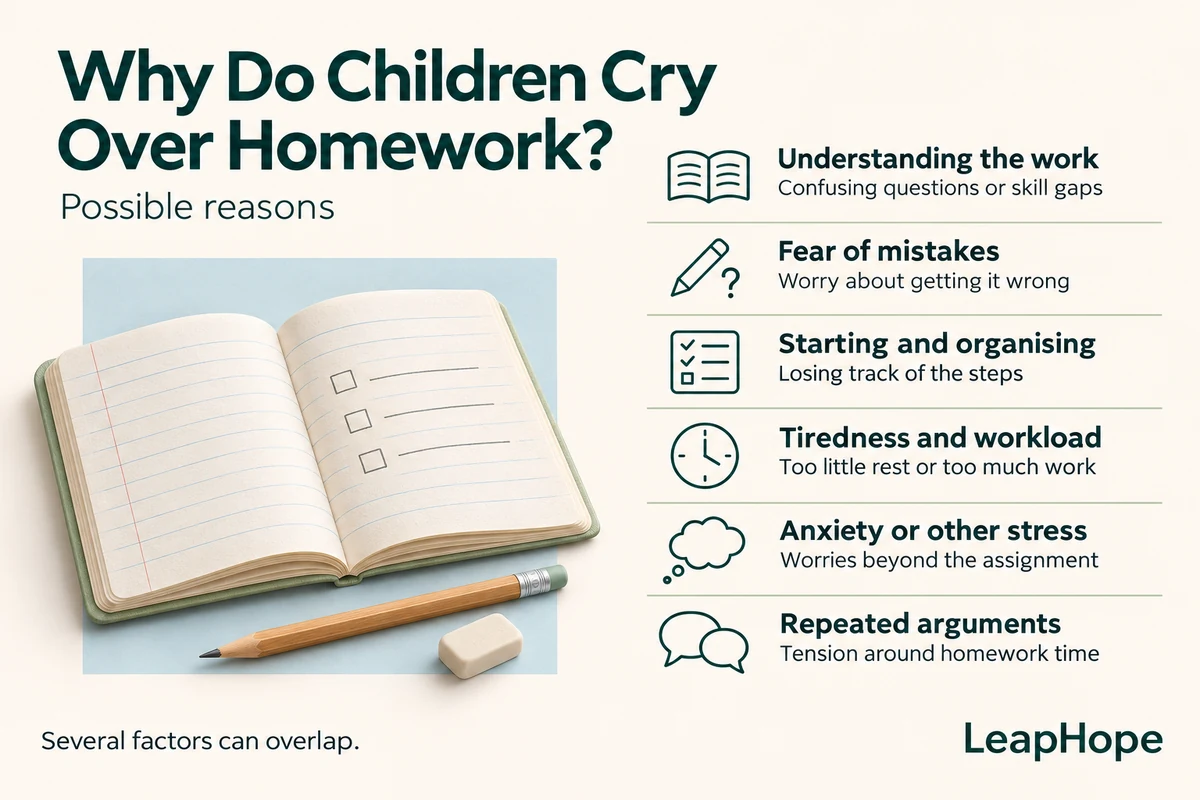
Difficulty Understanding the Work
Your child may follow a classroom explanation but struggle to apply it independently. They might understand an idea aloud yet find writing it difficult, or manage calculations but struggle with word problems.
Repeated problems with particular skills need attention from school. More practice may not resolve a gap in understanding or an unidentified learning difficulty.
Fear of Making Mistakes
An incorrect answer may feel like evidence that they are incapable. Signs include repeated erasing, checking every response with you or saying, “I’m stupid.”
Look more closely when fear of getting something wrong regularly prevents your child from attempting or finishing work, even when their marks are good.
Difficulty Starting and Managing Assignments
Some children know the answers but struggle to organise the task, remember instructions or maintain attention through several questions.
These abilities develop with age. Persistent difficulties can also occur with ADHD or other developmental needs. Assessment considers the wider history and behaviour across settings, rather than homework alone.
Tiredness and Too Much Work
School, travel, tuition, activities and insufficient sleep can leave little energy for another demanding task.
Check the actual workload, including unfinished classwork and extra practice. Homework that routinely takes much longer than the teacher expects may need adjusting. The best time to start also varies between children.
Anxiety, Low Mood or Other Stress
Anxiety about marks, criticism or disappointing someone can make homework upsetting. Friendship problems, bullying or family changes may also interfere with concentration.
Pay attention to difficulties beyond homework, such as withdrawal, loss of interest in enjoyable activities, persistent irritability or changes in sleep and appetite. These warrant discussion with a professional. Crying by itself does not establish a psychological disorder.
Repeated Arguments Around Homework
Your child may begin expecting criticism as soon as homework is mentioned. You may already feel tense about the evening ahead.
Reminders then trigger defensiveness, and the argument becomes an additional difficulty alongside the assignment.
If their teacher reports no problems, ask what support is available in class. Prompts, shorter tasks or worked examples may explain why the experience differs at home.
How Can Parents Help When a Child Cries Over Homework?
Pause the explanation when your child is too upset to follow it. Then choose the next step according to what is happening.
- Acknowledge the frustration briefly. “This is upsetting you. Let’s pause.” Offer space or company without requiring an immediate explanation.
- Find the point of confusion once they settle. Ask them to show you what the question requires or where they lost track. This is more useful than repeating the whole lesson.
- Offer a specific kind of help. “Would you like me to read the instructions with you or demonstrate an example?” Let them attempt the next part themselves.
- Return to a manageable amount. Try one question or part of a task after a break. There is no fixed work interval that suits every age and assignment.
- Leave it unfinished when necessary. If distress continues, the work remains inaccessible or continuing would substantially delay sleep, keep the attempt and inform the teacher. Repeated unfinished assignments need a revised support plan.
If frustration involves hitting or throwing, calmly stop unsafe behaviour. Discuss alternatives after the immediate upset has passed.
How Can Parents Reduce Repeated Homework Arguments?
Make changes outside homework time, when neither of you is trying to get an assignment finished. Start with one or two adjustments.
- Agree on a workable routine. Give your child age-appropriate choices about task order and planned breaks. Younger children usually need more help setting this up.
- Check the classroom method. A different explanation can create confusion when your child believes the teacher expects a particular approach.
- Keep corrections about the task. “Check the sign in this calculation” gives a clear direction. “You’re careless” turns feedback into a judgement about the child.
- Clarify how much checking school expects. Correcting every answer can hide what your child has not understood. Homework should still reflect their own effort.
- Notice growing independence. Recognise asking a clear question, beginning with fewer reminders or identifying an error. If you use rewards, choose achievable behaviours rather than perfect answers or no tears.
Give the teacher concrete information:
“This writing task took an hour. They could explain their ideas but needed help with every sentence. How are they managing similar work in class, and what support should we provide at home?”
Agree on any changes to workload or assistance and a time to review them. Where assignments appear across different apps, clarify what is compulsory and when it is due.
If you have shouted, apologise without adding a justification:
“I raised my voice. That was wrong. Next time I feel that frustrated, I’m going to step away before I shout.”
Follow through on that change. If anger, guilt or disagreements about discipline keep recurring, LeapHope’s online parenting counselling can help you work on your responses. You can attend without your child.
When Can a Child Psychologist Help With Homework Distress?
Parents can seek a consultation simply to understand their child’s reactions. There is no need to wait for poor marks, severe behaviour or a diagnosis.
Bring examples of what happens, when it began, what has already been tried and what school observes. A psychologist may explore learning demands, emotional wellbeing, development and family interactions before recommending support.
This could involve parent guidance, sessions with your child or coordination with educational professionals. Formal testing is appropriate only when there is a specific concern to investigate.
Persistent physical symptoms, unusual tiredness or concerns about hearing or vision should also be discussed with a paediatrician.
LeapHope provides online school stress counselling for children, teenagers and parents. An initial consultation can help clarify what assistance would be useful for your child.
Online consultations are available for families in India, the USA, the UK, Canada and the UAE.
Clinical Resources
- National University Health System: Are your kids refusing to do their homework?
- Nationwide Children’s Hospital: Homework Help: Tips for Families
- American Academy of Pediatrics: What’s the Best Way to Discipline My Child?