
Last Updated on October 20, 2026
Clinically Reviewed by Mansi More Nopany, RCI-Registered Clinical Psychologist.
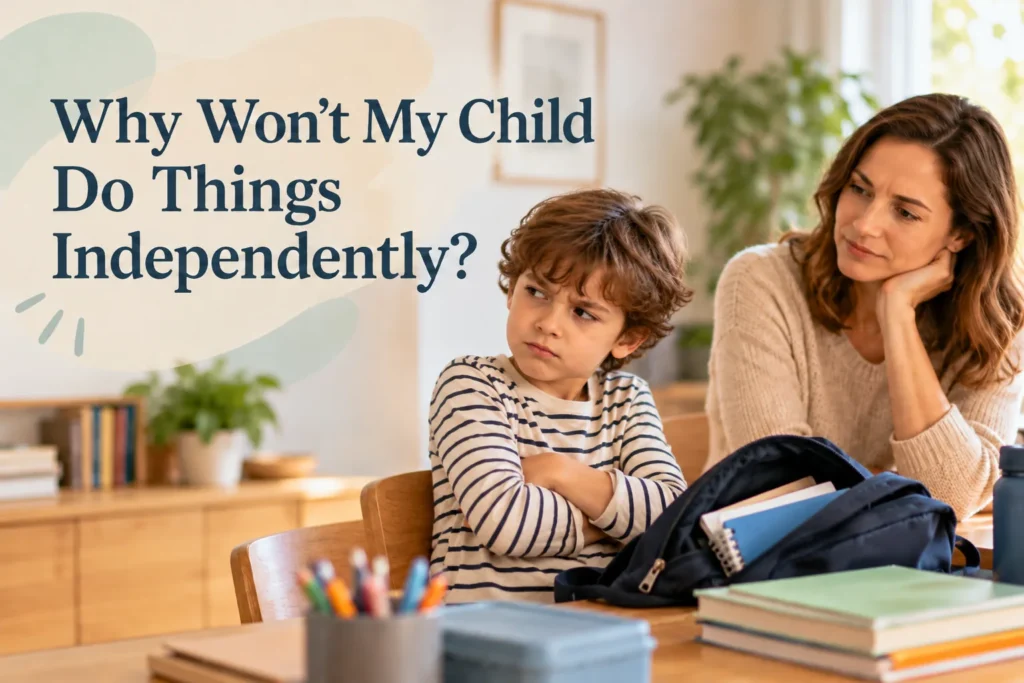
Your child asks you to find their school bag, bring them water, choose their clothes or finish tasks they seem capable of doing. You help because it’s quicker, especially when you’re rushing to get everything done.
But lately, you’ve noticed that your child waits for you to handle even familiar responsibilities. You may wonder why they won’t do things independently and whether you’ve been helping too much.
Your child may rely on you because your assistance has become part of their routine, they haven’t had enough practice, or certain tasks feel difficult or frustrating. Sometimes, they still need help developing the skills required to manage things alone.
The goal isn’t to stop helping your child. It’s to understand what they can already manage, where they need guidance and how you can gradually build their independence.
Why Does My Child Depend on Me for Everything?
Your child may be capable of doing some things independently but still expect your help with others. Here are five reasons this can happen.
1. Your Child Has Become Used to You Doing Things for Them
You may have started preparing your child’s snacks, organising their school bag or clearing away their belongings when they were too young to manage those responsibilities.
As your child grows, you may continue doing these things simply because that’s how your household works.
Your child may now expect you to bring their water, find their shoes or complete a familiar task without considering whether they could manage it themselves.
If you ask them to do it, they might resist or wait until you eventually step in. This doesn’t necessarily mean they’re lazy or incapable.
When your help has become part of the routine, taking responsibility may feel like an unexpected change.
2. Your Child Has Had Limited Opportunities to Try Things Alone
Your child may watch you complete a task every day without knowing how to manage the whole process independently.
For example, they might know what belongs in their school bag but struggle to remember everything when packing it themselves.
They may also rely on you to decide where to begin, what to do next or whether something has been completed correctly.
Children develop everyday skills through practice. If you regularly direct each step or correct their attempts before they’ve finished, your child may have fewer chances to work things out independently.
Knowing what a task involves is different from having experience completing it from beginning to end.
3. Your Child May Feel Uncomfortable Making Mistakes
Your child might say, “I can’t do it,” when you ask them to complete something they haven’t fully mastered.
Perhaps they become frustrated when their clothes don’t fit properly, their schoolwork needs correcting or an activity takes longer than expected.
You may notice that they ask you to finish the task rather than continue trying.
Some children hesitate because they’re worried about making mistakes. Others simply find the effort uncomfortable or haven’t learned how to manage frustration.
This doesn’t automatically mean your child has anxiety or low confidence.
But when they rarely get the opportunity to work through manageable difficulties, they may remain unsure about what they can accomplish.
If your child regularly gives up when something becomes challenging, read why children give up easily and how parents can help.
4. Your Child May Struggle to Start or Organise Tasks
Your child may know how to get ready for school but still need you to remind them about every step.
They might get distracted while dressing, forget where they’ve put their belongings or leave familiar responsibilities unfinished.
You may feel frustrated because you’ve explained the same routine many times.
But remembering instructions, planning what to do first and completing tasks involve developing executive-function skills.
Your child may understand each individual step yet struggle to manage the whole sequence without reminders.
This isn’t automatically a sign of ADHD or deliberate refusal. Sometimes, your child needs help organising the task rather than someone completing it for them.
5. Your Child May Not Yet Be Ready to Manage the Task Alone
You may notice that another child of a similar age can handle responsibilities your child still finds difficult.
But children don’t develop every ability at the same pace.
Your child may be learning the coordination needed for dressing, the attention required to complete a routine or the judgement involved in making certain decisions.
They may manage one responsibility confidently while still needing considerable support with another.
Before expecting them to complete a task alone, consider whether they’ve learned the necessary skills, understand what’s expected and can do it safely.
Needing help with something they’re not developmentally ready to manage isn’t excessive dependence.
Why Is Developing Independence Important for Children?
When you regularly manage responsibilities your child could gradually learn to handle, they may miss opportunities to develop useful everyday abilities.
- Confidence in their abilities: When your child completes a manageable task, they gain experience recognising what they can do without constant help. Without practice, unfamiliar responsibilities may continue to feel difficult.
- Problem-solving and decision-making: Your child learns by choosing what to do, organising activities and correcting ordinary mistakes. If you always make these decisions, they have fewer opportunities to develop those skills.
- Managing frustration and setbacks: Your child may become upset when something doesn’t work immediately. Working through manageable difficulties, with your support available, helps them practise coping instead of automatically giving up.
This doesn’t mean helping your child will cause future emotional difficulties.
Research on autonomy-supportive parenting suggests that opportunities to make choices and manage appropriate challenges can support children’s development. The benefit comes from allowing independence that matches your child’s abilities, not expecting them to handle everything alone.
How Can You Help Your Child Become More Independent?
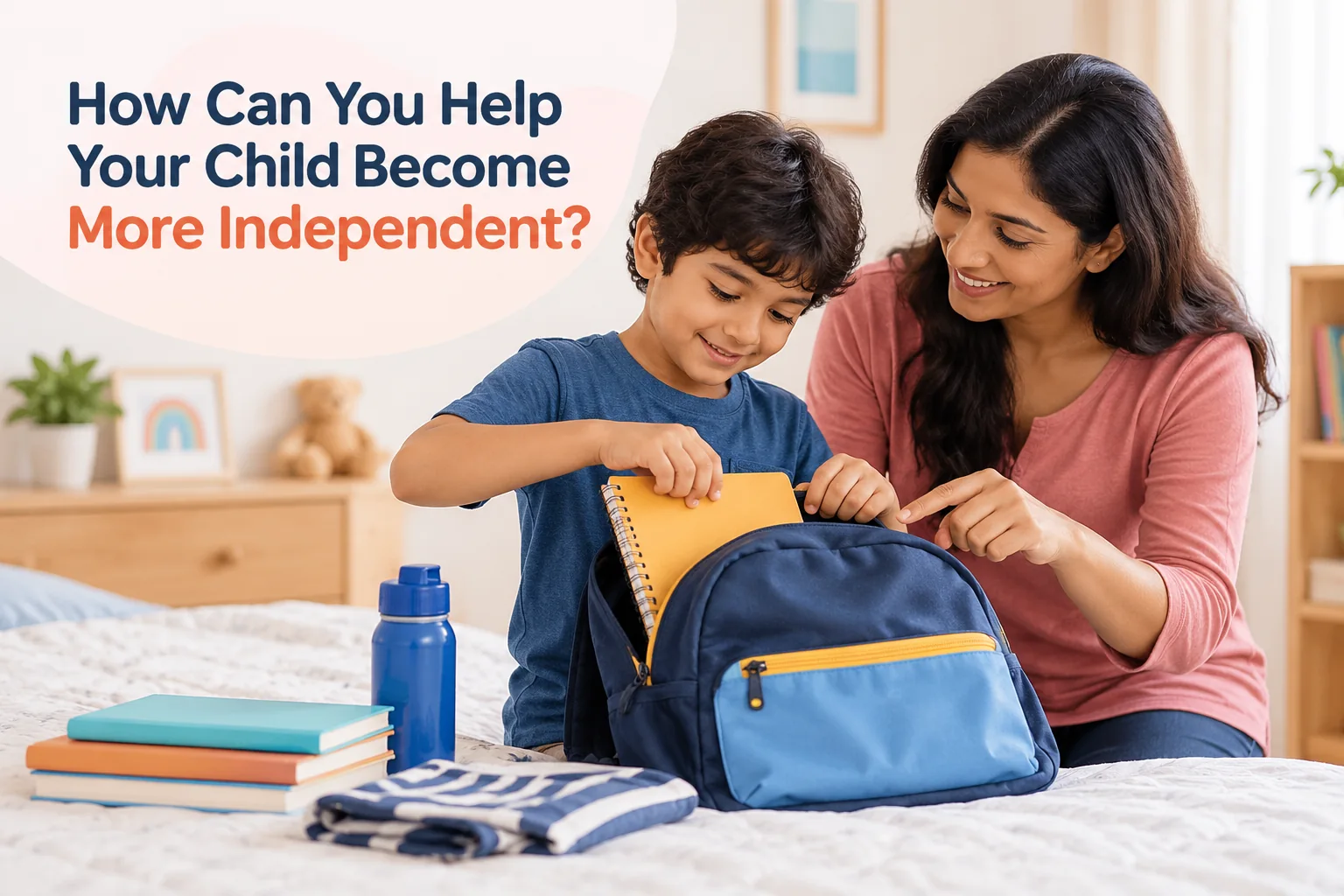
You don’t need to withdraw your help suddenly or expect your child to manage everything at once. Instead, consider where you can give them more responsibility while remaining available when they genuinely need you.
- Notice what you’re automatically doing. Look at the things you manage every day, such as bringing snacks, organising belongings or clearing plates. Consider which parts your child might already be able to handle.
- Show them how before stepping back. If your child hasn’t learned a task, demonstrate it and let them practise. As they become more comfortable, reduce your involvement rather than immediately taking over.
- Make everyday responsibilities easier. Keep appropriate belongings within reach, establish clear places for school items and use simple visual reminders if your child struggles to remember a routine.
- Allow time for mistakes. Your child may take longer or complete something differently from you. Give them opportunities to work through manageable difficulties without unnecessary criticism.
- Explain what they’re ready to manage. Let your child know when you expect them to begin taking responsibility for familiar tasks. Introduce changes gradually and adjust expectations as their abilities develop.
Child psychologists often describe this approach as scaffolding: giving your child enough guidance to learn, then reducing assistance as their skills improve.
The aim is to help your child become capable and confident, not to make them feel that asking for help is wrong.
When Should Parents Seek Help From a Child Psychologist?
Your child will still need reminders, guidance and occasional help as they grow. However, if they consistently struggle with everyday tasks despite appropriate teaching and opportunities to practise, it may be worth understanding why.
You might notice that your child cannot manage responsibilities expected for their developmental abilities, becomes very distressed when asked to try something independently or begins losing skills they previously had.
Difficulties that affect daily life at home and school also deserve closer attention.
A child psychologist may assess your child’s developmental abilities, emotional well-being, task organisation and the ways they currently receive assistance.
This can help clarify whether your child needs more opportunities to practise, different parenting support or further assessment for emotional or developmental concerns.
Not every child needs individual therapy. Sometimes, parents benefit from professional guidance about setting realistic expectations and gradually changing household routines.
At LeapHope, online parenting counselling can help you review how you support your child’s everyday responsibilities and encourage age-appropriate independence.
If your child has persistent emotional or behavioural difficulties, you can also consult an online child psychologist in India to discuss whether a psychological assessment is appropriate.
Some concerns may require evaluation by a paediatrician or developmental specialist, particularly when your child is losing previously acquired skills.
Let’s Recap
Your child may expect your help with everyday responsibilities because you’ve always managed those tasks, they haven’t had enough opportunities to practise, or they find certain parts difficult.
Before asking them to do more independently, consider what they’re already capable of doing and where they still need guidance.
You can help by gradually changing familiar routines, allowing manageable mistakes and giving your child opportunities to take responsibility as their skills develop. Independence grows through experience, but your support remains important throughout that process.
Resources and Research
- American Academy of Pediatrics. Age-Appropriate Chores for Children. HealthyChildren.org.
- Center on the Developing Child at Harvard University. Enhancing and Practicing Executive Function Skills with Children from Infancy to Adolescence.
- Harold S. Koplewicz, MD. Raising Confident, Independent Children. Child Mind Institute.
- Ortiz, C., & Fastman, M. (2024). A Novel Independence Intervention to Treat Child Anxiety: A Nonconcurrent Multiple Baseline Evaluation. Journal of Anxiety Disorders. Read the research on PubMed.


