

Last Updated on October 17, 2026
Clinically Reviewed by: Mansi More Nopany, RCI-Registered Clinical Psychologist
You ask your child to finish their homework. They ignore you. You ask again, and eventually raise your voice. Suddenly, they listen.
You may wonder why being strict works when asking politely doesn’t. But later, you also wonder whether shouting is affecting your child.
Many Indian parents grew up with strict discipline, high academic expectations and rules about respecting elders. Some remember being slapped for mistakes or compared with siblings. Now, as parents themselves, they want to raise their children differently but aren’t always sure what to do.
Your parenting style can influence your child’s confidence, behaviour, emotional security and relationships later in life. What matters isn’t just whether your child follows instructions, but how they experience your rules, reactions and expectations.
What Are the Four Main Parenting Styles?
Psychologists describe four main parenting styles based on how parents balance discipline, expectations and emotional support.
Authoritarian parenting: You set strict rules and expect obedience, often without allowing much discussion.
Authoritative parenting: You maintain clear rules while listening to your child, explaining decisions and allowing age-appropriate independence.
Permissive parenting: You’re affectionate and allow considerable freedom but may struggle to enforce boundaries consistently.
Uninvolved parenting: Your child receives limited guidance, supervision or emotional attention, even when their basic needs are met.
You may recognise yourself in more than one style. Perhaps you’re relaxed about friendships but strict about examination marks, or you encourage open conversations at home but expect complete obedience around grandparents.
How Can Your Parenting Style Affect Your Child?
Your child’s behaviour after making a mistake may reveal something important. Do they tell you what happened, make excuses or try to hide it?
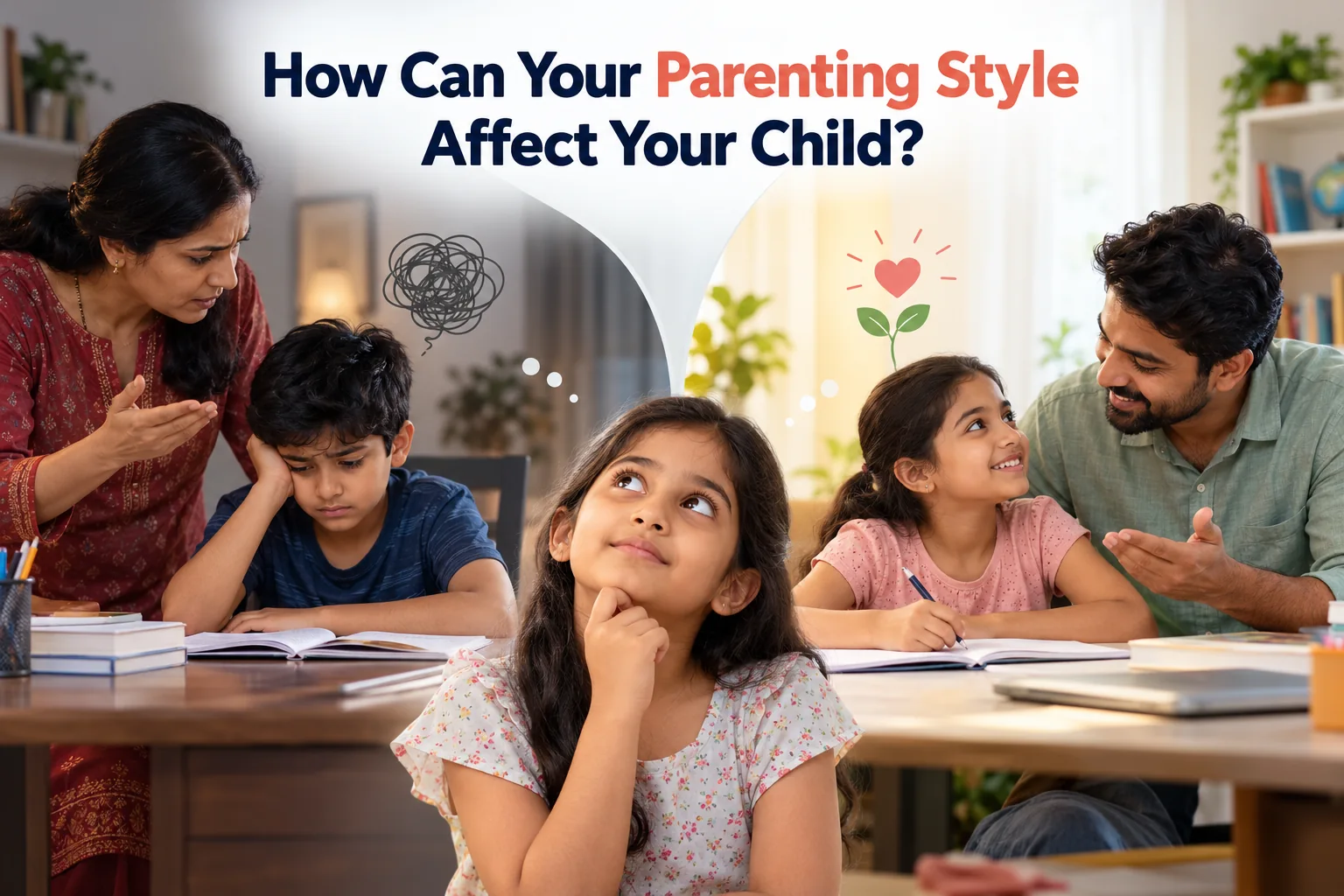
Children respond differently to discipline. Some become more cooperative, while others become anxious, withdrawn or defensive. Their age, temperament and experiences outside the family also matter.
1. Authoritarian Parenting: When Your Child Obeys but Fears Mistakes
You may believe strict discipline prepares children for life’s challenges. Perhaps you grew up hearing, “Don’t argue with elders” or “Do as you’re told,” and expect similar behaviour from your child.
In some Indian homes, the father is the final authority on discipline. In others, the mother handles most corrections. Grandparents and relatives may also expect children to obey without questioning them.
What can work: Clear expectations can help children follow routines, complete responsibilities and understand consequences. However, these benefits come from consistent rules, not necessarily from harsh punishment.
What can go wrong: Suppose your child gets poor exam marks. You become angry, compare them with a cousin and warn them not to repeat it.
The next time their marks fall, they hide the result.
You wanted them to study harder. Instead, they may have become more worried about your reaction than the actual problem.
Repeated harsh criticism can make some children hesitant to express opinions, fearful of failure or overly dependent on approval. Others may respond with anger and resistance.
A child might also stay silent when an uncle criticises them unfairly. You may see this as respect, while your child feels they aren’t allowed to explain themselves.
Research links authoritarian and psychologically controlling parenting with higher risks of emotional and behavioural difficulties. It doesn’t mean every strictly raised child will experience these problems.
When discipline involves hitting or threats
Some parents slap or hit their children after repeated disobedience, believing that a painful consequence will teach them not to repeat the behaviour.
The child may stop immediately. But that doesn’t establish that they’ve understood the rule.
They may simply be trying to avoid being hit again.
The World Health Organization’s research on corporal punishment links physical punishment with increased risks of aggression, anxiety, depression, poorer family relationships and longer-term mental-health difficulties. It finds no demonstrated long-term benefits.
Repeated violence, humiliation or frightening threats can also contribute to traumatic stress. Childhood maltreatment is associated with attachment difficulties in later relationships, although these outcomes are not inevitable.
If your child has become reluctant to share problems, understanding why children stop talking to their parents may help you recognise what has changed.
You can remain firm without using fear. When your child makes a mistake, address the behaviour, allow them to explain and decide on a reasonable consequence.
2. Authoritative Parenting: When You Set Rules and Listen Too
Your teenager wants to stay out an hour later than agreed. Instead of refusing immediately, you ask where they are, who they’re with and how they’ll return.
You may still say no, but you’ve considered their explanation.
This is authoritative parenting. You remain responsible for important decisions without treating every question as disobedience.
What can work: Children learn to respect boundaries while developing decision-making skills and confidence in expressing their opinions.
Research generally associates authoritative parenting with better emotional regulation, social development and fewer behavioural difficulties.
What can be difficult: Your child may still argue, ignore instructions or become upset when you refuse something. Grandparents may also disagree with allowing children to question adults.
The difference is how you handle these situations.
If your child disagrees with their grandfather, you can expect polite language without forcing them to accept every opinion.
If your child repeatedly ignores instructions, get their attention, give one clear direction and follow through. Repeating the request until you’re shouting can turn an ordinary instruction into a daily argument.
Listening doesn’t mean giving in. Your child can be disappointed with your decision while still being expected to follow a reasonable rule.
3. Permissive Parenting: When Saying No Becomes Difficult
Perhaps your parents were very strict. You remember being punished for small mistakes, having little privacy or rarely getting to make decisions.
Now you want your child to enjoy the freedom you didn’t have.
Some parents also become lenient because they feel guilty about working long hours or don’t want another argument after a tiring day.
What can work: Affectionate, approachable parents may find it easier to discuss feelings and personal concerns with their children. Reasonable freedom also supports independence.
What can go wrong: You allow one hour of gaming, but your child asks for another 20 minutes. You agree to avoid an argument.
Soon, the same thing happens every evening. When you finally refuse, your child becomes angry.
They’ve become used to the rule changing whenever they protest.
Research associates permissive parenting with some difficulties involving behavioural self-control. The concern isn’t affection or freedom, but inconsistent expectations.
If you experienced harsh parenting yourself, you might associate all discipline with the restrictions you disliked growing up. But setting a reasonable boundary is different from frightening or humiliating a child.
Choose limits you can maintain. Explain them beforehand and avoid changing them simply because your child becomes upset.
4. Uninvolved Parenting: When Your Child Stops Asking for Help
You may work long hours, pay school fees and arrange tuition to give your child better opportunities. That doesn’t make you an uninvolved parent.
The concern is a persistent lack of guidance, supervision and emotional attention.
What may appear positive: Some children learn to manage everyday responsibilities independently. But coping without dependable adult support isn’t necessarily healthy independence.
What can go wrong: Your child’s marks begin falling, so you arrange additional tuition. But perhaps they’re being bullied, struggling with friendships or feeling anxious about school.
If conversations at home rarely go beyond marks and responsibilities, the actual problem may remain unnoticed.
Research associates uninvolved parenting with greater emotional and behavioural adjustment difficulties. Over time, some children may become reluctant to seek help or struggle to trust others with personal concerns.
You don’t need hours of conversation every day. Notice changes in your child’s behaviour, follow up on things they’ve mentioned and give them your attention when something is troubling them.
Sometimes parental stress and demanding routines can make these connections harder to maintain.
Which Parenting Style Do Psychologists Recommend for Indian Families?
Authoritative parenting has the strongest overall research support. It combines clear expectations, emotional responsiveness and independence suited to the child’s age.
You don’t have to abandon Indian family values to follow this approach.
Your child can respect grandparents without agreeing with everything they say. They can take examinations seriously without being constantly compared with cousins. They can learn responsibility without being humiliated for mistakes.
Indian research on parent–adolescent relationships has found that children can experience close parental involvement as both supportive and restrictive, particularly around academic expectations.
You may repeatedly remind your child to study because you care about their future. They may experience those reminders as criticism or a sign that you’re never satisfied.
That doesn’t mean lowering every expectation. It may mean discussing their progress without making every conversation about what they haven’t achieved.
What if you were raised with strict or violent parenting?
You may have promised yourself that you would never shout at or hit your children. Yet when your child refuses to cooperate, you sometimes hear yourself using the same words your parents used.
That doesn’t mean you’re destined to repeat your upbringing.
Start by noticing the situations where you lose control. Is it unfinished homework, disrespectful language, arguments between siblings or embarrassment in front of relatives?
If you’re becoming too angry to respond calmly, make sure your child is safe and step away briefly. Return when you can address the behaviour without hitting, threatening or humiliating them.
You can apologise for shouting while still maintaining a reasonable consequence.
If you and your spouse have different approaches, agree privately on important rules. Otherwise, one parent may become the person children fear while the other repeatedly changes the consequences.
You don’t need to be perfectly calm in every situation. But repeated physical punishment, frightening anger or humiliation shouldn’t be accepted as ordinary discipline.
And if you’ve already made mistakes as a parent, meaningful change is still possible. A child’s emotional development is influenced by ongoing relationships and experiences, not one isolated interaction.
When Should Parents Consider Professional Support?
Occasional arguments, unfinished homework or resistance to rules don’t automatically require counselling.
Consider professional help when your child becomes persistently anxious about mistakes, withdraws from family conversations, hides important problems or shows changes affecting school and everyday life.
You may also be worried about your own reactions. Perhaps you shout more than you intend, struggle to control anger or find yourself using punishment you experienced as a child.
A psychologist can help you understand these patterns and develop more effective ways to manage behaviour, communicate expectations and respond to conflict.
At LeapHope, online parenting counselling can help you examine your parenting approach and family interactions. If your child is experiencing ongoing emotional or behavioural difficulties, child behaviour counselling may also be appropriate.
If physical punishment is occurring, stopping it should be an immediate priority rather than waiting to see whether emotional symptoms develop.
Final Thoughts
You may have grown up believing that strict discipline was necessary, or you may be determined to give your child a very different childhood.
Either way, your child will make mistakes, test boundaries and sometimes refuse to listen.
The question is how you respond when that happens.
Can your child admit poor marks without fearing humiliation? Can they disagree respectfully? Can they approach you after doing something wrong?
You can maintain rules, responsibilities and respect for elders without relying on fear.
The aim isn’t to raise a child who never makes mistakes. It’s to raise someone who can handle mistakes, take responsibility and trust you enough to ask for help.


