Last Updated on October 11, 2026
Clinically Reviewed By: Mansi More Nopany, RCI Clinical Psychologist
Does your child hit you, kick, scream, cry or throw things when angry?
Some of these reactions can be common in children, especially while they are still developing self-control. But when hitting keeps happening, becomes more intense or starts affecting life at home, parents naturally begin to worry about what is really behind the behaviour.
In this article, we look at why a child may hit when angry, why the behaviour can sometimes appear like simple misbehaviour, and when it may need closer attention.
Why Does My Child Hit Me When Angry?
There is usually no single reason behind hitting. A child’s age, temperament, communication skills, impulse control, stress and the situation around the outburst can all influence how they react.
The following factors may contribute to hitting, kicking, screaming or throwing things during frustration.
They Lose Control Before They Can Stop Themselves
Some children react very quickly when frustrated. They may know that hitting is wrong, but the reaction happens before they are able to pause and control it.
You may notice this immediately after your child is told “no,” loses a game, is corrected or has something taken away.
They Do Not Know How to Express What Is Wrong
Younger children may know that something feels wrong without having the words to explain it.
Hitting, kicking, crying or throwing something can become their immediate response when they cannot communicate what they want, what hurts or why they are frustrated.
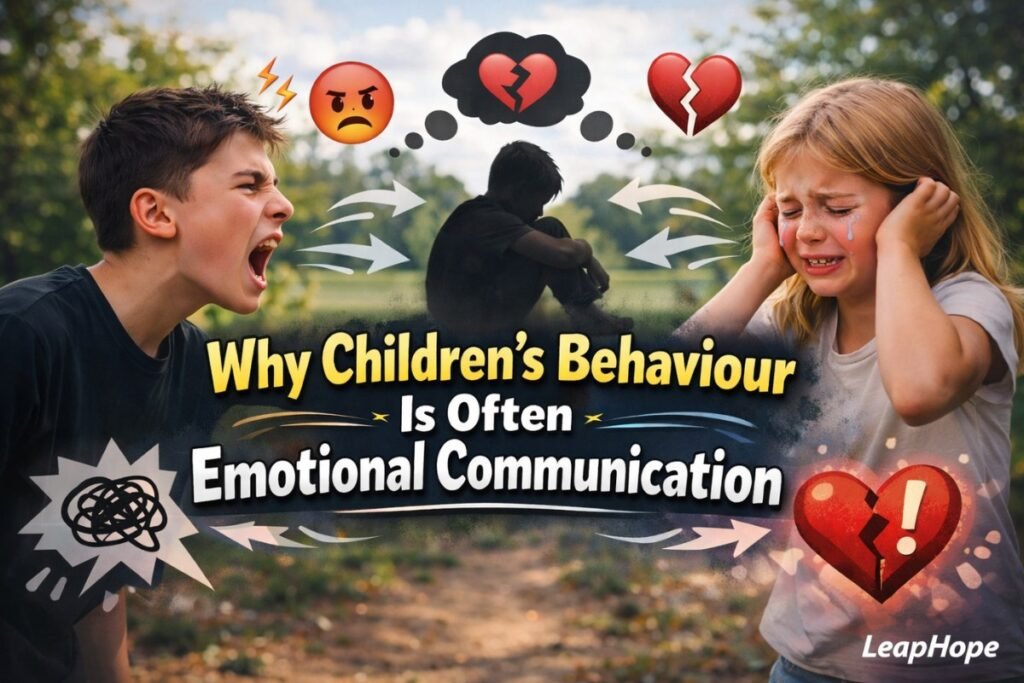
This is one reason it can be useful to look at what a child’s behaviour may be communicating rather than judging the behaviour by itself.
Something About the Situation Is Harder Than It Looks
Sometimes the important part is what happened before the hitting.
Homework may be unusually difficult. A transition may have happened suddenly. Losing may be particularly hard for that child. A sibling may have been irritating them long before the parent sees the final reaction.
Repeated aggression around the same situations can provide useful clues about what the child is struggling with.
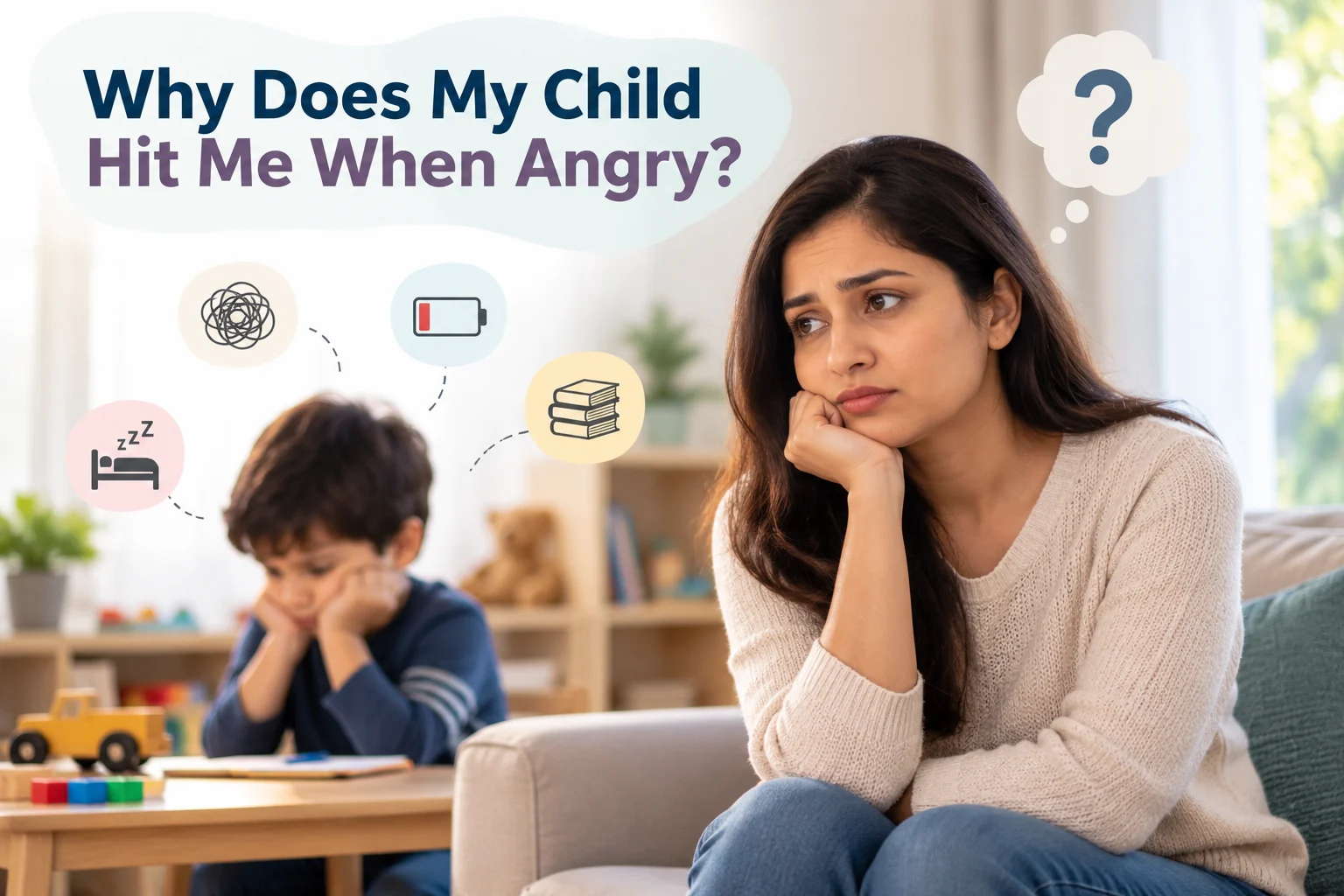
Tiredness, Hunger or Overstimulation Can Lower Their Control
Children often have less control over strong reactions when they are tired, hungry or overwhelmed.
The same child who handles a limit well in the morning may react very differently after a long school day, poor sleep or an overstimulating environment.
These factors can make an already difficult situation harder for the child to manage.
Hitting May Have Started Changing What Happens
Behaviour can also be shaped by what happens immediately afterwards.
For example, a parent removes a phone, the child hits, and the phone is returned because the parent wants the situation to end. If the same sequence happens repeatedly, hitting can gradually become associated with changing the outcome.
The child may be genuinely distressed while also learning that hitting affects what happens next.
They May Be Copying Aggressive Responses
Children learn from the ways people around them handle anger and conflict.
Frequent exposure to shouting, threats, physical aggression or very hostile disagreements can influence how a child responds when they become frustrated themselves.
Another Difficulty May Be Contributing
Repeated aggression can sometimes occur alongside ADHD-related impulsivity, anxiety, communication or learning difficulties, autism-related sensory overwhelm, trauma, chronic stress or other difficulties with emotional regulation.
Pain or physical discomfort can also change a child’s behaviour, particularly when a younger child cannot clearly explain what is wrong.
A broader pattern of symptoms, development and daily functioning is needed to understand whether another difficulty is contributing.
Is It Normal for a Child to Hit When Angry?
Yes, occasional hitting can happen in toddlers and preschoolers because self-control and communication are still developing. In an older child, repeated physical aggression deserves closer attention, particularly when it is not reducing with age.
It also becomes more concerning when hitting is frequent or severe, causes injuries or begins interfering with home, school or relationships.
The American Academy of Pediatrics also notes that aggressive behaviour can occur in young children while self-control is developing, but persistent or harmful aggression may need professional attention.
Why Does My Child Hit Me but Not Other People?
Some parents tell us that their child behaves well at school or around other adults but hits, shouts or misbehaves mainly with them at home. This can feel especially confusing when teachers describe the same child as calm and cooperative.
A child may spend much of the school day controlling their behaviour and struggle more once they return home. Home is also often where they face limits around screens, homework, bedtime, food and siblings.
Different responses from different adults can also affect where the behaviour appears most often.
This pattern deserves closer attention when a child behaves well outside but breaks down at home.
What Does Hitting Not Automatically Mean About Your Child?
When hitting keeps happening, parents may wonder whether their child is violent, spoiled, manipulative or developing a behavioural disorder.
Hitting by itself does not establish that:
- your child is a bad or violent child
- they lack empathy
- they are deliberately manipulating you
- they have ADHD or autism
- they have ODD
- they will grow up to become aggressive
One behaviour is not enough to establish a psychological or developmental diagnosis. A wider pattern of difficulties has to be considered.
What Should You Do When Your Child Hits You?
When your child hits, the immediate priority is safety, not a long conversation about why the behaviour is wrong.
- Stop the hitting: Create distance, block the hit if necessary and move siblings or dangerous objects away.
- Use very few words: A simple statement such as, “You can be angry. I won’t let you hit,” is enough.
- Avoid arguing during the outburst: A highly upset child may have little capacity to process a long explanation.
- Do not hit back: Responding with physical aggression introduces another aggressive response into the situation.
- Do not immediately reverse a reasonable limit: If hitting follows the removal of a phone or another boundary, changing the decision only because the child became aggressive can strengthen the pattern.
- Keep your own response controlled: The immediate aim is to bring the situation back to safety.
The discussion about what happened can take place after the child has settled.
What Should You Do After Your Child Calms Down?
Keep the conversation simple.
You might start with what actually happened: “You wanted the phone and I said no. Then you hit me.”
For a younger child, practising a simple alternative may be more useful than asking them to explain complex emotions.
Depending on their age, this may be:
- “Stop.”
- “No.”
- “Help me.”
- “My turn.”
- “I need a break.”
- walking away
- calling an adult
- keeping their hands away from the other person
The same situation can be practised later when everyone is calm. This gives the child another response to use when something similar happens again.
If somebody was hurt or something was damaged, the child can also take part in repairing what happened in a way appropriate for their age.
When Should You Talk to a Therapist About Your Child’s Hitting?
You do not need to wait until hitting becomes severe. Parents can speak with a child psychologist simply because they want to understand their child’s behaviour or development better.
Professional assessment is particularly useful when:
- hitting is frequent, severe or getting worse
- someone is being injured
- objects are being used during aggressive outbursts
- aggression appears in several settings
- the behaviour seems unusual for the child’s age
- school, friendships or family life are being affected
- aggression appears alongside significant attention, communication, learning or developmental difficulties
- there has been a sudden and significant change in behaviour
A child psychologist can examine development, communication, emotional regulation, attention, family context, triggers and behavioural patterns rather than looking only at the hitting.
LeapHope child psychologists focus on psychological assessment, behaviour and therapy. When a medical assessment is appropriate, parents may also be advised to consult the relevant medical professional.
Parents can explore child behaviour counselling or speak with a psychologist even when they mainly want professional guidance about what they are seeing at home.
LeapHope works with families across India, the USA, Canada, the UK, Australia and the UAE, as well as families living in other countries.
Final Thoughts
When a child repeatedly hits during anger, the hitting is only one part of the picture. Their age, development, communication, environment and the situations in which aggression appears can tell us much more.
Understanding that pattern can help parents recognise whether the behaviour is part of development, needs closer attention or would benefit from assessment by a child psychologist.