Last Updated on October 4, 2026
If your teenager seems angry all the time, even ordinary conversations can start feeling difficult.
You ask about homework and get snapped at. You mention screen time and suddenly it becomes an argument about trust. You say no to going out and hear that you “never understand.”
Parents searching how to deal with an angry teenager often want to know what to say in the moment.
But psychologists usually start somewhere else.
They first ask what kind of anger this is, what triggers it, how easily it starts, how long it lasts and whether it is mainly happening with parents or across the teenager’s whole life.
Because teenage anger is not one single problem.
What Do Psychologists Mean by Teenage Anger?
Anger, irritability and aggression are related, but they are not the same.
Anger is an emotion. A teenager may feel angry after being criticised, embarrassed, rejected, restricted or treated unfairly.
Irritability means anger is easier to trigger. An irritable teenager may seem constantly annoyed, frustrated or ready to snap even before a major argument begins.
Psychologists may also distinguish between persistent irritability and visible outbursts. One teenager may stay grumpy and reactive for hours. Another may seem fine between sudden explosions.
Aggression is different again. It refers to behaviour such as hitting, threatening, deliberately damaging property or trying to harm someone.
That distinction matters.
A teenager saying:
“Leave me alone. I’m angry.”
is not the same clinical picture as a teenager threatening a parent or smashing furniture.
And an angry teenager does not automatically have an anger disorder.
Irritability can occur alongside anxiety, depression, ADHD, poor sleep, emotional regulation difficulties, school stress and family conflict. Sometimes it is also part of ordinary adolescent frustration.
So instead of immediately asking:
“Does my teenager have anger issues?”
a psychologist is more likely to ask:
What makes this teenager’s anger unusually easy to trigger, difficult to regulate or disruptive to everyday life?
Why Do Teenagers Get So Angry With Parents?
Some parent-teen conflict is connected to a normal developmental change.
Teenagers increasingly want more control over their own lives.
They start asking:
“Why can’t I decide?”
“Why do you need to know?”
“Why don’t you trust me?”
“Why can everyone else do this?”
Parents, meanwhile, are still responsible for safety, education, money, sleep, devices, substances, curfews and many other decisions.
That creates a genuine tension.
The parent may think:
“I am trying to protect you.”
The teenager may hear:
“You don’t trust me.”
The parent may think:
“You still need boundaries.”
The teenager may hear:
“You think I’m incapable of making decisions.”
Neither interpretation automatically tells the whole story.
This is one reason teen anger at parents can become much stronger during adolescence even when the family relationship was previously close.
The teenager is not simply becoming “rebellious.” Their relationship with authority is changing.
They increasingly expect explanations, privacy and some voice in decisions affecting them.
That does not mean parents should surrender important boundaries.
It means that a parenting style that worked at 10 may not work exactly the same way at 16.
Today’s Teenagers Also Have More Information and Comparison
Modern teenagers are not learning about relationships, boundaries and independence only from parents.
They see:
- friends’ family rules
- parenting content
- mental health videos
- relationship advice
- discussions about privacy
- different cultural values
- influencers talking about independence
- online communities discussing what is “normal”
Some of this information is thoughtful.
Some is simplistic or wrong.
But it changes the parent-child conversation.
A parent can say:
“This is how things are done.”
And the teenager knows immediately that other families may do things differently.
That does not make the teenager right.
But it means authority increasingly has to coexist with explanation, trust and gradually increasing independence.
Why Phones Can Make Teenage Anger Harder to Understand
Parents often say:
“I only asked him to put his phone away.”
Or:
“I only asked why she was still online.”
But the phone may contain much more than entertainment.
For a teenager, it can also hold:
- friendships
- group chats
- private conversations
- romantic relationships
- school communication
- photos
- social status
- arguments
- rejection
- embarrassment
A teenager may therefore already be upset before the parent says anything.
They may have been excluded from a group chat, ignored by someone they like, embarrassed online or involved in an argument with a friend.
Then a parent says:
“Phone away.”
And the reaction appears completely out of proportion.
From the parent’s perspective, the anger came from nowhere.
From the teenager’s perspective, the parent entered a situation that had already been building.
This does not excuse disrespect.
It helps explain why the visible trigger and the actual emotional load may be different things.
Phones also create new privacy conflicts.
Parents may see monitoring as a safety measure.
Teenagers may experience the same behaviour as entering a private social world.
The useful question is therefore not simply:
“Should parents check phones?”
It is:
What level of supervision makes sense for this teenager’s age, maturity, behaviour and actual safety risk?
Phone use also connects with sleep.
Late-night messaging, gaming, scrolling and online conflict can reduce sleep and make frustration harder to tolerate the next day.
So when a teenager is angry all the time, sleep belongs in the assessment too.
When Is Teenage Anger More Than Normal Frustration?
Psychologists do not decide this based on whether a teenager gets angry.
Almost every teenager does.
They look at the pattern.
How Easy Is the Anger to Trigger?
Does it take a major disappointment?
Or can a very small request produce an extreme reaction?
A teenager becoming frustrated after losing an important opportunity is different from one exploding because dinner is ten minutes late.
How Often Is It Happening?
Occasional conflict is different from:
- arguments every day
- several outbursts a day
- constant irritability between arguments
If parents feel their teenager is angry all the time, frequency matters.
How Intense Does It Become?
There is a difference between:
“I’m annoyed.”
and:
screaming, threatening, destroying property or becoming physically aggressive.
How Quickly Do They Recover?
Some teenagers become angry quickly but calm fairly quickly too.
Others remain furious for hours or carry the argument into the next day.
Recovery is an important part of emotional regulation.
Where Does the Anger Happen?
Does the teenager mainly become angry with parents?
Or are there similar problems with:
- teachers
- friends
- siblings
- coaches
- classmates
Anger mainly during parent-child conflict suggests a different pattern from irritability appearing almost everywhere.
Is It Affecting Everyday Life?
Look at:
- school
- friendships
- hobbies
- sleep
- family relationships
- daily routines
The greater the impairment, the more important assessment becomes.
Has Something Clearly Changed?
A teenager who has always been emotionally intense is different from someone who was previously calm and has suddenly become unusually angry.
If that is the pattern, read our guide on sudden anger in a previously calm child or teenager.
Teen Anger Is Not the Same as Normal Moodiness
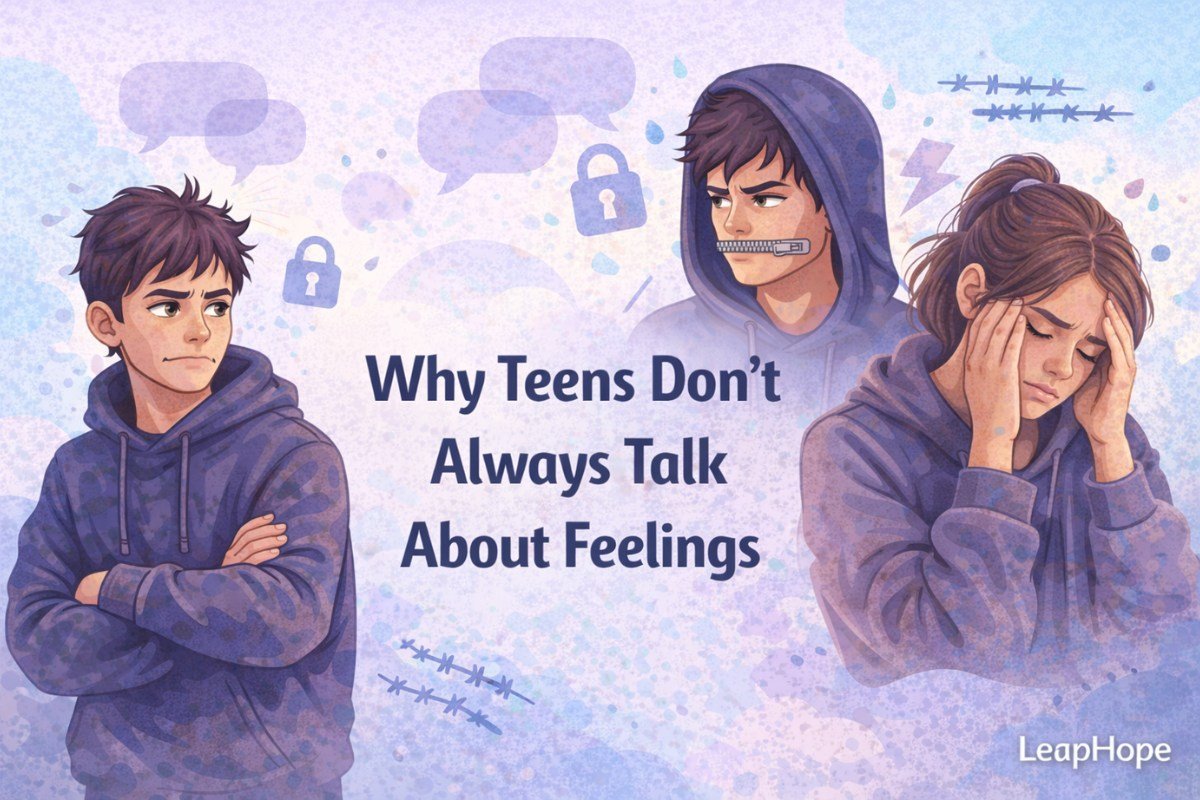
Teenagers naturally experience changing moods.
They can be enthusiastic one hour, disappointed the next and irritated later in the evening.
Persistent irritability is different.
Pay closer attention when teenage anger appears alongside:
- loss of interest
- social withdrawal
- falling school performance
- major sleep changes
- persistent sadness
- anxiety
- hopelessness
- unusual impulsivity
- significant personality change
If you are unsure whether the wider emotional pattern is still within a normal teenage range, our guide on teenage mood swings and when parents should worry explores that distinction in more detail.
The key point is:
Irritability is a signal to investigate, not a diagnosis by itself.
The American Academy of Child and Adolescent Psychiatry similarly emphasises looking at the frequency, intensity and impact of severe emotional outbursts rather than treating the outburst itself as a diagnosis.
How Should Parents Deal With an Angry Teenager in the Moment?
Once anger is escalating, the immediate goal is usually not to win the argument.
It is to prevent the situation from becoming more destructive.
That does not mean giving in.
It means recognising that a highly angry teenager is unlikely to process a long lecture very well.
Keep your response shorter.
Lower the intensity rather than matching it.
Do not add five unrelated complaints.
Do not bring up everything they did wrong last month.
And if both of you are becoming increasingly angry, pause the discussion.
You can return to the issue later.
Accept the Emotion Without Accepting Every Behaviour
A parent can say:
“I understand why you’re angry.”
without saying:
“Your behaviour is acceptable.”
Those are different things.
A teenager may be genuinely furious about:
- being told no
- losing phone access
- having a curfew
- not being allowed to attend something
- being confronted about schoolwork
The emotion can be real.
The boundary can still remain.
A useful distinction is:
You are allowed to be angry. You are not allowed to threaten, hit or intimidate someone because you are angry.
This prevents two common mistakes.
One is dismissing the teenager’s emotion completely.
The other is excusing harmful behaviour because the teenager is distressed.
Return to the Real Problem After Everyone Calms Down
Once the anger has settled, the conversation can become more useful.
Instead of:
“Why are you always like this?”
try to understand:
- what triggered the argument
- what the teenager thought you meant
- what they wanted
- where the behaviour crossed a boundary
- what could happen differently next time
A simple question such as:
“What happened just before this became such a big argument?”
can reveal much more than another lecture.
Understanding the trigger does not remove accountability.
It helps you solve the right problem.
When Anger Becomes Aggression
Anger is an emotion.
Aggression is behaviour.
Parents should treat them differently.
A teenager can feel extremely angry without:
- hitting
- threatening violence
- breaking things
- throwing dangerous objects
- blocking someone from leaving
- harming themselves
- threatening with a weapon
- Once there is a credible risk of harm, safety becomes the priority.
Do not continue arguing simply to prove that you are in control.
Create distance where possible.
Move siblings or vulnerable family members away from the situation.
If someone is in immediate danger, seek urgent local emergency help rather than waiting for a routine counselling appointment.
The reason for the anger can be explored later.
Safety comes first.
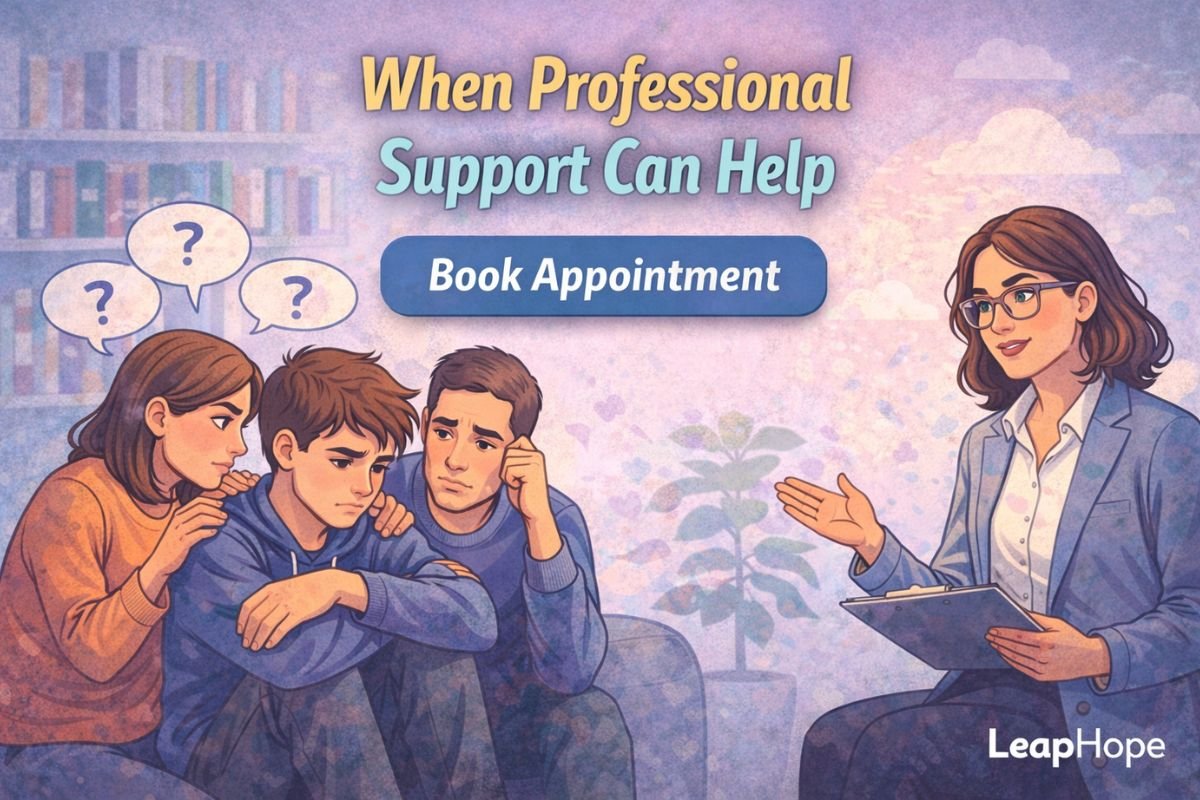
When Should an Angry Teenager See a Psychologist?
Consider professional assessment when teenage anger is becoming more frequent, easier to trigger, harder to recover from, aggressive, or is beginning to affect school, friendships or family life.
What appears alongside the anger also matters. Persistent worry and avoidance can point toward anxiety, while impulsivity, poor frustration tolerance and attention difficulties may make an ADHD assessment relevant. If arguments are mostly around grades, exams or refusing school, academic pressure may be part of the problem too.
Another important sign is when the whole family starts adjusting around the teenager’s mood. Parents avoid ordinary questions, siblings keep their distance, and everyone checks whether the teenager seems angry before speaking.
At that point, the issue is affecting family functioning, not just producing occasional arguments.
Parents do not need to know whether the cause is anxiety, low mood, ADHD, stress or something else before asking for help. Working out what is driving the anger is part of the assessment.
How LeapHope Supports Teenagers With Anger and Their Parents
At LeapHope, an angry teenager is not automatically treated as rebellious or badly behaved.
The psychologist looks at the pattern around the anger: what triggers it, how intense it becomes, how long it lasts, where it happens and what else has changed in the teenager’s life.
If repeated shouting, defiance or loss of control is becoming the main problem, child behaviour counselling may be relevant. If conflict is being maintained by repeated parent-teen power struggles, parenting counselling can also help parents change the interaction without giving up reasonable boundaries.
The teenager gets space to explain their side as well.
Depending on what is found, support may include CBT-based strategies, emotional regulation, frustration tolerance, communication work and parent guidance.
Families who are unsure where to start can explore LeapHope’s online child and teen counselling.
Final Thoughts
If you are wondering how to deal with an angry teenager, do not judge the situation only by the loudest argument.
Look at the wider pattern.
How easily is the anger triggered? How intense does it become? How quickly does your teenager recover? Is it mainly happening with parents, or is it affecting school, friends and everyday life too?
Some teenage anger comes with the normal push for more independence. Some is connected with stress, poor sleep, online conflict, school pressure or repeated family power struggles.
And sometimes persistent irritability or aggression deserves a closer psychological assessment.
Teenagers still need boundaries. But as they grow, those boundaries usually work better alongside trust, explanation, responsibility and age-appropriate freedom.