Women sometimes tell us, “My husband cheated on me while I was pregnant,” or, “My boyfriend cheated during my pregnancy and I don’t know what to do.”
The timing can make the betrayal especially painful.
Pregnancy already brings physical changes, emotional stress and major decisions about the future. Discovering infidelity during this period can affect your sense of trust, safety and stability in the relationship.
You may start asking:
- Was it because intimacy changed?
- Did I do something wrong?
- Does he still care about me?
- Can I trust him again?
- Should I stay or leave?
The first thing to separate is what changed during pregnancy from what your partner chose to do.
Why Being Cheated on During Pregnancy Can Hurt So Deeply
Infidelity during pregnancy can feel like both betrayal and loss of support.
You may have expected your partner to become more dependable during pregnancy, but instead you are now questioning whether you can rely on him during childbirth and after the baby arrives.
Pregnancy can affect sex, energy, mood, body image and how much attention partners give each other. These changes can affect the relationship, but they do not cause cheating.
Your partner may have felt stressed or disconnected. Crossing the boundary was still his decision.
Why Might a Partner Cheat During Pregnancy?
There is no single reason.
Possible factors may include weak boundaries, a need for outside validation, poor coping with stress, unresolved relationship problems or an existing pattern of secrecy.
These may help explain the behaviour. They do not excuse it.
Poor Boundaries May Have Existed Before Pregnancy
Sometimes the affair exposes a pattern that was already present.
There may have been earlier secrecy, inappropriate conversations, attention-seeking or weak boundaries with other people.
Ask yourself whether this behaviour appeared completely new or whether there were smaller warning signs before pregnancy.
That helps distinguish an isolated event from a longer pattern.
He May Have Struggled With Increased Responsibility
Pregnancy can bring financial pressure, lifestyle changes and the reality of becoming a parent.
Some people respond to this stress by withdrawing or avoiding responsibility.
That does not cause cheating, but it may reveal how your partner handles pressure when more maturity and emotional presence are required.
He May Have Sought Outside Validation
Some people rely heavily on attention from others to feel wanted or important.
During pregnancy, your attention may naturally shift toward your health, appointments and preparing for the baby.
If your partner responded by secretly seeking validation elsewhere, that reflects how he handled the change — not a failure on your part to give him enough attention.
He May Have Avoided Difficult Emotions
A partner who struggles to talk about stress, insecurity or loneliness may avoid those feelings rather than discuss them directly.
Outside attention can sometimes become part of that avoidance.
The important issue is not simply that he felt stressed. It is how he chose to deal with that stress.
Existing Relationship Problems May Have Become More Visible
You may already have had arguments, emotional distance, communication problems or dissatisfaction before pregnancy.
Pregnancy can place additional pressure on those difficulties.
But relationship problems and cheating are separate issues.
Both partners may contribute to problems within a relationship. The person who cheated remains responsible for crossing that boundary.
If you both decide to continue the relationship, rebuilding trust after cheating usually means addressing both the betrayal and the relationship problems that existed before it.
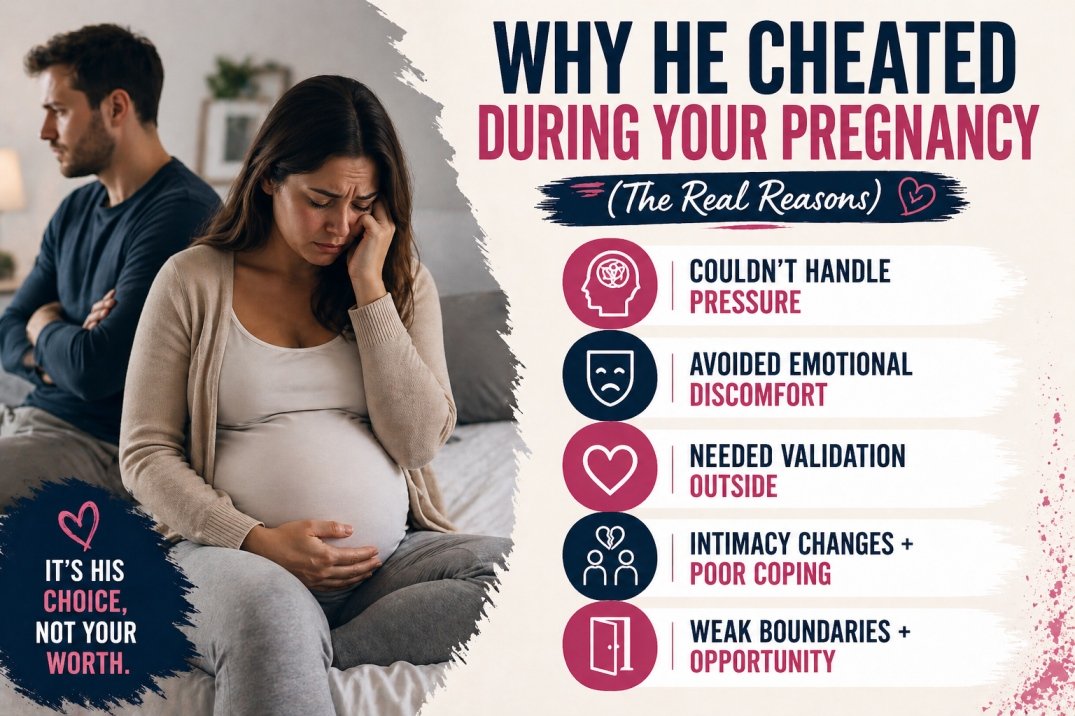
Changes in Intimacy During Pregnancy
Pregnancy can change sexual desire, comfort and frequency. Tiredness, nausea, pain, body changes and worry about the pregnancy can all affect intimacy.
If your partner felt disconnected or frustrated, that needed to be discussed with you. Cheating created a separate problem: secrecy and loss of trust.
The important question now is whether he can talk honestly about what was happening without using pregnancy or changes in sex to shift responsibility.
Does Cheating Mean He Does Not Care About You or the Baby?
Not always.
Someone can still care about their partner and behave in a way that seriously damages the relationship.
What matters more now is how he behaves after the affair is discovered.
Look at whether he:
- tells the truth
- ends contact with the other person
- accepts responsibility
- avoids blaming you
- takes your distress seriously
- respects the fact that trust may take time to return
His behaviour is more useful than trying to judge what he “really feels.”
Why You May Still Love Him
You can feel deeply hurt and still love your partner.
Emotional attachment does not disappear the moment trust is broken. You still have your shared history, routines, plans and connection as future parents.
You do not need to treat those feelings as a decision.
Still loving him does not mean you have forgiven him, and it does not mean you have to stay.
Should You Stay or Leave?
You do not have to decide immediately unless there is a safety concern.
Instead, look at the pattern around the affair and what has happened since.
Ask yourself:
- Was this one incident or part of repeated secrecy?
- Are new details still coming out?
- Has the affair actually ended?
- Is he blaming you, pregnancy or lack of sex?
- Does he accept reasonable boundaries?
- Do you feel safe disagreeing with him?
- Is he willing to work on the relationship after the immediate crisis settles?
If you are repeatedly seeing dishonesty, blame, intimidation or no willingness to change, it may help to look at the wider signs a relationship may not be repairable.
Can a Relationship Recover After Cheating During Pregnancy?
Yes, some relationships do recover.
But recovery usually depends on what happens after the cheating is discovered.
Trust becomes more possible when the partner who cheated is consistently honest, keeps clear boundaries and takes responsibility without becoming defensive each time the topic comes up.
The injured partner also needs enough time to decide whether rebuilding the relationship is something they actually want.
Recovery is less about getting back to “normal” and more about seeing whether the relationship can become safe, honest and dependable again.
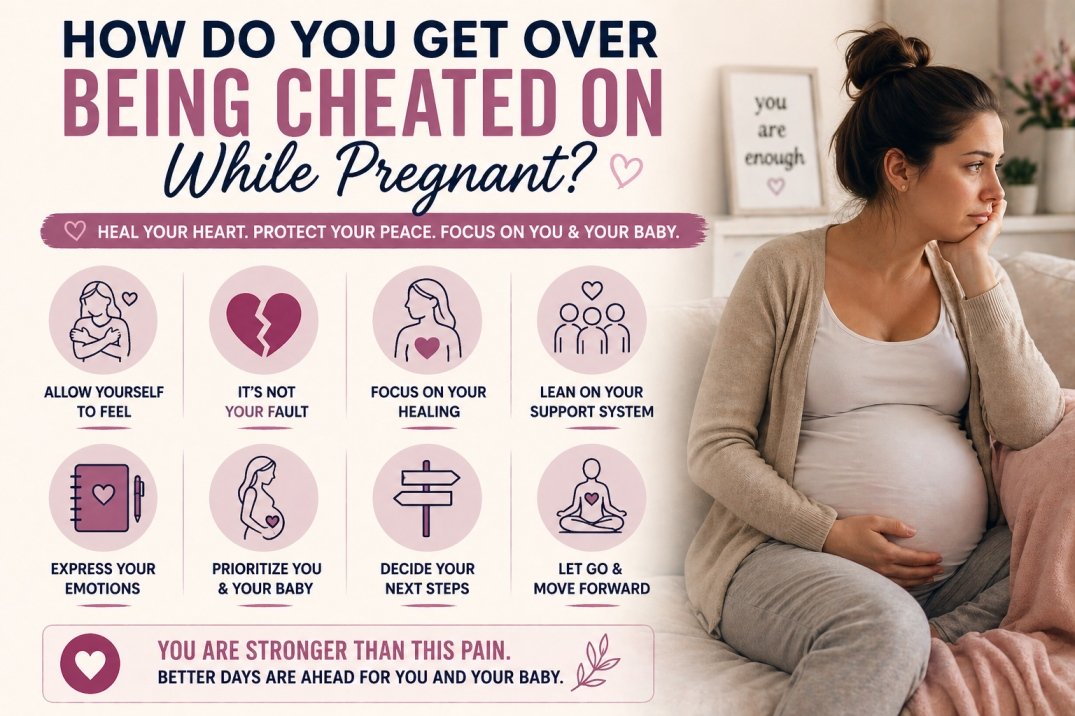
How to Cope After Being Cheated on While Pregnant
You do not need to solve the entire relationship immediately.
For now, focus on the decisions that affect your health, safety and ability to function day to day.
Give Yourself Some Time Before Making a Final Decision
Shock can make people move quickly toward either ending the relationship or forgiving everything just to reduce the uncertainty.
Unless there is an immediate safety concern, you can take time.
You can decide what contact you are comfortable with, what information you need from him and what boundaries you want while you work out what comes next.
Do Not Handle the Betrayal Completely Alone
Choose one or two people you trust rather than discussing the situation with everyone around you.
The right support person should be able to listen without pressuring you to stay, leave or forgive before you are ready.
Pregnancy itself can already affect emotional wellbeing. If you are struggling to cope, speak openly with your doctor, midwife or other maternity professional. The NHS guidance on mental health during pregnancy also recommends discussing significant emotional difficulties with a healthcare professional.
Consider Your Sexual Health
If your partner had sexual contact with another person, tell your prenatal healthcare professional.
Some sexually transmitted infections do not cause obvious symptoms, and pregnancy does not protect against them. Your doctor can advise which tests are appropriate based on your situation. The CDC provides specific guidance on STIs and pregnancy.
This is a health decision, not a statement about whether you intend to stay in the relationship.
Decide What You Need From Him Right Now
You may need:
- space from repeated arguments
- clarity about whether the affair has ended
- honesty about continued contact
- practical support during pregnancy
- clearer phone or communication boundaries
- time before discussing forgiveness or reconciliation
You do not need to pretend things are normal while trust is still unsettled.
When Professional Support May Help
Consider speaking with a psychologist or relationship therapist if you are:
- constantly replaying what happened
- struggling to sleep, eat or concentrate
- unable to decide what you want
- experiencing repeated disclosure of new lies
- trying to rebuild the relationship but getting stuck in the same arguments
- finding that every conversation about the affair ends in blame or shutdown
Individual counselling can give you space to process the betrayal without needing to decide immediately whether the relationship will continue.
If both partners want to understand what happened and assess whether the relationship can be repaired, online infidelity counselling can provide a structured setting for those conversations.
Where there is intimidation, coercion, threats or abuse, personal safety should be addressed before focusing on repairing the relationship.
The Bottom Line
Being cheated on during pregnancy can affect much more than trust in your partner. It can also change how secure you feel about the future you were preparing for.
You do not need to decide everything immediately.
Pay attention to what happens after the betrayal becomes known: whether your partner becomes more honest or more secretive, accepts responsibility or shifts blame, and respects your need for time and boundaries.
Those patterns will tell you more about the future of the relationship than one apology.
FAQs About Being Cheated on While Pregnant
How do I get over being cheated on while pregnant?
Start by taking care of your immediate emotional and physical health. Get support from someone you trust, speak with your maternity professional if the stress is becoming difficult to manage, and avoid forcing yourself to make a permanent relationship decision while you are still processing the initial shock.
Should I forgive him for cheating while I was pregnant?
Forgiveness is personal and does not need to happen quickly. Before deciding, look at whether your partner has ended the affair, accepted responsibility, become honest about what happened and changed the behaviour that damaged trust.
Why do I still love him after he cheated on me during pregnancy?
Because emotional attachment can remain even after trust has been damaged. Shared history, your relationship and preparing for a baby together can all make your feelings complicated. Loving him does not automatically mean you should stay or forgive.
Should I leave my partner if he cheated while I was pregnant?
There is no single answer that applies to every relationship. Consider the wider pattern of behaviour, whether the affair has ended, whether there is continued dishonesty, whether you feel safe and whether your partner is genuinely taking responsibility.
Can trust come back after cheating during pregnancy?
It can, but usually through consistent behaviour over time. Transparency, clear boundaries and accountability matter more than repeated promises that the cheating will never happen again.
Should I get tested for STIs if my partner cheated while I am pregnant?
Speak with your prenatal healthcare professional. Some STIs can occur without symptoms, and pregnancy does not provide protection from them. Your clinician can recommend testing based on your individual situation.