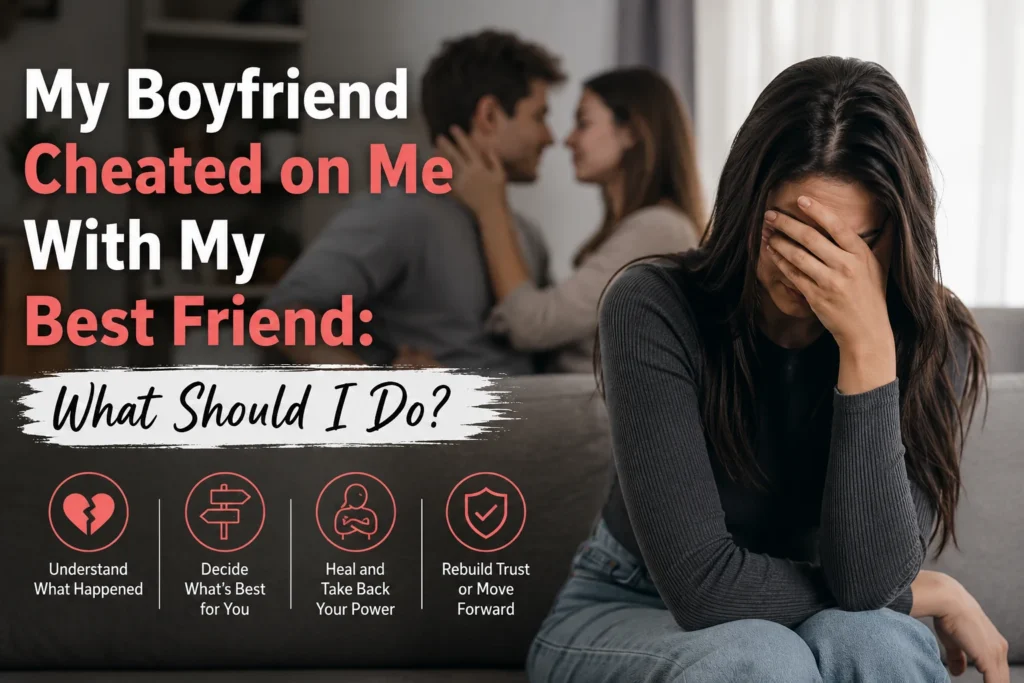

Leaving a relationship after discovering infidelity is rarely a calm or fully thought-out decision. It usually happens in a moment when the hurt, shock, and loss of trust feel too overwhelming to stay. In that state, walking away can feel like the only way to protect yourself.
At the time, the decision often feels clear.
What many people don’t expect is what happens later. As the intensity of the situation settles, other feelings begin to surface. You may start missing your partner, remembering the parts of the relationship that felt stable or meaningful, or questioning whether you left too quickly.
This can feel confusing. You know why you left, but at the same time, you still feel a pull towards them.
It’s common to find yourself wondering whether the relationship could have been worked through, or whether you made the right decision in that moment.
These thoughts don’t automatically mean that leaving was a mistake. More often, they reflect the fact that the relationship mattered and that you are still processing both the loss and the betrayal.
In this article, we’ll help you understand why this regret happens, what it may be telling you, and how to approach the question of going back with more clarity.
Why You Regret Leaving Even After You Were Cheated On
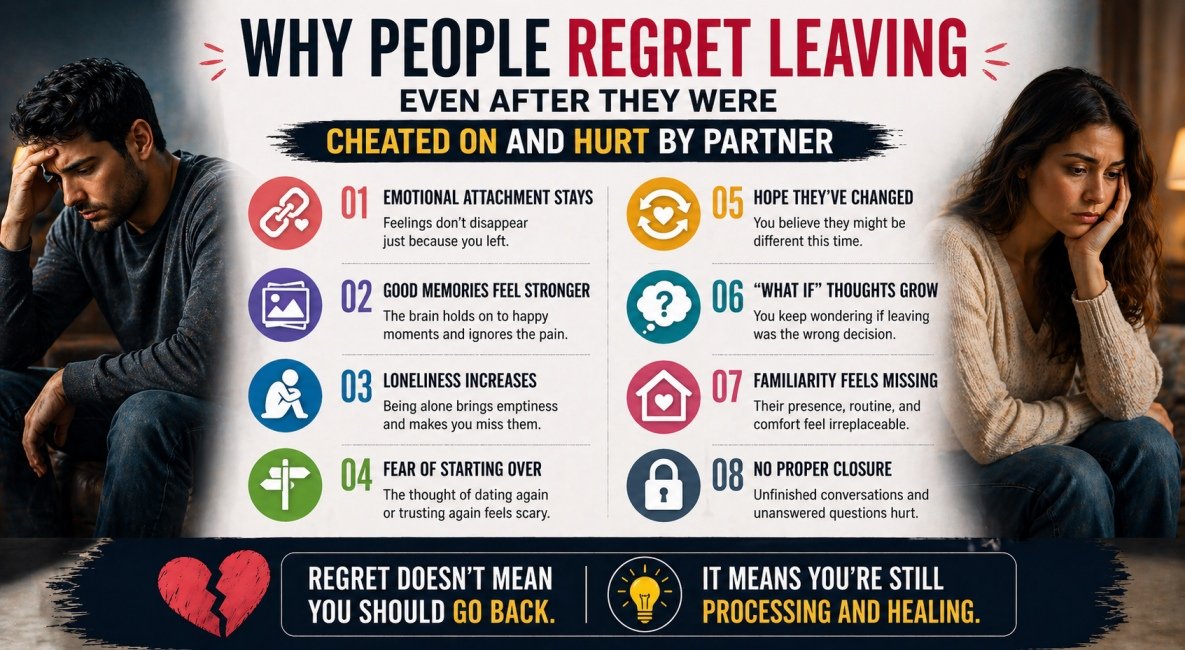
Leaving gave you relief, but not closure
Even though you were the one who was cheated on, hurt and betrayed, leaving doesn’t always bring immediate peace.
You left to protect yourself, but the decision happened in an intense emotional moment. It removed you from the situation, not from the attachment you had built.
As the anger settles, the bond can still remain. You may start missing them or questioning your decision, even while knowing they hurt you.
That’s where regret comes from, not because what happened was okay, but because you’re still processing both the pain and the loss at the same time.
Your mind starts replaying the relationship differently
After some time, your mind doesn’t hold on to the betrayal in the same intense way. The shock and anger reduce, and your focus can slowly shift.
You may find yourself thinking more about the connection you had, the good moments, the comfort, the familiarity, rather than what went wrong.
This doesn’t mean the betrayal was small. It means your mind is trying to reduce emotional pain by holding on to what felt safe and meaningful.
That shift can make the relationship look better in hindsight, which is why regret starts to feel stronger.
Distance creates emotional confusion
With time and distance, your emotional experience starts to shift. The constant exposure to the pain is gone, so the intensity naturally reduces.
As the hurt becomes less sharp, a sense of absence becomes more noticeable. You’re no longer dealing with the daily conflict, but you’re also no longer experiencing the connection that was once part of your life.
This can create longing.
At the same time, your memories may begin to feel softer. The mind holds on to moments of closeness more easily than moments of distress, especially when you are no longer in the situation.
That combination, less pain, more absence, can make the relationship feel more valuable than it did when you were in it, leading to confusion about whether leaving was the right decision.
The 3 Types of Regret You Might Be Feeling (And What They Really Mean)
1. Emotional Regret – “I still love them”
One of the strongest forms of regret is emotional. You may still miss them, think about their good qualities, or remember the parts of the relationship that felt real and meaningful.
This can feel confusing, especially after being hurt. A common thought is:
“They were good… so why did this happen?”
What makes this harder is that your mind holds both truths at once. You can remember the love, the connection, and the person they were to you while also knowing they betrayed your trust.
Love and betrayal can exist in memory at the same time. That doesn’t mean what they did was okay. It means the relationship had emotional depth, and your feelings don’t switch off just because something painful happened.
2. Practical Regret – “Life felt easier with them”
Another type of regret is not just emotional, but practical.
When you leave, you don’t only lose the person, you also lose the structure your life had around them. Shared responsibilities are gone. Daily routines change. If you were managing finances together, the pressure can feel heavier. If children are involved, parenting can become more demanding.
Even small things, having someone to talk to, rely on, or make decisions with, are suddenly missing.
Over time, this can lead to a different kind of thought:
“Life was easier when we were together.”
It’s important to recognise what this feeling is.
You’re not just missing a person, you’re missing a system your life was built on.
That sense of loss can feel like regret, even when the decision to leave was based on something real and painful.
3. Reality-Based Regret – “Maybe this wasn’t as rare as I thought”
With time, your perspective can shift in a different way.
You may start noticing how common infidelity seems to be in workplaces, social circles, or even in conversations around you. At the same time, you realise that “perfect” relationships are rare, and many couples go through difficult situations but still stay together.
This can lead to a quiet but powerful question:
“Did I leave something that was still workable?”
The comparison isn’t always accurate, but it feels real. When you see others staying despite problems, your own decision can start to feel less certain.
This type of regret comes from re-evaluating your situation in a broader context, not just from what you personally experienced.
4. Future Fear – “What if I don’t find better?”
Another layer of regret comes from looking ahead.
Starting over can feel uncertain. You may wonder how long it will take to rebuild, whether you’ll find someone you connect with in the same way, or if the next relationship might bring different problems.
This can create a sense of scarcity, the feeling that what you had was rare, and that you may not find something similar again.
At the same time, the past can start to look better than it really was. You remember the connection, the comfort, the familiar parts of the relationship, while the pain feels more distant.
That mix of fear and idealising the past can make going back seem like a safer or easier option, even if the original reason for leaving still matters.
Are You Missing Them… or the Relationship You Had Before the Cheating?
It helps to look at the relationship in two parts:
what it was before the cheating, and what it became after it happened.
Often, the feelings you’re having now are tied more to the earlier version, when things felt stable, familiar, and emotionally safe.
Emotional trap
It’s easy to grieve that past version and confuse it with the present reality. You may find yourself missing how things used to feel, rather than what the relationship actually became after trust was broken.
That’s where regret can become misleading.
Question to ask yourself
If nothing changed, would you still want to go back?
This question helps bring clarity. It shifts the focus from memories and feelings to the reality of what you would be returning to.
The Truth Most People Avoid – Not All Cheating Situations Are the Same
Case 1: A Generally Good Partner Who Made a Serious Mistake
In some relationships, the partner was otherwise responsible, emotionally present, and invested. The cheating feels like a rupture, a serious break in trust but not necessarily a pattern of behaviour.
In these situations, regret can feel stronger. You’re not only processing the betrayal, but also the loss of a relationship that had real value. That’s what creates the thought: “Maybe this could have been worked through.”
Case 2: Repeated Disrespect, Manipulation, or Emotional Harm
In other cases, cheating is not a one-time rupture but part of a larger pattern. There may have already been signs of dishonesty, emotional distance, or lack of respect before the betrayal happened.
Here, trust was already weakened.
In this situation, regret often comes from:
- loneliness
- emotional attachment
- the difficulty of letting go
Not necessarily from the relationship being healthy or sustainable.
Understanding which situation you were in can help you see your regret more clearly, rather than letting it guide your decision on its own.
The Illusion of Going Back – What Your Mind Doesn’t Fully Consider
Trust doesn’t automatically return
Missing someone doesn’t rebuild trust. Even if you go back, the impact of the betrayal doesn’t disappear. You may find yourself feeling suspicious, checking their behaviour, or struggling to feel emotionally secure again.
These reactions are not irrational. They are a response to what happened.
The relationship won’t go back to what it was
It’s natural to want things to feel the way they did before the cheating. But in reality, going back doesn’t restore the old relationship.
It creates a new one, shaped by what has happened, not separate from it.
Change requires effort from both sides
Repairing a relationship after cheating takes more than regret or apology. It requires consistent effort, accountability, and willingness from both people to rebuild trust over time.
Without that, going back may only bring the same pain back in a different form.
Before You Decide to Go Back, Ask Yourself These Honestly
Before acting on regret, it’s important to slow down and look at what is actually driving your thoughts. These questions are not meant to push you in any direction, but to help you see your situation more clearly.
- Am I feeling love, or am I reacting to loneliness?
Missing someone can feel like love, but sometimes it’s the absence of connection that is harder to sit with. - Do I miss them, or the version of them before the betrayal?
Be honest about whether your feelings are tied to the present reality or to how things used to be. - Have they shown real accountability, or just regret?
Regret is about feeling bad. Accountability is about taking responsibility and changing behaviour. - Can I realistically rebuild trust, not just hope for it?
Trust after betrayal takes time and effort. Ask yourself if you can genuinely move towards that, not just wish for it. - If nothing changed, would I still choose this relationship?
This helps separate emotional pull from practical reality. - Am I going back to heal, or to avoid pain?
Going back to escape loneliness or discomfort often leads to the same confusion again.
Taking the time to reflect on these questions can help you respond with clarity, rather than react from emotion alone.
When Going Back Might Make Sense (And When It Doesn’t)
It might be worth reconsidering if:
In some situations, going back can be explored carefully, not rushed into.
- There is genuine remorse and accountability, not just words but consistent behaviour
- They are open and transparent, without defensiveness or secrecy
- There is a clear willingness to rebuild trust slowly, understanding it will take time
- The cheating was not part of a repeated pattern
In these cases, the focus is not on going back to how things were, but on whether something new can be built with awareness.
It may not be the right decision if:
There are also situations where going back is more likely to repeat the same pain.
- You still feel emotionally unsafe or unsettled
- Trust feels difficult to imagine rebuilding
- The cheating was part of a larger pattern of behaviour
- Your decision is driven mainly by fear, loneliness, or pressure, rather than clarity
In these cases, the regret may feel strong, but it doesn’t necessarily point to a healthy direction forward.
What Your Regret Is Actually Telling You
Regret after leaving a cheating partner can feel like a sign that you made the wrong decision. But more often, it reflects what you’re still holding emotionally.
You may still feel connected to the person and the relationship you had. That doesn’t disappear immediately, even after something painful.
You may also not have fully processed the loss. Leaving creates distance, but understanding what happened, what it meant to you, and what you lost takes more time.
And at a basic level, it reflects something simple: you’re human. You’re capable of feeling hurt and still feeling attached at the same time.
Regret doesn’t always mean you made the wrong decision; it often means the decision was painful.
If You’re Considering Going Back, Do It With Clarity, Not Emotion
It’s natural to think about going back when the pain of separation starts to feel heavier than the clarity you had when you left. But acting on that feeling without understanding it can lead to the same cycle again.
Try not to go back just to:
- stop feeling lonely
- reduce the discomfort of the breakup
These are real feelings, but they don’t resolve what caused the relationship to break.
If you do consider going back, it helps to do it from a clearer place:
- where you see the situation as it is now, not how it used to be
- where your expectations are realistic, not based on hope alone
Going back should come from understanding, not from the need to escape how you feel.
Final Thought
You didn’t leave because you were weak. You left because something important in the relationship broke, and it affected your sense of trust and safety.
Missing them now doesn’t erase what happened. It reflects that the relationship mattered and that you are still working through what you felt and what you lost.
Before making any decision, it’s important to understand those feelings clearly, rather than reacting to them.
Missing them doesn’t erase what happened. But it does mean you need to understand your feelings before deciding your next step.
If you find yourself feeling stuck or unsure, speaking with an online clinical psychologist or seeking online marriage counselling can help you process this more clearly and make a decision that supports your emotional well-being.
FAQs
Is it normal to regret leaving after being cheated on?
Regret after leaving a cheating partner is common. Even though you were hurt, the emotional bond doesn’t end immediately. Missing them or questioning your decision usually reflects attachment and unprocessed loss, not necessarily a wrong decision.
Should I go back to someone who cheated on me?
Going back depends on the situation. It may be worth considering only if there is genuine accountability, transparency, and consistent effort to rebuild trust. Regret or loneliness alone is not a strong reason to return.
Why do I miss my ex even after they cheated?
You miss your ex because the relationship held emotional connection, routine, and familiarity. The betrayal caused pain, but it didn’t erase the attachment you built over time.
Can a relationship work after cheating and a breakup?
A relationship can work after cheating and a breakup, but it requires both partners to actively rebuild trust. This includes honesty, accountability, and long-term effort. Without these, the same issues often return.
How do I know if my partner has really changed after cheating?
Real change shows through consistent behaviour over time, not just apologies. Look for accountability, openness, and a willingness to address the reasons behind the cheating, not just regret for being caught.
Is going back after cheating a mistake?
Going back after cheating is not always a mistake, but it can be if the decision is driven by loneliness, fear, or pressure. It becomes more meaningful when it is based on clarity, realistic expectations, and evidence of change.