In relationship counselling today, many people come with concerns not about physical affairs, but about online behaviour that is making them anxious, emotionally disconnected, and insecure in their relationship.
Questions like:
“My husband keeps texting another woman late at night. He says she is just a friend. Am I overthinking?”
“Why does my girlfriend answer random DMs and allow flirting from other men online?”
“My boyfriend likes and DMs random hot girls on Instagram and Snapchat. Is this cheating?”
“My wife says online flirting is harmless because nothing physical happened. But why does it still hurt so much?”
“My partner has subscriptions to private online accounts and paid content on different websites. Does this count as infidelity?”
Many people feel confused because there may be no physical affair, yet the secrecy, emotional attachment, flirting, sexting, hidden chats, online subscriptions, or digital intimacy still create feelings of betrayal, anxiety, and broken trust inside the relationship.
In this article, we will explain which online behaviours commonly create relationship problems, when online interactions may cross into infidelity, why these behaviours happen, and how couples can create healthier digital boundaries in modern relationships.
Is Online Texting or Social Media Messaging Considered Cheating?
Not always.
Texting, chatting, or talking to people on social media for work, normal friendship, gaming, or information is usually not cheating.
But it can become a form of infidelity when the messages involve:
- flirting,
- sexting,
- emotional attachment,
- sexual conversations,
- hidden chats,
- or secret online relationships.
Many people feel hurt not because of physical cheating, but because their partner is giving emotional or romantic attention to someone else online.
What feels okay in one relationship may feel disrespectful in another. This is why couples need clear online boundaries and honest communication about what they are comfortable with.
Online Behaviours Which Create Relationship Issues and May Fall Under Infidelity
Today, people are constantly online and exposed to endless DMs, content, attention, and interactions from both strangers and known people. Many treat online flirting or emotional interactions as harmless because “nothing physical is happening.”
Below are 13 online behaviours that commonly create relationship stress and may cross relationship boundaries or fall under modern forms of infidelity.
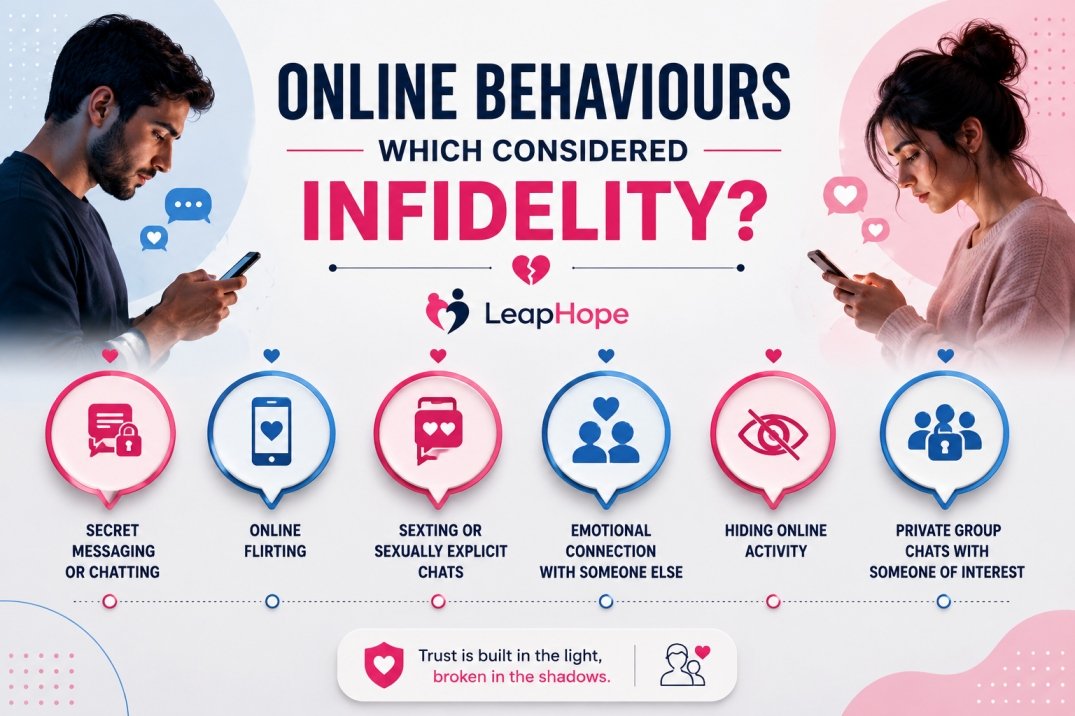
Constant Secret Texting With One Specific Person
If your partner constantly texts one specific person, whether it is a friend, coworker, ex, gaming partner, or random online connection, it can slowly create insecurity in the relationship, especially when the communication becomes secretive.
This may include frequent texting, late-night chats, hiding notifications, deleting messages, emotional conversations, or becoming defensive about the connection. Even if nothing physical is happening, repeated emotional attention toward someone else can still create trust issues and emotional distance in a relationship.
Deleting Messages and Hiding Social Media Conversations
If you constantly delete chats or hide conversations on Instagram, Snapchat, WhatsApp, Discord, or other social media platforms, it can slowly damage trust in your relationship.
This may include deleting flirtatious messages, hiding emotional conversations, removing sexual chats, archiving DMs, using disappearing messages, hiding online friendships, or clearing chats with someone your partner may feel uncomfortable about.
Even if nothing physical is happening, repeatedly hiding online conversations often creates suspicion, emotional insecurity, and relationship stress.
Late-Night Emotional Conversations Online
Many people complain that their partner stays emotionally connected to someone else online late at night. Sometimes it is a coworker, old friend, ex, gaming partner, or even a random online connection. Some people accidentally wake up and find their partner chatting at 2 AM, while others keep noticing constant late-night messaging but try to ignore it hoping it is harmless.
These conversations often become deeply personal, involving stress, loneliness, emotional support, relationship complaints, or private feelings that are no longer being shared inside the relationship. Even without physical cheating, this kind of emotional intimacy with someone else online can slowly create secrecy, emotional distance, insecurity, and trust issues between couples.
Flirting Through Instagram Likes, Reactions, and Comments
Many people feel uncomfortable when their partner constantly likes revealing pictures, reacts to stories with heart or fire emojis, leaves flirtatious comments, or repeatedly gives attention to certain people online.
Some see this behaviour as harmless social media activity, while others experience it as disrespectful, embarrassing, or emotionally hurtful, especially when it is done secretly or repeatedly. Over time, online flirting through likes, reactions, comments, and DMs can create insecurity, jealousy, and trust issues in a relationship.
Messaging an Ex Behind Your Partner’s Back
In today’s world, many people stay connected with their exes on social media even after moving on to a new relationship. During stress, boredom, loneliness, fights, or emotional distance, some slowly start talking to an ex again because the person feels familiar, emotionally understanding, or comforting.
Many people tell themselves it is harmless, “just friendship,” because nothing physical is happening and they are not meeting in real life. But when the conversations become secretive, emotionally personal, flirtatious, or hidden from a partner, it can slowly create insecurity, jealousy, emotional confusion, and trust issues in the relationship.
Sending Private Selfies or Personal Photos
Some people start privately sharing selfies, attractive pictures, gym photos, outfit pictures, or emotionally personal images with someone outside the relationship through Instagram, Snapchat, WhatsApp, Telegram, or other social media apps.
Many see it as harmless attention or casual interaction, especially when nothing physical is happening. But when the photos are shared secretly, meant to attract attention, emotionally intimate, flirtatious, or sexual in nature, it can create insecurity, jealousy, emotional distance, and trust issues in the relationship.
Keeping Hidden Snapchat, Telegram, or Instagram Accounts
Many people become suspicious when they discover hidden Snapchat, Telegram, Instagram, or other social media accounts their partner never mentioned before. Some people create private accounts to flirt, talk freely, follow certain people, hide conversations, or separate parts of their online behaviour from the relationship.
Even when someone says the account is harmless or “just private,” secrecy around social media activity often creates anxiety and trust issues. Hidden accounts, fake profiles, burner accounts, or secret online interactions can make a partner feel emotionally unsafe and disconnected in the relationship.
Paying for Private Online Content or OnlyFans Subscriptions
Many couples now argue about private online subscriptions such as OnlyFans, Instagram subscriptions, Snapchat premium accounts, Telegram channels, cam sites, private creator content, or other paid sexual and intimate platforms. Some people see it as harmless online entertainment, while others experience it as a form of betrayal, especially when it is hidden from the relationship.
The issue often becomes more serious when someone secretly spends money on private content, emotionally interacts with creators, requests personalised content, or gives sexual attention and energy outside the relationship. Even without physical contact, this behaviour can create feelings of rejection, insecurity, emotional distance, and broken trust for many partners.
Sexting or Sexual Conversations Online
Sexting or sexual conversations online are commonly viewed as a form of infidelity in many relationships, even when there is no physical meeting involved. This may include sexual texting, exchanging intimate photos, flirtatious voice notes, video calls, fantasy roleplay, or sexually suggestive conversations through Instagram, Snapchat, Telegram, WhatsApp, Discord, dating apps, or other online platforms.
Some people try to justify it by saying it is “only online,” but sexual attention, secrecy, and emotional excitement directed toward someone outside the relationship can still deeply hurt trust and emotional safety between partners.
Using Dating Apps While in a Relationship
Using dating apps while already being in a committed relationship creates trust issues for many couples, even when someone claims they are “just browsing” or “not meeting anyone.” Apps like Tinder, Bumble, Hinge, Grindr, and similar platforms are usually designed for attraction, flirting, dating, or emotional connection.
Some people use dating apps for validation, attention, boredom, curiosity, or ego boosts without intending physical cheating. But secretly swiping, matching, flirting, or chatting with other people online can still create insecurity, emotional distance, and feelings of betrayal inside the relationship.
Seeking Validation and Attention From Strangers Online
Some people slowly start enjoying online attention more than they realise. This may include posting attractive pictures mainly for reactions, privately sending outfit photos, gym selfies, getting-ready videos, morning office looks, or personal updates to someone they know has a crush on them, someone in the “friendzone,” coworkers, online friends, or even random people from social media.
Others constantly entertain flirtatious DMs, seek compliments, or enjoy feeling desired and emotionally wanted outside the relationship.
Acting Single on Social Media Despite Being in a Relationship
Some men and women continue acting single online even while being in a committed relationship or marriage. This may include hiding their relationship status, telling people they are single, flirting in DMs, building emotional connections online, entertaining romantic attention, or chatting with others as if they are emotionally available.
Sometimes this behaviour gets exposed through likes, comments, tagged posts, flirtatious reactions, or social media interactions that are eventually noticed by a partner or even by both social circles. Even if nothing physical happens, acting single online while committed to someone can create feelings of disrespect, embarrassment, insecurity, and broken trust in a relationship.
AI Girlfriend or Boyfriend Apps and Digital Emotional Intimacy
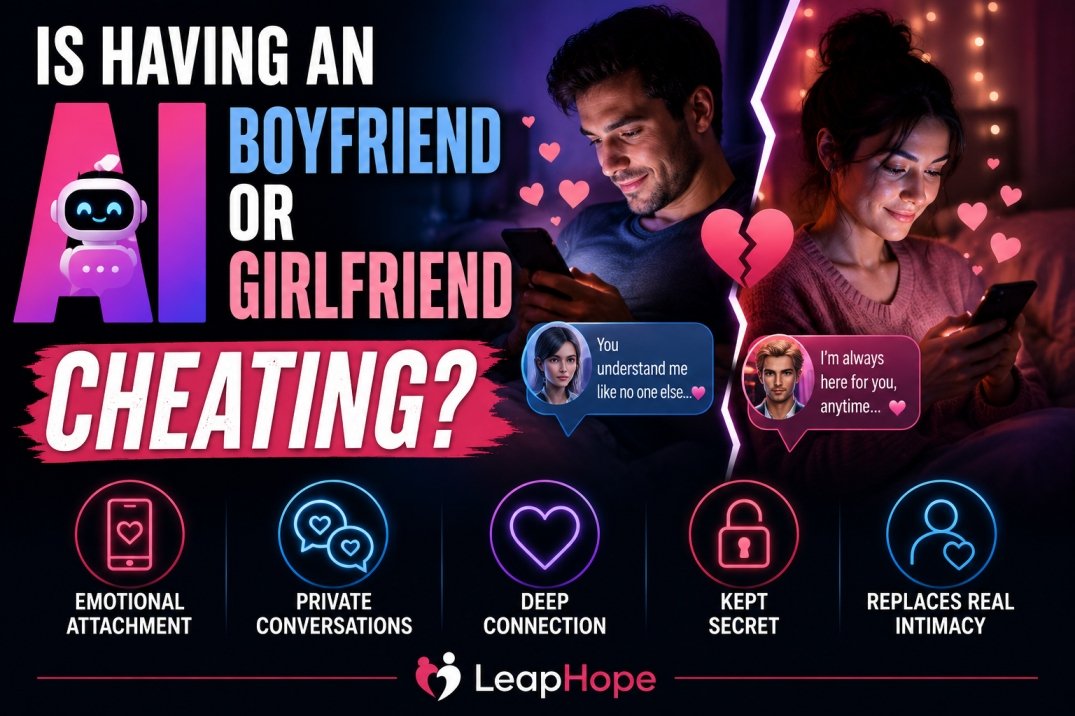
With the rise of AI girlfriend, boyfriend, and companion apps, many couples are now questioning whether flirting, sexting, romantic roleplay, or emotional attachment with AI tools or chatbots counts as cheating.
Some people use AI chats casually for entertainment, curiosity, loneliness, stress relief, fantasy conversations, or emotional comfort. But problems often begin when someone starts hiding AI conversations, spending emotional or sexual energy on AI interactions, flirting regularly, sexting, roleplaying romantic relationships, or becoming emotionally attached to virtual companions instead of connecting with their real partner.
Even though no real person may be involved, many people still consider it a form of digital infidelity, emotionally replaced, or betrayed when AI intimacy becomes secretive, emotionally intense, or starts affecting the real relationship.
Why People Engage in Online Infidelity Even After Being in a Relationship
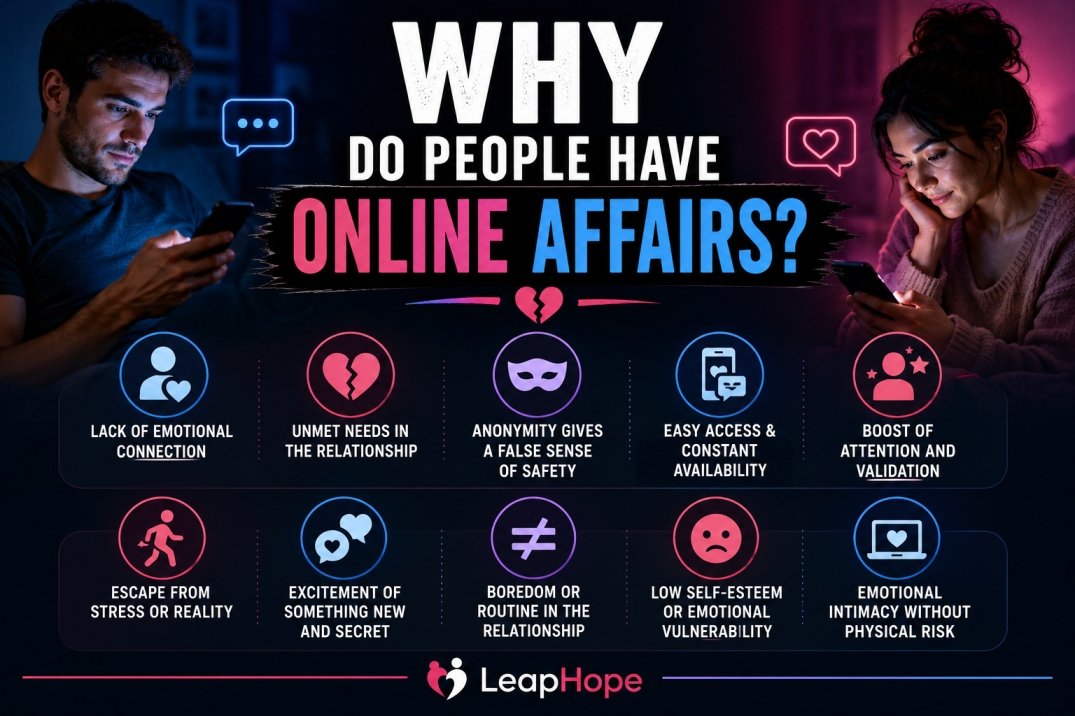
Online infidelity usually does not start suddenly. In many cases, people slowly become emotionally involved online while convincing themselves it is harmless because nothing physical is happening.
Some common psychological and behavioural reasons include:
- Feeling emotionally neglected, disconnected, or lonely in the relationship
- Wanting attention, compliments, validation, or excitement from others
- Enjoying the dopamine rush from likes, DMs, flirting, and online reactions
- Looking for emotional escape during stress, boredom, fights, or routine life
- Feeling more confident talking online than in real life
- Seeking emotional comfort from someone who feels “understanding”
- Craving novelty, curiosity, fantasy, or emotional stimulation
- Wanting to feel attractive, desired, or emotionally important again
- Believing online behaviour is “not real cheating” because there is no physical contact
- Slowly becoming emotionally attached without planning to cheat initially
- Using social media, dating apps, or online chats as entertainment or time pass
- Keeping backup emotional connections for validation or attention
- Enjoying secrecy, hidden attention, or private emotional intimacy
- Having weak or unclear relationship boundaries around online behaviour
- Spending more emotional energy online than inside the real relationship
Many people justify these behaviours by saying:
“It’s only online.”
“Nothing physical happened.”
“We are just friends.”
“I was only chatting.”
But even without physical cheating, repeated secrecy, emotional intimacy, flirting, or online sexual behaviour can still create insecurity, emotional pain, and trust issues in a relationship.
How To Create Healthy Online Boundaries
In today’s digital world, couples cannot always assume both partners see online behaviour the same way. Something one person sees as harmless may deeply hurt the other. This is why healthy online boundaries and honest communication are important in modern relationships.
Some healthy online relationship boundaries include:
- Discussing what both partners consider disrespectful online behaviour
- Being transparent instead of secretive about online friendships and interactions
- Avoiding hidden chats, disappearing messages, or deleting conversations regularly
- Setting clear boundaries around exes, flirting, dating apps, and sexual content
- Protecting emotional intimacy inside the relationship instead of seeking it outside
- Reducing validation-seeking behaviour from strangers online
- Respecting privacy without creating secrecy or emotional distance
- Addressing loneliness, emotional disconnection, or relationship stress early
- Creating shared expectations around social media behaviour and online interactions
- Avoiding online behaviour you would hide from your partner in real life
- Prioritising emotional connection with your partner over outside online attention
Healthy boundaries are not about controlling each other’s phones or social media. They are about protecting trust, emotional safety, honesty, and respect inside the relationship.
When to Seek Professional Help
Professional help may be needed when:
- Online boundary violations keep repeating despite promises or arguments
- Trust feels broken after hidden chats, online flirting, sexting, or emotional attachment with someone else
- You constantly fight about phones, DMs, social media, or online behaviour
- One or both partners feel emotionally disconnected, anxious, insecure, or unsafe in the relationship
- Online flirting, sexual behaviour, or validation-seeking starts becoming compulsive
- You feel emotionally exhausted from suspicion, checking, overthinking, or loss of trust
If online behaviour is affecting your mental health, emotional stability, relationship trust, or daily peace, professional support can help you understand the deeper emotional and psychological patterns behind it.
LeapHope offers online therapy for individuals struggling with anxiety, emotional distress, trust issues, compulsive online behaviour, and relationship insecurity, along with online marriage counselling and relationship therapy for couples facing emotional disconnection, online infidelity, or repeated trust problems.
The Bottom Line
Online cheating is not always about physical intimacy. In many modern relationships, secrecy, emotional attachment, flirtatious behaviour, sexual conversations, hidden online interactions, and digital intimacy can damage trust just as deeply.
Not every text, DM, or social media interaction is cheating. But when online behaviour becomes secretive, emotionally intimate, sexually charged, or starts replacing emotional connection inside the relationship, many people experience it as a form of infidelity.
Even in the modern digital world, most people still do not feel comfortable emotionally or sexually sharing their partner with someone else, whether it happens online or offline.
This is why healthy relationships today need clear online boundaries, honesty, emotional transparency, and open conversations about what both partners consider respectful behaviour in the digital world.
FAQs
Is chatting with others online considered cheating?
Online chatting alone is not automatically cheating. However, hidden emotional intimacy, flirtatious conversations, sexting, or emotionally depending on someone else online can cross relationship boundaries and feel like infidelity to many people.
So, I’ve caught my husband secretly texting a so-called female friend. Should I be worried that he hides their relationship?
Many people feel hurt not only because of the texting itself, but because of the secrecy around it. If conversations are being hidden, deleted, or defended aggressively, it can naturally create anxiety, insecurity, and trust issues in the relationship.
Is texting an ex behind your partner’s back emotional cheating?
For many couples, secret emotional conversations with an ex can feel like emotional cheating, especially when the chats involve emotional comfort, flirting, hidden communication, or emotional attachment outside the relationship.
Is texting another girl constantly and daily, and not telling your wife, considered cheating?
Many people experience this as emotional betrayal, especially when the conversations are emotionally personal, hidden, flirtatious, or begin replacing emotional connection inside the marriage.
If a husband was texting another girl behind your back and deleting everything, should that be considered cheating?
Deleting conversations often damages trust because it creates secrecy. Even if nothing physical happened, hidden emotional or flirtatious communication can still feel deeply hurtful and emotionally unsafe in a relationship.
When a married man is having feelings for another woman and he is only chatting with her, is that considered cheating?
Many people consider this a form of emotional infidelity when emotional intimacy, romantic feelings, secrecy, or emotional dependence develop outside the marriage, even without physical contact.
Is looking at other women online cheating?
Looking at attractive people online is not automatically cheating. But constantly consuming sexual content, hiding online activity, privately interacting with other women, or giving repeated sexual attention outside the relationship can create trust issues and may cross relationship boundaries for many couples.