
Reviewed by: Aradhana Gambhir
Yes, someone can love you and still cheat on you.
That answer can feel impossible to accept after betrayal. If they loved you, why would they risk losing you? Why lie, hide messages, become intimate with someone else, or do something they knew could seriously hurt you?
The confusion comes from treating love and faithful behaviour as the same thing. They are connected, but they are not identical.
Someone may feel emotionally attached to you, care about your future together, fear losing you, and still make a destructive decision because of poor boundaries, validation-seeking, impulsivity, avoidance, or a desire for excitement.
That does not make cheating less serious. It simply means cheating does not automatically prove that every feeling they had for you was fake.
If They Loved You, Why Did They Cheat?
Love is a feeling and attachment. Staying faithful also requires behaviour: honesty, self-control, boundaries, judgement, and the ability to deal with attraction or dissatisfaction without betraying the relationship.
A person can fail at those behaviours even while still feeling love.
This is why someone who cheated may still:
- panic when the relationship is about to end
- cry or show genuine regret
- say they never wanted to leave
- still feel emotionally attached to their partner
- continue caring about their family and shared future
The contradiction is real, but it is possible.
Psychology Today also discusses how infidelity can occur even when emotional attachment or love for the primary partner has not disappeared.
The more useful question after cheating is often not only:
“Did they love me?”
It is:
“Are they capable of behaving in a way that makes their love safe to trust?”
Why Do People Cheat on Someone They Still Love?
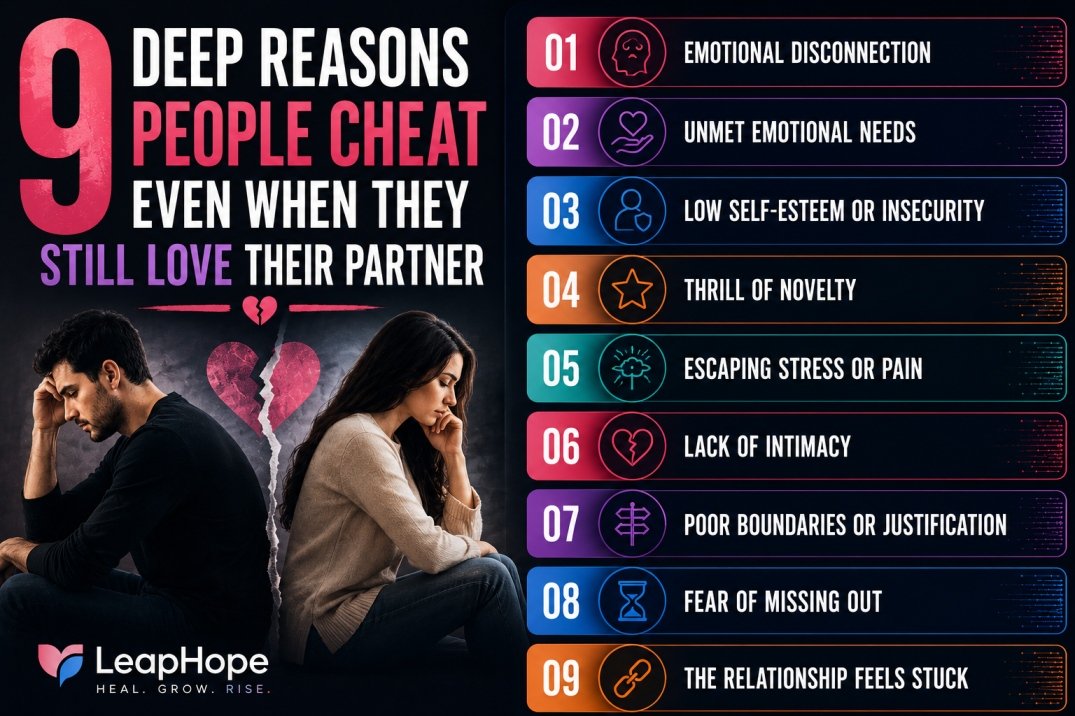
There is rarely one explanation, but several patterns appear repeatedly.
They Want Validation or to Feel Desired
Attention from someone new can make a person feel attractive, interesting, wanted, or important.
This can be especially tempting for someone whose confidence depends heavily on outside approval. They may enjoy the feeling without initially confronting what they are risking.
That explains the attraction. It does not excuse the decision to cross a relationship boundary.
They Want Escape or Excitement
Some affairs offer temporary relief from routine, stress, responsibility, or dissatisfaction with life.
The attraction may not be primarily about wanting another partner. It may be about how the person feels during the affair: exciting, free, desired, or different from their everyday self.
This is one reason someone may have an affair without actually wanting to leave their relationship.
Boundaries Cross Gradually
Not every affair begins with someone deliberately deciding to cheat.
A friendship can become more personal. Messages become more frequent. Emotional problems are shared. Flirting starts. Conversations are hidden.
The person may keep telling themselves that nothing serious is happening until the relationship has already crossed important boundaries.
This is particularly common with emotional affairs, where secrecy and emotional intimacy may develop before anything physical happens.
They Compartmentalise What They Are Doing
Some people are able to mentally separate the affair from the rest of their relationship.
They may act normally at home, show affection, make plans for the future, and still keep another part of their life hidden.
This does not mean they are unaware that cheating is wrong. It means they avoid fully connecting their behaviour with its consequences until the two parts of their life collide.
They Lack the Maturity to Protect What They Value
A person can value a relationship without having the emotional maturity needed to protect it consistently.
Love alone does not automatically create:
- self-control
- honesty
- healthy boundaries
- accountability
- good communication
- resistance to temptation
Someone can therefore love deeply and still behave badly.
That may be uncomfortable to accept, but it is often more accurate than assuming love should automatically prevent every destructive choice.

Does Cheating Mean the Relationship Was Fake?
Not necessarily.
After discovering an affair, many people begin reviewing the entire relationship:
“Was any of it real?”
“Were they lying every time they said they loved me?”
“Were all our good memories fake?”
The affair was real. The deception was real. But that does not automatically mean every loving moment before it was false.
People are capable of holding contradictory feelings and behaving inconsistently with their own values.
You do not have to rewrite your entire relationship as fake in order to recognise that your partner seriously betrayed your trust.
Both things can be true:
There may have been genuine love, and there was still genuine betrayal.
If They Say They Still Love You, Should You Believe Them?
They may be telling the truth.
But after cheating, their words should not be the main evidence you rely on.
Look at what happens next.
Someone who is genuinely taking responsibility should be willing to:
- end inappropriate contact with the other person
- stop hiding information
- answer reasonable questions honestly
- accept responsibility without blaming you
- understand why trust has been damaged
- accept that rebuilding trust may take time
- change the boundaries or behaviour that allowed the affair to continue
A person can love you and still be unsafe to trust at this moment.
That distinction matters.
Love describes how someone feels. Trust depends on what they repeatedly do.
If you are trying to judge whether their regret is genuine, look at the difference between apologies and the signs your partner is truly sorry after cheating.
Was It Because I Wasn’t Enough?
Being cheated on often creates immediate comparison.
Was the other person more attractive?
More interesting?
More successful?
Better sexually?
Easier to talk to?
These questions are understandable, but cheating is not a reliable measurement of your worth.
Affairs sometimes happen in unhappy relationships, but they can also happen in relationships where love, affection, sex, friendship, and stability still exist.
Problems inside the relationship can provide context. They do not transfer responsibility for cheating to the betrayed partner.
If someone was lonely, dissatisfied, sexually frustrated, or unhappy, there were other choices available: communication, counselling, boundaries, separation, or ending the relationship.
Cheating was still a choice made by the person who cheated.
Can Someone Regret Cheating If They Still Love You?
Yes.
A person may experience guilt, shame, fear, grief, or genuine regret once they fully understand what they have damaged.
But regret and accountability are different.
Someone can feel terrible about what happened and still avoid responsibility, minimise the affair, hide details, or repeat the same behaviour.
Genuine repair requires more than feeling bad.
It requires changed behaviour.
Does Love Mean You Should Stay After Cheating?
No.
Their love for you does not automatically mean you should forgive them, remain in the relationship, or trust them again.
Your decision depends on what happened and what happens afterwards.
Important questions include:
- Has the affair actually ended?
- Are they taking full responsibility?
- Are they still hiding information?
- Have the boundaries that allowed the affair changed?
- Do you want to repair the relationship?
- Are their actions becoming more trustworthy over time?
You can believe someone still loves you and still decide that the relationship is no longer acceptable to you.
Those two conclusions do not contradict each other.
Can a Relationship Recover If Love Is Still There?
Yes, some relationships recover after infidelity.
But love alone is not enough.
Recovery usually requires honesty, accountability, transparency, changed boundaries, and consistent behaviour over time.
The betrayed partner may also need time to process anger, confusion, intrusive thoughts, and uncertainty without being pressured to “move on.”
If both people choose to remain together, rebuilding trust after cheating becomes more important than repeatedly proving whether love still exists.
The question gradually changes from:
“Do you love me?”
to:
“Can I trust what you do?”
When Professional Support Can Help
After infidelity, couples can become trapped in the same conversation: one partner repeatedly asks for answers while the other becomes defensive, avoids the topic, or insists that apologising should be enough.
Marriage counselling for infidelity can help couples understand what happened, establish clear boundaries, work through the impact of betrayal, and decide whether rebuilding the relationship is realistic.
Therapy does not require the betrayed partner to forgive or stay. The purpose is to help both people understand the situation clearly enough to make informed decisions.
Final Thoughts
Someone can truly love you and still cheat on you.
That does not make the betrayal smaller, and it does not mean love should automatically be enough for you to stay.
Love and loyalty are connected, but loyalty also requires honesty, boundaries, judgement, self-control, and accountability.
So after infidelity, you do not have to solve the impossible question of whether every feeling your partner ever had was genuine.
Look at what matters now.
Do their actions match the love they say they feel?
That answer will usually tell you more than the words “I love you” alone.
FAQs
Can someone truly be in love with you and still cheat?
Yes. A person can remain emotionally attached to their partner while making choices that betray the relationship. Love does not automatically guarantee honesty, boundaries, self-control, or good judgement.
If someone cheats, does it mean they never loved you?
No. Cheating does not automatically prove that the relationship or their feelings were fake. Genuine attachment and betrayal can coexist, although the betrayal may still make the relationship unsafe or unacceptable.
Can someone cheat in a happy relationship?
Yes. Not every affair is caused by an unhappy relationship. Some cheating is connected to validation-seeking, opportunity, poor boundaries, novelty, impulsivity, or personal struggles rather than obvious dissatisfaction with the partner.
Should I believe someone who cheated when they say they love me?
It is possible that they still love you, but their behaviour after discovery matters more than the statement alone. Look for honesty, accountability, ended outside contact, changed boundaries, and consistent behaviour.
Can love save a relationship after cheating?
Love may provide a reason to try, but it is not enough by itself. Rebuilding a relationship after cheating requires trust, honesty, accountability, transparency, and sustained behavioural change from the person who betrayed the relationship.