Last Updated on December 29, 2025
Betrayal can change how a relationship feels almost overnight. What once felt safe may now feel uncertain, even if both people want to move forward. Trust doesn’t disappear all at once, but after betrayal, it often becomes fragile, easily shaken by small moments, questions, or silence.
Many people assume rebuilding trust means going back to how things were before. In reality, trust after betrayal usually has to be rebuilt in a different way. Doubt can linger even when apologies are sincere. Reassurance may help one day and feel insufficient the next. This back-and-forth is common, but rarely talked about openly.
Rebuilding trust isn’t just about fixing what was broken. It’s about understanding how betrayal changes emotional safety, communication, and expectations inside a relationship. Some couples manage to move forward together. Others realise that trust can’t be restored in the same form, even with effort.
This article explores what rebuilding trust after betrayal actually looks like inside a relationship, why the process often feels slow and uneven, and how trust changes as people decide what they are able and willing to rebuild.
What Breaks Trust in a Relationship?
Trust is fragile, and many factors can lead to its destruction. Some of the most common causes include:
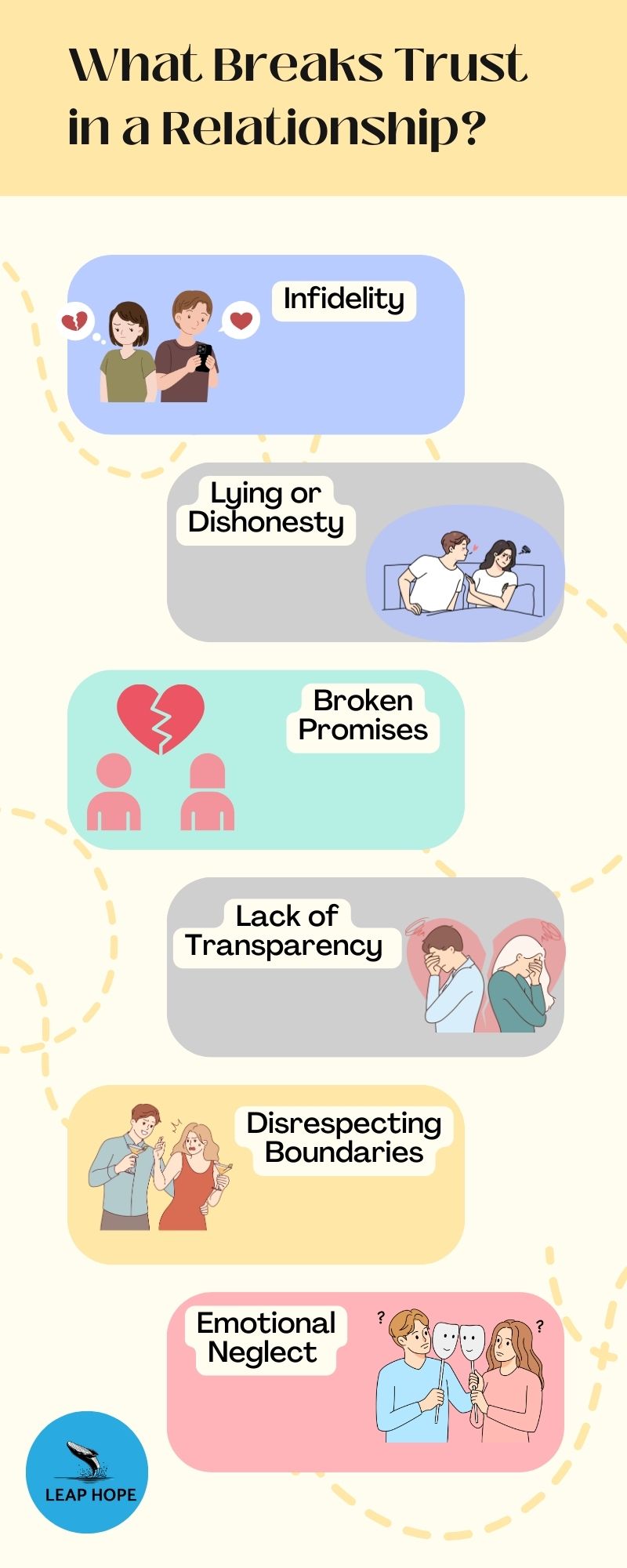
Infidelity
Infidelity often disrupts trust at its core. Beyond the act itself, it introduces doubt about honesty, emotional presence, and commitment. Even after apologies, questions tend to linger, making it difficult to feel secure in the relationship again.
Lying or Dishonesty
Trust erodes when truth feels inconsistent. Small lies, omissions, or half-truths can create a pattern where reassurance no longer feels reliable. Over time, this uncertainty can make even neutral situations feel suspicious.
Broken Promises
When commitments aren’t followed through, words begin to lose weight. Repeated broken promises often leave one partner questioning whether effort and accountability are shared equally in the relationship.
Lack of Transparency
Secrecy around emotions, finances, or daily life can quietly undermine trust. When openness is missing, partners may begin filling in gaps with assumptions, which often increases tension rather than clarity.
Disrespecting Boundaries
Ignoring emotional or personal boundaries can make a relationship feel unsafe. Even when intentions aren’t harmful, repeated boundary crossings can create emotional withdrawal and defensiveness over time.
Emotional Neglect
Trust also suffers when emotional needs go unmet. Feeling consistently overlooked or unsupported can be experienced as a form of betrayal, especially when closeness and care were once present.
Understanding how trust breaks helps explain why rebuilding it takes more than reassurance alone. Trust isn’t only about loyalty, it’s about feeling emotionally safe, respected, and considered over time.
How Lack of Trust Shows Up in Everyday Relationship Dynamics
When trust has been damaged, it often changes how partners relate to each other in subtle but persistent ways. These patterns don’t always look dramatic, but they can slowly affect connection and emotional safety.
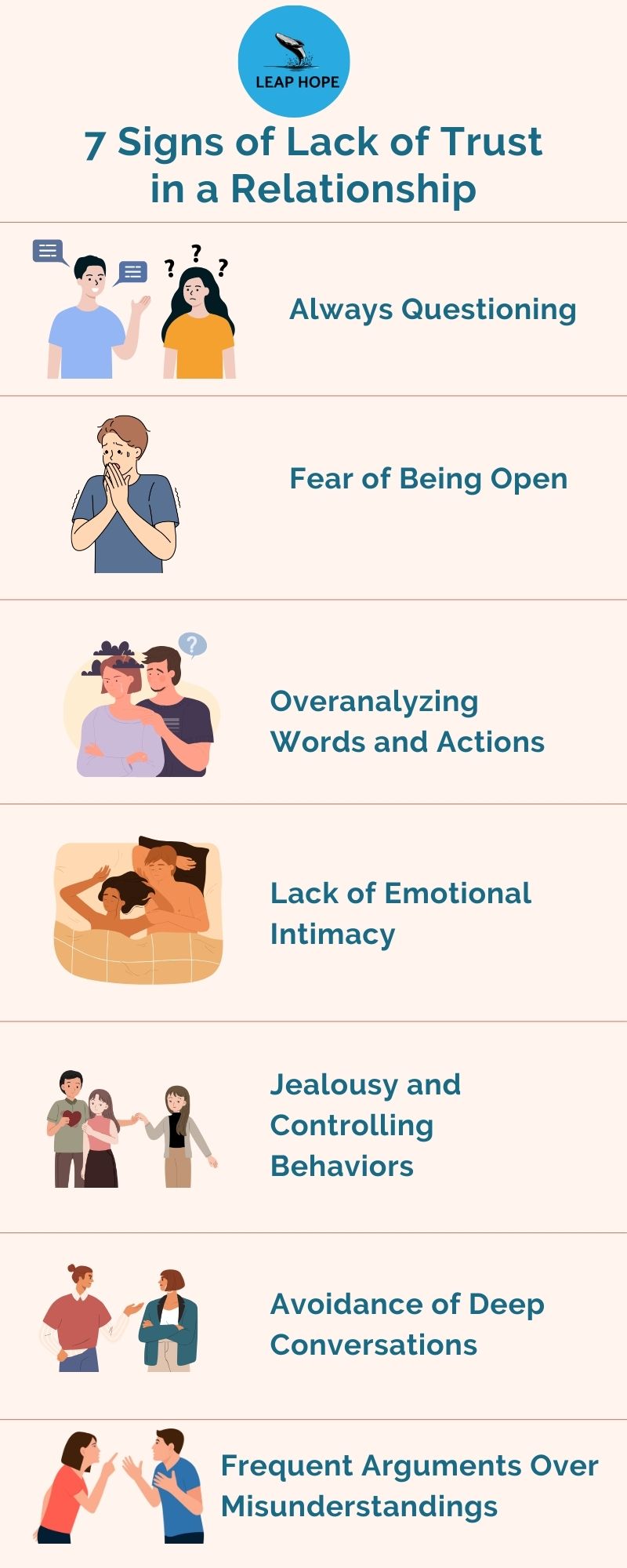
Constant Doubt and Questioning
One of the earliest shifts is second-guessing. Words, actions, or small changes in behaviour may start to feel suspicious, even when there’s no clear reason. This constant questioning can make everyday interactions feel tense or emotionally draining.
Difficulty Being Emotionally Open
After betrayal, vulnerability often feels risky. Sharing feelings, needs, or fears may feel unsafe, leading one or both partners to hold back emotionally. This guardedness isn’t a lack of care, it’s often a way of self-protection.
Overanalyzing Conversations and Actions
When trust is fragile, ordinary moments can feel loaded. Tone, timing, or wording may be examined closely, searching for hidden meaning. This heightened alertness can increase stress and make communication feel exhausting rather than supportive.
Emotional Distance and Reduced Intimacy
Trust plays a major role in emotional closeness. When it’s missing, partners may feel disconnected even while staying together. Conversations become surface-level, and deeper emotional sharing starts to fade.
Jealousy or Monitoring Behaviours
In some relationships, insecurity shows up as checking, reassurance-seeking, or controlling behaviour. These actions are usually driven by fear rather than intent, but they can further strain the relationship if left unaddressed.
Avoiding Difficult Conversations
To prevent conflict or emotional discomfort, partners may avoid serious discussions altogether. While this can feel like keeping the peace, it often leads to unresolved tension and growing emotional distance.
Frequent Misunderstandings and Conflict
Without trust as a stabilising force, misunderstandings become more common. Small disagreements escalate easily, and conversations that once felt manageable start turning into repeated arguments.
These patterns don’t mean a relationship is doomed. They reflect how betrayal reshapes emotional safety, often in ways that both partners struggle to articulate. Recognising these dynamics is an important step toward understanding what rebuilding trust actually requires.
What Rebuilding Trust After Betrayal Actually Involves
Rebuilding trust after betrayal isn’t a checklist or a linear process. It’s a gradual shift in how safety, honesty, and consistency are experienced inside the relationship. Many couples expect trust to return once apologies are made or time passes, but rebuilding usually requires deeper changes in how the relationship functions day to day.
Below are the core elements that tend to shape whether trust can slowly rebuild over time. These are not steps to follow in order, but patterns that often need to be present for trust to feel possible again.
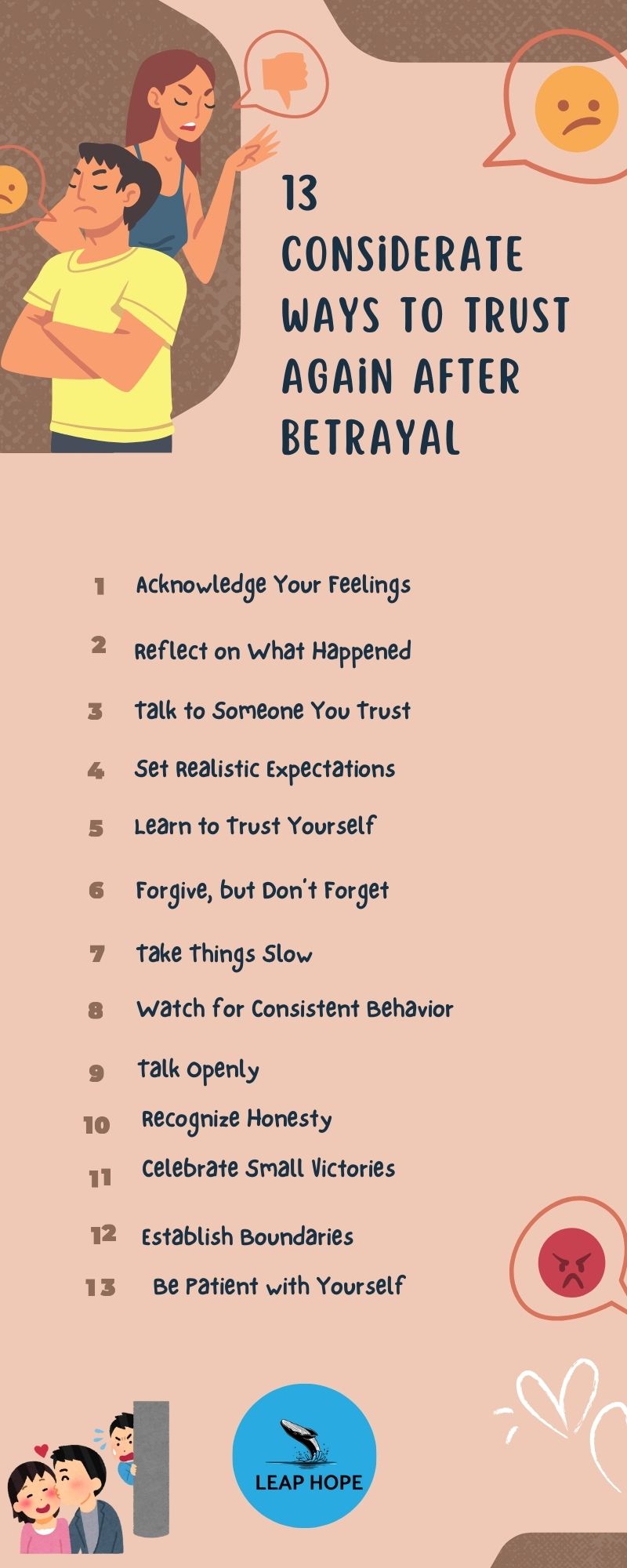
Emotional Acknowledgement Without Pressure
One of the first psychological shifts happens when emotions are allowed to exist without being managed or corrected. Anger, grief, confusion, and doubt often surface in waves. Trying to calm them too quickly can actually delay trust rebuilding, because the body hasn’t yet registered safety.
Meaning-Making, Not Replaying
Psychologists often distinguish between understanding a betrayal and reliving it. Rebuilding trust requires making sense of what happened without repeatedly reopening the wound. The goal is not to analyse every detail, but to integrate the experience into a clearer understanding of the relationship.
Restoring Self-Trust Before Relational Trust
After betrayal, many people struggle more with trusting themselves than trusting their partner. Doubting one’s judgment, instincts, or boundaries is common. Psychological recovery often involves rebuilding confidence in one’s own perceptions, rather than relying solely on reassurance from the other person.
Consistency That Reduces Hypervigilance
Trust begins to shift when the nervous system no longer feels the need to stay alert. This happens through consistency over time, not intensity. Predictable behaviour, emotional availability, and follow-through gradually reduce the need to monitor or question.
Tolerance for Emotional Ambiguity
Psychologists recognise that rebuilding trust involves holding mixed feelings at once. Love and anger, hope and fear, closeness and distance can coexist. Trying to force emotional clarity too early often leads to shutdown or resentment.
Boundaries as Emotional Safety, Not Punishment
Boundaries play a critical role in trust recovery, but not as ultimatums. Healthy boundaries signal what is needed to remain emotionally present, not what the other person must do to earn forgiveness. When boundaries are clear, trust has a structure to rebuild within.
Repair Without Self-Abandonment
One of the most overlooked aspects of rebuilding trust is ensuring that the person who was hurt does not minimise their needs to keep the relationship intact. Psychological healing requires that repair does not come at the cost of self-respect or emotional suppression.
Acceptance That Trust May Return Differently
Clinically, trust after betrayal rarely looks identical to trust before it. Many relationships that recover do so with a more conscious, slower, and less idealised form of trust. Accepting this shift often reduces frustration and unrealistic expectations.
This perspective helps explain why rebuilding trust cannot be rushed or simplified. It is not a single decision or a set of actions, but a gradual reorganisation of emotional safety within both the individual and the relationship.
When Rebuilding Trust Is Possible and When It Isn’t
Rebuilding trust after betrayal depends less on intention and more on what actually changes over time. Some relationships are able to repair trust in a way that feels emotionally safe. Others discover that trust cannot be restored without ongoing strain or self-betrayal.
When Rebuilding Trust Is More Likely
Trust has a better chance of rebuilding when both partners acknowledge the impact of the betrayal without minimising it. Responsibility is taken consistently, not just during emotional conversations. Difficult topics can be discussed without repeated defensiveness, shutdown, or blame.
Over time, words and behaviour begin to align, and emotional safety slowly increases instead of staying fragile.
When Rebuilding Trust Becomes Unlikely
Trust often struggles to return when accountability is avoided, forgiveness is rushed, or the betrayed partner feels pressured to “move on” before feeling ready. If dishonesty, secrecy, or boundary violations continue, trust tends to remain unstable, regardless of effort or time.
In these situations, the relationship may stay stuck in cycles of doubt and reassurance without real repair.
When Choosing to Step Away Can Be Healthy
There are times when focusing on rebuilding trust keeps one person emotionally exhausted, anxious, or disconnected from themselves. Recognising that trust cannot be rebuilt in a way that feels safe is not a failure, it’s an honest assessment of the relationship’s limits.
Choosing to step away can be an act of self-respect rather than abandonment.
When Therapy Can Support Rebuilding Trust After Betrayal
For some couples, rebuilding trust feels overwhelming to navigate alone. Therapy doesn’t fix betrayal or guarantee reconciliation, but it can offer a structured space where difficult emotions and patterns can be explored without escalating conflict.
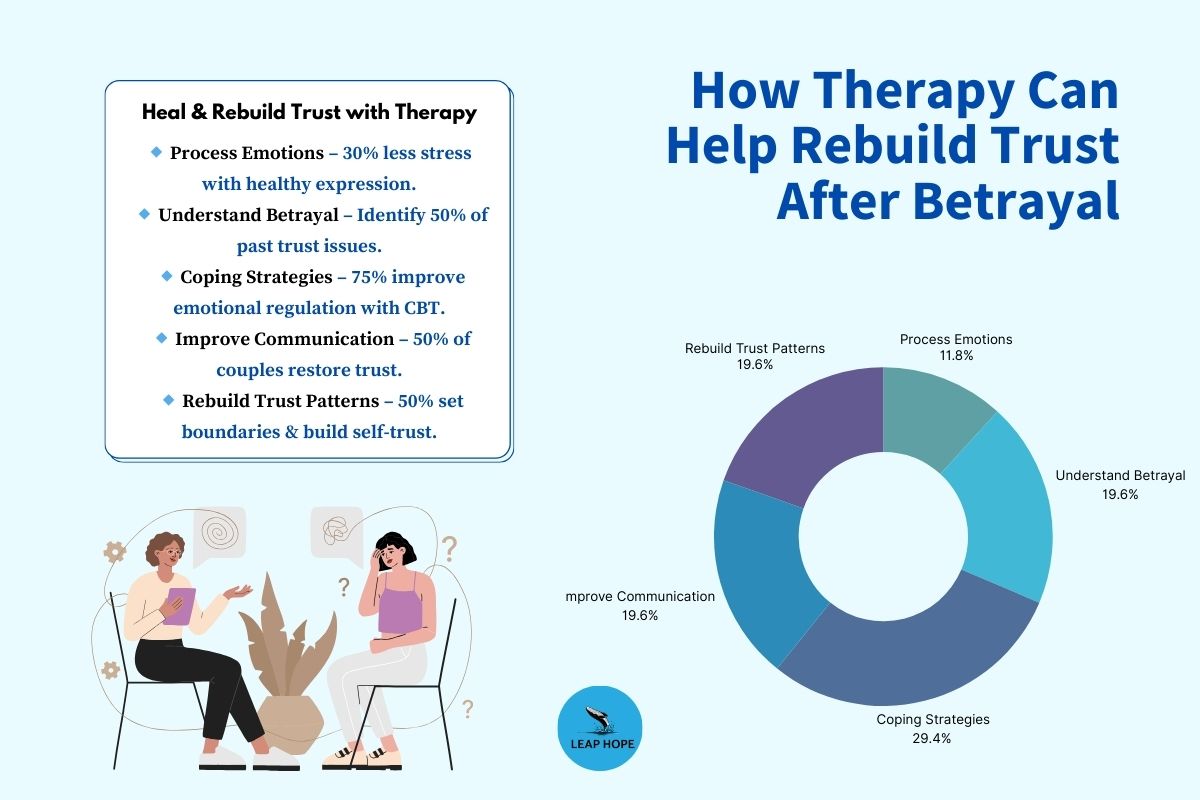
Rather than focusing on quick solutions, therapy often helps partners slow conversations down, understand what is happening beneath surface reactions, and make sense of why trust feels difficult to restore.
A therapist may help by:
Creating a safer space for emotional expression
After betrayal, emotions often feel intense or chaotic. Therapy can provide a setting where anger, grief, fear, or confusion can be expressed without being dismissed or defended against.
Identifying relational patterns, not assigning blame
Therapeutic work usually looks at how the relationship functions as a system, rather than focusing only on one person’s actions. This can help both partners understand recurring dynamics that made trust vulnerable.
Supporting clearer communication during difficult conversations
Many couples struggle to talk about betrayal without arguments or shutdown. Therapy can help slow these conversations down so both people feel heard, even when agreement isn’t immediate.
Helping rebuild self-trust alongside relationship trust
Betrayal often damages confidence in one’s own judgment. Therapy may support individuals in reconnecting with their instincts, boundaries, and emotional needs, which is an important part of any trust-rebuilding process.
Clarifying whether rebuilding trust is realistic
In some cases, therapy helps couples recognise that trust may not be repairable in a way that feels healthy or sustainable. Gaining clarity around this can be just as important as working toward reconciliation.
Therapy is not a requirement for rebuilding trust, and it doesn’t work the same way for everyone. But for some relationships, having guided support can make the process less isolating and more emotionally manageable.
Final Thoughts
Rebuilding trust after betrayal is rarely straightforward. It often brings mixed emotions, uncertainty, and moments of doubt, even when there is a genuine desire to move forward. Wanting to trust again does not automatically make the process easier, and struggling along the way does not mean something is wrong.
Some relationships find a way to rebuild trust in a form that feels stable and honest. Others reach a point where moving on becomes the healthier option. Both outcomes require self-awareness and emotional care, not failure or weakness.
What matters most is recognising what feels emotionally sustainable for you. Trust, when it returns, usually does so gradually and differently than before, shaped by clearer boundaries, deeper awareness, and a stronger understanding of what you need in a relationship.