
Last Updated on October 25, 2026
Is your teenager sleeping very little but still full of energy? Have they suddenly become unusually confident, started making risky decisions, or changed so much that you barely recognise their behaviour?
As a parent, it’s hard to know whether something is part of growing up or needs medical attention.
Sometimes, these changes may be associated with bipolar disorder in teenagers. But depression, ADHD, anxiety, and other conditions can cause similar symptoms. Understanding what doctors look for can help you decide when your teenager needs an assessment.
What Is Bipolar Disorder in Teenagers?
Bipolar disorder is a mental health condition that affects mood, energy, activity, and behaviour. It involves distinct episodes that are noticeably different from a teenager’s usual state.
These episodes may include:
- Mania: A period of unusually elevated or irritable mood and increased energy that seriously affects functioning. Severe episodes may require hospital treatment.
- Hypomania: A noticeable but less severe increase in mood and energy. It does not cause the marked impairment seen in mania.
- Depression: A period of persistent low mood or loss of interest, often accompanied by changes in sleep, appetite, energy, and concentration.
Some people experience mixed features, meaning depressive and manic symptoms occur during the same episode.
Bipolar disorder can begin during adolescence, although diagnosis in younger people requires particular care. A teenager does not need to experience every type of episode to have bipolar disorder.
What Are the Early Signs of Bipolar Disorder in Teens?
The signs depend on the type of mood episode. Doctors look for a combination of symptoms, their duration, and how different they are from the teenager’s usual behaviour.
Signs of Mania or Hypomania
You may notice:
- Reduced need for sleep: Your teenager sleeps only a few hours yet feels unusually energetic.
- Increased activity: They suddenly start numerous projects or become far more active than usual.
- Rapid speech: They speak much faster, jump between ideas, or are difficult to interrupt.
- Racing thoughts: They describe thoughts moving unusually quickly.
- Inflated confidence: They believe they have exceptional abilities or can accomplish unrealistic goals.
- Poor judgement: They make unusually reckless decisions involving money, safety, or relationships.
- Marked irritability: They become unusually agitated alongside changes in energy, sleep, and activity.
For example, staying up late before an examination is not the same as having a reduced need for sleep. During mania, a teenager may sleep very little for several nights but not feel tired, while also becoming unusually talkative, energetic, or impulsive.
Mania can be severe enough to require hospital care and may include psychotic symptoms. Hypomania is less severe and can be overlooked because the teenager may seem unusually productive or outgoing.
Signs of Bipolar Depression
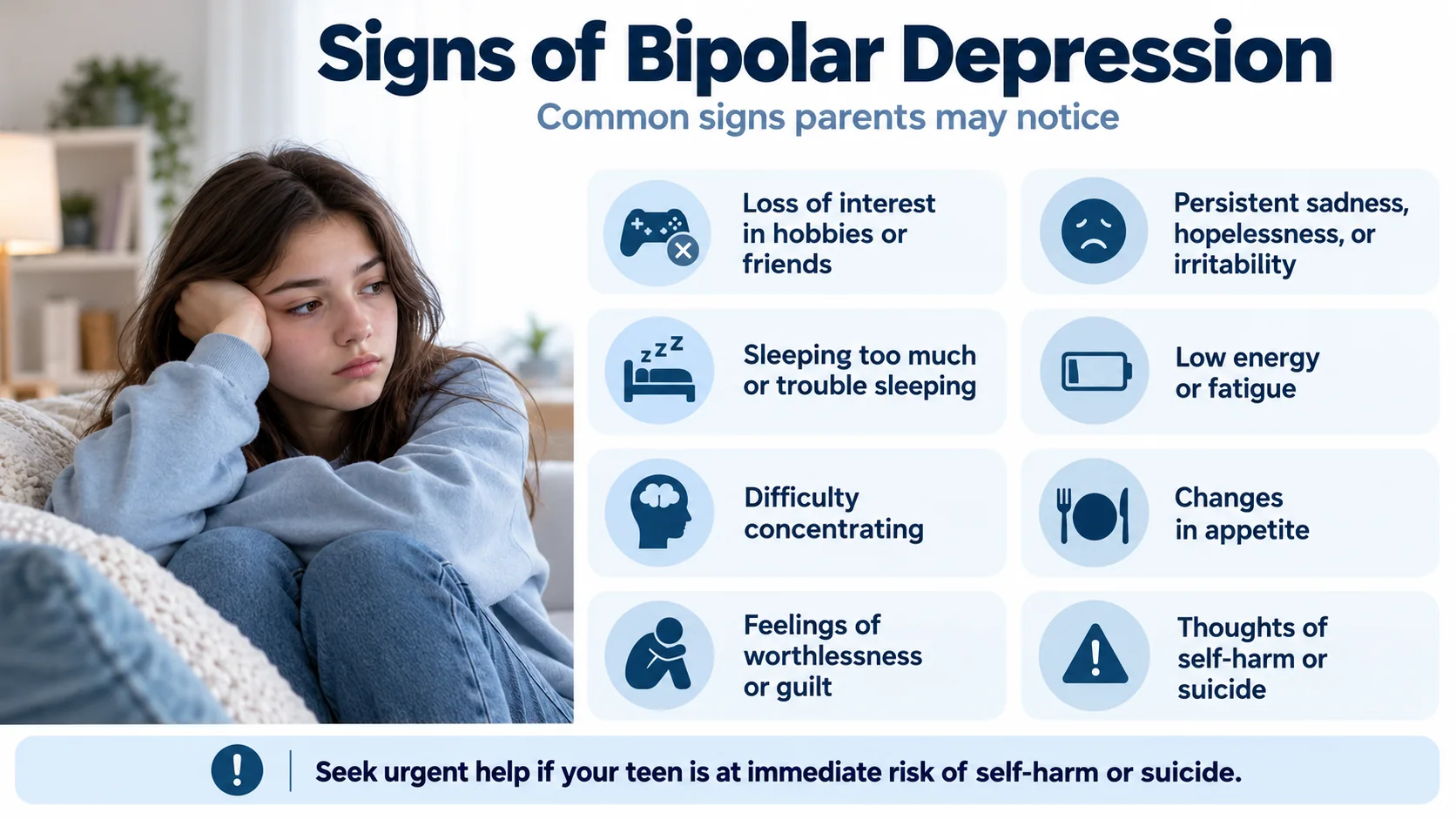
During a depressive episode, a teenager may:
- Lose interest in hobbies, friends, or favourite activities.
- Feel persistently sad, hopeless, empty, or unusually irritable.
- Sleep much more or struggle to sleep.
- Experience low energy and difficulty concentrating.
- Notice changes in appetite.
- Feel worthless or excessively guilty.
- Struggle with schoolwork or everyday responsibilities.
- Think about death, self-harm, or suicide.
These symptoms can resemble major depression. Our guide to depression in teenagers explains other signs parents may notice.
The important question for bipolar disorder is whether the teenager has also experienced a manic or hypomanic episode.
Bipolar Disorder vs Normal Teenage Mood Swings
Mood changes are common during adolescence. Arguments, friendship difficulties, examinations, and lack of sleep can all affect how a teenager feels.
Doctors become more concerned when several symptoms occur together as a distinct episode.
| Normal Teenage Mood Changes | Possible Bipolar Episode |
|---|---|
| Often follow everyday experiences | May arise without an obvious trigger |
| Usually settle relatively quickly | Symptoms persist for several days or longer |
| Sleep may change because of habits or circumstances | Sleep needs change alongside mood and energy |
| Behaviour remains broadly familiar | Behaviour becomes markedly different |
| Daily functioning is generally maintained | Judgement, relationships, school, or safety may be seriously affected |
A single bad day, an argument, or a period of excitement does not establish bipolar disorder. The overall pattern matters.
Why Can Bipolar Disorder Be Misdiagnosed in Teenagers?
Identifying bipolar disorder can take time because the earliest symptoms are not always specific. A teenager may seek help for one problem before a clearer pattern emerges.
1. Depression May Be Recognised First
Some teenagers initially seek treatment because they are withdrawn, exhausted, or struggling with depression.
Earlier hypomanic symptoms may have been mild, overlooked, or never discussed. For example, a period of unusually high energy may have seemed like a welcome improvement rather than a possible mood episode.
If a later manic or hypomanic episode occurs, the psychiatrist may reconsider the original diagnosis.
2. ADHD Symptoms Can Overlap With Mania
A teenager with ADHD may struggle with impulsivity, distractibility, excessive talking, or restlessness.
These can also occur during mania. The clinician must establish whether they represent longstanding difficulties or a distinct change associated with altered mood and energy.
Importantly, some teenagers have both ADHD and bipolar disorder.
3. Severe Irritability Can Have Other Explanations
Frequent angry outbursts do not automatically indicate bipolar disorder.
A teenager who seems irritable nearly every day may have a different emotional or behavioural difficulty. One relevant childhood condition is disruptive mood dysregulation disorder (DMDD), which involves persistent irritability and severe outbursts rather than distinct manic episodes.
You can learn more about DMDD and persistent irritability in children.
4. Other Factors May Affect the Assessment
Substance use, certain medications, medical illnesses, trauma-related symptoms, and serious sleep disruption can change a teenager’s mood or behaviour.
Psychiatrists assess these possibilities because identifying the underlying problem affects treatment decisions.
An earlier diagnosis may need to be reviewed when new information becomes available. That does not automatically mean the original clinician made an error.
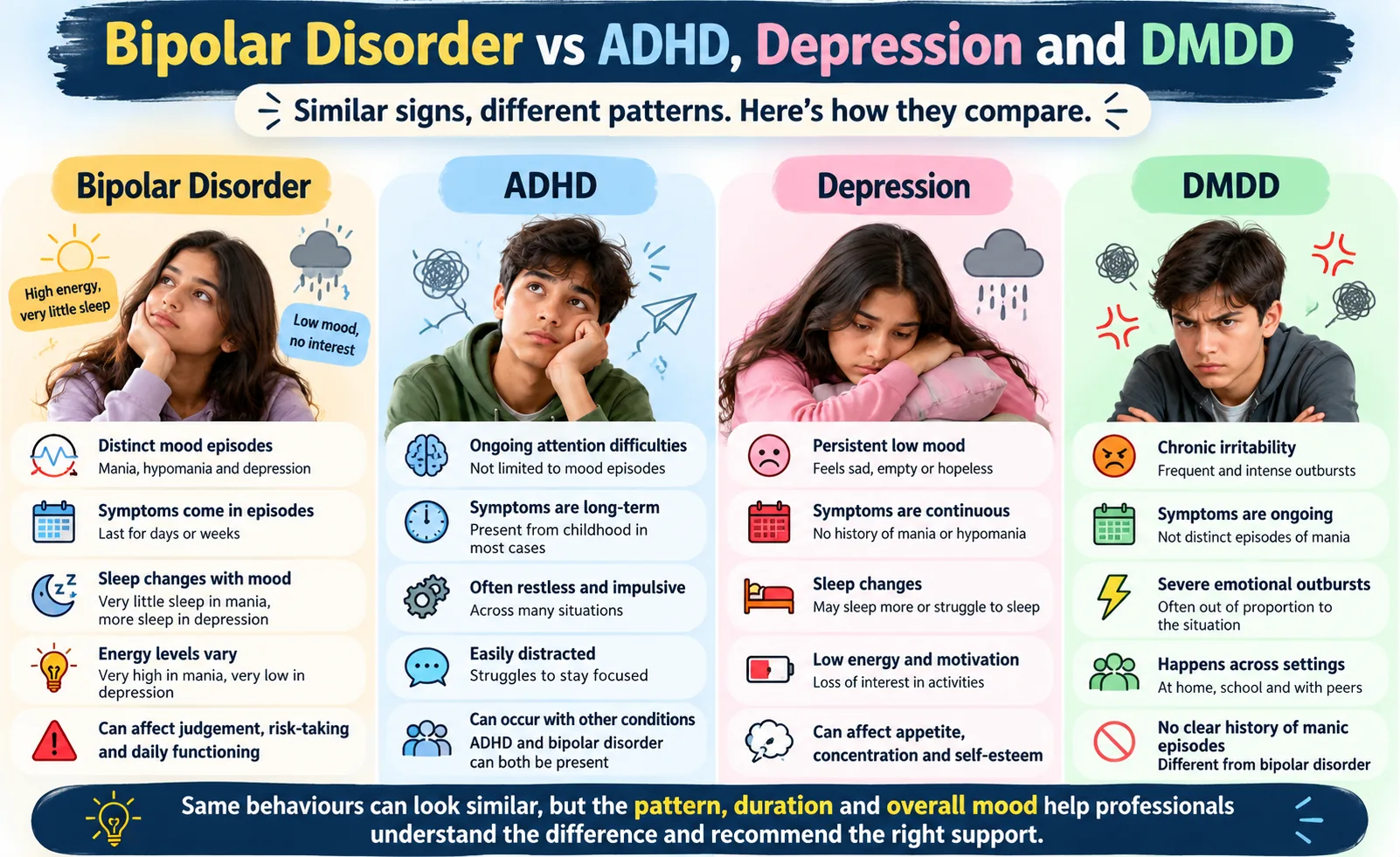
Bipolar Disorder vs ADHD, Depression and DMDD
These conditions can share symptoms, but their overall patterns differ.
| Condition | Important Clinical Difference |
|---|---|
| ADHD | Attention difficulties and impulsivity are generally persistent rather than confined to mood episodes. |
| Major depression | There is no history of mania or hypomania. |
| DMDD | Irritability and outbursts are chronic rather than occurring as distinct manic episodes. |
| Anxiety disorders | Excessive fear or worry is central, without the characteristic manic pattern of mood and energy changes. |
This table explains general differences, not diagnostic rules parents can apply themselves. Symptoms may overlap, and some conditions can occur together.
What Causes Bipolar Disorder in Teenagers?
There is no single established cause.
Researchers believe several factors contribute:
- Genetics: Having a close family member with bipolar disorder increases risk, but does not mean a teenager will develop the condition.
- Brain functioning: Researchers are studying differences in brain systems involved in mood regulation. These findings may help explain bipolar disorder, but they cannot identify its cause in an individual teenager.
- Environmental factors: Stressful experiences and disrupted sleep may contribute to mood episodes in susceptible people.
A particular parenting style, an examination, or screen use should not be described as the direct cause of bipolar disorder.
How Is Bipolar Disorder Diagnosed in Teenagers?
Diagnosis requires a detailed clinical assessment, ideally by a child and adolescent psychiatrist.
The psychiatrist examines whether the teenager has experienced distinct mood episodes, how long they lasted, how severe they were, and how they affected everyday functioning.
They may also review family history, school functioning, previous treatments, substance use, and possible medical explanations.
Under commonly used DSM diagnostic criteria, mania generally lasts at least seven days, or any duration if hospitalisation is necessary, while hypomania lasts at least four consecutive days. However, duration alone does not confirm bipolar disorder. NICE recommends specialist assessment and monitoring over time for children and young people rather than making a diagnosis from isolated symptoms.
There is no single blood test, brain scan, or online quiz that confirms bipolar disorder. Tests may be used to investigate other medical explanations.
What Should Parents Tell the Psychiatrist?
You don’t need to arrive with a diagnosis. A short record of what you’ve noticed is more helpful:
- When the unusual behaviour began and how long it lasted.
- Changes in sleep, especially whether your teenager felt tired afterward.
- Periods of unusually high energy, rapid speech, or risky decisions.
- Any previous episodes of depression.
- Changes in school attendance, friendships, or everyday functioning.
- Current medicines, substance use, and relevant family history.
If possible, note when your teenager returned to their usual behaviour. This helps the clinician understand the pattern between episodes.
What If Your Teenager Has Been Diagnosed, but You’re Not Sure?
It’s reasonable to ask how a diagnosis was reached, particularly if you have never noticed obvious mania.
Ask the psychiatrist which symptoms support the diagnosis, whether other conditions have been considered, and whether further monitoring is needed.
For complex or uncertain cases, a second opinion from a child and adolescent psychiatrist may help.
Do not stop or change prescribed medication without consulting the treating psychiatrist. Some medication changes can cause withdrawal effects or increase the risk of mood episodes.
How Is Bipolar Disorder Treated in Teenagers?
Treatment depends on whether the teenager is experiencing mania, bipolar depression, or a period of relative stability. Their age, other conditions, and safety needs also affect the plan.
A psychiatrist usually coordinates care.
- Medication: Depending on whether your teenager is experiencing mania, bipolar depression, or needs ongoing treatment, a psychiatrist may prescribe an appropriate mood stabiliser or antipsychotic medicine. The choice depends on age, symptoms, medical history, and potential side effects. Regular monitoring is important.
- Psychological therapy: CBT and other structured approaches may help teenagers manage stress, recognise warning signs, and cope with difficulties alongside medical treatment.
- Family-focused interventions: These can improve communication, help families recognise relapse signs, and support treatment.
- Psychoeducation: Understanding the illness, medication, sleep changes, and relapse prevention helps families take part in care.
- School coordination: Temporary adjustments may help a teenager maintain learning and routines during recovery.
Bipolar depression requires particular care in treatment selection. Antidepressants are not generally used alone in bipolar I disorder because of the risk of triggering mania or mood instability.
Treatment often continues between episodes to reduce recurrence. Counselling is valuable, but it should not replace indicated psychiatric medication or monitoring.
Additional child and teen counselling support may help with emotional difficulties and family communication as part of a coordinated care plan.
How Can Parents Support a Teenager With Bipolar Disorder?
Psychologists and family therapists may recommend these practical steps alongside medical care:
- Keep a simple sleep and mood record. Note significant changes in sleep, energy, and behaviour. Share concerning patterns with the treating clinician.
- Protect regular sleep. Encourage consistent bedtimes and waking times, and discuss major sleep changes with the psychiatrist.
- Respond calmly during escalating symptoms. Keep conversations short, avoid unnecessary confrontation, reduce stimulation where practical, and prioritise safety.
- Agree on warning signs together. When your teenager is well, discuss which changes should prompt a call to their treatment team.
- Stay involved without taking over. Ask what help your teenager wants, support appointments, and raise treatment concerns with the clinician.
Family communication may still be difficult even when symptoms are being treated. Parenting counselling can offer additional guidance for these challenges.
When Should Parents Seek Professional Help?
Arrange an assessment if your teenager develops marked changes in sleep and energy, unusually risky behaviour, prolonged depression, or symptoms that significantly interfere with school, relationships, or daily life.
Seek urgent medical or emergency mental health assistance if they express suicidal intentions, are at immediate risk of harm, develop hallucinations or delusions, or become severely disorganised or unsafe.
You don’t need to wait for a particular diagnosis before getting help.
Finding Support for Your Teenager
If you’re worried about your teenager’s emotional or behavioural changes, LeapHope provides online child psychology support in India.
Families looking for online child and teen counselling information can also explore LeapHope’s services for the USA, UK, Canada, and UAE.
A psychologist can support emotional wellbeing and family communication, while suspected bipolar disorder warrants assessment by a suitably experienced psychiatrist. Emergency or intensive in-person care may be necessary when symptoms are severe.
Let’s Recap
Bipolar disorder in teenagers involves distinct episodes of changes in mood, energy, and behaviour. Those episodes can be difficult to identify when symptoms resemble depression, ADHD, or other conditions.
If you’re concerned, pay attention to what has changed, how long it lasts, and how it affects your teenager’s life. Share those observations with a qualified professional rather than trying to make the diagnosis yourself.
Clinical Sources
These resources provide additional information about bipolar disorder, diagnosis, and treatment:
- National Institute of Mental Health (NIMH) — Bipolar Disorder in Children and Teens: A practical explanation of symptoms, assessment, and treatment for families.
- NICE — Bipolar Disorder: Assessment and Management (Updated 2025): Evidence-based guidance, including specialist assessment and treatment recommendations for young people.
- Indian Psychiatric Society — Clinical Practice Guidelines: 2025 Update: Indian guidance on bipolar disorder assessment and management, published in 2026.
- AACAP — Bipolar Disorder in Children and Teens: Guidance for parents on recognising symptoms and obtaining appropriate professional care.