
Many couples tell us this in therapy. They have a fight, and after that, their partner changes. Instead of resolving the issue, they pull away. Communication drops, and the connection weakens.
In online therapy sessions, this pattern comes up repeatedly. Clients describe the same shift. After an argument, their partner starts talking to someone else more. They call or message them, laugh and talk normally, sometimes in front of them.
In some cases, they begin sharing personal things with that person or go out to meet them. This is often a friend, a coworker, or someone from their social circle.
This is not a one-time reaction. It is a repeated pattern seen across different relationships.
The fight remains unresolved, but a third person enters the dynamic. This shifts the emotional connection outside the relationship and creates tension.
At this point, the question becomes direct. Is this revenge behaviour after a fight, or is it moving toward emotional cheating?
There may not be physical involvement, but the boundary is already being affected. Over time, this pattern can lead to emotional dependence on someone else and distance within the relationship.
This pattern is seen in both men and women.
In this article, our therapists explain what this behaviour means, why it happens after fights, and when it becomes serious.
After Fights, They Pull Away and Focus on Someone Else Cycle
Some people show a clear pattern like this. In normal situations, they are a good partner. But after a fight, their behaviour changes.
They stop engaging. There is silence or distance. Instead of working through the issue, they withdraw. At the same time, they turn to someone else and start connecting there while the issue with you remains unresolved.
This creates a cycle. Conflict happens, they withdraw, they connect outside, and the problem stays as it is.
Over time, this affects how you feel. It can feel like being ignored or replaced. It also raises questions about your partner and the relationship.
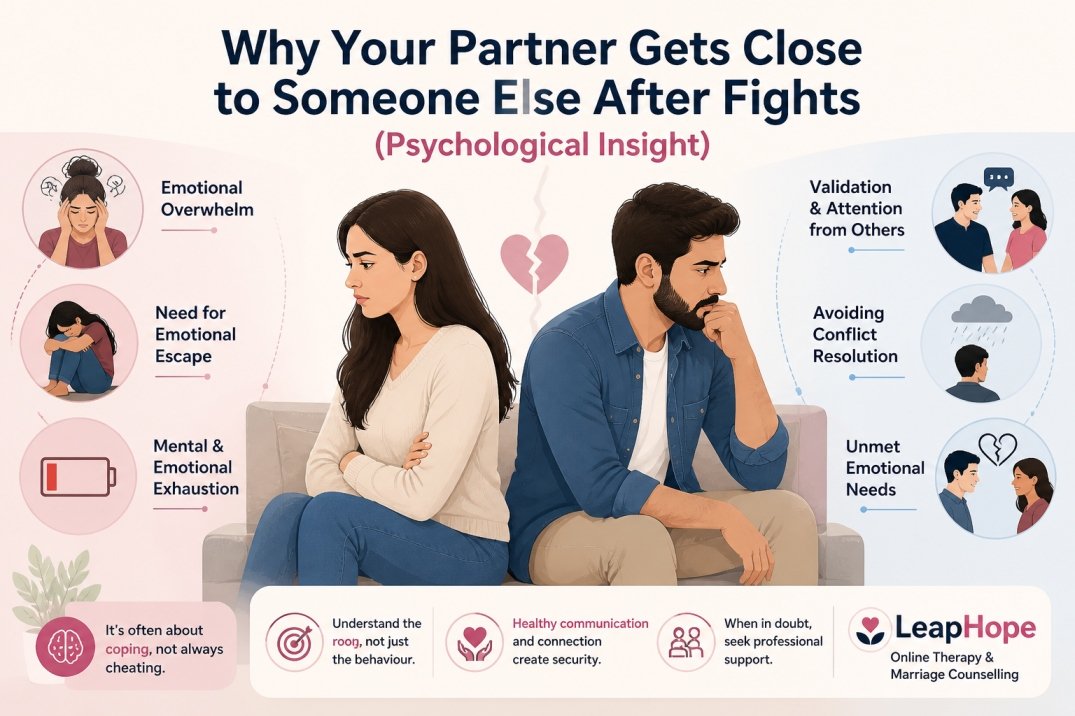
Why Your Partner Gets Close to Someone Else After Fights (Psychological Insight)
Conflict avoidance
For some people, a fight feels overwhelming. Instead of staying and resolving it, they pull away to reduce that discomfort. This is called conflict avoidance.
Turning to someone else gives them a quick sense of relief. There is no pressure, no argument, and no need to explain themselves. It helps them calm down without dealing with the actual issue.
But the problem remains. Over time, this pattern replaces repair with avoidance, and connection starts shifting outside the relationship.
Emotional discomfort regulation
After a fight, some partners feel uneasy or tense within the relationship. Instead of working through that discomfort together, they try to reduce it quickly on their own. This is called emotional discomfort regulation.
Turning to someone else feels easier because there is no conflict in that interaction. It gives them relief without having to repair things with their partner.
The problem is that the discomfort inside the relationship is not addressed. Over time, this creates a pattern where emotional relief comes from outside, instead of being rebuilt within the relationship.
Validation seeking
After a fight, some partners feel criticised or pushed away within the relationship. Instead of rebuilding that connection, they look for reassurance elsewhere. This is called validation seeking.
Talking to someone else makes them feel heard or appreciated again. It restores their sense of being valued without having to resolve the issue with their partner.
Over time, this shifts where they look for emotional support. Instead of repairing the relationship, they begin to rely on someone else to feel better.
Avoiding vulnerability
After a fight, repair requires openness. It means admitting fault, sharing feelings, and staying in a difficult conversation. Some partners avoid this. This is called avoiding vulnerability.
This often links with an avoidant attachment style. For them, closeness during conflict feels uncomfortable, so they pull back instead of opening up.
Turning to someone else feels easier because there is no pressure to be vulnerable or accountable. It allows them to connect without facing the issue in the relationship.
Over time, this blocks repair. The distance with their partner increases, while communication outside starts feeling more comfortable.
Regaining control
After a fight, some partners feel criticised, cornered, or out of control. Instead of staying in that position, they try to rebalance it. This is about regaining control.
Turning to someone else shifts the dynamic. They move from feeling affected by the conflict to feeling independent and less influenced by it.
In some cases, this also changes how they are seen. Instead of being in a tense situation with their partner, they are in a more comfortable position with someone else, where they feel normal again.
This does not resolve the issue. It only shifts the focus. Over time, this pattern creates distance in the relationship and reduces the need to work through conflict.
Occasional jealousy-triggering
After a fight, some partners act in ways that draw attention to someone else. This is occasional jealousy-triggering.
It may show up as being more visible with that person, mentioning them more, or engaging with them in a way that is noticeable. The behaviour is not always openly stated, but it can be meant to send a message or create a reaction.
This often comes from hurt or defensiveness. Instead of expressing it directly, the reaction is indirect.
It does not resolve the conflict. It adds another layer to it. Over time, this can increase tension and insecurity in the relationship.
Weak emotional boundaries
After a fight, some partners do not keep clear limits around what should stay within the relationship. This is called weak emotional boundaries.
They start sharing personal thoughts, feelings, or relationship issues with someone else instead of working through them with their partner. The connection slowly becomes more open outside than inside the relationship.
It may not feel like cheating to them, but the emotional space that belongs to the relationship is being shared elsewhere.
Over time, this weakens trust and shifts emotional closeness away from the relationship.
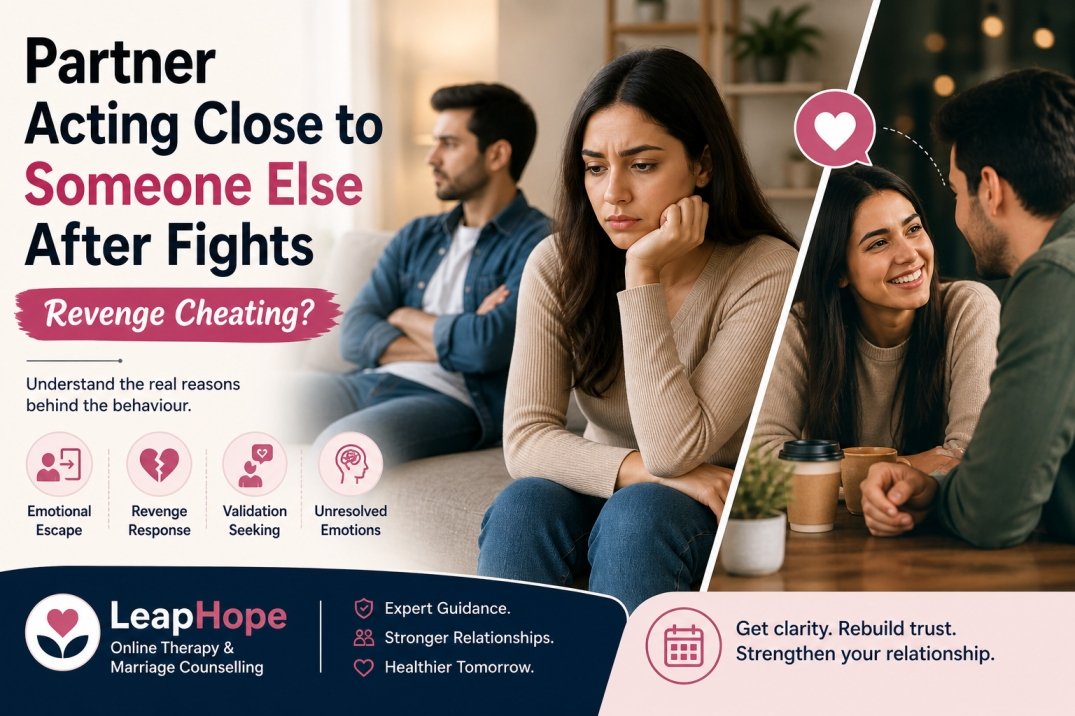
Is This Revenge Cheating or Emotional Escape?
Revenge Cheating If:
- they intentionally get romantically or sexually involved with someone else after a fight
- there is clear secrecy around calls, messages, or meetings
- they hide interactions or lie about the other person
- emotional or physical boundaries are clearly crossed
- the involvement is not casual, it has intent or continuation
- the behaviour is driven by anger, hurt, or a need to get back at you
Not Revenge Cheating If:
- they mention that person more to be noticed
- the behaviour is visible, not hidden
- it feels like they are trying to show “I have options”
- they are not hiding calls, messages, or meetings
- they are not forming a private or emotional connection with that person
Most cases are not pure revenge.
Why This Is Serious and May Turn Into Emotional or Physical Infidelity
Psychologically, a shift begins in how they experience the relationship.
After repeated conflicts, the mind starts linking the relationship with stress, pressure, or discomfort. At the same time, the outside interaction feels easier, calmer, and more rewarding. This creates a contrast.
Over time, they begin to turn to that easier connection first. It becomes their way to feel understood, relaxed, or normal again. The relationship, on the other hand, starts to feel like something that requires effort.
This is how emotional priority shifts.
They may not see it as cheating, but their mind is already placing emotional comfort outside the relationship. Once that shift happens, boundaries start feeling less important. The outside connection begins to feel more natural, and the relationship feels more distant.
This is why it becomes serious.
When emotional attachment forms outside, the step toward deeper involvement does not feel like a big change. It feels like a continuation of what has already started.
What to Do When Your Partner Turns to Others After Fights
Go for therapy if this pattern keeps repeating
If this keeps happening after fights and your conversations are not leading to change, it needs structured intervention. Repeated patterns like this usually do not shift on their own.
Therapy helps both partners see the pattern clearly, understand what is driving it, and learn how to handle conflict without withdrawing or turning to someone else. It also brings accountability, which is often missing in repeated cycles like this.
If the behaviour continues despite discussions, treating it seriously and seeking help is the right step.
For individual patterns, online therapy for psychological issues can help, and for relationship concerns, online marriage counselling at LeapHope provides structured support.
Point out the pattern clearly if they don’t see it
Do not argue about one incident. Focus on the pattern.
Explain what happens after fights, step by step. Keep it specific and based on behaviour, not assumptions. The goal is to make them see the sequence, not defend themselves.
Many people do not recognise this pattern in their own behaviour. Unless it is pointed out clearly, they continue doing it without understanding its impact.
Make it clear this crosses a boundary
State it directly. Turning to someone else after a fight is not a neutral habit. It affects trust and the relationship.
Be specific about what is not acceptable, such as sharing personal issues outside, increasing closeness with someone else after conflict, or avoiding repair by connecting elsewhere.
Do not minimise it as “just talking.” If it continues, it changes the relationship dynamic.
Set clear expectations for what needs to change
Be specific about the behaviour you expect after a fight. For example, staying engaged, taking a short break but returning to resolve the issue, and not turning to someone else during that time.
Avoid vague requests like “be better” or “don’t do this.” Clear expectations make it easier to see whether change is happening or not.
This shifts the focus from arguing about the past to setting a standard for how conflicts should be handled going forward.
Watch actions over time, not just what they say
Do not rely on promises made after a conversation. Look at what actually changes after the next few conflicts.
Check whether they stay engaged, return to resolve the issue, and reduce outside involvement. Consistency over time is what shows real change.
If the same pattern continues despite discussions, it indicates that the issue is not being addressed.
The Bottom Line
This is not always revenge cheating.
But it is not harmless either.
It is a pattern of emotional avoidance. Instead of dealing with the conflict, attention shifts outside. Over time, this creates disconnection during moments when the relationship needs engagement the most.
The issue is not just the other person. It is what your partner does after conflict.
The real issue isn’t just who they’re talking to, it’s why they turn away from the relationship when it matters most.