

A 32-year-old woman came to counselling after months of tension at home. Most fights with her husband somehow involved his mother. It could start with a small comment about cooking, how the house was managed, or family plans, but it rarely stayed small.
What troubled her most was the feeling of being alone in it. She tried to stay respectful and avoid arguments, yet the tension kept returning. Her husband disliked conflict and often stayed quiet, which left her carrying the stress by herself.
Situations like this are more common than many couples realise. They appear in newly married homes and in marriages that are several years old. They happen in families who live together and in families where parents are involved from a distance. The details differ across countries, but the emotional strain inside the marriage often feels the same.
Signs Your Mother-in-Law Is Interfering in Your Marriage
In counselling, daughters-in-law rarely complain about one big incident. The stress usually builds through repeated small moments that slowly affect the relationship between husband and wife.
Some common patterns include:
- She frequently criticises how you run your home. Comments about cooking, cleaning, or daily routines may seem small, but repeated criticism can make you feel constantly judged in your own space.
- She tells your husband how you should behave as a wife. Instead of addressing concerns directly, she may guide him on how you should manage the household or interact with the family.
- She questions your parenting decisions. Advice about feeding, discipline, or childcare may turn into criticism when your choices differ from hers.
- She shares private matters with relatives. Personal issues between you and your husband may become topics of discussion within the extended family.
- She expects your husband to prioritise her preferences. This can create a quiet competition for attention and influence within the marriage.
- She becomes involved in arguments between you and your husband. Conflicts that should stay between the couple may start including her opinions or reactions.
Individually, these behaviours may appear minor. Over time, however, they can create pressure inside the marriage. The daughter-in-law may feel constantly evaluated, while the husband may feel caught between loyalty to his partner and loyalty to his mother. This tension often becomes the real issue couples struggle with.
How Mother-in-Law Interference Shows Up in Daily Married Life
In counselling, daughters-in-law rarely describe one major incident. The tension usually grows through everyday situations. Small comments, repeated expectations, or family habits slowly begin to affect the couple’s relationship and the atmosphere at home.
When Household Decisions Become a Power Struggle
Household routines are a common source of conflict. A mother-in-law may comment on cooking, kitchen organisation, or how the home should be managed.
In some Indian or South Asian families where generations live together, the kitchen may traditionally remain the mother’s space, making it harder for a daughter-in-law to feel ownership. In Western homes, the interference may appear during visits, such as rearranging things or commenting on how the house is run.
When Parenting Choices Are Constantly Questioned
Parenting often brings generational differences. A mother-in-law may question feeding choices, discipline, or routines.
In some families, grandparents offer frequent advice based on their own experience. Sometimes they may ignore the parents’ rules for the child, believing their way is better. This can leave the daughter-in-law feeling that her role as a parent is not respected.
When Finances and Lifestyle Decisions Are Judged
Money can also create tension. A mother-in-law may express opinions about spending, housing decisions, or support for extended family.
In traditional families, sons may feel pressure to prioritise parental expectations. In Western settings, comments may focus more on lifestyle or financial choices. Either way, the couple can feel their independence is being questioned.
When Your Privacy as a Couple Feels Limited
Some daughters-in-law feel their relationship is no longer private. Personal disagreements may be discussed with relatives, or family members may become involved in issues between husband and wife.
When private matters turn into family discussions, couples often find it harder to resolve conflicts calmly.
When Your Husband Feels Caught in the Middle
Many husbands feel pressure from both sides. Respect for parents may make it difficult to challenge a mother, while silence can leave the wife feeling unsupported.
When this balance is not addressed, the husband can feel trapped, and the tension between both women may continue to grow.

Why Mother-in-Law Conflicts Look Different Around the World
Mother-in-law conflict does not look the same in every family. Cultural expectations, living arrangements, and family roles shape how these tensions appear. Understanding these differences can help you see that many women experience similar struggles, even if the details vary.
In India and Many South Asian Families
In many South Asian homes, couples often live with or near the husband’s parents. The mother-in-law may have spent years managing the household and may still feel responsible for how things are done. Traditional expectations about the role of a daughter-in-law can sometimes create pressure around cooking, family duties, and respect for elders.
In the United States and Canada
Couples are more likely to live separately from parents, but interference can still occur. It may appear through frequent advice about parenting, strong opinions about lifestyle decisions, or regular visits that influence how the household runs.
In the UK and Europe
In many European families, criticism may be more subtle. Comparisons, indirect comments, or expectations around family gatherings and holidays can create tension without open confrontation.
In Multicultural Marriages
When partners come from different cultural backgrounds, family expectations can easily clash. What feels normal and respectful in one culture may feel intrusive in another. Without clear communication, these differences can quickly lead to misunderstandings between the daughter-in-law and the extended family.
The Psychological Reasons Some Mothers-in-Law Interfere
In counselling, this behaviour is rarely just about control. Most mothers-in-law are not trying to damage the marriage. The interference often comes from emotional adjustments that are difficult for them after their son gets married.
Understanding these reasons can help you respond more calmly instead of reacting only with anger or hurt.
Difficulty Letting Go of the Mother Role
For many years, she was the person who guided her son’s life, his routines, decisions, and habits. Marriage changes that position. When another woman becomes the central person in his daily life, some mothers struggle to step back from the role they held for so long.
Fear of Losing Emotional Closeness
Some mothers feel that marriage will distance their son from them. If they already feel lonely or insecure, they may try to stay very involved in his life to keep that emotional connection.
Belief That Elders Should Guide the Family
In many families, parents believe they should continue guiding younger members. Advice about cooking, parenting, or household decisions may come from this belief, even if the couple feels it crosses their boundaries.
Anxiety About Getting Older
As parents age, they may worry about becoming less important in the family. Staying involved in their son’s household can give them a sense that they are still needed and respected.
Different Generations See Life Differently
Each generation grows up with different ideas about marriage, parenting, and independence. What feels normal to you may feel wrong or careless to her. These differences can easily turn advice into criticism.
When you understand the emotional reasons behind the behaviour, it becomes easier to manage the situation with more clarity and less emotional exhaustion.
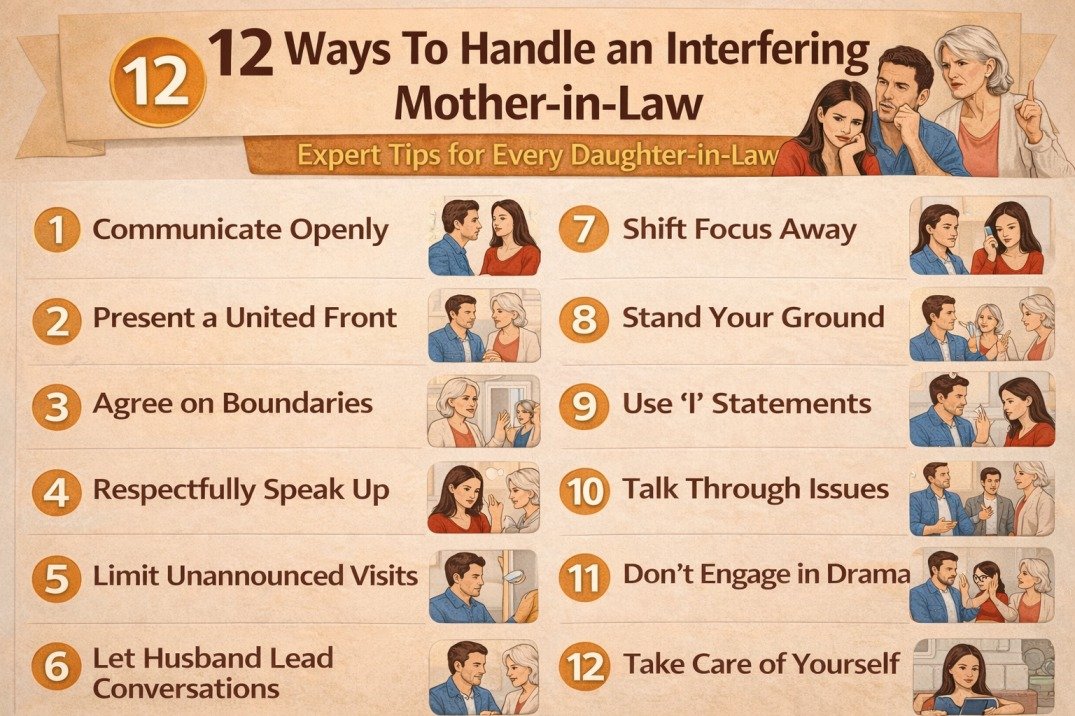
12 Ways To Handle an Interfering Mother-in-Law – Expert Tips for Every Daughter-in-Law
Many daughters-in-law who come to counselling say the same thing: “I don’t want to fight with her. I just want peace in my home.” The goal is not to defeat your mother-in-law or prove she is wrong. The goal is to protect your mental health and your marriage while managing the relationship in a steady way.
Observe Her Emotional Motives Before Reacting
If you are in your early years of marriage, the family system is still adjusting. A mother who has guided her son for 25 or 30 years may struggle to step back suddenly. Some comments may come from fear of losing importance in his life. When you recognise this emotional shift, you can respond with more clarity instead of reacting to every remark.
Identify the Situations That Trigger Her Interference
In many homes, the same topics repeatedly create tension, cooking, childcare, finances, or family visits. For example, a 30-year-old daughter-in-law may feel criticised in the kitchen, while a mother-in-law may feel her experience is being ignored. When you notice these patterns, you can approach those moments more carefully instead of being surprised by them.
Understand the Role She Believes She Still Has in the Family
Some mothers-in-law genuinely believe they are still responsible for guiding the household. This is especially common in families where parents have traditionally led decisions for years. Understanding this belief helps you see that some interference comes from habit rather than deliberate harm.
Separate Her Opinions From Your Self-Worth
Many daughters-in-law slowly begin doubting themselves because of repeated comments about cooking, parenting, or running the home. Remind yourself that these opinions come from a different generation’s expectations. They do not define your ability as a wife or mother.
Read the Family Power Dynamics Carefully
Every family has an invisible structure of influence. Some families revolve strongly around the mother’s authority. Others expect sons to prioritise parental wishes. Observing these dynamics helps you understand why certain conflicts happen repeatedly.
Avoid Emotional Escalation Traps
Some mothers-in-law speak emotionally when they feel ignored or challenged. If you react immediately with anger, the conversation quickly turns into a fight. Staying calm in those moments often prevents a small disagreement from becoming a major family conflict.
Respond Calmly but Firmly When Boundaries Are Crossed
Silence about everything can slowly build resentment. When something truly affects your space, such as decisions about your child or your home, responding calmly but clearly shows that your role in the family also deserves respect.
Build a Strong Partnership With Your Husband
A marriage becomes more stable when the couple understands each other’s pressures. Your husband may feel torn between respect for his mother and loyalty to you. Honest conversations about how the situation affects both of you can help you face the issue together rather than as opponents.
Reduce Situations That Repeatedly Create Conflict
If certain topics or situations always lead to arguments, it may help to limit them. For example, some couples reduce discussions about finances in front of extended family or create clearer routines around household responsibilities.
Let Go of the Need to Win Her Approval
Many women spend years trying to prove they are a “good daughter-in-law.” Constantly trying to meet every expectation can become emotionally exhausting. Peace often improves when you stop seeking approval for every decision you make.
Accept That You Cannot Change Her Personality
If your mother-in-law has behaved in a certain way for decades, it is unlikely to change quickly. Focusing on managing the relationship, rather than trying to change her character, usually reduces frustration.
Protect Your Emotional Well-Being While Staying Respectful
Living with repeated tension can affect sleep, mood, and confidence. Protecting your mental health may mean creating emotional distance from certain comments while still remaining respectful in the relationship. This balance allows you to keep peace in the family without losing yourself.
If You Live With Your Mother-in-Law and Feel Constant Pressure
Living with a mother-in-law can create pressures that couples living separately may not experience. In many joint family homes, the daughter-in-law is adjusting not only to marriage but also to an established household system with its own routines and authority.
Common challenges many women describe include:
- Lack of personal space. Daily routines, conversations, or small habits may feel constantly observed, which can slowly create mental fatigue.
- Unclear authority in household decisions. If the mother-in-law has managed the home for years, she may continue directing how the kitchen, routines, or family responsibilities should be handled.
- Feeling judged or monitored. Repeated comments about cooking, cleaning, or daily habits can make a woman feel evaluated in her own home.
Helpful ways to cope with this pressure include:
- Protect small moments of personal space and private time with your husband.
- Choose carefully which issues truly need discussion and which ones can be ignored.
- Introduce changes in household routines gradually instead of through confrontation.
- Remind yourself that her expectations do not define your value in the family.
The goal is not to win every disagreement. The goal is to protect your mental balance while slowly building a more stable environment in the home.
When Mother-in-Law Conflict Starts Affecting Your Marriage
The situation becomes more serious when tension with a mother-in-law starts affecting the relationship between you and your husband.
Some warning signs include:
- Frequent arguments with your husband about issues involving his mother.
- Emotional exhaustion, feeling constantly stressed at home.
- Resentment building between partners over loyalty or support.
- Feeling unsupported or alone in handling the situation.
When these patterns continue, the strain can slowly damage communication and trust in the marriage.
In such cases, couples counselling or online marriage therapy can help. A therapist can help both partners understand the pressure they are under and guide them in setting healthier boundaries with extended family.
FAQs Brides and Wives Often Ask About Mother-in-Law Problems
Why does my mother-in-law interfere in everything we do?
Mother-in-law interfering in everything often happens when a parent struggles to adjust after their son gets married. She may still feel responsible for guiding his life and decisions, which leads her to stay involved in the couple’s routines, choices, or family matters.
What should I do if my husband always takes his mother’s side?
If your husband always takes his mother’s side, it usually means he is trying to avoid conflict with his parent. Instead of arguing in the moment, talk to him calmly about how the situation affects your mental health and your sense of support in the marriage.
Is it normal to struggle with a mother-in-law after marriage?
Struggling with a mother-in-law after marriage is more common than many couples expect. Marriage changes family roles, and both parents and the couple are adjusting to new boundaries. Tension often appears during this transition period.
How can couples set boundaries with parents without disrespect?
Setting boundaries with parents without disrespect means being clear but calm about decisions. Couples can explain their choices together, stay consistent, and avoid turning every disagreement into a confrontation.
Can mother-in-law conflict damage a marriage?
Mother-in-law conflict damaging a marriage usually happens when the tension leads to repeated fights between partners or when one partner feels unsupported. Addressing the issue early helps prevent resentment from building inside the relationship.
How do you stay calm around a difficult mother-in-law?
Staying calm around a difficult mother-in-law often requires emotional distance. Not every comment needs a response. Focusing on your mental balance and choosing which issues truly matter can help reduce stress in the relationship.