

Last Updated on February 18, 2026
Can friends with benefits actually work, or does someone always end up catching feelings?
These days, a lot of people want connection without full commitment. With dating apps, busy work lives, and changing relationship norms, friends with benefits can seem like the perfect middle ground. But without clear rules, it can quickly turn into confusion, jealousy, or a situationship neither person meant to create.
Friends with benefits is not just casual sex, and it is not a secret relationship either. It is a mutual agreement between two people who are already friends and decide to add physical intimacy without romantic commitment. The key difference between FWB and a situationship is clarity. In a healthy FWB setup, both people know exactly what this is and what it is not.
If you are wondering what the real friends with benefits rules are, how to set boundaries, or how to keep it casual without getting emotionally hurt, this guide will walk you through what actually works today.
Do Friends With Benefits Actually Work Today?
You might be wondering, does friends with benefits actually work? The honest answer is: it can, but only if both of you truly want the same thing.
FWB works when you are clear from the start. You both agree it is casual. You are not secretly hoping it turns into a relationship. You are not using it to distract yourself from loneliness or heartbreak. When both people are emotionally steady and honest, it can stay simple and drama-free.
It usually fails when one person wants more but does not say it. That is when jealousy, mixed signals, and hurt feelings start creeping in. If you tend to get attached quickly, or if you struggle with feeling secure in casual setups, FWB may feel harder than you expect.
Can FWB work long term? Sometimes. But it only lasts when both people keep talking, keep checking in, and are willing to walk away if it stops feeling healthy. Chemistry is easy. Clarity is what makes it work.
15 Friends With Benefits Rules That Actually Work
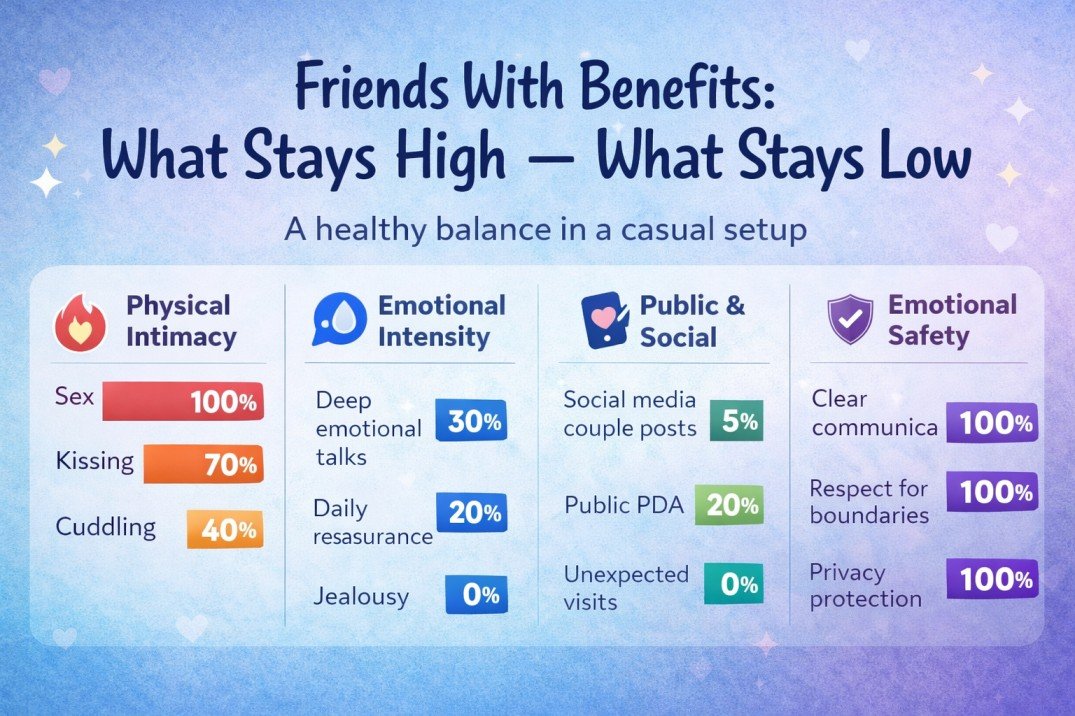
Friends with benefits only works when there are clear boundaries. Without rules, it slowly turns into confusion or hurt feelings.
These 15 rules help you keep it casual, honest, and emotionally safe.
1. Define What This Is and What It Is Not
Before anything happens, sit down and talk like adults.
Are you both okay with this being casual? Are you both clear that this is not dating? Not a hidden relationship? Not a “let’s see where it goes” situation?
If one of you secretly hopes it turns into something serious, that needs to be said now. Silence is what creates hurt later.
2. Be Clear About Exclusivity
You and your friend need to decide: are you both free to see other people, or is this exclusive?
Don’t assume you’re the only one. Don’t guess. Ask directly.
If exclusivity matters to you, say it. If it doesn’t, say that too. Different expectations here are where most FWB setups fall apart.
3. Choose Someone Emotionally Steady
This works best when both friends are emotionally stable.
If one of you just came out of a breakup, gets attached very quickly, or struggles with jealousy, this can get complicated fast.
You need someone who can enjoy the connection without turning it into something heavier in their head.
4. Agree on Protection and Sexual Health
Just because it’s casual doesn’t mean you skip responsibility.
Talk about protection. Talk about testing. Talk about whether you’re seeing other people.
It may feel slightly awkward for five minutes, but that conversation protects both of you long term.

5. Don’t Act Like a Couple on Social Media
If this is casual, let it stay casual online too.
No flirty comments under every photo. No inside jokes that look romantic. No sudden “soft launch” stories that confuse everyone including yourselves.
The moment you start presenting like a couple publicly, expectations quietly shift.
6. Set Clear Texting Boundaries
FWB texting rules matter more than people admit.
Are you texting all day? Sending good morning and good night messages? Checking in emotionally every evening?
If your chats start looking like a relationship, the dynamic will start feeling like one.
Keep texting intentional, not constant.
7. Don’t Turn It Into Emotional Check-Ins
You can care about each other without becoming each other’s daily emotional support system.
If you’re venting about work every night, asking for reassurance, or relying on them for comfort like a partner would, the lines blur quickly.
That’s what creates attachment, not just sex.
8. No “Soft Relationship” Behaviour Online
Be careful with things like:
- Posting each other constantly
- Tagging as if you’re exclusive
- Late-night public flirting
- Relationship-style captions
Ask yourself: would this confuse someone who doesn’t know the situation?
If yes, it will probably confuse one of you eventually too.
9. Don’t Treat Them Like Your Therapist
You’re friends, yes. But they’re not your partner.
If you start sharing every insecurity, every fear, every late-night emotional spiral, the connection deepens fast. Emotional intimacy is what builds attachment, often more than physical intimacy.
Keep support balanced. Don’t turn this into your main emotional outlet.
10. Decide Your Kissing, Cuddling, and Sleepover Rules Early
It sounds small, but it isn’t.
Are you okay with long cuddling after sex? Sleeping over every time? Holding hands in public? Kissing outside the bedroom?
These details matter. For some people, cuddling feels casual. For others, it feels intimate and bonding.
Talk about it. If certain behaviours make you feel attached, set limits before it becomes confusing.
11. Don’t Let Jealousy Grow Silently
If you agreed this isn’t exclusive, you can’t act shocked when they date someone else.
But be honest with yourself. If you feel jealous, don’t ignore it. Ask yourself why.
Sometimes jealousy is a sign you want more than you admitted. If that’s happening, talk about it instead of pretending you’re fine.
12. Keep Your Dating Goals Separate
If you eventually want a serious relationship, don’t let FWB replace real dating.
Keep meeting people. Keep your long-term goals in mind. Don’t let comfort turn into attachment just because it’s easy.
FWB should add to your life, not quietly delay what you actually want.
13. If Your Feelings Change, Say It Early
If you start wanting more, don’t wait and hope it passes.
Tell them. Calmly. Honestly.
You can say something simple like, “I didn’t expect this, but I think my feelings are shifting.”
It may feel uncomfortable for a few minutes, but it’s better than staying silent and slowly resenting them.
14. If They Start Dating Someone Else, Step Back
If you both agreed it wasn’t exclusive, they’re allowed to see other people.
But that doesn’t mean you have to pretend you’re unaffected.
If it starts to hurt, take space. Don’t compete. Don’t try to become “better” to win them back.
Sometimes stepping back protects your self-respect more than staying casual ever could.
15. End It Cleanly, Not Slowly
When it stops feeling good, say it.
Don’t fade out. Don’t keep meeting just because it’s comfortable. Don’t reconnect just because you’re lonely one night.
If it’s over, let it be over.
A simple, respectful conversation closes the chapter properly and gives both of you space to move on without confusion.
Unspoken Friends With Benefits Rules Most People Ignore
Not every rule needs to be said out loud. Some boundaries are understood but when they’re ignored, that’s when things turn awkward, messy, or even risky.
These are the quiet behaviour rules that protect your privacy, dignity, and emotional safety in a friends with benefits arrangement.
- No recording intimate moments. Ever.
- No screenshots of private chats without consent.
- Don’t forward their photos or messages to friends.
- Don’t share bedroom details with your friend group.
- Don’t post stories just to make them jealous.
- Don’t use them only when you feel lonely or bored.
- Don’t show up at their workplace or home unannounced.
- Don’t assume access to their time because you’re intimate.
- Don’t mix money, expensive gifts, or financial favours into it.
- Don’t involve alcohol every time you meet.
- Don’t stalk their social media for reassurance.
- Don’t compare yourself to people they’re dating.
- Don’t treat their space like you’re in a committed relationship.
Friends With Benefits With an Ex: Is It Different?
Yes, it’s different.
When you start friends with benefits with an ex, you’re not beginning from neutral ground. There’s history. There are old emotions, unfinished conversations, and past expectations. Even if you both say it’s casual now, the past can quietly influence how you react to things.
FWB with an ex can work only if the breakup is truly processed and neither of you is secretly hoping to rebuild the relationship. If one of you still has unresolved feelings, jealousy will surface quickly. Old patterns tend to repeat.
Before agreeing to it, ask yourself honestly:
Are you both genuinely over the relationship, or is this just a softer way of staying connected?
If the answer feels unclear, it’s usually a sign to step back.
Can Friends With Benefits Be Exclusive?
Yes, FWB can be exclusive, but only if you both clearly agree to it.
An exclusive friends with benefits setup means you’re not seeing other people, even though you’re not in a committed relationship. That can reduce jealousy, but it also increases emotional closeness. The line between casual and relationship gets thinner.
If marriage or open relationships are involved, clarity matters even more. Everyone must know the boundaries. Secrecy is where things break.
Exclusive FWB can work, but only when expectations are spoken, not assumed.
Can Friends With Benefits Turn Into a Relationship?
Yes, FWB can turn into a relationship, but only when both people genuinely want that shift.
It doesn’t happen because one person quietly hopes for it. It doesn’t happen because you act more affectionate or try to “prove” you’d be a good partner. A real change only works when you both openly say, “This feels different now.”
If you’re wondering whether your FWB likes you, look at actions, not mixed signals. Are they prioritising you outside the bedroom? Introducing you to friends? Talking about a future that includes you? Or are things still strictly casual?
If you want more, say it clearly. Don’t apply pressure. Don’t try to create jealousy. And be prepared for an honest answer. If the feeling is mutual, it can grow naturally. If it’s not, forcing it will only damage the friendship.
When Friends With Benefits Becomes Unhealthy
Friends with benefits is not automatically bad for your mental health. But it can become unhealthy if it starts affecting your emotional stability.
If you feel anxious waiting for their texts, overthinking their social media activity, or constantly questioning where you stand, that’s a sign something is off. Casual arrangements should feel light. If they feel heavy, your body is telling you something.
It also becomes unhealthy when attachment turns compulsive. If you keep going back even though you feel hurt, ignored, or one-sided, it’s no longer mutual. Feeling used, unimportant, or emotionally drained is not part of a healthy FWB setup.
If this arrangement is creating more stress than clarity, it may be time to step back. Sometimes what looks casual on the surface is actually meeting deeper emotional needs underneath. Talking to a therapist can help you understand whether you truly want something casual or if you’re settling for less than you need.
Final Thoughts
Friends with benefits is not good or bad on its own. It depends on you, the other person, and how honest both of you are willing to be.
When it’s clear, mutual, and respectful, it can stay simple. But when expectations are unspoken or feelings are ignored, it slowly becomes confusing and painful. The key is not pretending you’re fine, it’s checking in with yourself regularly and being brave enough to speak up if something changes.
If you find yourself feeling anxious, attached, jealous, or unsure about what you really want, that’s not a weakness. It just means there may be deeper emotional needs underneath the arrangement.
If you’re struggling to understand your feelings or set healthier boundaries, online counselling from a psychologist can help you gain clarity without judgment. Sometimes a neutral space is exactly what you need to decide whether to continue, redefine, or walk away.
FAQs
Can friends with benefits work long term?
Friends with benefits can work long term if both people stay clear about expectations, communicate honestly, and handle emotional shifts maturely. It usually fails when one person quietly wants more.
Do friends with benefits always catch feelings?
Friends with benefits do not always lead to feelings, but attachment can grow over time. Being honest early and checking in regularly reduces the risk of one-sided emotions.
How do you set boundaries in FWB?
Setting boundaries in FWB starts with a direct conversation about exclusivity, texting habits, emotional limits, and physical expectations. Clear agreements prevent confusion later.
Is FWB bad for mental health?
FWB is not automatically bad for mental health, but it can become unhealthy if it causes anxiety, jealousy, or emotional distress. If it feels heavy, it may not be right for you.
Can FWB be exclusive?
FWB can be exclusive if both people clearly agree to it. Exclusivity must be spoken and mutual, not assumed, or it creates misunderstandings.
What should I do if I want more?
If you want more, say it clearly and calmly. Honest conversation gives the connection a chance to grow or close respectfully instead of becoming confusing.
Last Updated: 18 February 2026