Last Updated on October 23, 2026
Clinically Reviewed by Mohit Yadav, RCI-Registered Clinical Psychologist
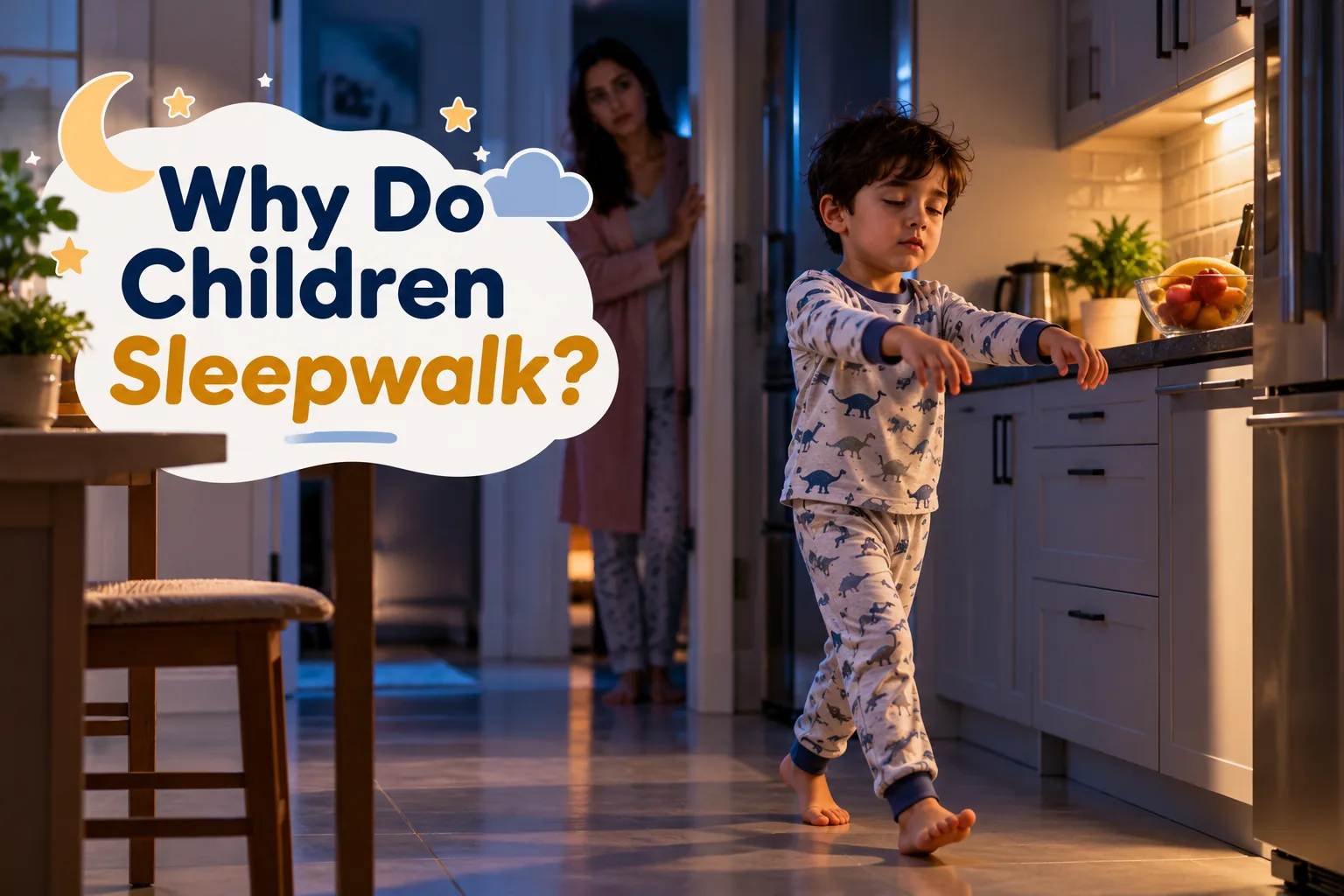
Have you ever found your child standing in the kitchen at night, looking for something, or walking into your bedroom with their eyes open but barely responding? The next morning, they may insist they don’t remember any of it.
You might wonder whether they were sleepwalking, dreaming or simply too sleepy to remember getting out of bed.
Sleepwalking is relatively common in childhood, and most children eventually outgrow it. But how can you tell when nighttime wandering is harmless and when it deserves attention?
What Is Sleepwalking Disorder in Children?
Sleepwalking, medically called somnambulism, happens when your child partially awakens from deep sleep without becoming fully conscious. Doctors classify it as a non-REM parasomnia, also called a disorder of arousal.
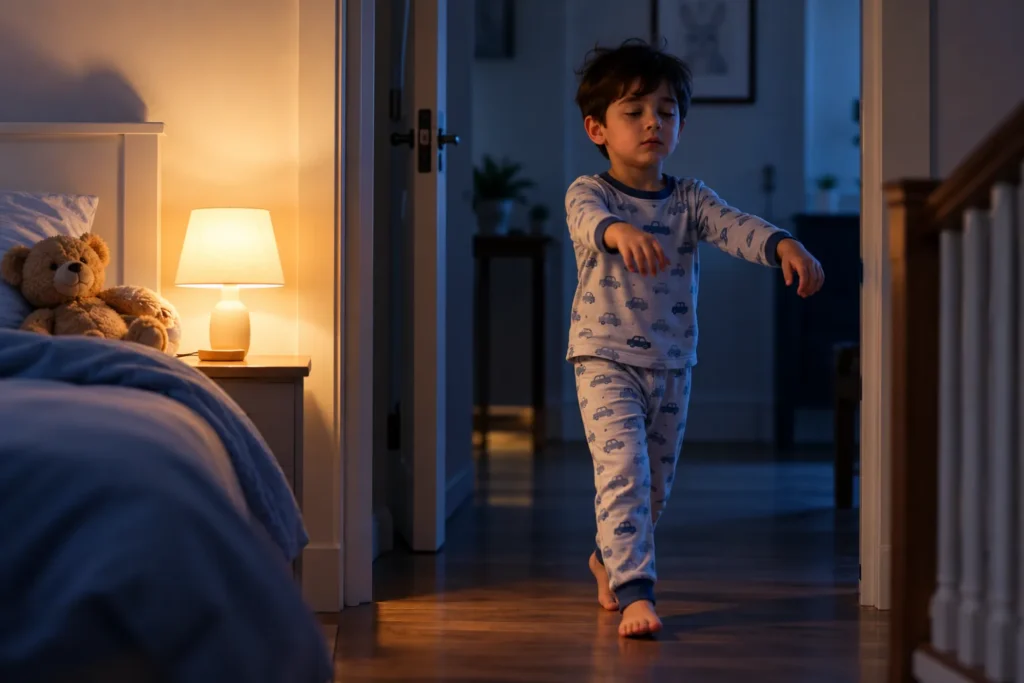
During an episode, your child might sit up, walk through the house, open a door or speak to you. Their eyes may be open, but they might look confused, give unusual answers or barely respond. Episodes commonly occur during the first few hours of sleep.
According to the Royal Children’s Hospital Melbourne, sleepwalking is particularly common in younger children, and most eventually outgrow it. An occasional episode does not automatically mean your child has a sleep disorder that requires treatment.
Getting out of bed doesn’t necessarily mean your child is sleepwalking.
Your child may come into your bedroom because they want company, feel comfortable beside you or have developed that habit. They may remember the visit, genuinely recall very little after briefly waking, or be reluctant to admit they wanted to sleep with you.
Don’t assume they’re lying or sleepwalking simply because they say they don’t remember. Their awareness and responsiveness during the episode offer more useful clues, although neither can establish a diagnosis on its own.
Why Do Children Sleepwalk?
Several factors can make sleepwalking more likely. Sometimes there is no obvious trigger, even when episodes happen repeatedly.
1. The Brain Partially Wakes During Deep Sleep
Sleepwalking occurs when some brain systems involved in movement and behaviour become active while others remain in deep sleep.
This explains why your child might walk, speak or carry out familiar actions without being fully aware of their surroundings.
They may enter the kitchen, move objects or appear to look for something specific. Although these actions seem deliberate, they can happen during an incomplete awakening.
Sometimes their behaviour may remind you of something they enjoyed during the day, such as a superhero story, a game or an exciting activity. That doesn’t establish that the experience caused the episode or that they were acting out a dream.
Children can also wake normally after dreams and move around while fully conscious. Typical sleepwalking is different from REM sleep dream-enactment behaviour.
2. Age, Sleep Development and Family History
Sleepwalking is more common in childhood, particularly when children spend substantial time in deep sleep.
It commonly occurs between ages four and eight, although it can happen earlier or later.
Family history can also increase the likelihood. If you or another family member experienced sleepwalking or night terrors, your child may be more susceptible.
Many children experience fewer episodes as they grow older.
3. Lack of Sleep, Illness and Changes in Routine
Sleepwalking may become more frequent when your child is overtired, has a fever or experiences interruptions to their usual sleeping schedule.
Travel, unfamiliar sleeping arrangements and periods of stress can sometimes contribute.
Stress is a possible trigger, but it isn’t necessary for sleepwalking to occur. Sleepwalking alone doesn’t mean your child has anxiety, trauma or another psychological condition.
If insufficient sleep is a recurring concern, our guide to sleep problems in children explains common childhood sleep difficulties separately.
4. Other Sleep Conditions and Certain Medicines
Sometimes another condition repeatedly interrupts your child’s sleep and contributes to sleepwalking episodes.
Obstructive sleep apnoea, for example, may cause loud snoring, gasping or pauses in breathing. Some sleep-related movement conditions can also disturb sleep.
Certain medicines are associated with sleepwalking or similar nighttime behaviours. If you notice a new pattern after your child starts medication, discuss it with the prescribing doctor before making changes.
When Is Sleepwalking Normal, and When Should Parents Worry?
Occasional childhood sleepwalking is often harmless, particularly if your child is otherwise sleeping well and functioning normally during the day.
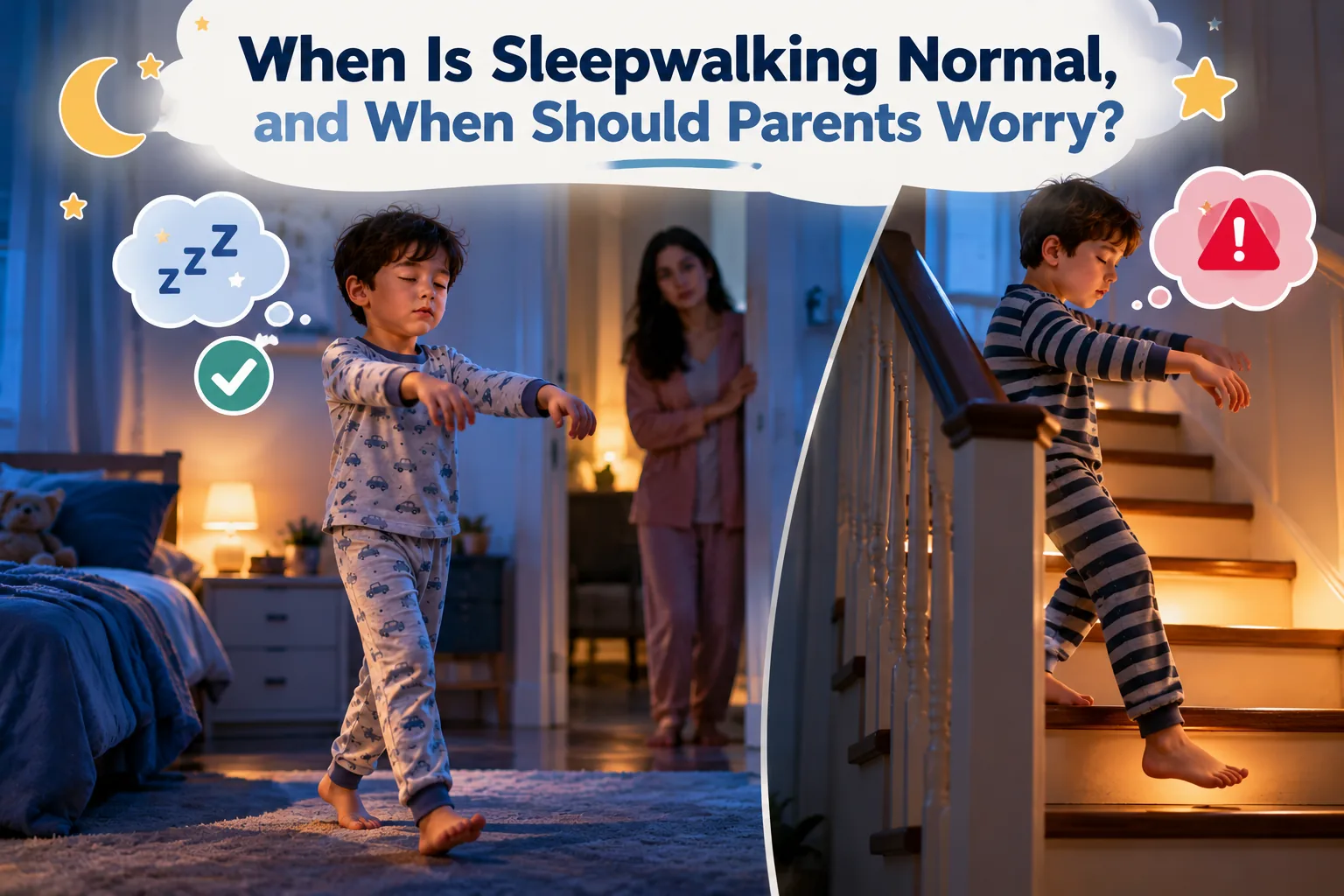
The concern isn’t simply whether they enter an unexpected room. It’s whether the episodes create safety risks, significantly disrupt sleep or suggest another medical condition.
Usually Less Concerning
- Your child occasionally gets out of bed while partially asleep and settles again.
- They walk around familiar areas without engaging in dangerous activities.
- Episodes are brief and don’t significantly disturb their sleep.
- They are alert and functioning normally the following day.
- Sleepwalking becomes less frequent as they grow older.
Signs That Need Medical Attention
- Unsafe wandering: Your child approaches balconies, stairs, open windows or external doors while not fully awake.
- Injury or dangerous actions: They fall, handle sharp objects or attempt to use kitchen appliances.
- Increasing episodes: Sleepwalking becomes frequent, unusually intense or significantly disrupts sleep.
- Daytime problems: Your child experiences persistent sleepiness or noticeable difficulty functioning during the day.
- Breathing symptoms: You notice repeated gasping, loud snoring with breathing pauses or other breathing disturbances during sleep.
- Unusual movements: Episodes involve repeated stiffening, jerking or movements that could suggest a seizure.
Seek urgent medical help for serious injuries, significant breathing difficulty, a suspected first seizure or prolonged abnormal unresponsiveness.
An unusual nighttime destination doesn’t necessarily indicate a serious disorder. But any behaviour that puts your child at risk of injury needs attention, even when the sleepwalking itself is otherwise typical.
What Should Parents Do When Their Child Sleepwalks?
The priority is to prevent injury without unnecessarily disturbing your child’s sleep.
- Guide them back rather than startling them. Speak gently and steer your child towards bed if they are not in immediate danger. Waking a sleepwalker is not inherently dangerous, but sudden waking may leave them confused or distressed.
- Prevent access to dangerous areas. Secure balconies, windows and outside doors, remove obstacles near stairs, and keep sharp objects and hazardous appliances inaccessible. Consider a door alarm if your child may leave the house. Don’t block emergency escape routes or lock your child into a room.
- Avoid upper bunk beds. A lower sleeping position reduces the risk of falling if your child gets up during an episode.
- Record patterns if episodes repeat. Note the approximate time, duration, responsiveness and any unusual movements or breathing difficulties. A short video taken safely may help a doctor assess an atypical episode.
- Address predictable triggers. If episodes follow late nights or interrupted sleep, providing adequate sleep opportunities may help. For frequent episodes at a predictable time, a clinician may recommend scheduled awakenings.
You don’t need to interrogate your child the following morning. If you think they’re consciously coming into your room for comfort, you can discuss that separately without accusing them of dishonesty.
When Should You See a Psychologist or Paediatrician?
You don’t have to wait until your child’s nighttime behaviour becomes serious to ask for help. If you’re worried, unsure whether it’s sleepwalking or simply want professional reassurance, speaking with a qualified psychologist or paediatrician is a reasonable step.
A child psychologist can help you understand concerns around sleeping alone, emotional comfort, anxiety and bedtime behaviour. Even when no significant psychological problem is present, a consultation may help you feel clearer about how to respond at home.
If your child is genuinely sleepwalking, particularly when episodes are frequent, unusual or potentially dangerous, a paediatrician is the appropriate first contact for medical assessment. They can determine whether a sleep specialist or further investigation is needed.
Through LeapHope, you can speak with qualified professionals via online child and teen counselling or explore online child anxiety counselling when emotional concerns are involved.
Getting professional clarity is a reasonable choice, even when your concerns turn out to be part of ordinary childhood behaviour. Psychological support, however, does not replace medical assessment when a sleep disorder is suspected.
Let’s Recap
Your child getting out of bed at night doesn’t automatically mean they have a sleep disorder. They may be looking for comfort, briefly awake with little memory of moving, or genuinely sleepwalking.
Most childhood sleepwalking improves with age. Focus on your child’s safety, how often episodes occur and whether anything concerning accompanies them.
And if you’re uncertain, you can always seek professional guidance rather than trying to work everything out yourself.
Medical References
- Royal Children’s Hospital Melbourne — Sleepwalking
- NHS — Sleepwalking
- Diagnosis and Management of NREM Sleep Parasomnias in Children and Adults (2023)
- Nemours KidsHealth — Sleepwalking
This article provides educational information and does not replace an individual medical assessment.